

Clay Pebbles for Drainage: The Ultimate Guide for Indoor Growers (2026)
Your heaviest potting mix is likely your biggest liability when it comes to plant health and physical strain. Most UK growers don't realise that dense, waterlogged soil is responsible for nearly 75% of indoor plant failures. You've probably dealt with the frustration of overwatered pots that weigh a tonne and eventually succumb to root rot. It's a messy, expensive cycle that wastes your nutrients and your time. By integrating clay pebbles for drainage into your setup, you can immediately reduce pot weight while creating the oxygen-rich environment that high-yielding plants require to thrive.
We agree that gardening should be about efficiency and results, not struggling with heavy bags and stagnant water. This guide shows you how to master the science of aeration so you can protect your root systems and maximise your plant health. We'll look at the specific benefits of expanded clay, the best ways to layer it in your pots, and how this reusable media helps you save money on every subsequent grow. From lighter mixes to healthier harvests, here's everything you need to know about upgrading your drainage game for 2026.
Key Takeaways
- Understand how the porous internal structure of expanded clay optimizes moisture retention while providing essential oxygen to the root system.
- Learn the science behind using clay pebbles for drainage to prevent root rot and maintain a healthy "Oxygen-Water Balance" for indoor plants.
- Discover professional methods for layering and mixing pebbles into soil or coco coir to create custom, high-performance growth substrates.
- Follow our essential preparation guide to correctly rinse and pH balance your medium, avoiding common pitfalls that can stunt plant growth.
- Save on your setup costs by identifying quality brands and securing the best bulk prices available in the UK market.
What Are Clay Pebbles and How Do They Improve Drainage?
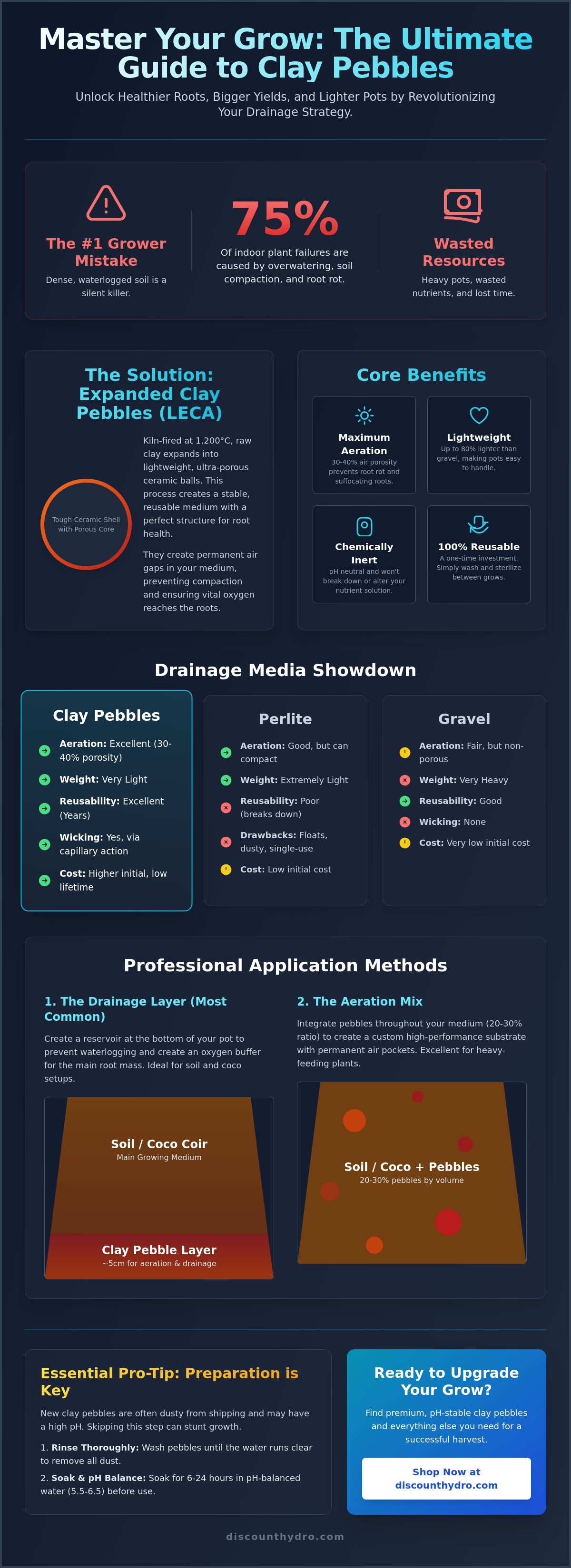
Clay pebbles are essential for any professional indoor setup. Also known as Expanded clay aggregate (LECA), these kiln-fired balls solve common moisture issues by providing a balance of water retention and aeration. Using clay pebbles for drainage is the most effective way to stop root rot and prevent stagnant water at the bottom of your containers. They work by creating large air gaps in your medium, allowing excess water to escape while keeping the root zone oxygenated. They are a primary medium in what is hydroponics, but they are equally effective when used as a drainage layer in soil or coco-based systems.The Manufacturing Process: Why It Matters
The production process involves heating raw clay to approximately 1,200°C in a rotary kiln. At these extreme temperatures, the clay expands like popcorn, creating thousands of tiny air pockets inside each pellet. A tough, outer ceramic shell forms during the cooling stage. This shell ensures the pebbles don't break down or compact over several growing cycles. You get a lightweight, airy medium that remains physically stable. The uniform round shape is a key design feature. It provides predictable drainage and air gaps across the entire container, which is impossible to achieve with jagged rocks or irregular gravel.Clay Pebbles vs. Other Drainage Media
Standard gravel is heavy and difficult to handle in large volumes. Clay pebbles weigh approximately 80% less than stone, which makes a massive difference when shifting 50-litre bags or moving heavy pots around the grow room. This emphasis on lightweight yet durable materials is mirrored in other industries, such as the indoor play sector where SoftplayToys4kids provides equipment designed for ease of handling and safety. While gravel is just a solid mass, the porous core of LECA actually wicks and stores a small amount of moisture for the plant to use. Perlite is another popular alternative, but it has distinct disadvantages for long-term use. Perlite is extremely dusty and often floats to the top of the medium during watering. Clay pebbles for drainage stay exactly where you put them. They are a better long-term investment because they are 100% reusable. You can wash, sterilise, and reuse them for years. Key benefits for UK growers:- High Porosity: Retains essential moisture while allowing maximum oxygen to reach the roots.
- Lightweight: Simplifies logistics and handling, especially in multi-pot systems.
- Durability: Doesn't degrade or change the pH of your nutrient solution.
- Cost-Effective: Reusable nature provides a lower lifetime cost than single-use alternatives.
The Science of Aeration: How Expanded Clay Prevents Root Rot
The root zone requires a precise oxygen-water balance to maintain plant health. Indoor crops often struggle because traditional soils compact over time; this squeezes out air and leads to stagnant water. Using clay pebbles for drainage solves this by creating permanent macroscopic pores between the pebbles. These gaps ensure that even when the medium is saturated, oxygen remains available to the root hairs. Research into how drainage works in containers shows that adding coarse materials is the only way to effectively lower the perched water table in a pot. For the 80% of beginner growers who lose their first crop to overwatering, this physical structure is the most important safeguard against failure. Most professional pebbles provide roughly 30% to 40% air porosity even when fully drained.
Understanding Capillary Action in Growing Media
Clay pebbles feature a porous internal structure that pulls water upward through capillary action. This allows moisture to move from the bottom of the pot to the top without completely filling the air gaps between the pebbles. It eliminates "hot spots" where dry pockets of soil might otherwise kill off sensitive roots in larger 20-litre or 50-litre containers. If you use a bottom-watering system, a 5cm layer of pebbles at the base acts as a reservoir. It provides consistent hydration while keeping the main root mass safely above the standing water. This wicking effect ensures that every centimetre of the root system receives a balanced supply of nutrients and moisture.
Preventing Root Rot and Fungal Growth
Root rot is almost always caused by anaerobic conditions where pathogens like Pythium thrive. These bacteria colonise roots when oxygen levels drop below 10% for extended periods. Aeration prevents root rot by ensuring high oxygen concentrations that physically inhibit the survival of anaerobic pathogens. In high-humidity environments typical of UK indoor grow rooms, drainage is the primary defense against fungal outbreaks. By keeping the root zone airy, you reduce the risk of crop-destroying infections that can wipe out an entire tent in 48 hours. This is especially vital for growers using plastic pots that don't breathe as well as fabric options. If you're looking to upgrade your setup, you can find professional-grade hydroponic supplies at warehouse prices to get your drainage right from day one.
Effective Methods for Using Clay Pebbles in Pots and Systems
Professional growers rely on clay pebbles for drainage to prevent waterlogging and ensure oxygen reaches the root zone. These expanded clay aggregates are inert, pH stable, and provide a permanent structure that doesn't break down over a single season. Whether you're working in a dedicated room or using grow tents, managing the moisture level in your containers is the first step toward avoiding root rot and nutrient lockout.
The Bottom Drainage Layer Technique
Adding a base layer of pebbles is the most common application for traditional pot culture. For standard 10 to 20 litre pots, apply a 2cm to 5cm layer of washed clay pebbles at the very bottom. This creates a "reservoir" space where excess water can sit away from the soil, preventing the bottom roots from drowning in anaerobic conditions. It's a vital safeguard for decorative pots that don't have drainage holes, though we always recommend using drilled containers for high-performance crops.
To keep your system running clean, place a fine plastic mesh or a piece of landscape fabric over the pebble layer before adding your soil. This barrier prevents fine particles from washing down and clogging the gaps between the pebbles. Without this mesh, the clay pebbles for drainage eventually become packed with silt, which reduces their effectiveness by 40% or more over a 12 week cycle.
Creating the Ultimate Potting Mix
Mixing pebbles directly into your substrate is a proven way to improve the properties of soilless mixes and heavy peat-based soils. For coco coir users, a ratio of 70% coco to 30% clay pebbles is the industry standard. This blend increases the "fluffiness" of the medium, allowing for faster dry-back periods and more frequent feeding cycles. If you're growing long-term crops that stay in the same pot for 6 months or longer, this structure prevents the medium from compacting under its own weight.
When you use high-strength hydroponic nutrients, salt buildup is a constant risk. A high-aeration mix containing pebbles allows you to flush the pots more effectively. The increased porosity means you can run a 20% runoff volume during every feed without worrying about overwatering. This practice keeps the Electrical Conductivity (EC) in the root zone stable, even when pushing aggressive feed charts. In enclosed environments where humidity can spike, the fast-draining nature of a pebble-mix helps keep the surface of the pot dry, which discourages pests like fungus gnats from colonising your media.
How to Prepare and Maintain Your Drainage Medium
Clay pebbles for drainage are highly effective, but you can't just pour them straight from the bag into your pots. New media is covered in a fine layer of clay dust. This silt is a silent killer for hydroponic systems. It settles in the bottom of tanks and creates a gritty sludge that clogs dripper lines and burns out £50 water pumps within a few days of operation. Proper preparation prevents these mechanical failures and ensures your plants have a stable environment from day one.
Initial Preparation: Rinsing and Soaking
Start by placing your pebbles in a large sieve or a bucket with drainage holes. Rinse them with a high-pressure hose until the runoff water is transparent. Once the dust is gone, you need to manage the pH levels. Most expanded clay arrives with a pH of 8.0 or higher. This alkalinity prevents plants from absorbing essential nutrients like iron and manganese. You must buffer the stones before they touch your roots.
Follow this process to stabilise your media:
- Fill a 100-litre reservoir with water and adjust it to a pH of 5.0 using phosphoric acid.
- Submerge the pebbles for 24 hours to ensure they are fully hydrated.
- Check the levels every 6 hours; the clay will likely pull the pH back up as it leaches minerals.
- Keep adding pH Down until the water stays at a steady 5.5 to 5.8 for at least four hours.
This ensures your media doesn't cause nutrient lockout during the first week of growth. Testing the final runoff water is the only way to be certain the pebbles are neutral and ready for use.
Sterilisation and Reuse
You don't need to buy new media for every crop. High-quality clay pebbles for drainage can last between 5 and 10 years if you maintain them properly. After harvest, the pebbles will be full of old root fragments. Dry the media out completely; this makes the organic matter brittle. Rub the pebbles together or shake them in a mesh tray to break the dried roots away efficiently.
Sterilisation is the next vital step. Pathogens like Pythium can survive between cycles and infect your next batch of plants. Soak the cleaned pebbles in a solution containing 30ml of 12% hydrogen peroxide per litre of water. Leave them for at least 12 hours to ensure total disinfection. If you prefer a cheaper option, a 10% bleach solution works well, though it requires much more rinsing to remove the chlorine residue.
Store your clean, dry media in sealed 50-litre tubs or heavy-duty bags. This prevents dust, pests, or fungal spores from contaminating the pebbles before the next season starts. Keeping the stones dry during storage is the best way to stop algae growth.
Buying Quality Clay Pebbles at the Best UK Prices
Low-grade growing media often leads to long-term failure in a hydroponic system. Cheap pebbles break down into silt, clogging your pots and ruining your clay pebbles for drainage strategy. This silt blocks oxygen from reaching roots, which causes rot in 90% of overwatered indoor setups. High-quality expanded clay stays structurally sound for multiple seasons. Investing in premium pebbles ensures your roots stay aerated and your pumps remain clear of debris.
What to Look for in a Quality Clay Pebble
Consistency is key for aeration. Look for an 8-16mm size range. This ensures uniform gaps between pebbles, allowing water to pass through while retaining oxygen. Premium brands offer "pre-washed" or "dust-free" options. These save hours of rinsing and prevent fine particles from damaging your hydroponic pumps or reservoir filters. Check the pH stability too. Top-tier pebbles are kiln-fired at 1,200 degrees Celsius to ensure they remain inert. Lower quality batches often fluctuate, forcing you to adjust your nutrient solution more frequently. Using clay pebbles for drainage only works if the media doesn't interfere with your water chemistry.
- Size: Industry standard 8-16mm for maximum air-to-water ratio.
- Cleanliness: Pre-washed pebbles reduce setup time and system clogs.
- pH Stability: High-quality brands won't spike your pH levels above 7.0.
Choosing the right bag size depends on your scale. A single 10L bag might suit a small tent, but large grow rooms require 45L or 50L bags to stay cost-effective. Buying in bulk reduces your price per litre significantly. For commercial-scale operations, pallet deliveries offer the best value for money in the UK market. We've seen growers save up to 20% by switching from individual small bags to bulk pallet orders. For those running 10 or more large pots, 50L bags are the standard choice. Smaller 10L bags work well for topping up existing systems or for small-scale propagation. Always calculate your total volume needs before ordering to avoid multiple delivery charges.
Complete Your Setup with Discount Hydro
Discount Hydro stocks a massive range of growing media from the industry's leading hydroponic brands. We focus on providing the UK's best prices without compromising on the quality your plants need to thrive. If you're a local grower in County Durham, use our click and collect service to get your supplies even faster. We also provide rapid delivery across the UK for all online orders. Our team ensures that every bag is handled with care so it arrives intact and ready for use. Don't let poor drainage hold back your harvest. Shop our full range of growing media and drainage solutions to get the professional results you're looking for.
Optimise Your Indoor Environment for Better Yields
Success in indoor growing starts with the right foundation. Using clay pebbles for drainage is a proven method to increase oxygen levels around the root zone and stop rot before it starts. You’ll save money over time because these pebbles are fully reusable across multiple seasons. It's essential to prep your media by rinsing away dust to maintain a stable pH for your plants. This simple step protects your investment and ensures your root systems stay healthy and white.
Discount Hydro has supplied professional-grade growing media to UK growers for over 10 years. We maintain massive stock levels of leading brands like VitaLink and Euro Pebbles at our dedicated warehouse. You can get what you need quickly with fast nationwide UK delivery or use our convenient click-and-collect service in County Durham. We focus on providing the gear you need without the high retail markups. Don't let poor drainage hold your harvest back when high-quality solutions are this affordable and easy to access.
Browse our selection of high-quality clay pebbles at the UK’s best prices
Get your system running at peak performance today.
Frequently Asked Questions
Do I really need to put clay pebbles at the bottom of my pots?
You should put a 2-3cm layer of clay pebbles at the bottom of your pots to prevent root rot and improve aeration. This layer creates a physical gap that stops roots from sitting in stagnant water, which is a leading cause of plant death in 75% of indoor setups. Using clay pebbles for drainage ensures your pots don't become waterlogged after heavy feeding. It's a cheap, effective way to protect your investment.
Can I use clay pebbles instead of soil for my indoor plants?
You can use clay pebbles as a 100% replacement for soil in hydroponic or semi-hydroponic systems. This method eliminates soil-borne pests like fungus gnats, which plague 1 in 4 indoor growers. Because pebbles are inert, you'll have total control over the nutrients your plants receive. It's a cleaner, more efficient way to grow, though you'll need to monitor your nutrient solution daily to maintain the correct EC levels.
How do I stop clay pebbles from floating in my hydroponic system?
You stop clay pebbles from floating by soaking them for 24 hours before use and ensuring your water level doesn't exceed 50% of the pot's height. Most pebbles have a density of 0.3 to 0.7 g/cm³, meaning they'll naturally bob until they're fully saturated. If you're using a deep water culture system, keep the water line 2cm below the bottom of the net pot to prevent the medium from shifting.
Are clay pebbles better than gravel for drainage in heavy planters?
Clay pebbles are superior to gravel because they're 75% lighter and provide significantly better oxygen access to the root zone. A 10-litre bag of pebbles weighs about 4kg, while the same volume of gravel can exceed 15kg. This makes your heavy planters much easier to move around the grow room. Additionally, clay pebbles for drainage have a porous structure that stores moisture, unlike solid stone or gravel.
Do clay pebbles change the pH of my nutrient solution or soil?
Most clay pebbles are pH neutral, but they can raise your solution's pH by 0.5 to 1.0 points if the factory dust isn't removed. This dust is often alkaline and will cause nutrient lockout if you don't manage it. To avoid issues, soak your pebbles in pH-adjusted water (5.5 pH) for 24 hours before planting. This simple step ensures your nutrient levels stay stable and your plants don't suffer.
How often should I wash my clay pebbles?
You should wash your pebbles after every harvest or every 4 months to prevent salt build-up and pathogen growth. Reusing your medium can save you 100% on replacement costs each cycle. Simply rinse away the organic debris and soak the pebbles in a 10% bleach or peroxide solution for 2 hours. This sterilisation process kills 99% of bacteria, ensuring your next crop starts in a clean, healthy environment.
Can clay pebbles be used for decorative purposes on top of the soil?
You can definitely use clay pebbles as a decorative mulch on top of your soil to reduce water evaporation by 25%. A 1-2cm layer on the surface keeps the soil cool and stops a hard crust from forming. It also acts as a physical barrier against pests like fungus gnats, which struggle to reach the moist soil to lay eggs. It's a practical, low-cost way to improve your pot's appearance.
Are clay pebbles safe for all types of indoor crops and decorative plants?
Clay pebbles are safe for 100% of indoor crops and decorative plants grown in the UK. They're manufactured at temperatures exceeding 1,100 degrees Celsius, making them completely sterile and free from harmful chemicals. Whether you're growing leafy greens, herbs, or tropical house plants, these pebbles won't degrade or leach toxins into your water. They're a reliable, food-grade choice for any grower looking for a long-lasting, reusable growing medium.