

The Complete Guide to Hydroponic Nutrient Schedule in 2026
Feeding your plants the same mineral ratio every day is the fastest way to stall your harvest. Precision is required for professional results in any controlled environment. Many UK growers find mixing ratios and delivery timing difficult to manage. This often leads to wasted nutrients or root damage. Mastering a precise hydroponic nutrient schedule is the difference between average growth and maximum yield. It's about providing specific minerals at the right moment for optimal plant development.
We know that tracking NPK ratios and pH levels is often confusing and time consuming. This guide simplifies the process for commercial and hobbyist growers alike. You'll learn how to manage your hydroponic nutrient schedule effectively to maximize plant health and final weight. We'll cover the specific needs for every growth stage, how to build a reliable feeding plan, and the best methods for maintaining the environment for nutrient uptake. This ensures your system runs efficiently while reducing unnecessary waste.
Key Takeaways
- Learn how to structure a professional hydroponic nutrient schedule to support specific growth stages from seedling to harvest.
- Identify the varying NPK requirements for vegetative and flowering phases to prevent nutrient lock-out and deficiencies.
- Master essential monitoring techniques for pH and EC levels to ensure maximum nutrient uptake and plant health.
- Discover high-performance nutrient brands like Intense Nutrients and Dutch Pro for consistent, high-yield results.
- Access direct pricing on professional-grade hydroponic supplies with fast nationwide delivery options across the UK.
What is a Hydroponic Nutrient Schedule?
A hydroponic nutrient schedule is a structured feeding plan designed to provide plants with specific mineral concentrations at precise intervals. Because hydroponics relies on a soil-less medium, the grower is entirely responsible for the plant's diet. You can't rely on the ground to provide minerals. A schedule tracks the transition from the seedling phase through to the final harvest. It adjusts the electrical conductivity (EC) and pH levels to match the plant's biological requirements at every step. Without a plan, you're just guessing. Precision leads to profit.
Following a set routine ensures your crops receive the correct ratios of minerals for their current development stage. A seedling has different needs than a plant in full bloom. If you get this wrong, you'll see a massive drop in yield. In the UK, indoor growers often face environmental shifts that affect how plants drink. A reliable schedule provides a baseline that you can adjust based on your specific grow room conditions. It's the most effective way to maintain stability in your reservoir.
Different Nutrient Types Explained
Nutrients are categorized into two main groups. Your schedule must balance both to avoid stunted growth or yellowing leaves. Macronutrients are the primary building blocks. They are needed in large quantities. Micronutrients are trace elements. They are just as vital for health but used in smaller doses.
- Nitrogen (N): Drives leaf and stem development during the vegetative stage.
- Phosphorus (P): Essential for root growth and heavy bloom production.
- Potassium (K): Regulates water movement and strengthens plant immunity.
- Trace Elements: Includes Calcium, Magnesium, and Iron. These prevent leaf spotting and brittle stems.
High-quality brands like Intense Nutrients and Dutch Pro pre-mix these elements. This ensures a balanced profile that targets specific growth phases. Using professional-grade products removes the guesswork from your hydroponic nutrient schedule.
Why a Schedule is Important
Plants don't have the same appetite throughout their life. A seedling needs a weak solution to avoid root burn. A flowering plant requires high phosphorus and potassium to maximize its weight. A consistent schedule prevents the cycle of overfeeding and underfeeding. Both mistakes are costly for a commercial or hobbyist grower.
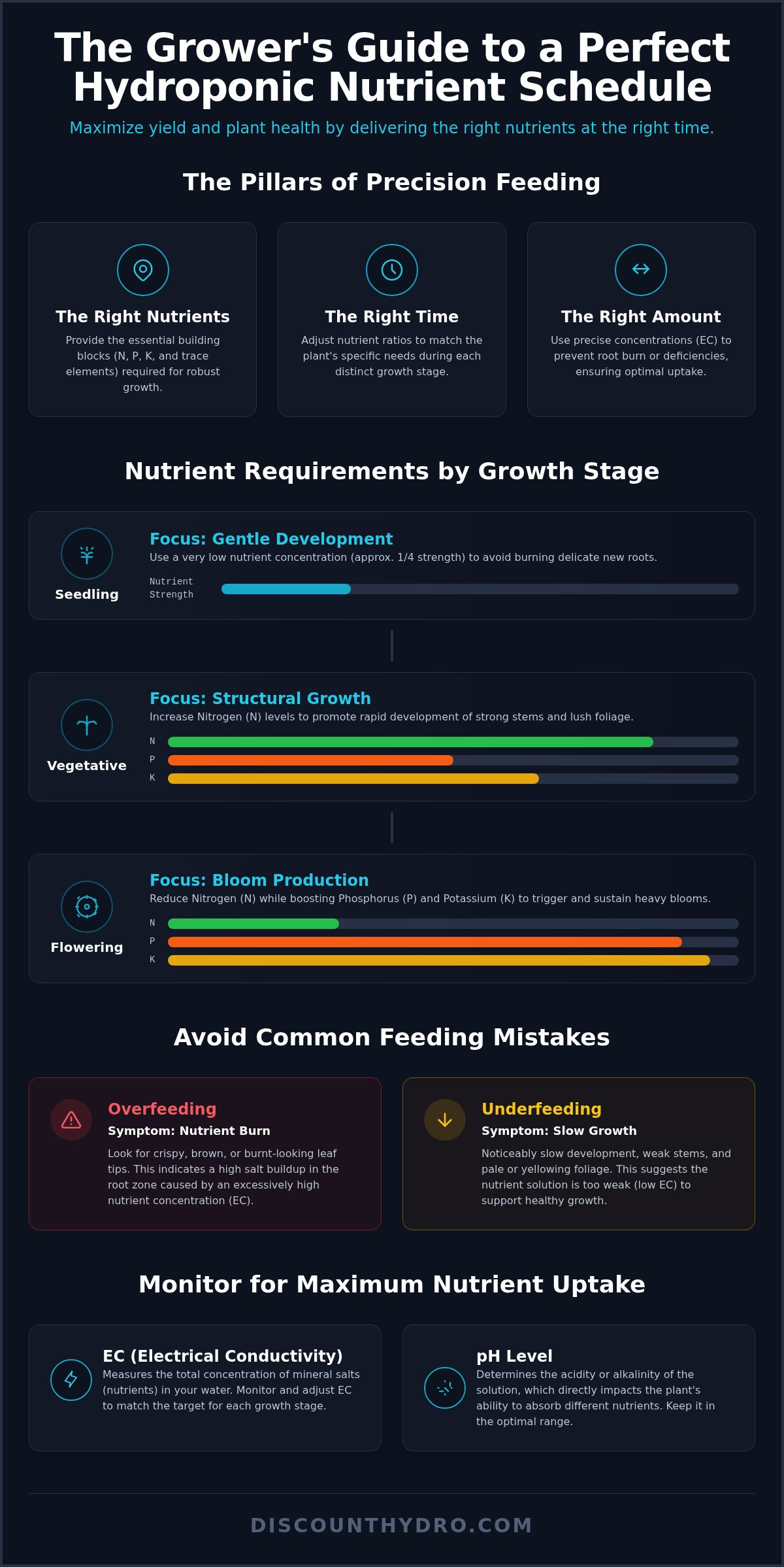
Overfeeding causes nutrient burn. You'll see this as crispy brown leaf tips. It's a sign of high salt buildup. Underfeeding results in slow growth and pale foliage. Following a set schedule allows you to monitor exactly what goes into your tank. It's easier to troubleshoot problems when you have a record of your feeding history. You should always adjust your concentrations based on how the plants look. If the tips are burning, back off the EC. If growth is slow, increase the dosage slightly. Stability is the goal for any successful harvest.
Creating Your Nutrient Schedule: Step-by-Step Guide
A successful harvest starts with a structured plan. You don't just pour nutrients into a tank and hope for the best. Every crop moves through distinct phases, and your hydroponic nutrient schedule must evolve with them. The process begins by identifying the exact growth stage of your plants. This allows you to mix a water-based nutrient solution that provides the correct mineral density for that specific moment.
Nutrient Needs by Growth Stage
Plant requirements shift significantly as they mature. You must adjust your reservoir weekly to match these changes. Failing to do so leads to stunted growth or nutrient lockout. Stability is the goal for any commercial or domestic setup.
- Seedling Stage: Use a very low concentration. Start at roughly 1/4 strength. Roots are delicate and burn easily at this stage.
- Vegetative Stage: Increase Nitrogen levels. This is when the plant builds its structure. Aim for a higher EC (Electrical Conductivity) to support rapid leaf development.
- Flowering Stage: Reduce Nitrogen and boost Phosphorus and Potassium. This shift triggers and sustains heavy bloom production. If you keep Nitrogen too high now, you'll get excess foliage but very little yield.
Manufacturer Recommendations
Most professional brands provide detailed feeding charts. These are your primary map. Brands like Intense Nutrients and Dutch Pro design their charts based on rigorous testing. Don't ignore them. These charts usually list measurements in millilitres per litre (ml/L). Always follow the label instructions precisely. If you're looking for a specific brand to start your hydroponic nutrient schedule, you can find the best hydroponic nutrients and supplements at competitive UK prices online.
Reading a chart is straightforward. Locate the current week of growth on the vertical axis. Follow it across to find the dosage for each component. Most systems use a two-part or three-part base nutrient. Never mix these concentrates directly together; always add them one by one to your water. This prevents the minerals from binding and becoming unavailable to the plant. This chemical reaction, known as precipitation, ruins the batch and wastes your money.
Your environment dictates the final dosage. High temperatures in a UK grow room can cause plants to drink more water, leaving behind a concentrated mineral solution. This spikes the EC. Monitor your reservoir daily. If the EC rises, add plain water. If it drops, the plants are hungry and need more nutrients. A schedule is a guide, but the plant's response is the final authority. Always prioritise stability over aggressive feeding to ensure a consistent, high-quality yield.
Choosing the Right Nutrients for Your Hydroponic Setup
Selecting the correct mineral profile is the foundation of a high-performance system. Professional growers in the UK rely on brands like Intense Nutrients and Dutch Pro because these formulations offer chemical stability and proven results. A balanced solution ensures that your plants don't just survive but reach their full genetic potential. You must match your hydroponic nutrient schedule to your specific hardware. For example, recirculating systems like Deep Water Culture (DWC) require highly soluble minerals to prevent pump clogs and biofilm buildup. For those new to the science of soilless cultivation, Hydroponics: A Brief Guide offers a useful breakdown of how water and minerals interact in these environments.
Professional formulations are preferred because they account for the lack of natural buffering found in soil. These products are often "pH buffered," meaning they help maintain the ideal acidity range automatically. This reduces the need for constant manual adjustments. Using a cheap, generic fertiliser will lead to sediment at the bottom of your tank and nutrient lockout. Stick to industry-standard brands to ensure your delivery system remains clean and efficient.
Understanding N-P-K Ratios
Every bottle of base nutrient displays three numbers. These represent Nitrogen (N), Phosphorus (P), and Potassium (K). These are the primary macronutrients required for plant life. Nitrogen is the main driver for green, leafy growth. Phosphorus is critical for root development and flower initiation. Potassium regulates the plant's internal systems and overall vigour. Your hydroponic nutrient schedule will shift these ratios as the crop matures. A typical vegetative ratio might be 3-1-2, while a flowering ratio often shifts toward 1-3-2 to support heavy fruit and bloom production.
Supplemental Nutrients and Additives
Base nutrients provide the essentials, but additives push your yield further. UK water can vary in hardness, often making a Cal-Mag supplement necessary. Calcium and Magnesium prevent common issues like blossom end rot and yellowing between leaf veins. Rooting hormones are used during the early stages to establish a massive root zone quickly. A larger root system allows the plant to drink more and grow faster.
Bloom boosters are high-PK additives used during the peak of the flowering cycle. These provide the extra energy needed for dense, heavy harvests. Silicon is another popular additive. It strengthens cell walls, making plants more resistant to heat stress and pests. Always add supplements to your reservoir before your base nutrients. This ensures proper dilution and prevents the minerals from reacting with each other in concentrated form. Using a logical sequence in your feeding routine protects your investment and ensures maximum uptake.
Maximizing Your Yield: Tips for Effective Nutrient Management
Achieving a heavy harvest requires more than just following a basic hydroponic nutrient schedule. You must actively manage the chemical balance of your reservoir. If the pH is off, your plants can't eat. This is known as nutrient lockout. For most hydroponic crops, the optimal pH range is between 5.5 and 6.5. Outside of this window, essential minerals like iron and manganese become chemically unavailable to the roots. Similarly, your Electrical Conductivity (EC) measures the total concentration of salts in the water. High EC causes root burn. Low EC leads to starvation. Monitoring these two metrics daily is the only way to ensure your plants operate at peak efficiency.
Environmental factors in your UK grow room also dictate nutrient uptake. High temperatures often cause plants to transpire more water, which leaves behind a more concentrated mineral solution in the tank. This spikes your EC levels quickly. If you don't adjust your reservoir by adding plain water, the salt levels will eventually toxicify the root zone. Consistent monitoring allows you to make these small adjustments before they become terminal problems for your crop.
Monitoring Tools
Precision starts with the right hardware. You can't guess pH or mineral density by looking at the water. Handheld digital pH pens and EC meters are mandatory for any serious setup. Calibrate your tools weekly using standard buffer solutions to ensure accuracy. Test your reservoir every morning before your LED grow lights come on. This gives you a clear baseline of what the plants consumed during the dark cycle. Regular testing allows you to maintain a stable hydroponic nutrient schedule that reacts to the plant's actual needs rather than theoretical charts.
Common Nutrient Problems and Solutions
Identifying issues early prevents total crop failure. Yellowing between the leaf veins often indicates a magnesium deficiency, while brown, crispy leaf edges suggest nutrient burn from a solution that's too strong. If you encounter persistent imbalances, a full reservoir flush is the most effective remedy. Drain the tank and replace it with a fresh, half-strength batch of nutrients. This resets the root zone chemistry and stops the damage. For growers looking to maintain peak performance, you can buy hydroponic nutrients and monitoring tools at competitive prices for fast UK delivery. Professional-grade equipment ensures you have the data needed to correct imbalances before they impact your final yield weight.
Avoid the mistake of "more is better." Beginners often push EC levels too high in hopes of faster growth, but this usually results in stunted plants and mineral toxicity. Follow the manufacturer's guidance but always prioritise what your meters tell you. If the EC is rising day by day, your plants are telling you the mix is too strong. Dilute it. Successful management is about finding the "sweet spot" where the plant consumes water and nutrients at an equal rate, keeping the reservoir levels stable.
Discount Hydro: Your Source for Hydroponic Nutrients
Discount Hydro is a dedicated supplier for professional and domestic growers across the UK. We focus on providing the essential tools and minerals required to maintain a high-performance hydroponic nutrient schedule. Our inventory is built on competitive pricing and immediate availability. We stock industry-leading brands like Intense Nutrients and Dutch Pro. These are the formulations professional growers trust for consistency and yield. We eliminate the middleman to offer direct pricing on high-quality supplements. This ensures you get the best value for your setup without compromising on mineral quality. We don't waste time with fluff; we provide the products that drive results.
Our warehouse in Chester-le-Street serves as a hub for County Durham growers. You can access our full range of products via our convenient click-and-collect service. This allows local growers to get the supplies they need without waiting for couriers. For those further afield, we offer fast nationwide delivery. We ensure your nutrients arrive quickly so your plants never miss a feeding cycle. Whether you need a single bottle of Cal-Mag or a bulk order of base nutrients, we handle every transaction with efficiency and speed. Our logistics are designed to support the fast-paced needs of indoor cultivation.
Why Choose Discount Hydro?
We aren't just a shop; we're specialists in hydroponic growing solutions. Our inventory includes LED grow lights, grow tents, and growing media alongside our extensive nutrient range. We understand the technical requirements of different systems, from DWC to NFT. Our team provides direct support for nutrient selection. We help you choose the right supplements to correct deficiencies or boost flower production. We prioritise functional, cost-effective choices that deliver results. Our focus is on providing a no-frills, reliable service for growers who value price and product availability. We've built our reputation on being a straightforward supplier for the UK indoor gardening community.
Get Started with Your Nutrient Schedule Today
Maintaining a strict hydroponic nutrient schedule requires a reliable supply chain. We keep high stock levels of all major base nutrients and additives in our Chester-le-Street facility. You can browse our complete catalogue online to compare prices and specifications. This allows you to plan your budget and feeding plan with precision. If you prefer a face-to-face consultation, visit our trade counter at Drum Industrial Estate. We offer the expertise needed to optimise your grow room performance. Our staff can explain the differences between various mineral profiles to ensure your plants get exactly what they need.
Explore our hydroponic nutrients today and secure the best rates for your next grow. We provide the products you need to maximise your yield and maintain plant health throughout the year. Shop online now for fast UK delivery or visit us in-store for immediate collection. Our direct approach ensures you get the right products at the right price every time.
Optimize Your Harvest Results Now
Maintaining a precise hydroponic nutrient schedule is the most effective way to drive plant growth and secure a heavy yield. You've learned how to identify the specific mineral needs of each growth phase and the importance of tracking pH and EC levels daily. These steps prevent common feeding errors and ensure your crops remain healthy from seedling to harvest. Using trusted brands like Dutch Pro or Intense Nutrients provides the stability your system needs for consistent performance.
Discount Hydro is your reliable supplier for all professional-grade nutrients and supplements. We offer competitive pricing on a massive selection of stock with fast UK delivery options. If you're local to County Durham, our click-and-collect service at Drum Industrial Estate ensures you get your supplies without delay. Our team is ready to provide expert advice on selecting the right products for your specific setup. We focus on providing the tools you need for a functional and cost-effective growing environment.
Shop hydroponic nutrients at Discount Hydro today to upgrade your feeding routine. Get the right minerals at the right price to ensure your next harvest is your best yet. Start your next grow with the precision required for professional results.
Frequently Asked Questions
What is the best nutrient schedule for hydroponic plants?
The best schedule depends on your specific plant species and its current growth stage. Most professional growers follow the manufacturer feeding charts provided by brands like Dutch Pro. A reliable hydroponic nutrient schedule uses a week-by-week approach. You start with a low concentration for seedlings and gradually increase the mineral density as the plant enters the vegetative and flowering phases to maximize yield.
How often should I feed my plants in a hydroponic system?
Hydroponic plants have constant or frequent access to nutrients depending on your system type. In recirculating setups like Deep Water Culture, the roots sit in the solution 24/7. For run-to-waste systems using coco or rockwool, you typically feed between two and five times during the light cycle. This frequency ensures the root zone stays saturated with oxygenated, nutrient-rich water at all times.
Are specialized nutrients necessary for hydroponics?
Yes, specialized nutrients are mandatory because they contain the full spectrum of minerals in a water-soluble form. Unlike soil-based products, these formulations include essential micronutrients that plants usually extract from the ground. They are also designed to remain stable in water without creating sediment or clogging your pumps and irrigation lines. Using the wrong products will lead to immediate deficiencies.
What brands do you recommend for hydroponic nutrients?
We recommend professional-grade brands like Intense Nutrients and Dutch Pro for consistent, high-yield results. These manufacturers produce chemically stable formulas specifically balanced for the demands of indoor grow rooms. These brands provide detailed feeding guides that make managing your hydroponic nutrient schedule straightforward. They are proven to perform well under high-intensity LED grow lights and various hydroponic hardware setups.
How do I adjust nutrient levels based on plant growth?
Adjust your levels by monitoring the Electrical Conductivity (EC) of your reservoir daily. If the EC drops as the water level goes down, your plants are hungry and need a stronger concentration. If the EC rises, the plants are drinking more water than minerals, indicating the mix is too strong. You should then dilute the solution with plain, pH-adjusted water to prevent root burn.
What should I do if my plants show signs of nutrient deficiency?
Check your reservoir pH levels immediately before adding any extra nutrients. Most deficiencies are actually caused by nutrient lockout due to incorrect pH rather than a lack of minerals in the water. If your pH is within the 5.5 to 6.5 range and symptoms persist, identify the specific deficiency and add a targeted supplement like Cal-Mag or a bloom booster to correct the balance.
Can I use regular fertilizer in my hydroponic system?
No, you should never use regular garden fertilizer in a hydroponic setup. Standard fertilizers are often organic or designed for slow release in soil. In a water-based system, these products will cause bacterial blooms, foul the reservoir, and fail to provide the immediate mineral availability your plants need. This usually leads to root rot and total crop failure within days.
How long does shipping take for nutrient orders in the UK?
We provide fast nationwide delivery across the UK, with most orders arriving within one to two working days. We understand that plants can't wait for food, so we prioritise rapid logistics and high stock levels. Local growers in County Durham can also use our click-and-collect service at our Chester-le-Street warehouse for immediate access to our full range of nutrients and supplies.