

Fabric Pots vs Plastic Pots: The Ultimate 2026 Comparison for Indoor Growers
Could your choice of container be the primary bottleneck preventing a record-breaking harvest? Most growers invest heavily in LED lights and nutrients but overlook the simple vessel holding their media. If you've struggled with stunted growth or root-bound plants, the fabric pots vs plastic pots debate is more than just a matter of price. It's a technical decision that impacts drainage, oxygenation, and root zone temperature in your grow tent.
We know you're looking for the fastest growth rates without the constant risk of root rot or heat stress. This 2026 guide provides a direct, value-driven analysis of how container materials influence root architecture and your final harvest weight. You'll discover which options offer the best long-term ROI, comparing the air-pruning benefits of breathable fabric against the 10-year durability of heavy-duty plastic. We'll break down the technical trade-offs so you can secure a cost-effective solution that scales with your production needs. This comparison ensures your root system stays healthy across multiple cycles while maximizing every square inch of your facility.
Key Takeaways
- Compare root architecture development between air-pruning geotextiles and traditional rigid plastic containers to improve nutrient uptake.
- Evaluate the performance of fabric pots vs plastic pots regarding drainage, evaporative cooling, and root zone temperature management.
- Match container types to specific growing media like soil or coco coir to maximize hydration and aeration.
- Review cost-per-grow data to determine the long-term ROI of durable plastic versus high-yield fabric bags.
- Access cleaning protocols to ensure container reuse and maintain hygiene across multiple indoor cycles.
Fabric Pots vs Plastic Pots: Understanding the Core Differences
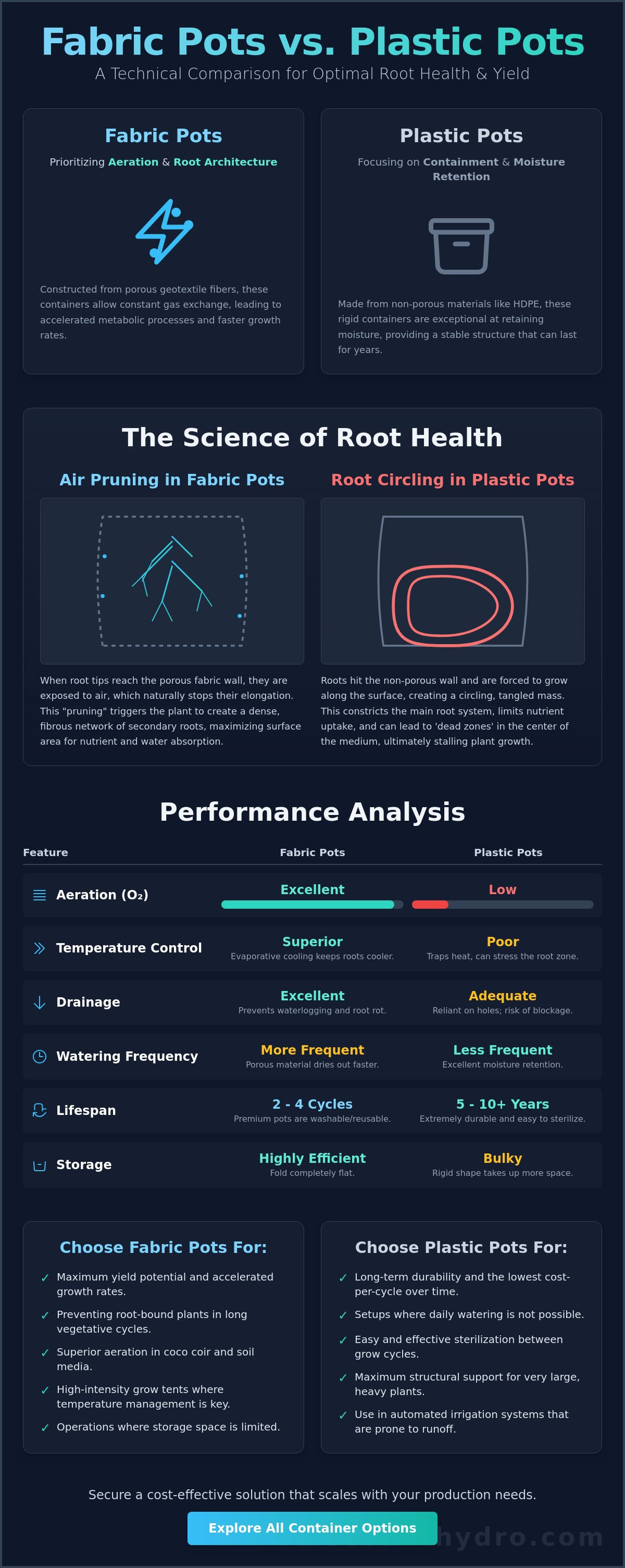
Choosing the right vessel for your root zone is a technical decision that dictates your irrigation frequency and oxygen levels. For decades, rigid plastic was the only viable option for commercial and hobbyist setups. Today, the choice of fabric pots vs plastic pots centers on a fundamental shift in philosophy. Traditional containers focus on containment and moisture retention. Modern fabric alternatives prioritize aeration and root architecture. This choice is just as vital to your final harvest weight as your selection of hydroponic nutrients. When evaluating fabric pots vs plastic pots, you're deciding between two different ways to manage water and air.
The Anatomy of a Standard Plastic Pot
Standard plastic pots are typically manufactured from high-density polyethylene (HDPE) or various recycled plastic blends. These materials are non-porous, which makes them exceptional at retaining moisture. This is a benefit if you can't water your plants every single day. Most designs feature a set of drainage holes at the base. While functional, these configurations can fail if the pot sits directly on a flat tray without enough clearance. This creates a stagnant zone where anaerobic bacteria thrive. The primary advantage of plastic remains its durability. High-quality plastic pots are easy to sterilize between cycles, often lasting five to ten years with basic maintenance. They provide a stable, rigid structure that supports heavy plants without sagging.
The Rise of Breathable Fabric Containers
Breathable containers represent a major evolution in Container gardening. These pots are constructed from thick geotextile fibers. Unlike plastic, the walls of a fabric pot are porous. This allows for constant gas exchange between the root zone and the external environment. Increased oxygen levels at the root level accelerate metabolic processes, leading to faster growth rates. For growers working in confined indoor grow tents, fabric pots offer a logistical win. They're significantly lighter than plastic and fold completely flat for storage. You can fit dozens of empty fabric bags in the space occupied by a single 20-litre plastic pot. While some budget options are designed for a single season, premium fabric pots are washable and reusable for two to four growing cycles. This makes them a highly efficient choice for high-turnover indoor environments where performance outweighs long-term container lifespan.
The Science of Root Health: Air Pruning vs Root Circling
Container choice directly dictates root architecture. In the fabric pots vs plastic pots debate, the physiological impact on the plant is the most significant factor for yield. Plastic pots act as a hard boundary. When a root hits the wall of a rigid container, it continues to grow along the surface, leading to circling. This creates a spiral of thick, woody roots that provide minimal nutrient uptake. Fabric pots utilize the environment to manage root length through a process called air pruning. This biological reaction transforms how your plants interact with their growing medium.
How Air Pruning Works in Fabric Pots
Air pruning occurs when root tips are exposed to relatively dry air through porous fabric walls. As the root tip dehydrates, it naturally stops elongating. This isn't damage; it's a signal to the plant to produce secondary branching. Instead of one long root circling the pot, the plant develops a massive network of fine, fibrous root hairs. This increased surface area allows for significantly higher nutrient and water absorption. In high-intensity LED grow light environments, plants have higher metabolic demands. A dense root system is required to keep up with the rapid transpiration rates these lights induce. Resources like the Oklahoma State University Extension on container gardening highlight how material choice influences these developmental outcomes.
The Risks of Root-Bound Plants in Plastic
Rigid containers often lead to root-bound conditions during long vegetative cycles. As roots circle the perimeter, they eventually begin to strangle the main root mass. This constriction limits the flow of water and nutrients to the upper canopy. You'll often find 'dead zones' in the center of the medium where oxygen can't reach because the outer root shell is too dense. Common signs of this stress include stalled growth and unexplained nutrient deficiencies that don't respond to feeding adjustments. If you're seeing these issues, it's time to browse professional pots and trays to find a more breathable system.
A fibrous root system doesn't just improve feeding; it increases structural stability. Plants in fabric pots are less likely to lean because the root mass is distributed evenly throughout the entire volume of the media. This leads to increased vegetative vigour. When the root system is efficient, the plant directs more energy toward foliage production rather than struggling to survive in a constricted environment. Comparing fabric pots vs plastic pots shows that for maximum biological performance, aeration is the superior technical strategy.
Performance Analysis: Drainage, Temperature, and Maintenance
Indoor environments require precise control over environmental variables. When evaluating fabric pots vs plastic pots, the thermal and hydraulic properties of the container material directly impact your daily maintenance routine. Plastic acts as a thermal insulator. In contrast, fabric acts as a heat exchanger. This distinction is critical when managing a sealed environment where temperatures can fluctuate rapidly.
Managing Root Zone Temperatures
High-intensity lighting systems, such as 720W LED arrays, generate significant radiant heat. In a standard UK grow tent, this heat can penetrate the sides of a black plastic pot, baking the roots and slowing metabolic activity. Fabric pots mitigate this through evaporative cooling. As moisture evaporates through the breathable walls, it pulls heat away from the root zone. The Old Farmer's Almanac on grow bags notes that this temperature regulation is a primary benefit of porous materials. However, if you're growing in an unheated garage during a UK winter, plastic pots offer a technical advantage. They hold onto residual heat, preventing the root zone from dropping into the range where growth stalls. In high-humidity grow tents, the rate of evaporation slows, but fabric still provides a more stable thermal environment than rigid plastic.
Drainage and Irrigation Requirements
Drainage efficiency is a major performance metric for any indoor setup. Plastic pots rely on a limited number of holes at the base. This often leads to "wet feet" if the medium isn't perfectly aerated, creating a breeding ground for anaerobic bacteria. Fabric pots provide 360-degree drainage. Water escapes from the bottom and the sides, making it nearly impossible to overwater your plants. This drainage efficiency creates a trade-off. Fabric pots dry out faster, which means you'll need to water more frequently. For many growers, this necessitates an automated dripper system to maintain consistent moisture levels. A key benefit of the fabric design is salt management. In plastic pots, excess mineral salts from nutrients often accumulate in the lower third of the medium. Fabric allows you to flush these salts out through the side walls, preventing pH swings and nutrient lockout.
Maintenance is where plastic remains the pragmatic, cost-effective choice. You can scrub a plastic pot with a bleach solution and have it ready for the next cycle in minutes. Fabric pots require a thorough machine wash to remove trapped salts and organic matter from the fibers. While plastic pots can last 5 to 10 years, fabric bags typically need replacement after 2 to 4 seasons. Your choice depends on whether you prioritize the durability of plastic or the superior biological performance of fabric.
Selection Guide: Matching Pots to Your Medium and System
Container selection is a technical requirement that must align with your irrigation frequency and substrate choice. The fabric pots vs plastic pots decision isn't just about the container; it's about how that container manages the specific physical properties of your medium. High-porosity mixes behave differently in breathable geotextiles than they do in rigid HDPE plastic. You need to match the vessel to the drainage characteristics of your chosen substrate to avoid nutrient lockout or root zone stagnation.
Best Pots for Soil and Coco Coir
Coco coir and perlite blends are designed for high-frequency feeding. These inert media thrive in fabric grow bags because the increased aeration prevents the substrate from becoming waterlogged during multiple daily fertigation events. Oxygen reaches the center of the root mass, facilitating rapid nutrient uptake. If you prefer organic soil, plastic pots provide a distinct advantage. Soil holds moisture longer and contains organic matter that can dry out too quickly in fabric, leading to hydrophobic zones. Plastic ensures a slower, more even dry cycle. This is essential for maintaining the microbial life in organic setups. For most indoor cycles, a 12-litre to 19-litre container provides the ideal volume for root development without wasting vertical space.
Integration with Automated Systems
Your irrigation hardware often dictates your pot choice. Top-drip systems are the performance standard for fabric pots. The constant flow of nutrient solution through the medium prevents salt accumulation in the fabric walls, which we previously identified as a risk in breathable containers. The fabric pots vs plastic pots choice also impacts how you interact with bottom-feeding hardware. If you're using systems like Autopots, rigid plastic is the practical choice. Plastic maintains the consistent capillary action required to pull water upward from a reservoir. Additionally, plastic pots are easier to move and rearrange within your grow tent, which is a major factor when cleaning or flushing a large system. Fabric bags can become heavy and lose their shape when saturated, making them less ideal for systems that require frequent pot rotation or relocation.
For a standard 1.2m x 1.2m footprint, you can typically fit nine 12-litre pots or four 20-litre pots. Fabric containers allow for a slightly higher density because they don't suffer from the same heat-retention issues as plastic when packed closely together. When mapping out your tent, consider the height of your setup. Plastic pots are generally taller and narrower, while fabric pots have a wider base. This wider profile provides better lateral root growth. This translates to a wider plant canopy and more efficient light interception from your LED array. Choosing the right dimensions ensures you maximize your yield per square metre without overcrowding the floor space.
Ready to upgrade your containers? Shop our full range of pots and trays for the best prices on professional growing equipment.
Maximising ROI: Pricing and Durability at Discount Hydro
Return on investment for your grow room hardware is calculated by balancing initial purchase price against total life cycles. In the fabric pots vs plastic pots cost analysis, plastic is the clear winner for long-term durability. A high-quality HDPE pot can easily last ten years in a controlled indoor environment. This makes the cost-per-grow negligible over a 24-month period. Fabric pots are a performance-oriented choice. While they typically require replacement every two to four seasons, the potential for faster growth and increased root health often outweighs the higher replacement frequency. For commercial-scale setups, bulk buying containers provides the most significant reduction in overhead costs.
Cleaning and Maintenance Tips
Maintaining hygiene is essential to prevent pathogen buildup between cycles. Plastic pots are the easiest to manage. Use a stiff brush to remove dry media, then soak in a 5% bleach solution or a dedicated horticultural steriliser. Rinse thoroughly and they're ready for immediate reuse. Fabric pots require more intensive care to maintain their breathable properties. Follow these steps to extend their lifespan:
- Remove all loose growing media and root fragments.
- Turn the pots inside out and shake vigorously.
- Machine wash on a cold, delicate cycle using a mild detergent.
- Air dry completely before storage or reuse; never use a tumble dryer as high heat damages the geotextile fibres.
- Replace fabric pots when the material becomes thin or the stitching begins to fray.
The Discount Hydro Value Promise
We stock a massive inventory of heavy-duty plastic pots and professional-grade fabric grow bags at competitive rates. Our selection ensures you can find the exact dimensions required for your specific plant count and tent size. We focus on providing no-frills, high-performance equipment that delivers results without unnecessary markups. You can browse our full range of hydroponics equipment online and benefit from our efficient UK delivery service. Every product in our catalogue is selected for its reliability in high-intensity indoor environments.
Your container system is incomplete without proper drainage management. To get the most out of your fabric pots vs plastic pots, you must invest in high-quality trays and run-off kits. Fabric pots specifically benefit from pot stands or elevators. These accessories ensure air can circulate underneath the container, preventing the bottom of the root mass from staying too wet. Plastic pots require deep saucers to manage the concentrated run-off from the base drainage holes. We offer a variety of professional trays and stands designed to keep your grow room floor clean and your root zones oxygenated. Secure your essentials today and optimise your next cycle for maximum efficiency.
Optimise Your Root Zone for Maximum Yield
Successful indoor cultivation depends on selecting the right vessel for your specific medium and irrigation strategy. The fabric pots vs plastic pots choice is a technical trade-off between the superior air pruning of geotextiles and the long-term durability of HDPE plastic. If you're running high-intensity LEDs, fabric containers prevent heat stress and circling roots. If you prioritse a 10-year lifespan and easy cleaning, heavy-duty plastic remains the industry standard. You'll find that matching your container to your irrigation frequency is the fastest way to improve your final harvest weight.
We're a specialist hydroponic stockist providing the technical hardware you need to scale your production. Our inventory features professional-grade containers at competitive discount prices to ensure you get the best ROI on every cycle. Shop our full range of pots and trays at the best UK prices and take advantage of our UK-wide fast delivery. Our team ensures your gear arrives quickly so your schedule stays on track. Select the system that fits your workflow and start seeing healthier root systems today.
Frequently Asked Questions
Do fabric pots really make plants grow faster?
Yes, fabric pots accelerate growth by providing superior aeration to the root zone. This increased oxygen level boosts metabolic activity and nutrient uptake. The air pruning process also creates a more fibrous root system compared to the circling roots found in rigid containers. This leads to faster vegetative development and larger final harvest weights under high-intensity lighting.
Can I reuse fabric pots for my next grow cycle?
You can reuse fabric pots for multiple cycles if you sterilise them correctly between grows. Most high-quality geotextile bags last for two to four growing seasons. You must machine wash them on a cold cycle to remove salt buildup and organic debris. Plastic pots offer better longevity, often lasting ten years or more with basic cleaning.
Are plastic pots better for preventing pests like fungus gnats?
Plastic pots are generally better at limiting pest access to the medium. The breathable walls of fabric pots can attract fungus gnats if the outer surface remains damp. Plastic provides a solid barrier that's easier to manage in humid environments. If you use fabric, ensure you have adequate airflow at the base to keep the material dry.
How much more often do I need to water in fabric pots?
You'll need to water fabric pots approximately 30% to 50% more frequently than plastic containers. Because the material is porous, moisture evaporates from the sides as well as the top. This prevents overwatering but requires a more disciplined irrigation schedule or an automated dripper system to maintain consistent hydration levels in the root zone.
What size fabric pot should I use for indoor growing?
A 12-litre to 19-litre pot is the standard for most indoor vegetative and flowering cycles. Smaller 4-litre or 8-litre bags work well for short cycles or high-density sea of green setups. When choosing between fabric pots vs plastic pots, consider that fabric pots often have a wider footprint, so measure your floor space carefully before purchasing.
Can I use fabric pots in a flood and drain system?
Fabric pots are compatible with flood and drain systems, but they present specific technical challenges. They can absorb and wick up nutrient solution effectively, but they also trap salt more readily than plastic. This can lead to pH fluctuations in the reservoir. Rigid plastic pots are usually preferred for these systems because they're easier to clean and rearrange.
Do fabric pots cause more humidity in my grow tent?
Yes, fabric pots increase the relative humidity inside your grow tent. The lateral evaporation from the pot walls releases water vapour directly into the air. You may need to increase your extraction fan speed or use a dehumidifier to maintain target VPD levels. Plastic pots keep moisture contained, which helps manage humidity in smaller, less ventilated spaces.
Which is cheaper: fabric or plastic pots in the long run?
Plastic pots are the more cost-effective solution in the long run due to their extreme durability. While a fabric pot is affordable, its lifespan is limited to a few years. In the fabric pots vs plastic pots debate, plastic wins on ROI per cycle. However, many growers accept the higher replacement cost of fabric to gain the biological performance benefits of air pruning.