

Grow Room Safety Checklist UK: The Essential 2026 Guide for Indoor Gardeners
Your indoor garden setup is only as reliable as its weakest electrical connection. As of October 15, 2026, all new UK installations must meet strict updated standards, or they are officially a liability. Using a professional grow room safety checklist uk is the most efficient way to prevent electrical fires and avoid property damage from humidity leaks. You need hardware that performs under pressure without compromising your home's safety.
It's understandable to feel concerned about high-intensity lighting or complex UK electrical ratings like RCDs and IP65 standards. You want a setup that works correctly every time you flip the switch. This guide delivers a clear, transactional breakdown of the gear and routines required for a fail-safe indoor environment. You'll gain a daily safety protocol and the technical knowledge needed to pass basic inspections. We'll cover everything from mandatory surge protection to fire prevention strategies specifically for 2026.
Key Takeaways
- Align your indoor setup with the latest BS 7671:2018+A4:2026 electrical standards to ensure full UK compliance.
- Reduce fire risks by implementing a daily grow room safety checklist uk that prioritizes visual cable inspections and temperature monitoring.
- Prevent electrical accidents by installing Residual Current Devices (RCDs) and using high-quality LED Grow Lights designed for UK power ratings.
- Manage environmental hazards by isolating heat-generating ballasts and drivers from flammable materials found in standard Grow Tents.
- Invest in safety-first hardware, including compliant pots, trays, and ventilation systems, to protect your property and your investment.
Understanding UK Grow Room Safety Regulations and Standards
Safety is the primary foundation for a high-performance indoor garden. Without a rigorous approach to electrical and fire standards, your setup is a liability rather than an asset. The UK regulatory landscape is strict for a reason. Equipment standards are governed by the UK Health and Safety at Work etc. Act 1974, which provides the legal framework for equipment safety and installation. While these regulations often focus on commercial environments, they set the benchmark for residential safety too. If your gear doesn't meet these standards, it shouldn't be in your home.
UK power systems present unique challenges. Our 230V mains power is significantly more dangerous than the 110V systems common in North America. Higher voltage increases the risk of lethal electric shock and high-energy arcing. If a wire is pinched or a component fails, the potential for an immediate electrical fire is much higher in a UK grow room. This is why following a grow room safety checklist uk isn't optional. It's a technical necessity to manage the high-intensity power required for modern horticulture.
Legal considerations extend to fire safety and property protection. The Regulatory Reform (Fire Safety) Order 2005 requires that any space used for equipment operation must be assessed for risk. For indoor gardeners, this means ensuring that heat-generating components like drivers and ballasts are managed correctly. Ignoring these standards doesn't just risk a fire; it puts your legal standing with building authorities at risk.
The Importance of CE and UKCA Markings
The UKCA (UK Conformity Assessed) marking is the mandatory product marking for goods placed on the market in Great Britain. It replaced the CE marking and indicates that the product conforms to UK statutory requirements. Buying cheap, uncertified electronics from overseas is a major fire risk. These products often lack internal fuses or high-quality capacitors. When purchasing LED Grow Lights, always verify the UKCA or CE mark is permanently etched or printed on the chassis. Don't rely on stickers that can be easily forged. Authenticity is your best insurance against hardware failure.
Insurance and Residential Safety Compliance
An unsafe setup can immediately void your UK home insurance policy. Insurers categorize high-wattage electrical environments as a "material change in risk." If you don't disclose the setup or if it fails to meet basic electrical standards, you won't be covered in the event of a fire or flood. Compliance requires using certified hardware and maintaining an equipment log. Record the purchase dates and safety checks for all your gear, including Grow Tents and ventilation systems. This documentation serves as a safety audit, proving you've maintained a professional-grade environment. A consistent grow room safety checklist uk provides the paper trail needed to satisfy insurance requirements and keep your property secure.
Electrical Safety: Managing High-Intensity Power in the UK
Electricity is the primary cause of accidents in indoor gardening. High-wattage equipment combined with nutrient-rich water creates a high-risk environment. UK mains operate at 230V, making safety devices critical for property protection. A Residual Current Device (RCD) is mandatory for every circuit. It cuts power instantly if a fault is detected, preventing lethal shocks and electrical fires. This is a core requirement for any professional grow room safety checklist uk. Never plug high-intensity gear directly into a wall socket without RCD protection.
Managing total electrical load is a technical necessity. Standard UK domestic sockets and extension leads are rated for 13 amps. To calculate your load, divide the total wattage of your gear by 230. For example, a 600W ballast draws roughly 2.6 amps. Exceeding 10 amps on a single extension lead causes heat buildup and insulation melting. Switching to modern LED Grow Lights reduces this electrical strain significantly. These units run cooler and draw less current than traditional HPS systems, allowing for safer power distribution across your setup.
IP Ratings Explained for Grow Room Gear
IP (Ingress Protection) ratings define how well hardware resists dust and moisture. Lighting and fans used near irrigation systems must be IP65 or higher. This rating ensures the equipment is protected against water splashes from any direction. The "Splash Zone" includes any area within one metre of your pots, trays, or reservoirs. Check the labels on your extraction fans and lighting drivers. If they don't meet the IP65 standard, move them outside the tent or away from water sources to prevent short circuits.
Cable Management and PAT Testing
Poor cable management leads to trip hazards and heat accumulation. Use a "Drip Loop" for every power cord. Simply allow the cable to hang in a U-shape lower than the socket it plugs into. This forces gravity to pull any stray water drops away from the electrical connection. Organise your cables using Velcro ties or clips to keep them off the floor. Serious growers should follow RHS electrical safety guidelines and arrange for annual PAT testing. This Portable Appliance Testing verifies that your hardware is safe to operate under constant load. Including a PAT test date in your grow room safety checklist uk ensures your insurance remains valid and your equipment stays reliable.
Fire Prevention and Environmental Hazard Control
Fire prevention depends on managing the "Fire Triangle": heat, oxygen, and fuel. In an indoor garden, high-intensity lighting and ballasts provide the heat. Ventilation systems supply constant oxygen. Fuel includes dry plant matter, cardboard packaging, and even the synthetic materials of the tent itself. Removing any one of these elements breaks the triangle. Proper hardware placement is the most effective way to eliminate fuel sources. Never mount ballasts or LED drivers directly onto flammable surfaces or against the walls of a grow tent. Use dedicated non-flammable mounting brackets or place them on paving slabs outside the growing area.
Ventilation is your primary tool for preventing heat-related equipment failure. If extraction fans fail, temperatures inside the tent can spike rapidly, causing insulation on cables to degrade or electronic components to pop. High humidity is equally dangerous. Relative humidity levels above 70% increase the risk of electrical arcing across circuit boards and plug sockets. A comprehensive grow room safety checklist uk must include a daily verification of your extraction and dehumidification systems. Keeping environmental parameters within target ranges prevents the conditions that lead to short circuits and mould-related electrical faults.
Water and Electricity: The Critical Interface
Managing the intersection of water and high-voltage power is vital. Elevate all electrical components, including multi-way socket strips and timers, at least 30cm off the floor. This height provides a safety buffer against floor-level floods or reservoir leaks. Use caution when mixing hydroponic nutrients near power sources. Concentrated liquid feeds are highly conductive. If a spill occurs, immediately isolate the power at the main consumer unit before attempting to clean the area. Never wipe down wet electrical gear while it remains live.
Odour Control and Air Quality
Air quality management impacts both plant health and safety. Carbon filters are essential for managing Volatile Organic Compounds (VOCs) and maintaining a neutral environment. Check the integrity of your extraction ducting for air leaks that could lead to heat pockets or odour escapes. Poor extraction doesn't just affect the smell; it causes equipment to overheat by trapping stagnant, hot air around lighting fixtures. Every grow room safety checklist uk should confirm that air is moving freely through the filter and that the fan motor is running without unusual vibration or noise. This ensures the hardware operates within its designed thermal limits.
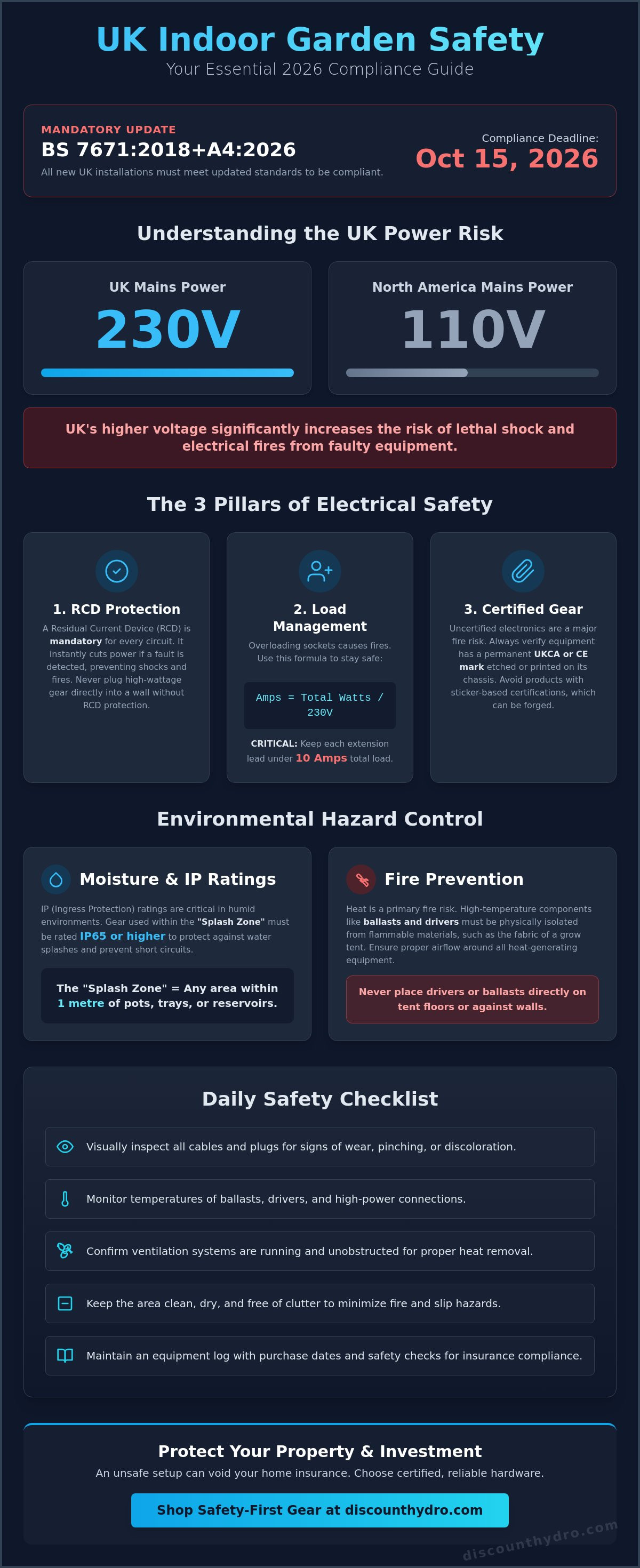
The Ultimate 2026 Grow Room Safety Checklist
A professional grow room safety checklist uk provides a structured defense against equipment failure and property damage. Routine inspections catch minor issues before they become catastrophic hazards. Consistency is the key to maintaining a compliant environment. Use the following schedule to audit your hardware and environmental controls. If any component fails these checks, replace it immediately to maintain your safety standards.
- Daily: Conduct a visual inspection of all plugs, cables, and timers. Look for browning, melting, or discolouration. These are signs of electrical resistance and heat buildup.
- Daily: Verify temperature and humidity levels against your target ranges. High heat or extreme moisture levels increase the risk of electrical arcing.
- Weekly: Test every Residual Current Device (RCD) by pressing the "test" button. The device must trip instantly. Check all fan intake filters for dust accumulation.
- Monthly: Perform a deep clean of your LED grow lights. Dust on heatsinks or diodes traps heat and reduces the lifespan of the fixture.
- Quarterly: Inspect structural supports, tent poles, and hanging equipment. Check for metal fatigue or stress marks on components holding heavy lights or carbon filters.
Failure to follow a rigorous grow room safety checklist uk often leads to avoidable accidents. Most electrical fires start at connection points that were neglected for weeks. Upgrade your setup with professional-grade, safety-tested hardware from Discount Hydro to ensure your gear meets 2026 standards.
Daily Operational Checks
Listen for unusual noises from extraction fans, circulation fans, or irrigation pumps. Grinding or buzzing sounds often indicate motor failure or a blocked impeller. Ensure all timers remain synchronised for your specific light cycles. A desynced timer can lead to equipment running when it should be cooling down. Check that no foliage is in direct contact with light fixtures. Even cool-running LEDs can cause leaf scorch or become a fire risk if plant material is pressed directly against the diodes or drivers.
Long-Term Maintenance and Upgrades
Hardware has a finite lifespan. Replace carbon filters every 12 to 18 months to ensure effective odour control and clear airflow. Clogged filters force fan motors to work harder, increasing heat and power consumption. Inspect all irrigation lines for salt buildup. Mineral deposits from nutrients can cause blockages, leading to increased pressure and potential leaks near electrical outlets. Consider upgrading to smart sensors for remote safety monitoring. Modern sensors provide real-time alerts to your phone if temperatures exceed safety thresholds or if moisture is detected on the floor. This provides an additional layer of protection for residential setups.
Reliable Gear: Choosing Safety-First Equipment at Discount Hydro
Investing in quality hardware is the ultimate safety insurance policy for your indoor garden. Substandard gear is the most frequent cause of system failure and property damage. At Discount Hydro, every product is selected based on its ability to meet rigorous UK electrical standards. Buying from a UK-based specialist ensures your equipment is designed for 230V mains power and comes with local technical support. This approach eliminates the risks associated with importing uncertified electronics that lack proper internal fusing or high-quality capacitors. Our team understands the specific requirements of the UK power grid and building regulations.
High-Quality LED Solutions
LEDs are inherently safer than older HID or HPS systems. Traditional high-pressure bulbs operate at extreme temperatures and require high-voltage ignitors that can fail catastrophically. In contrast, modern LED Grow Lights use semi-conductors that run significantly cooler. Choosing fixtures with passive cooling is a specific safety advantage. These units use heavy-duty heatsinks instead of internal fans. This removes a common failure point; if a fan stops, the light can overheat. Passively cooled LEDs stay within safe operating temperatures through design alone. They are the most reliable option for long-term, unattended operation.
Professional Extraction and Filtration
Air movement is a safety-critical component. High-quality extraction fans feature thermal cut-off protection. This safety switch automatically kills power to the motor if it detects overheating, preventing a potential fire. It's essential to use matched fan and filter sets. If a filter is too small for the fan, it creates backpressure that strains the motor and increases electrical load. Correctly sized ventilation ensures your environmental parameters stay within the limits defined in your grow room safety checklist uk. This reduces the risk of moisture buildup near your electrical sockets and ensures your extraction system doesn't become a hazard.
Browse our range of safety-tested grow room equipment to build a setup that prioritizes performance and property protection.
Secure Your Setup for 2026 Success
Maintaining a safe indoor garden requires technical discipline and the right hardware. Adhering to the latest BS 7671 electrical standards is the only way to protect your property from avoidable fires and equipment failure. Implementing a consistent grow room safety checklist uk ensures that every plug, ballast, and ventilation fan operates within its safe thermal limits. Routine audits are your best defense against the risks of 230V mains power and high-humidity environments. Don't leave your property's safety to chance when professional-grade solutions are available.
Discount Hydro provides the gear needed to build a compliant and efficient setup. Every electronic component we stock meets UKCA and CE safety standards, giving you confidence in your system's reliability. As a UK-based specialist, we offer expert advice and fast nationwide delivery on all orders. Shop Safety-First Hydroponics Gear at Discount Hydro to upgrade your environment today. You've got the knowledge to manage your garden safely; now get the equipment that matches your standards. Your successful harvest starts with a secure foundation.
Frequently Asked Questions
Do I need a professional electrician to set up a small UK grow room?
You don't strictly need an electrician for simple plug-and-play setups that use existing wall sockets. However, any new wiring or circuit modifications must comply with Part P of the Building Regulations 2010. Notifiable work requires a registered "Competent Person" to certify the installation. Following a professional grow room safety checklist uk helps you maintain these standards without making structural changes to your home.
What is the most common cause of fires in indoor grow rooms?
Electrical failure from overloaded circuits and poor cable connections is the primary cause of fires. High-wattage ballasts and lighting systems generate significant heat, which can melt insulation on cheap or overloaded extension leads. Loose wiring inside plugs creates resistance, leading to electrical arcing and ignition. Regular visual inspections are the most effective way to catch these issues before they escalate.
How many grow lights can I safely plug into a single UK wall socket?
You must calculate the total amperage to ensure you don't exceed the 13A limit of a standard UK socket. A typical 600W ballast draws approximately 2.6 amps, so you could technically run four, but this leaves no capacity for fans or pumps. It's safer to limit a single socket to 10 amps total current draw. This prevents overheating the internal house wiring during long lighting cycles.
Is it safe to leave a grow room running while I am at work?
It's safe if your environment is built with UKCA-compliant hardware and protected by an RCD. Modern setups using LED Grow Lights and thermal cut-off fans are designed for continuous operation. Using smart sensors for remote monitoring provides an extra layer of security. Never leave a new or modified setup unattended until you've verified its thermal stability for at least 48 hours.
What is an RCD and why is it essential for hydroponics?
A Residual Current Device (RCD) is a safety switch that disconnects power instantly if it detects a leakage of current to earth. This is essential for hydroponics because it prevents lethal electric shocks if water contacts live components. Every grow room safety checklist uk should prioritize RCD protection for all equipment near reservoirs, pots, or irrigation systems to ensure property and personal safety.
How do I prevent humidity from damaging the electrics in my grow tent?
Use high-capacity extraction fans to keep relative humidity below 70% and prevent moisture from condensing on electrical components. Ensure all lighting drivers and fans have an IP65 rating or higher for water resistance. Elevating your socket strips at least 30cm off the floor prevents them from sitting in the damp air where condensation is most likely to form near the ground.
Can I use a standard extension lead for my grow room setup?
Standard domestic extension leads are often unsuitable for the continuous, high-current draw of lighting systems. They can overheat and melt under a constant load. Use heavy-duty, 13A-rated leads with built-in surge protection or dedicated lighting contactors. Contactors take the heavy electrical load off your timers, preventing the internal switches from fusing together and staying permanently on.
What should I do if I smell burning in my grow room?
Isolate the power at the main consumer unit or wall socket immediately if you smell burning. Do not attempt to touch individual plugs or cables until the circuit is dead. Once the power is off, inspect all connections for melted plastic, scorched pins, or discoloured wires. Replace the damaged component entirely before restoring power to the rest of the system to avoid a fire.