

Grow Tent Ventilation Setup UK: The Complete 2026 Guide
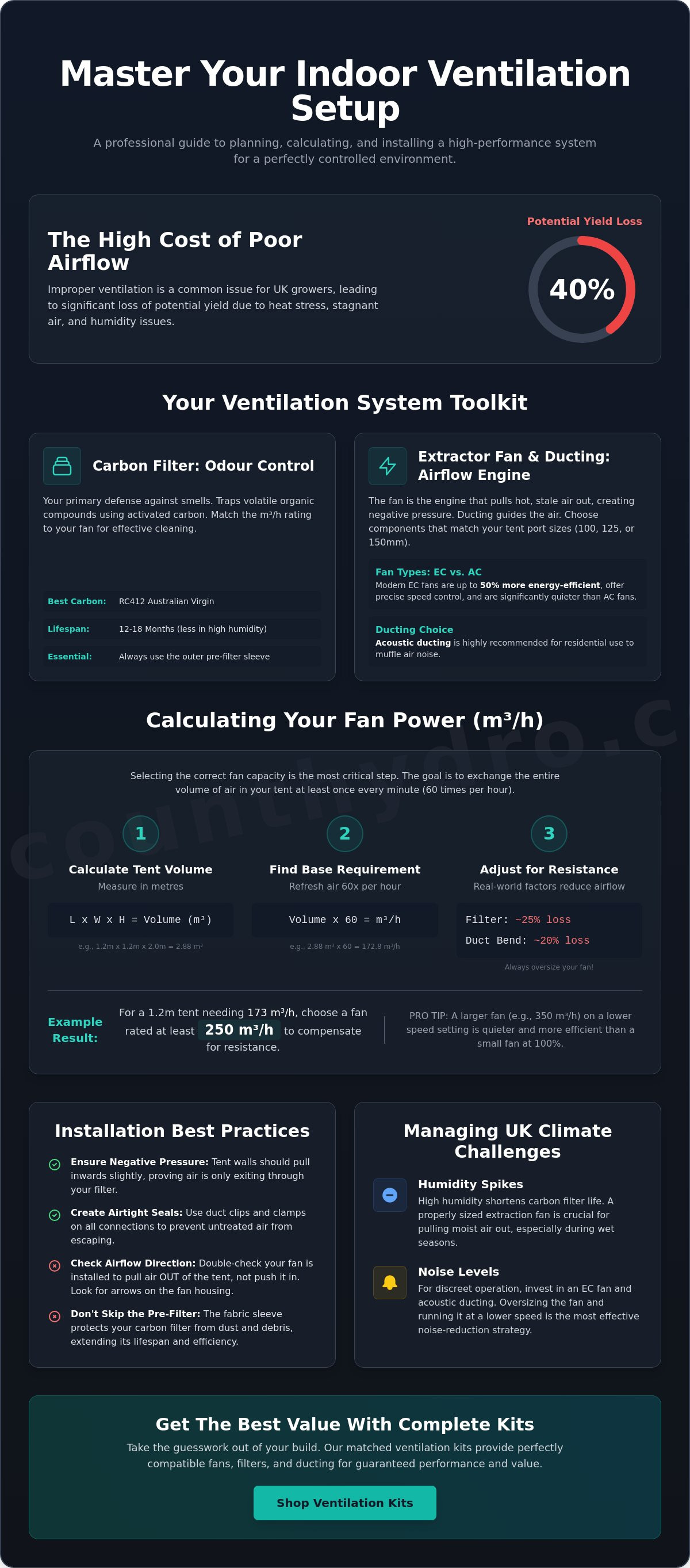
UK growers can lose up to 40% of their potential yield because of an improper grow tent ventilation setup uk. It's a common issue caused by confusing technical specs like CFM versus m3/h and the constant struggle to manage heat in small spaces. You want a system that works without the noise or the fear of odour escaping into the rest of your home. We understand that finding the right balance between extraction power and energy efficiency is the most important part of your indoor build.
This professional guide helps you master your indoor environment by planning, calculating, and installing a high-performance ventilation system. You'll learn how to choose the right EC fans and carbon filters to ensure perfectly controlled temperature and humidity. We'll walk through the exact formulas needed for UK climates and explain how to maintain negative pressure for total peace of mind. By the end, you'll have a quiet, efficient setup that protects your plants and your privacy.
Key Takeaways
- Identify the essential hardware like inline duct fans and carbon filters needed for heat and odour control.
- Learn the precise m3/h formula to calculate the correct fan size for your specific grow tent ventilation setup uk.
- Follow a clear step-by-step process to install your kit, ensuring you don't install fans backwards.
- Master UK-specific climate challenges by managing humidity spikes and noise levels for a discreet grow.
- Understand why complete ventilation kits provide better value and ensure all your components work together.
Essential Components of a Grow Tent Ventilation System
A professional grow tent ventilation setup uk is more than just a fan and a hole in the side of a tent. It's a closed-loop system designed to manage gas exchange and heat removal. Maintaining controlled conditions is impossible without high-quality components working in unison. If one part of the chain fails, your plants will suffer from heat stress, stagnant air, or mould issues.
The Carbon Filter: Odour Control Basics
The carbon filter is your primary defence against escaping smells. These units use activated carbon to trap volatile organic compounds through adsorption. High-quality filters typically use RC412 Australian virgin carbon, which is known for its high porosity and longevity. Most filters last between 12 to 18 months, though high humidity can shorten this lifespan. You must match the filter's m3/h rating to your fan's output to ensure air spends enough time inside the carbon bed to be cleaned. Never skip the pre-filter sleeve. This fabric outer layer catches dust and larger debris before they clog the carbon pores, extending the life of your equipment and maintaining airflow efficiency.
Extractor Fans and Ducting: The Airflow Engine
The inline duct fan acts as the engine of your grow tent ventilation setup uk. You have two main choices: traditional AC fans or modern EC (Electronically Commutated) fans. EC fans are up to 50% more energy-efficient and offer precise speed control without the humming noise common in AC models. This fan pulls hot, stale air out of the tent, creating the negative pressure needed to keep odours contained.
Ducting creates the path for air travel. While standard aluminium ducting is cost-effective, acoustic ducting is the preferred choice for UK residential growers because it significantly muffles the sound of rushing air. Combi ducting offers a middle ground with a light-proof outer layer and a durable inner core. Before purchasing your extraction kit, make sure you've already chosen a grow tent with port sizes that match your ducting diameter. Standard sizes are usually 100mm, 125mm, or 150mm.
- Oscillating Fans: These move air inside the tent to prevent "hot spots" and strengthen plant stems by simulating a breeze.
- Duct Clips and Clamps: These create airtight seals at connection points. Even a small leak can allow untreated air to bypass the carbon filter.
- Passive Intake: This method relies on the tent's mesh vents to let fresh air in naturally as the extractor fan pulls air out.
- Active Intake: This uses a secondary, smaller fan to push fresh air into the tent, which is helpful in larger setups or rooms with poor natural circulation.
Calculating Fan Size for UK Grow Tents (m3/h)
Selecting the correct fan capacity is the most critical step in building a functional grow tent ventilation setup uk. Most high-quality fans sold in Britain are rated in m3/h (cubic metres per hour), whereas American brands often use CFM (cubic feet per minute). Getting this conversion right is essential to avoid under-powering your extraction. To convert CFM to m3/h, multiply the CFM value by 1.7. Without enough power, you won't be able to maintain the environment required for healthy plant development.
The Core Calculation: Volume x Air Exchanges
The goal is to refresh the entire volume of air inside your tent at least once every minute. To find your base requirement, calculate the volume of your tent (Length x Width x Height) in metres. For a standard 1.2m x 1.2m x 2.0m tent, the volume is 2.88 m³. Multiply this figure by 60 to find the hourly rate. In this example, the base requirement is 172.8 m³/h. This level of exchange is vital for managing temperature and humidity during the peak growing stages. During summer, or if you're using high-intensity lighting, you may need to increase this rate to three exchanges per minute to keep temperatures stable.
If you want to skip the complex math, our matched ventilation kits take the guesswork out of these calculations by pairing fans with compatible filters.
Compensating for Static Pressure and Resistance
Raw volume calculations don't tell the whole story. You must account for the "Carbon Filter Tax" and ducting resistance. Static pressure is the resistance air meets when passing through filters and ducting. A carbon filter typically reduces fan efficiency by 25%. Additionally, every 90-degree bend in your ducting can reduce airflow by another 20%. For the 1.2m tent mentioned above, a fan rated at 250 m³/h is a much safer choice than the base 172.8 m³/h figure.
- Oversizing for Silence: Using a larger 350 m³/h fan with a digital controller is often better than running a small fan at 100% power.
- Filter Resistance: High-density carbon beds require more "pull" to move air through the granules.
- Ducting Length: Keep runs as short and straight as possible to maintain maximum m3/h.
Planning for these losses ensures your grow tent ventilation setup uk performs as expected once installed. It's better to have extra power you can dial back than a system that can't keep up when the room gets too hot.
Step-by-Step: How to Install Your Ventilation Kit
Installing your grow tent ventilation setup uk requires a logical order to ensure airtight performance. Start with the carbon filter. Attach the flange securely using the provided screws or a tight-fitting gasket. Slide the cloth pre-filter over the cylinder. This sleeve prevents dust from clogging the carbon pores. Next, check your fan's airflow direction. Most fans have an arrow on the housing. Ensure it points away from the filter and toward the exhaust port. Installing a fan backwards is a common mistake that stalls air exchange and leads to immediate heat spikes.
Mounting the Filter and Fan: Internal vs External
Internal mounting is the professional standard for odour control. It keeps the fan noise muffled inside the tent fabric and ensures all air is scrubbed before it reaches the exhaust port. If you're using a small 0.6m tent, you might need to mount the fan externally to save vertical space. Always verify your tent's roof bars can handle the load. High-quality filters can weigh over 10kg. Use rope ratchets instead of traditional jack chains. Ratchets allow for easy height adjustments and significantly reduce the transfer of fan vibrations to the tent frame. This setup aligns with the scientific principles of greenhouse ventilation regarding efficient air movement and pressure management.
Sealing the System: Ducting and Clips
Connect your components using durable ducting. Keep the runs as short and straight as possible. Every extra metre or 90-degree bend increases static pressure and reduces your fan's effective m3/h. Use stainless steel jubilee clips for all connections. While duct tape is common, it eventually peels due to heat and humidity. Professional clips ensure a 100% airtight seal that won't fail mid-grow. Check your ventilation ports for light leaks. Drawstring ports must be tightened twice around the ducting to prevent external light from disrupting your plants' dark cycle.
Once the grow tent ventilation setup uk is powered on, perform the "tent wall suck" test. Close all zips and intake vents. The tent walls should pull inward slightly. This visual cue confirms negative pressure. It ensures that all air leaving the tent passes through the carbon filter first. If the walls don't move, check for leaks in your ducting or unzipped doors. Maintaining this pressure is the only way to guarantee 100% odour neutralisation in a residential setting.
Managing Temperature, Humidity, and Noise in the UK
The British climate presents specific hurdles for any grow tent ventilation setup uk. External conditions fluctuate wildly, often within the same day. When your lights turn off, the temperature inside the tent drops rapidly. This causes a massive spike in relative humidity. Cold air holds less moisture than warm air, leading to condensation on leaves and potential mould issues. You must ensure your extraction system is capable of reacting to these shifts instantly.
Modern LED grow lights change the environmental dynamic significantly. They emit far less radiant heat than traditional HPS lamps. While this is great for energy bills, it means there's less heat to help evaporate excess moisture. You'll likely need to run your extraction at a different rate to compensate for this lack of heat. Using a digital fan controller with a thermostatic probe allows the system to automate these adjustments 24/7, keeping your environment stable without manual effort.
Controlling Humidity During Damp UK Winters
Never turn off your extraction fans during the dark cycle, even if the room feels cold. Stagnant air is a magnet for botrytis and powdery mildew. UK humidity often exceeds 70% outdoors, requiring active management inside the tent. If your extraction alone can't keep levels below 60% during the flowering stage, a dedicated dehumidifier is necessary. You should also consider using small tube heaters. These help maintain the Vapour Pressure Deficit (VPD), ensuring plants continue to transpire and take up nutrients even in damp, cool conditions.
Silent Running: Reducing Fan Vibration and Air Noise
Discretion is a priority for most UK residential growers. Most noise in a ventilation system comes from air rushing through ducting or fan motor vibrations. Acoustic "silenced" ducting is the best solution for stealth. It features a thick layer of insulation that absorbs high-frequency air noise. You can also use rubber mounting straps or fan silencers to prevent vibrations from travelling through the tent frame. EC fans are the gold standard for silent, low-power operation. They don't produce the annoying hum that AC fans create when dimmed, making them perfect for bedroom or loft setups.
To keep your grow discreet and efficient, browse our range of silent EC fans and digital controllers today.
Get the Best Value Ventilation Gear at Discount Hydro
A successful grow tent ventilation setup uk depends on the quality of your components. You can't achieve professional results with sub-par extraction hardware. Discount Hydro provides direct access to high-performance inline fans and carbon filters that meet the demands of the latest UK environmental standards. We focus on providing the best value for money by stocking reliable brands that deliver consistent airflow and total odour neutralisation. Whether you're building a new system or upgrading an old one, we have the inventory ready for immediate dispatch from our warehouse.
The right equipment makes the difference between a struggling environment and a thriving one. We prioritize technical specs over fancy packaging. Our fans are chosen for their m3/h efficiency and their ability to handle the resistance of high-density carbon filters. We stock everything from basic AC models for those on a tight budget to the latest EC fans for growers who need silent operation and digital control. You don't have to guess which parts fit together when you buy from a specialist supplier.
Affordable Fan and Filter Bundles
Buying components separately often leads to compatibility issues and higher costs. Our pre-matched ventilation kits are designed specifically for standard tent sizes like 1.2m x 1.2m or 2.4m x 1.2m. These bundles ensure your fan's m3/h rating perfectly matches the carbon filter's capacity. This prevents the efficiency losses caused by mismatched flanges or insufficient pull. If you're based in the North East, you can take advantage of our click-and-collect service at our County Durham store. This is the fastest way to get your grow tent ventilation setup uk running without waiting for a courier to arrive.
Why UK Growers Choose Discount Hydro
We understand the practical needs of British indoor gardeners. Our warehouse is stocked with everything from silent EC fans to a massive selection of hydroponic nutrients to support every stage of plant growth. We don't just sell boxes; we provide the technical hardware required for success. Our nationwide delivery is fast and reliable, ensuring your equipment arrives in discreet packaging. We maintain high stock levels so you aren't left waiting for backorders when your environment needs urgent attention.
If you're unsure about fan sizing or need help selecting the right ducting for a specific space, Contact our team for direct advice. We can help you design a bespoke system that fits your budget and your tent dimensions. Our focus is on providing straightforward, pragmatic solutions that keep your temperatures stable and your environment secure. Visit our online store or come see us in person to see why we are the leading choice for value-driven growers across the United Kingdom.
Optimize Your Grow Tent Environment Today
Achieving a professional grow tent ventilation setup uk requires more than just buying the most powerful fan. Success comes from combining precise m3/h calculations with a strategic installation that accounts for both noise and the damp British climate. By maintaining negative pressure and using digital controllers to automate your environment, you protect your plants from mould and ensure total odour control. These steps are the foundation of a high-yielding indoor garden that remains discreet and efficient year-round.
Ready to upgrade your system? Shop Professional Grow Tent Ventilation Kits at Discount Hydro to find everything you need in one place. We provide competitive discount pricing on top-tier brands and offer expert technical support to help you choose the right gear for your specific space. With our UK-wide fast delivery, you can have your new extraction system running in no time. Don't leave your harvest to chance when you can secure your environment with the right tools.
Take control of your grow room today and enjoy the peace of mind that comes with a perfectly balanced setup. Your plants will perform better when they have the fresh air they need to thrive.
Frequently Asked Questions
Should the fan be inside or outside the grow tent?
You should place the fan inside the tent whenever space allows. This position keeps the motor noise muffled by the tent fabric and ensures a more secure, direct connection to the carbon filter. If you're using a very small tent where vertical space is limited, mounting the fan externally is a valid alternative. Always ensure all ducting connections are airtight to maintain negative pressure regardless of where you mount the hardware.
How often do I need to replace my carbon filter?
Most professional carbon filters last between 12 to 18 months of continuous use. You'll know it is time for a replacement when faint odours begin to escape from the exhaust ducting. High humidity levels above 70% can significantly shorten this lifespan by causing the carbon granules to clump together. Regularly washing the fabric pre-filter sleeve every few months helps maintain airflow and protects the internal carbon bed from dust buildup.
Can I use a bathroom extractor fan for my grow tent?
You shouldn't use a standard bathroom fan for a grow tent ventilation setup uk. These fans are designed for open-air movement and lack the static pressure required to pull air through the dense carbon bed of a filter. Using a bathroom fan will result in almost zero airflow once the filter is attached. This leads to rapid heat spikes and total failure of your odour control system.
What is the ideal humidity for a grow tent in the UK?
Ideal humidity levels depend on the growth stage of your plants. Aim for 60% to 70% during the vegetative stage and drop this to 40% to 50% during the flowering stage to prevent rot. UK growers often face high ambient humidity outdoors, which makes a powerful extraction system essential. Using a digital controller helps you manage these levels by automatically increasing fan speed when moisture spikes during the dark cycle.
How do I stop my grow tent fan from being so loud?
You can reduce noise by switching to an EC fan and installing acoustic insulated ducting. EC fans are the gold standard for silent operation because they don't produce the humming sound common in older AC motors when dimmed. Using rubber mounting straps instead of chains will stop vibrations from travelling through the tent frame. Keeping your ducting runs short and straight also prevents the loud "whooshing" sound caused by air turbulence.
Do I need an intake fan as well as an exhaust fan?
You don't necessarily need an active intake fan for smaller grow tent setups. Passive intake vents at the bottom of the tent usually allow enough fresh air to enter via the negative pressure created by the exhaust fan. In larger tents or very warm rooms, a secondary intake fan helps bring in fresh CO2 and keeps temperatures stable. This prevents the main extractor from having to work at maximum power, which saves energy and reduces noise.
How much does it cost to run a grow tent ventilation system per month?
Monthly running costs vary based on your fan's wattage and current UK energy tariffs. Modern EC fans are up to 50% more energy-efficient than traditional AC models, making them very cheap to run continuously. A standard 4-inch or 6-inch EC fan often uses less power than a small household appliance. You can calculate the exact cost by checking the wattage on the fan's label against your latest electricity bill rates.