

How to Control Humidity in a Grow Tent: The Complete 2026 UK Grower’s Guide
Buying the biggest dehumidifier available is often the least efficient way to protect your plants. With UK electricity standing charges up by 94% as of April 2026, every watt counts when you're learning how to control humidity in grow tent environments. Most growers struggle with the balance between extraction and intake, leading to wasted energy and the constant fear of powdery mildew or bud rot. You don't need a massive budget to maintain a stable environment; you need a strategy built on physics and airflow.
We understand that technical terms like Vapor Pressure Deficit (VPD) can feel like a distraction from the actual growing process. However, mastering these metrics is the only way to ensure your plants thrive without your utility bills skyrocketing. This guide provides the exact 2026 UK standards for environmental control, including target VPD ranges like 0.8 to 1.2 kPa for the vegetative stage and 1.2 to 1.5 kPa for flowering. You'll learn how to optimize your existing ventilation, use cost-effective tools, and apply professional airflow techniques to achieve heavier yields and total crop security.
Key Takeaways
- Learn why Vapor Pressure Deficit (VPD) is the master metric for plant health and how it dictates moisture absorption.
- Discover how to control humidity in grow tent setups for every stage, from delicate seedlings to high-yield flowering.
- Reduce moisture levels efficiently through top-down extraction and strategic defoliation to protect against rot and mildew.
- Manage dry environments using lung room pre-conditioning to ensure stable growth without expensive equipment.
- Optimise your energy spend with smart controllers and LED lighting that sync environmental variables for maximum efficiency.
The Science of Grow Room Humidity: Why VPD is Your Master Metric
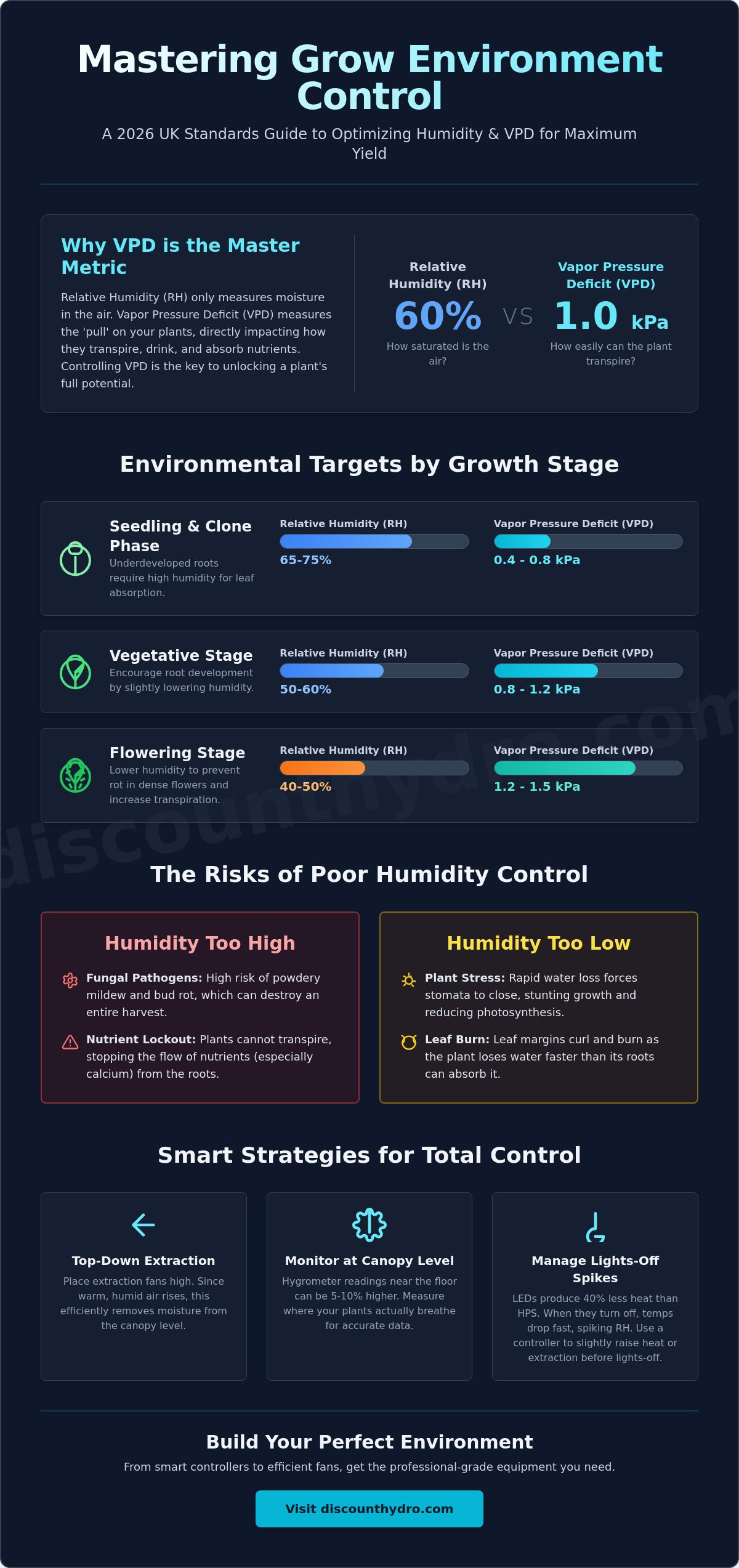
Managing an indoor environment requires more than just a hygrometer. Most growers focus on Relative Humidity (RH), which measures the percentage of water vapour in the air at a specific temperature. However, plants respond more directly to Vapor Pressure Deficit (VPD). VPD is the difference between the moisture in the air and how much moisture the air can hold when saturated. Understanding this relationship is the first step in learning how to control humidity in grow tent setups. While RH tells you how much water is in the air, VPD tells you how much water the plant is actually losing through its stomata.
Plants "breathe" through microscopic pores called stomata. When humidity is too high, the air is saturated, and the plant cannot evaporate water. This stops the "pull" of nutrients from the roots, leading to nutrient lockout. If the air is too dry, the plant loses water too fast, causing stress and leaf burn. By targeting specific VPD levels, you ensure the plant transpires at an ideal rate, moving water and nutrients efficiently from the growing media to the canopy.
Understanding the RH and Temperature Connection
Warm air has a higher capacity for moisture than cold air. If your grow room temperature drops while the moisture level remains the same, the RH will spike. This is why "lights off" periods are dangerous. When your LED grow lights turn off, the temperature in the tent falls rapidly. Since LEDs produce 40% less heat than traditional HPS bulbs, the cooling happens faster, often pushing the air past its dew point and causing condensation on leaves.
The Consequences of Poor Humidity Control
Ignoring these metrics leads to crop failure. High humidity creates the perfect environment for fungal pathogens like powdery mildew and botrytis, also known as bud rot. These can destroy a harvest in days. Additionally, poor transpiration caused by high humidity often results in calcium deficiencies, as calcium only moves through the plant via water evaporation. Conversely, low humidity forces the plant to close its stomata to save water, which stunts growth and causes leaf margins to curl and burn. Learning how to control humidity in grow tent environments prevents these physiological stresses and keeps your yield on track.
Target Humidity Levels: A Stage-by-Stage Breakdown for 2026
Plants have evolving environmental needs. A seedling with a tiny root system relies on leaf absorption for survival. A flowering plant with dense clusters faces a high risk of internal rot. Getting these levels right is the core of how to control humidity in grow tent environments. You must adjust your targets as the plant matures to ensure maximum transpiration without crossing into the "danger zone" of fungal growth.
Place your hygrometer at the canopy level. Floor readings are often 5 to 10 percent higher than where the plant actually breathes. Consistent monitoring allows you to adjust your extraction fans before moisture spikes cause damage. High quality hydroponic nutrients also play a role here. They ensure plants have the mineral profile required to handle environmental shifts. Silicon supplements, for example, strengthen cell walls against fungal penetration during high-humidity periods.
Seedlings and Vegetative Growth Requirements
Clones and seedlings require 65-75% RH. Their root systems are underdeveloped, so they need moist air to prevent dehydration. Aim for a VPD target of 0.4 to 0.8 kPa. Using propagation domes is the most cost-effective way to create these micro-climates without humidifying the entire room. As plants transition to the vegetative stage, drop the humidity to 50-60%. This encourages the plant to seek water through its roots, accelerating growth. During this stage, your target VPD should sit between 0.8 and 1.2 kPa. Hardening off plants is essential; don't drop the humidity overnight. Gradually lower the RH by 5% every few days to avoid wilting or stunted growth.
The Critical Flowering and Harvest Phases
Once you switch to the flowering phase, moisture becomes your biggest enemy. You must drop humidity to 40-50% to prevent dense flowers from rotting. This is where practical strategies for reducing humidity become vital for crop security. In the final two weeks of flower, many UK growers drop the RH to 35% to stress the plant into producing more essential oils and to eliminate any chance of botrytis. Maintain a VPD of 1.2 to 1.5 kPa for optimal results. After harvest, move your plants to a dedicated drying area kept at 60% RH. This slow-dry process preserves terpenes and prevents the crop from becoming brittle. If you're struggling to hit these dry targets, investing in a reliable dehumidifier is often cheaper than losing a single harvest to rot.
Effective Strategies to Lower Humidity in Your Grow Tent
Lowering moisture is often more difficult than raising it, especially in the damp UK climate. You need a combined approach of mechanical extraction and strategic plant management. Heat and water vapour naturally rise, so your extraction fan must be mounted at the highest point of the tent. This ensures you pull the most humid air out of the environment first. Learning how to control humidity in grow tent setups starts with this basic principle of physics. If your extraction is positioned low, you are simply recirculating stagnant, moist air around your pots.
Defoliation is another powerful tool for moisture control. Every leaf acts as a biological humidifier, pumping water into the air through transpiration. Removing large, unnecessary fan leaves from the bottom third of your plants reduces the total volume of water being released. This also opens up the canopy for better airflow. Additionally, you should time your watering for the first hour of the light cycle. This allows surface moisture in the growing media to evaporate and be extracted while the room is at its warmest. Watering just before the lights turn off is a common mistake that leads to massive humidity spikes during the dark cycle.
Ventilation and Extraction Upgrades
Sizing your fan correctly is non-negotiable. Your extraction system should be capable of replacing the entire volume of air in your tent at least once every minute. If your fan is underpowered, moisture will accumulate regardless of your other efforts. Active intake fans are superior to passive vents because they allow you to maintain precise negative pressure. This prevents odours from escaping and ensures a constant stream of fresh, drier air. Use multiple oscillating fans within the tent to eliminate "dead spots." These are pockets of still air where moisture collects, providing the perfect breeding ground for mould.
Dehumidifiers: Active Moisture Removal
When ventilation isn't enough, you need a dehumidifier. For UK growers, the choice between compressor and desiccant models is vital. Compressor units are highly efficient in warm rooms, but their performance drops significantly in temperatures below 15°C. Desiccant dehumidifiers are often better for UK garages or lofts because they work consistently in cold conditions and even add a small amount of heat to the space. Place the unit in your "lung room"—the room where your tent sits—rather than inside the tent itself. This pre-conditions the intake air, making it far easier to maintain your target VPD. Ensure your unit has an auto-shutoff feature or a continuous drainage hose to prevent the tank from overflowing and causing a flood in your grow space.
Raising Humidity: Solutions for Dry Grow Environments
Dry air is just as dangerous as rot-inducing moisture. If your grow room is too dry, plants lose water faster than their roots can replace it. You'll see leaf edges curling upwards, crispy brown tips, and a total halt in vertical growth. In the UK, this is most common during winter. Central heating systems strip moisture from the air, often dropping indoor RH below 30%. Knowing how to control humidity in grow tent environments means being prepared for these seasonal shifts before they stunt your crop.
Pre-conditioning your "lung room" is the most efficient fix. If the air entering your tent is already at 50% RH, your plants won't have to work as hard to maintain their transpiration rates. This is far more effective than putting a tiny humidifier inside a tent where the extraction fan simply sucks the mist out every sixty seconds. Light intensity also plays a massive role. High-intensity light increases leaf surface temperature, which forces the plant to transpire faster to stay cool. If your humidity is low, your plants are essentially working overtime just to survive.
Humidifiers and Passive Misting
Ultrasonic humidifiers are popular because they're quiet and affordable. However, they can release mineral "white dust" if you use hard UK tap water. This dust can quickly clog your carbon filters and reduce the lifespan of your extraction fan. Evaporative models are safer for your gear but require more frequent wick changes. For a zero-cost fix, place open water trays or hang wet towels near your intake vents. This passive evaporation can provide the small boost needed during the early vegetative stage. For total precision, use a plug-in hygrostat to automate your humidifier, ensuring it only runs when levels dip below your set point.
Adjusting Intake and Lighting
Your equipment settings dictate your moisture levels. During the seedling stage, reduce your extraction fan speed. This keeps the humidity released by the plants inside the tent for longer. You can also dim your LED grow lights to reduce leaf surface temperature. Lower temperatures mean less evaporation and less stress on the plant. Grouping your pots closer together also helps; they'll share a "transpiration canopy" that naturally raises the local RH. If you need to upgrade your environment, you can find professional-grade grow tents and climate tools designed for maximum moisture retention at Discount Hydro.
Building a Humidity-Controlled Setup with Discount Hydro
Maintaining a stable environment is a financial decision. A single failed harvest due to botrytis or powdery mildew costs far more than a professional extraction kit. Learning how to control humidity in grow tent environments is significantly easier when your hardware does the heavy lifting. Modern smart controllers now sync your fans and lights to maintain a specific VPD automatically. This removes the guesswork and reduces energy waste by only running equipment when the environment drifts outside your set parameters. High-performance gear ensures your plants reach their full genetic potential without the constant risk of environmental stress.
We source extraction systems specifically for the UK market, where external humidity and temperature fluctuate rapidly. Our selection focuses on high-pressure fans that can pull air through thick carbon beds without losing significant CFM. This is vital for maintaining the negative pressure required to keep moisture and odours contained. Investing in reliable gear today prevents the expensive reality of crop loss tomorrow.
Essential Climate Control Hardware
Your extraction fan and carbon filter are the lungs of your operation. Choosing the right combo is essential for consistent airflow. We stock a range of sizes to suit every tent volume, from small hobby spaces to large scale setups. Digital hygrometers and thermometers are equally important. You need accurate, real-time data to make informed adjustments to your environment. Our range of tools focuses on durability and competitive pricing, ensuring you get professional-grade monitoring without the premium price tag.
Value-Driven Solutions for Every Budget
Building a professional-grade setup doesn't have to break the bank. We offer discounted bundles that include everything you need to manage your environment from day one. Whether you are looking for energy-efficient LEDs or high-flow ventilation, our inventory is curated for maximum value. You can get expert advice at our County Durham shop or take advantage of our fast, discreet UK delivery. Check out our full range of extraction fans and filters to master your environment and protect your yield.
Final Environment Checklist:
- Extraction fan mounted at the highest point of the tent.
- Digital hygrometer placed at the plant canopy level.
- Oscillating fans positioned to eliminate all dead spots.
- Intake vents located at the bottom to ensure vertical airflow.
- Smart controller set to target stage-specific VPD ranges.
- Negative pressure confirmed by the slight inward bowing of the tent walls.
Master Your Environment for Heavier Yields
Mastering how to control humidity in grow tent environments is the difference between a mediocre harvest and a professional-grade result. You now have the strategies to balance extraction, manage seasonal dry spells, and target precise VPD levels for every growth stage. Reliable climate control prevents the devastating losses caused by bud rot and nutrient lockout while ensuring your plants transpire at peak efficiency. High-performance hardware is an investment that pays for itself through increased crop quality and reduced energy consumption.
Discount Hydro has been a specialist UK retailer since 2010. We provide the tools you need to maintain total environmental authority. Whether you need a single hygrometer or a full smart extraction kit, we offer fast nationwide delivery and convenient click and collect from our County Durham shop. Don't leave your harvest to chance when professional-grade stability is within reach.
Browse our range of high-performance extraction fans and climate tools at Discount Hydro
Your plants are ready to thrive. Start optimizing your setup today for a healthier, more productive grow room.
Frequently Asked Questions
Where should I place my hygrometer in the grow tent for the most accurate reading?
Place your hygrometer at the plant canopy level to get the most relevant data. Avoid putting it directly under your grow lights or next to a humidifier outlet, as these positions create false readings. Secure the sensor to a tent pole at the same height as your tallest leaves. This ensures you are measuring the exact environment where your plants are transpiring.
Can I use a bowl of water to raise the humidity in my tent?
A bowl of water is a low-cost but inefficient way to raise humidity levels. For better results, place a wet towel in front of an intake fan or use a large, shallow tray to increase the surface area for evaporation. These methods provide a small boost during the seedling stage. If levels remain below 40%, you'll likely need an ultrasonic humidifier to prevent stunted growth.
Why does the humidity in my tent spike when the lights go out?
Humidity spikes when lights go out because the air temperature drops rapidly. Cold air cannot hold as much moisture as warm air, so the relative humidity percentage rises even if the total water volume is unchanged. Since LEDs produce 40% less heat than HPS bulbs, this cooling happens faster. Keep your extraction fans running 24/7 to pull this excess moisture out of the tent.
Is 70% humidity too high for plants in the flowering stage?
Yes, 70% humidity is dangerously high for the flowering stage and will likely lead to crop loss. High moisture levels in dense flower clusters create the perfect environment for botrytis and powdery mildew. You should aim for 40% to 50% RH during this phase to protect your harvest. Learning how to control humidity in grow tent environments during late flower is essential for preventing rot.
Do LED grow lights lower humidity more than HPS lights?
LED grow lights don't lower humidity as effectively as HPS lights because they emit significantly less radiant heat. HPS bulbs raise the air temperature, which increases the air's moisture-carrying capacity and speeds up evaporation. Because LEDs keep the room cooler, you'll find that relative humidity stays higher. This requires a more aggressive extraction strategy or the use of a dedicated dehumidifier.
How often should I run my extraction fan to maintain proper humidity?
You should run your extraction fan 24 hours a day to maintain proper humidity and air exchange. Turning fans off during the dark cycle leads to stagnant air and rapid moisture buildup, which invites fungal pathogens. Your fan should be capable of replacing the total air volume of the tent every minute. Continuous airflow is the most reliable method for how to control humidity in grow tent setups.
Will a carbon filter help reduce humidity in my grow room?
A carbon filter does not reduce humidity; its only job is odour control. Very high humidity, specifically above 80%, can actually clog the pores of the activated carbon and make the filter less effective. While the filter is part of the extraction chain that removes moist air, it has no dehumidifying properties. Always ensure your RH stays below 70% to protect the lifespan of your carbon filter.
What is the ideal VPD range for indoor plants?
The ideal VPD range depends entirely on the current growth stage of your plants. Target 0.4 to 0.8 kPa for seedlings and clones to prevent moisture stress and dehydration. During the vegetative stage, aim for 0.8 to 1.2 kPa to encourage rapid leafy growth. Flowering plants require a higher range of 1.2 to 1.5 kPa to maximize nutrient uptake while preventing internal rot issues.