

How to Get Rid of Aphids: The Complete Indoor Grower’s Guide
Aphid control is a three-front war: physical knockdown, biological disruption, and environmental exclusion. You've likely spotted the signs: stunted growth, curled leaves, and sticky honeydew residue. Infestations put your yield at risk when pests spread rapidly through a controlled indoor environment. You need to know exactly how to get rid of aphids without using toxic chemicals, as 80% of pesticide exposure occurs indoors. Total eradication is possible with a pragmatic, results-driven approach.
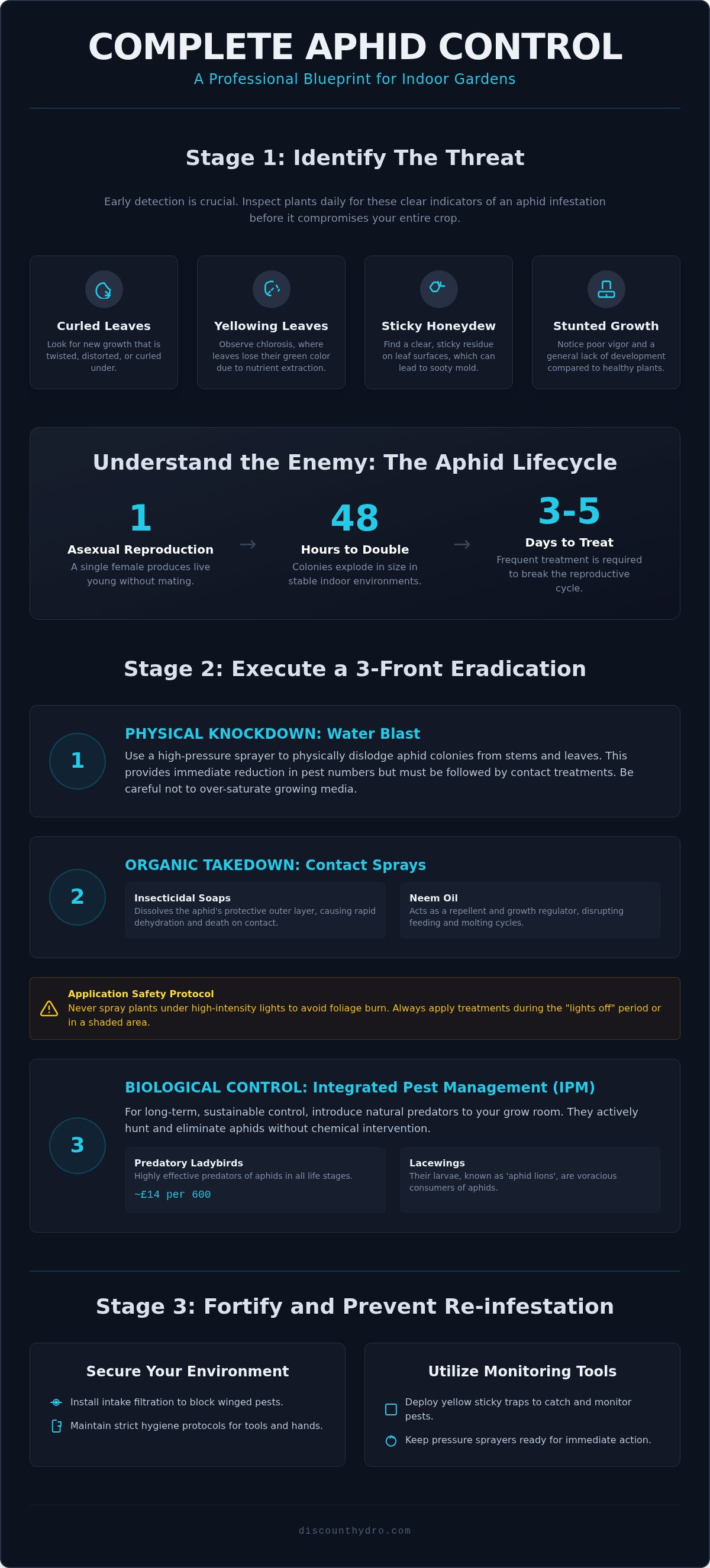
This guide provides the professional blueprint to eliminate these pests and secure your grow room. You'll learn the exact methods to identify, eradicate, and prevent infestations using professional-grade tools like sticky traps and targeted treatments. We'll examine 2026 data on biological controls, such as ladybugs, which currently cost approximately £14 for a colony of 600. We'll also cover essential environmental adjustments and nutrient protocols to stop them coming back. From immediate knockdown tactics to long-term prevention plans, this is the complete strategy for healthy, pest-free plants.
Key Takeaways
- Identify Aphididae early by spotting leaf curling and sticky honeydew before infestations compromise plant health.
- Master the exact techniques for how to get rid of aphids using a combination of high-pressure water blasts and organic insecticidal soaps.
- Deploy Integrated Pest Management (IPM) strategies, including the introduction of predatory Ladybirds and Lacewings, for long-term control.
- Secure your grow room with intake filtration and strict hygiene protocols to block winged pests from entering your system.
- Utilise professional-grade yellow sticky traps and pressure sprayers as essential monitoring tools to prevent future outbreaks.
Identifying Aphids and Understanding the Damage to Your Grow
Aphids (Aphididae) are sap-sucking insects that multiply with devastating speed. These pests pierce plant tissue to extract essential nutrients, directly weakening the host. Understanding Aphid biology and impact is the first step in learning how to get rid of aphids. While often green, they also appear in black, white, or red varieties. They aren't just "green bugs"; they're a technical threat to your entire indoor garden.
Spotting them early prevents a total crop loss. You should inspect your plants daily for specific indicators of an infestation. Look for these signs:
- Curled, twisted, or distorted new growth.
- Yellowing leaves, also known as chlorosis.
- Stunted development and poor vigour.
- Sticky residue on leaf surfaces, known as honeydew.
This honeydew isn't just a mess. It's a substrate for sooty mould. This black fungus blocks light, which reduces photosynthesis and further stunts growth. Aphids also act as high-risk vectors for over 100 plant viruses. A single bite can transmit diseases that no nutrient supplement can fix. Once a virus takes hold, the plant often requires immediate culling to protect the rest of the grow room.
The Aphid Life Cycle: Why Speed is Essential
Indoor growers face a unique challenge because aphids reproduce asexually. A single female produces live young without mating, and these nymphs mature in just a few days. In the warm, stable environment of a grow tent, a colony can double in size every 48 hours. Winged "colonisers" develop when a plant becomes overcrowded, allowing the pests to fly to healthy crops nearby. You must treat your plants every 3 to 5 days to break this cycle. This frequency ensures you kill new nymphs before they reach reproductive age.
Distinguishing Aphids from Other Common Pests
Misidentification leads to wasted money on the wrong treatments. Aphids are often confused with fungus gnats or spider mites, but they have distinct physical markers. Gnats are flying adults or soil-dwelling larvae, whereas aphids remain stationary on the foliage. Mites leave fine webbing and tiny white spots on leaf tops, while aphids prefer the undersides and stems. Cornicles are a pair of small upright tubes found on the posterior end of an aphid's abdomen, resembling tiny tailpipes. Identifying these "tailpipes" confirms you're dealing with aphids rather than other pests.
Immediate Action: Physical Removal and Organic Knockdown Methods
Physical removal is the fastest way to reduce pest pressure. The "Water Blast" technique involves using a concentrated stream of water to dislodge colonies from stems and sturdy foliage. For indoor growers, this requires care to avoid over-saturating the growing media or spiking humidity levels. It's a manual knockdown method that provides immediate relief but doesn't eliminate the entire population. Understanding these knockdown methods is vital for anyone learning how to get rid of aphids effectively.
To kill the remaining pests, you must use insecticidal soaps. These products work on contact by dissolving the aphid's waxy protective outer layer, causing the insect to dehydrate. According to UC IPM aphid management, these less toxic options are highly effective when applied with precision. Neem oil is another essential tool for your kit. It acts as both a repellent and a growth regulator, interfering with the insect's ability to feed and moult.
Safety is paramount when applying any liquid treatment. Never spray your plants under high-intensity LED grow lights. The water droplets act as magnifying lenses, which can cause severe light burn on the foliage. Always apply treatments during the "lights off" period or move plants to a shaded area until they are completely dry.
DIY Organic Sprays vs. Commercial Solutions
A basic DIY solution can be made using pure liquid soap and water. You must avoid soaps containing degreasers, perfumes, or harsh detergents, as these will damage plant cuticles. While cost-effective, DIY mixes lack the stability and surfactants found in commercial horticultural oils. Pre-mixed organic solutions offer consistent concentrations, ensuring you don't accidentally burn your crop. If an infestation is widespread, you should escalate to professional-grade contact killers to stop the spread before your harvest is ruined.
Application Techniques for Total Coverage
Aphids congregate on the undersides of leaves and along soft stems. Casual spraying won't work. You must be thorough. Ensure you drench the undersides of every leaf and the junctions where stems meet. Treating the top layer of your growing media is also recommended to catch any pests that fall during the process. Using a high-quality pressure sprayer allows for a consistent fine mist that penetrates dense canopies. This is a critical step in mastering how to get rid of aphids permanently. Without total coverage, a few survivors will restart the colony within days.
Advanced Control: Biological Solutions and Integrated Pest Management (IPM)
Integrated Pest Management (IPM) is the professional standard for long-term control. It shifts the focus from reactive spraying to a proactive, multi-layered framework. According to Clemson's IPM for aphids, biological controls are a cornerstone of this approach. Instead of relying solely on knockdown agents, you introduce natural predators to maintain a biological balance. Ladybirds and Green Lacewings are the most effective generalist choices. Lacewing larvae, often called "aphid lions," are particularly aggressive and can consume hundreds of pests during their development. For specific species like the melon aphid, Aphidius colemani parasitic wasps provide surgical precision by laying eggs inside the aphids, effectively mummifying them. This method is a sophisticated answer to how to get rid of aphids in a sensitive indoor environment.
Deploying Biological Controls Indoors
Success with biologicals depends entirely on your grow room environment. Most beneficial insects thrive in temperatures between 21°C and 27°C with relative humidity above 50%. If your room is too hot or dry, your predators will die or become dormant before they can hunt. You must also manage your ventilation. Turn off high-powered extraction fans during the initial release so your insects aren't immediately sucked into the carbon filter. Crucially, you can't use chemical sprays and biologicals at the same time. Even organic residues like neem oil or certain insecticidal soaps can repel or kill your beneficial insects. Wait at least seven to ten days after your last organic knockdown spray before introducing predators to ensure their survival.
Monitoring with Sticky Traps
Yellow sticky traps are essential for 24/7 monitoring and adult population control. They don't just catch pests; they provide the data needed for an effective IPM strategy. Place traps at canopy height and near intake vents where winged colonisers are most likely to enter. Check these traps daily. A sudden increase in trapped adults tells you exactly when to release more predators or escalate your physical removal efforts. You can apply similar monitoring tactics found in our Spider Mites guide to stay ahead of all common indoor threats. By recording trap counts, you move from guessing to professional management, ensuring you only spend money on treatments when the infestation level requires it.
Preventing Re-infestation: Grow Room Hygiene and Environmental Control
Excluding pests is more cost-effective than constant treatment. The "Clean Room" protocol is your first line of defence. Aphids often hitchhike on outdoor clothing, footwear, or pets. Always change into clean, grow-room-only clothes before entering your space. Intake filtration is equally vital for indoor setups. Winged aphids are small, but they can't pass through fine-mesh bug screens or carbon filters. If you leave your intake vents open and unprotected, you're inviting a re-infestation from the outside environment.
Never introduce new cuttings or plants directly into your main grow area. A mandatory 14-day quarantine period in a separate space allows you to monitor for dormant eggs. During this time, apply the knockdown methods discussed previously to ensure the plant is clean. Environmental factors also dictate how fast a colony grows. High temperatures above 27°C combined with low airflow create a breeding ground for pests. Maintain consistent extraction and use oscillating fans to keep air moving. Stagnant air allows aphids to settle and feed undisturbed. This level of environmental control is a core part of knowing how to get rid of aphids permanently.
Strengthening Plants from the Inside Out
Your feeding schedule directly impacts pest resistance. High levels of nitrogen produce soft, lush plant tissue that is easy for aphids to pierce. Balancing your Hydroponic Nutrients is essential for long-term health. Use silica supplements to thicken cell walls. This creates a physical barrier that makes it harder for sap-sucking insects to feed. Healthy plants with strong natural defences are less attractive to pests and recover faster from minor attacks. It's a pragmatic, proactive approach to crop protection.
Sterilising Your Equipment Between Cycles
A successful harvest doesn't mean the war is over. Deep clean your grow tent between every cycle using a 10% bleach solution or professional-grade hydrogen peroxide. Scrub every surface, including the frame and light fixtures. Sterilise all pots, trays, and hand tools to kill dormant eggs or larvae. Remove all dead plant matter immediately. Decaying leaves provide a refuge for pests and pathogens. Cleanliness is non-negotiable for serious growers. Investing in a dedicated grow tent ensures a sealed environment that is easier to keep sterile and pest-free.
Essential Pest Control Tools at Discount Hydro
Executing the strategies for how to get rid of aphids requires professional-grade equipment. Surface-level cleaning with household items often fails because it lacks the precision needed for indoor grow rooms. You need hardware designed for consistent performance and chemicals formulated for high-intensity environments. At Discount Hydro, we stock a range of tools specifically for pest management, from physical barriers to biological support.
Professional pressure sprayers are the most critical tool in your kit. These units provide a consistent fine mist that ensures total foliage coverage, reaching the leaf undersides where colonies hide. Yellow sticky traps act as your 24/7 monitoring system. By catching winged colonisers, they provide early warning before a population explosion occurs. We also supply organic pest control concentrates and plant health supplements. Using premium additives from brands like Intense Nutrients or Dutch Pro strengthens plant cell walls, making your crop a harder target for sap-sucking insects.
Why Quality Hardware Matters
Durability is a major factor when choosing equipment. Cheap plastic sprayers often fail when used with horticultural oils or neem-based solutions. The seals degrade, leading to leaks and inconsistent pressure. Investing in professional hardware ensures your knockdown applications are effective every time. Cost-efficiency is another consideration. Buying organic concentrates is significantly cheaper than purchasing ready-to-use bottles. You get more active ingredients for your money and can mix fresh batches as needed. We offer fast UK delivery for urgent pest emergencies, ensuring you don't lose your crop while waiting for supplies.
Building Your Pest Emergency Kit
Don't wait for an outbreak to buy supplies. Every serious grower should have three items on hand at all times: a high-quality pressure sprayer, a pack of yellow sticky traps, and a bottle of organic knockdown concentrate. Having these ready allows you to act the moment you spot the first sign of leaf curling or honeydew. This proactive approach is the only reliable way to master how to get rid of aphids without resorting to harsh chemicals. If you're in an immediate crisis, use our click-and-collect service for rapid pickup from our warehouse. This ensures you have the tools to start your eradication protocol today.
Ready to secure your grow room? Browse our full range of Pest Control and Tools to find professional solutions at competitive prices.
Secure Your Harvest with Professional Pest Management
Success in the grow room depends on rapid response and consistent prevention. You now have the blueprint for how to get rid of aphids using a combination of physical knockdown, biological predators, and strict environmental hygiene. Transitioning from reactive spraying to an Integrated Pest Management (IPM) framework ensures your plants remain healthy throughout their life cycle. Use high-quality sticky traps for 24/7 monitoring and strengthen your crops from the inside out with silica-rich nutrients. These pragmatic steps stop infestations before they compromise your final yield.
Discount Hydro is a specialist UK retailer providing the professional-grade tools you need to maintain a sterile environment. We offer competitive pricing on sprayers, organic concentrates, and monitoring equipment. Our stock includes trusted brands like Intense Nutrients and Dutch Pro to help you build a resilient garden. With expert advice and fast UK-wide delivery, we ensure you have the hardware to handle any emergency. Don't let an outbreak ruin months of work.
Stop pests now; shop our professional pest control range
Frequently Asked Questions
Can aphids live in hydroponic systems without soil?
Yes. Aphids live on the plant's foliage and stems, not in the substrate. They suck sap from the host plant regardless of the growing medium used. Hydroponic setups often provide the warm, humid conditions aphids thrive in, making them a common threat in soil-free environments. You must monitor your plants daily even in a sterile hydroponic system to catch colonisers before they establish a large population and compromise your harvest.
What is the fastest way to kill aphids on indoor plants?
The fastest way to kill aphids is a combination of physical removal followed by an insecticidal soap spray. Use a high-pressure water stream to dislodge the majority of the colony from the stems. Immediately apply an organic knockdown spray to dissolve the waxy coating of the remaining pests. This dual approach provides immediate results and stops the reproduction cycle. It's the most effective method for how to get rid of aphids quickly.
Are aphids dangerous to humans or pets?
No, aphids are not dangerous to humans or household pets. They don't bite, sting, or carry diseases that affect mammals. Their primary danger is to your crop, as they transmit plant-specific viruses and create honeydew that leads to sooty mould. They are purely a threat to plant health and final yield. While honeydew is a nuisance in your grow room, it is part of a complex natural cycle that beekeepers often monitor; you can read more about the UK beekeeping scene and local honey production via the Local Honey directory. You don't need to worry about your personal health, but you must act fast to save your plants from damage.
Can I use vinegar to get rid of aphids?
Vinegar is generally not recommended as it's too acidic and can easily burn delicate plant foliage. While it can kill aphids on contact, the risk of permanent crop damage is high. It's much safer and more effective to use a dedicated insecticidal soap or horticultural oil specifically formulated for indoor gardening. These professional products provide better results without the risk of destroying your leaves or affecting the plant's overall development.
How do I know if the aphids are finally gone?
You know the aphids are gone when you see zero new activity on your yellow sticky traps for at least 14 consecutive days. Check the undersides of new growth and stems daily for any survivors or sticky honeydew. Because their life cycle is so short, seeing no new nymphs over a two-week period indicates the breeding cycle is broken. Continued monitoring is essential to ensure a second wave doesn't start from hidden eggs.
Do aphids come from the soil or the air?
Aphids usually enter grow rooms through the air as winged "colonisers" or hitchhike on your clothing. While some pests originate in unsterilised soil, aphids are more likely to fly in through an unfiltered intake vent. This is why using bug screens and changing your clothes before entering the grow area is essential for prevention. They don't need soil to survive once they find a host plant to feed on indoors.
Will aphids ruin my harvest if I ignore them?
Yes, ignoring an infestation will lead to stunted growth and potentially a total crop failure. Aphids multiply exponentially; a few insects can become thousands in a week. They drain the plant's energy and transmit viruses that can kill the host. Learning how to get rid of aphids early is the only way to protect your final harvest. Once sooty mould develops on the honeydew, the plant's ability to photosynthesise is severely reduced.
Can I use ladybirds inside a grow tent?
Yes, ladybirds are highly effective predators for indoor grow tents. You must ensure your environment is hospitable, with temperatures between 21°C and 27°C. Turn off high-powered extraction fans during their initial release to prevent them from being sucked into carbon filters. They will actively hunt and consume aphids until the food source is depleted. This biological control is a key part of a professional Integrated Pest Management strategy for serious indoor growers.