

How to Get Rid of Spider Mites in a Grow Tent: The 2026 Eradication Guide
Spraying every chemical in your cabinet isn't the fastest way to save your crop; it's often the fastest way to ruin it. You've likely seen those tiny webs and yellow speckles spreading across your leaves overnight, threatening your entire harvest. It's frustrating to watch your yield disappear while you struggle to find a spray that actually works without damaging your foliage. Learning how to get rid of spider mites in grow tent environments requires a technical shift from simple spraying to total environmental sterilization.
We understand the need for a sterile grow space and a clear strategy that doesn't break the bank. This 2026 guide provides the exact steps to identify, kill, and prevent these pests using professional-grade tools and climate manipulation. You'll learn how to implement a release rate of one predatory mite for every ten spider mites and how to comply with the 2026 pesticide standards that now require testing for 80 different substances. We'll preview the best environmental controls and equipment adjustments to stop the breeding cycle and ensure your next grow remains completely pest-free.
Key Takeaways
- Identify early infestation markers including yellow stippling and underside leaf spotting to prevent total crop loss.
- Learn how to get rid of spider mites in grow tent systems using a combination of contact killers and organic biological controls.
- Execute a total hardware reset and sterilization protocol to eliminate dormant eggs between growing cycles.
- Utilize Vapour Pressure Deficit (VPD) and specific humidity targets to create an inhospitable environment for mite reproduction.
- Source professional-grade loupes and high-pressure sprayers to build a comprehensive, value-driven pest management kit.
Identifying Spider Mites and Assessing Tent Damage
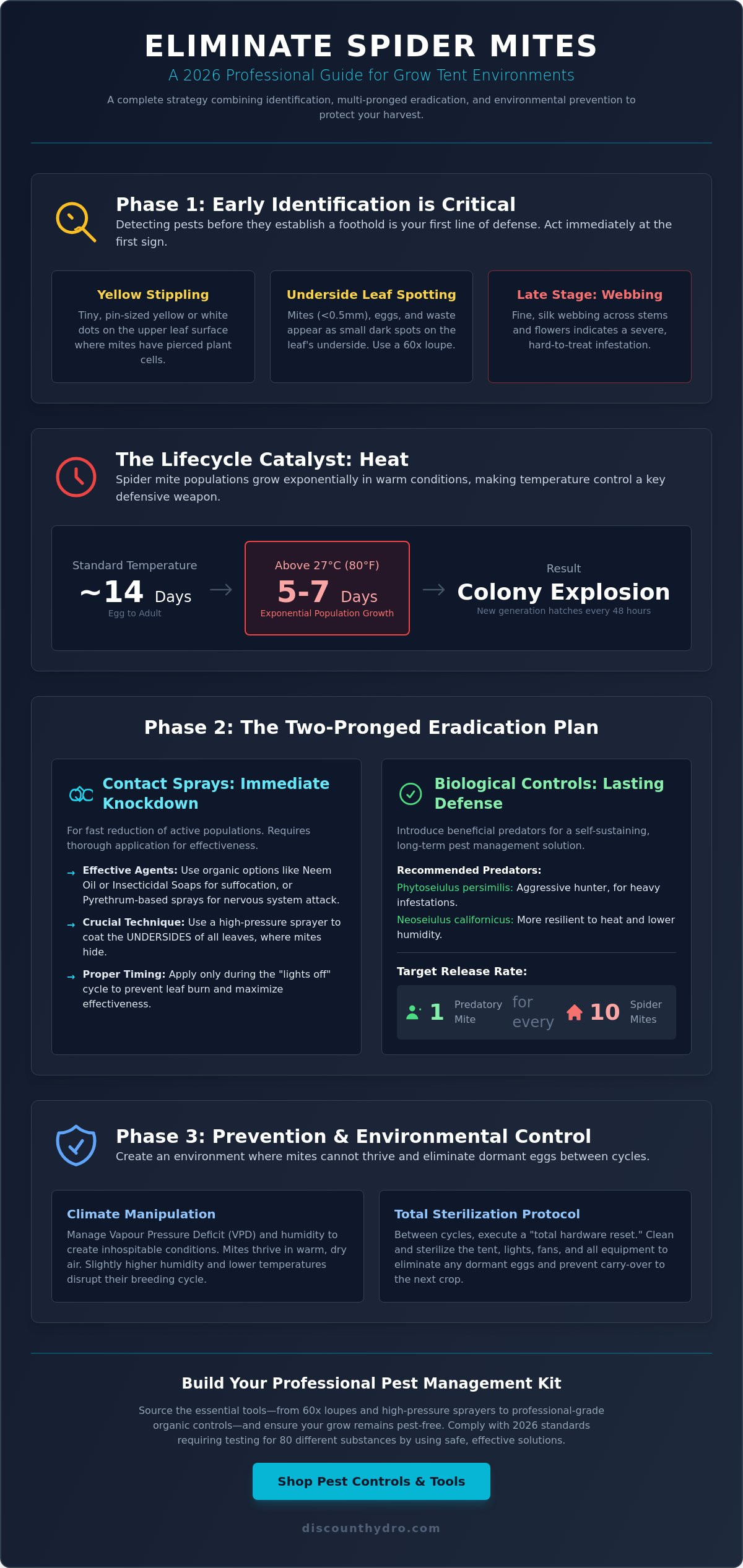
Spider mites (Tetranychidae) are sap-sucking arachnids that thrive in the warm, dry conditions found in indoor setups. These pests aren't insects; they're closer to spiders and ticks. They use specialized mouthparts to pierce plant cells and drain chlorophyll, which directly impacts your plant's ability to photosynthesize. Because they measure less than 0.5mm, you won't see them easily without magnification. Knowing how to get rid of spider mites in grow tent environments starts with a rigorous visual audit of your foliage. Early symptoms appear as yellow stippling or tiny white dots on the upper surface of the leaves. By the time you see silk webbing draped across your flowers or stems, the infestation has reached a terminal stage where eradication becomes significantly more difficult.
The transition from a few spots to a total takeover happens faster than most growers realize. A single female can lay hundreds of eggs in her short life. This Spider Mite Identification process is your first line of defense against a collapsed harvest. If you ignore the initial spotting, the mites will eventually coat the entire plant in protective webbing, creating a barrier that makes contact sprays almost useless. Immediate intervention is the only way to protect your investment in LED lights and high-end nutrients.
The Stippling Stage: Early Warning Signs
Successful detection requires a 60x jeweler's loupe or a digital microscope. You should inspect the undersides of leaves, particularly along the main veins and midribs where mites prefer to congregate. Stippling is often misdiagnosed as a calcium or nitrogen deficiency. While nutrient issues usually affect the leaf as a whole or follow specific patterns, mite damage is erratic. Look for tiny, pin-sized punctures that don't match standard deficiency charts. If the dots move when viewed under magnification, you have a confirmed infestation. Check the lowest leaves first, as mites often climb the plant structure from the growing media upward.
Lifecycle Acceleration and Temperature Links
Heat is the primary catalyst for a mite explosion. In a grow tent where temperatures exceed 27°C, the lifecycle from egg to reproductive adult shrinks to just 5 to 7 days. At these elevated temperatures, population growth is exponential. Missing a single treatment window allows a new generation of eggs to hatch and recolonize the tent within 48 hours. This is why how to get rid of spider mites in grow tent setups requires a repetitive treatment schedule. You aren't just killing the adults; you're fighting a clock against the next hatch. High-intensity lighting often creates the exact microclimate these pests need to thrive, making temperature management a critical part of your pest control strategy.
Eradication Strategies: Sprays and Biological Controls
Killing mites requires a two-pronged approach. Contact killers provide immediate knockdown; systemic treatments or biologicals offer ongoing protection. For indoor setups, safety is paramount. You don't want chemical residues on your final harvest. Organic choices like Neem oil or insecticidal soaps work by suffocating the mites. These are effective but require direct contact. If the spray doesn't touch the mite, the mite lives. This is a core part of Integrated Pest Management Strategies that combine multiple tools for total control. Using these methods correctly is the secret to how to get rid of spider mites in grow tent setups without damaging your plants.
Effective Contact Sprays and Application
Mites live on the undersides of leaves. Most growers fail because they only spray the tops. You need a high-pressure sprayer to reach every crevice. Pyrethrum-based products are the industry standard for rapid knockdown. They attack the mite's nervous system on contact. Timing matters. Spraying under high-intensity LED lights causes leaf burn. Always apply treatments during the "lights off" period or dim your fixtures. This prevents the liquid droplets from acting like magnifying glasses that scorch your foliage. For consistent results, check our inventory of professional sprayers and pest controls to ensure full coverage.
Using Beneficial Predators in Grow Tents
Biological control is a powerful long-term solution for how to get rid of spider mites in grow tent environments. Predators like Phytoseiulus persimilis are aggressive hunters. They eat only spider mites and die off once the food source is gone. Neoseiulus californicus is a better choice if your tent is warmer or has lower humidity. These mites can survive longer without a high pest population. A release rate of one predatory mite for every ten spider mites is a solid guideline for control. You must ensure your environment stays within the predator's preferred range; usually 20°C to 30°C with humidity above 60% for optimal hunting.
During the vegetative stage, you have more flexibility with sprays. Once your plants transition to the flowering stage, avoid heavy oils or systemic chemicals that can affect the quality of your harvest. Switch to biologicals or light essential oil blends to keep the environment clean. Consistent monitoring ensures you catch the next hatch before it becomes a crisis. If you've already seen webbing, you'll need to physically remove the most infested leaves before releasing predators to give them a fighting chance.
Sterilising Your Grow Tent and Hardware
Sterilizing the environment is non-negotiable. If you only kill the adults on the plant, you've failed. Dormant eggs survive for weeks in the teeth of a tent zipper or inside the fins of an LED heat sink. A total reset clean between cycles is the only way to ensure the next crop starts in a sterile environment. When researching how to get rid of spider mites in grow tent setups, most guides overlook the hardware itself. You must treat the tent as a clinical space, not just a storage area for plants.
Use 70% Isopropyl Alcohol (IPA) for most surfaces. It evaporates quickly and kills on contact. Bleach solutions at a 1:10 ratio are better for floors and hard plastic trays, but don't use bleach on reflective Mylar. It causes oxidation and reduces light efficiency over time. Wipe down Mylar with a microfibre cloth and diluted IPA to maintain maximum reflectivity. Pay close attention to support poles and tent corners. These are the primary locations where eggs accumulate and wait for the next heat cycle to hatch.
According to university research on spider mite management, sanitation is a critical cultural practice that prevents re-infestation. This includes your tools and irrigation lines. Soak all pots and trays in a sanitizing solution for at least 20 minutes to ensure total eradication. If you're using a complex irrigation system, flush the lines with a dedicated cleaning agent to remove any organic matter that could harbor pests.
The Equipment Deep Clean Protocol
LED grow light heat sinks and drivers are notorious hiding spots. Dust builds up in the cooling fins, creating a warm microclimate perfect for mites. Use compressed air to clear the fins and wipe the exterior with IPA wipes. Never spray liquids directly onto the diodes or electrical components. Clean your pots and trays thoroughly with a stiff brush to remove any root debris. Cross-contamination often happens when growers reuse "clean looking" pots without a proper chemical soak.
Ducting and Ventilation Hygiene
Flexible ducting is a major risk factor. The ridges inside the pipe provide perfect shelter for mites to travel between rooms. If you've had a severe infestation, replace the ducting entirely. It's a low-cost way to ensure you aren't re-introducing pests. Clean the pre-filters on your extraction fans and consider installing HEPA intake filters. These filters block mites from being sucked into the tent from the surrounding building. If your current setup is too difficult to maintain, see our guide on Choosing a Grow Tent for models designed with hygiene and durability in mind. This level of detail is essential for anyone serious about how to get rid of spider mites in grow tent environments permanently.
Climate Control as a Primary Pest Deterrent
Climate manipulation is your most powerful preventative tool. While sprays provide immediate intervention, maintaining specific Vapour Pressure Deficit (VPD) targets creates a biological barrier. Spider mites thrive in hot, arid conditions where their transpiration rates are high. By increasing humidity levels to 60% or higher during the vegetative phase, you create a low VPD environment that physically slows mite reproduction and movement. This technical approach is a critical component of how to get rid of spider mites in grow tent systems without relying solely on chemical applications.
Airflow management is equally vital. Mites are weak flyers and struggle to establish colonies in high-velocity air. Stagnant "dead spots" in the corners of your tent act as nurseries for new hatchlings. You must maintain constant negative pressure using an active extraction system. This ensures that any airborne mites are sucked into your filtration system rather than drifting onto adjacent plants. Proper ventilation also prevents the heat spikes that trigger rapid egg hatching cycles.
Temperature Management and Extraction
Keep your tent temperatures below 25°C to stay out of the mite "danger zone." High-intensity lighting often raises ambient temperatures, so your extraction fans must be sized correctly for your space. Use digital fan controllers to automate your environment and prevent fluctuations. Oscillating fans provide the physical disruption necessary to keep mites from settling on leaf undersides. If you're upgrading your setup, check our LED Grow Lights Guide for fixtures that offer superior PAR output with lower heat signatures.
Humidity Control and Monitoring
Deploying high-capacity humidifiers helps maintain leaf turgor, making it harder for mites to pierce the plant's surface. You must balance this against the risk of mould; use 24/7 hygrometers to monitor your levels precisely. If humidity drops below 50%, mite populations can double in less than a week. Consistent monitoring allows you to adjust your climate before a small sighting becomes a full infestation. For the most reliable environmental management, shop our full range of ventilation and climate control systems to keep your grow space secure.
Essential Pest Control Kit from Discount Hydro
Successful eradication relies on having the correct technical tools on hand before an outbreak occurs. You can't manage what you can't see or reach. Our inventory is curated for professional efficiency and cost-effectiveness. Learning how to get rid of spider mites in grow tent environments is a waste of time without professional-grade hardware. We provide the essential supplies needed for every stage of the Integrated Pest Management (IPM) cycle. Our logistics network supports UK-wide delivery and rapid click-and-collect services for growers facing urgent infestation threats.
A functional pest control kit includes three core categories: detection, application, and sterilization. High-magnification loupes are mandatory for confirming the presence of Tetranychidae. Without at least 60x magnification, you'll likely misidentify damage as a simple nutrient deficiency. We also stock high-pressure pump sprayers. These are necessary to achieve the leaf-underside saturation required for contact killers to work. Finally, industrial-grade cleaning agents ensure that your tent and hardware are fully sterilized between cycles; these kill dormant eggs that standard household cleaners might miss.
Top-Rated Contact Killers and Preventatives
Our selection of sprays includes technical formulations with active ingredients like pyrethrum, which provides an immediate neurological knockdown. We also offer organic-certified soaps and essential oil blends that suffocate mites without leaving heavy chemical residues. Buying these concentrates in bulk is the most economical strategy for multi-tent facilities or large-scale setups. Beyond direct killers, we supply silica-based supplements that strengthen plant cell walls from the inside out. For more details on optimizing your feed program, check our Hydroponic Nutrients Guide. Plants with high cell wall integrity are significantly more resistant to sap-sucking pests.
Hardware for a Pest-Proof Setup
Prevention is cheaper than a cure. Upgrading your grow tent can provide a physical barrier against entry. Many of our latest models feature ultra-fine mesh pre-filters on all intake ports; these are specifically designed to block small arachnids. Maintaining climate stability is the next step. High-performance extraction fans and digital controllers prevent the heat spikes that accelerate mite lifecycles. By keeping your environment within narrow parameters, you make reproduction much more difficult for any pests that manage to enter. Shop the full Pest Control range at Discount Hydro to find value-driven solutions for your grow room. We focus on high-stock levels and transactional speed to ensure you get the tools you need exactly when you need them.
Secure Your Harvest with Professional Eradication
Eradicating a mite outbreak requires more than a single spray. It demands a technical combination of environmental manipulation, chemical knockdown, and total hardware sterilization. By maintaining high humidity and temperatures below 25°C, you disrupt the rapid reproduction cycle that leads to crop failure. Identifying early stippling with a 60x loupe ensures you act before webbing destroys your yield. Mastering how to get rid of spider mites in grow tent systems is about consistency and using the right tools for the job.
We provide everything you need to reset your grow space and prevent future infestations. Browse our Professional Pest Control Range for the industry's lowest price guarantee on specialist inventory and technical sprays. You'll benefit from UK-wide fast delivery to stop an infestation before it spreads. Don't let pests compromise your hard work. Take control of your environment today to ensure a clean, high-yielding harvest tomorrow.
Frequently Asked Questions
Can spider mites survive in an empty grow tent?
Yes, spider mites can survive in an empty grow tent for several weeks by entering a dormant state known as diapause. They hide in zippers, pole joints, and equipment crevices until a new host plant is introduced. This is why a total sterilization reset with Isopropyl Alcohol is mandatory between grow cycles to prevent a recurring infestation.
Does heat treatment work to kill spider mites in a tent?
Heat treatment is only effective if you can maintain temperatures above 55°C for several consecutive hours. This is rarely practical for indoor growers because extreme heat can damage tent Mylar and sensitive LED drivers. Chemical sterilization with professional grade agents is a more reliable and safer method for protecting your hardware and ensuring total eradication.
How often should I spray my plants to break the mite lifecycle?
You should spray every 3 days for at least two weeks to successfully break the lifecycle. Because eggs hatch every 5 to 7 days in warm environments, a single application is never enough. Consistent treatment ensures you kill new hatchlings before they reach reproductive age and restart the infestation cycle.
Will spider mites go away if I lower the temperature?
Lowering the temperature won't kill the mites; it only slows their metabolic and reproductive rates. While breeding drops significantly below 20°C, the mites remain alive and will resume rapid population growth as soon as temperatures rise. Use cooling only as a supplementary tactic while you implement the primary steps for how to get rid of spider mites in grow tent setups.
Can I use a bug bomb in my grow tent?
Bug bombs are generally less effective than targeted contact sprays because they fail to reach the undersides of the leaves where mites congregate. They also leave chemical residues on your equipment and reflective surfaces that can be difficult to remove. A high pressure manual sprayer allows for the precision coverage needed to hit the pests directly and ensure a clean environment.
Are spider mites visible to the naked eye?
Spider mites are barely visible to the naked eye and usually look like tiny, moving dust motes. Most growers see the damage, such as yellow stippling or white dots, before they notice the mites themselves. Confirmation always requires a 60x loupe or a digital microscope to distinguish them from other small pests or harmless dust particles.
How do spider mites get into a sealed grow tent?
Mites enter sealed tents primarily through air intake ports or by hitchhiking on the clothing and hair of the grower. They are light enough to be carried by the wind or pulled in by powerful extraction fans. Installing HEPA filters on your intake vents is the most effective hardware upgrade to block these microscopic pests from entering your sterile zone.
Is it possible to save a plant heavily covered in webs?
Saving a plant covered in heavy webbing is extremely difficult and often not cost effective for the average grower. By the time webbing appears, the mite population is in the thousands and the plant's vascular system is severely compromised. In most cases, it's better to cull the infested plant and focus on sterilizing the entire tent to protect your remaining inventory.