

How to Heat a Grow Tent: UK Winter Indoor Growing Guide (2026)
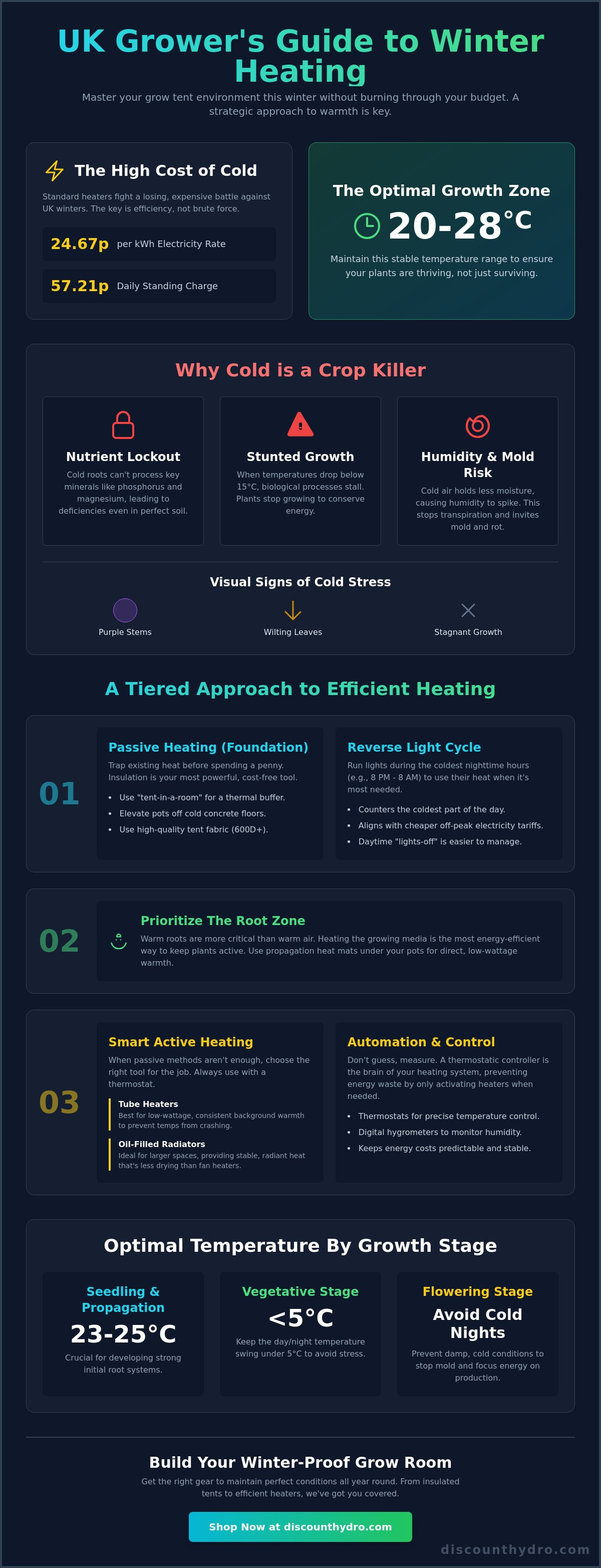
Heating the air in your grow tent is actually the most expensive way to keep your plants healthy this winter. With UK electricity rates currently sitting at 24.67 pence per kWh, simply cranking up a standard heater is a fast track to a massive energy bill. Learning how to heat a grow tent uk effectively requires a smarter strategy than just fighting the cold air in a drafty loft or garage. You need a system that targets the root zone and traps heat where it matters most.
It's frustrating to watch your plant development stall when temperatures drop while you're also managing a 57.21p daily standing charge. This guide will show you the most cost-effective ways to maintain a stable 20-25°C environment using high-efficiency gear like tube heaters and thermal insulation. We will explore the best layering techniques and smart controllers that keep your electricity costs manageable while ensuring your indoor garden thrives through the 2026 winter season.
Key Takeaways
- Maintain a stable environment between 20°C and 28°C to prevent nutrient lockout and stunted growth during cold UK nights.
- Discover how to heat a grow tent uk for less by reversing your light cycle and using insulation like silvered Mylar to trap existing bulb heat.
- Compare low-wattage tube heaters for background warmth against oil-filled radiators for larger, stable environments.
- Prioritize heating the root zone with propagation mats and pot elevation to ensure efficient growth without high energy bills.
- Use digital hygrometers and thermostatic controllers to automate your environment and keep energy costs predictable.
Why Temperature Control is Critical for UK Indoor Crops
UK winters are brutal for indoor growers. If your tent is in a loft or garage, external temperatures often drop to near zero, pulling heat out of your environment instantly. Maintaining a range of 20°C to 28°C when lights are on is the standard for healthy growth. Once temperatures hit the 15°C mark, biological processes stall. Understanding greenhouse principles helps you realize that your tent is a controlled bubble that requires constant input to stay stable against the British weather.
Cold air doesn't just slow growth; it creates a chain reaction of failures. Nutrient lockout is a primary concern when you're figuring out how to heat a grow tent uk effectively. When the environment is too cold, the plant's metabolic rate drops, preventing it from processing essential minerals like phosphorus and magnesium. This leads to stunted plants and poor yields. Additionally, cold air affects the Vapor Pressure Deficit (VPD). Because cold air holds less moisture, relative humidity spikes, which stops the plant from transpiring. If a plant can't transpire, it can't move nutrients from the media into its leaves.
Optimal Temperature Ranges by Growth Stage
Different stages of development have specific thermal requirements. Seedlings and propagation setups are the most vulnerable, requiring a steady 23-25°C to develop strong initial root systems. During the vegetative stage, you can manage a slight day and night temperature swing, but you should keep the gap under 5°C to avoid stress. The flowering stage is critical; avoiding damp, cold nights is essential to prevent mold and ensure the plant focuses its energy on production rather than survival.
The Dangers of Cold Roots
Root temperature is often more important than air temperature. The growing media acts as a battery for the plant, and if that battery is frozen, the engine won't start. Cold media significantly slows down microbial activity, which is necessary for breaking down organic matter and facilitating nutrient uptake. You can spot cold stress easily if you know what to look for. Common signs include:
- Purple stems: Often a sign of phosphorus lockout caused by cold.
- Wilting leaves: Even when the media is wet, the plant can't drink.
- Stagnant growth: No new leaf development for several days.
Protecting the root zone is the most efficient way to maintain health without overspending on ambient air heating. Most UK growers lose their crops in February because they ignore the floor temperature in uninsulated spaces. Keeping the roots warm ensures that the plant stays active even if the air temperature dips slightly during the dark cycle.
Passive Heating: Insulation and Light Timing Strategies
Modern LED setups are efficient, but they've created a "heat gap" for winter growers. While old HPS lamps produced massive amounts of waste heat, LEDs run much cooler. In a drafty UK garage or loft, this lack of ambient warmth can be a disaster. Learning how to heat a grow tent uk efficiently starts with passive strategies that trap existing energy before you ever turn on a heater. If you don't address insulation first, you'll simply be paying to heat the air outside your tent.
The most effective passive method is the "tent within a room" concept. By placing your grow tent inside a larger, insulated space, you create a buffer zone of dead air that acts as a thermal barrier. This double-walling effect is essential for outbuildings. You should also focus on the floor. Concrete acts as a massive heat sink, pulling warmth directly out of your pots and stalling root growth. Elevating your system on pallets or foam boards is a zero-cost way to keep the root zone several degrees warmer than the floor itself.
Optimising Your Light Schedule
You can use your lighting as a primary heat source by simply flipping your timer. Setting your "lights-on" period from 8 PM to 8 AM ensures the equipment runs during the coldest hours of the night. This timing also aligns with Economy 7 tariffs, which offer significantly lower electricity rates during off-peak hours. Managing the "lights-off" period during the day is easier because ambient temperatures are naturally higher. Following general UK greenhouse heating advice, you should aim for consistency; large fluctuations between day and night temperatures are what lead to condensation and damp issues.
Insulation Techniques for UK Grow Tents
Your choice of equipment dictates how much heat you lose. High-quality grow tents with 600D or 1680D fabric offer much better thermal retention than budget alternatives. To further boost performance, wrap the exterior of your tent in silvered Mylar or bubble wrap to reflect heat inward. For extreme environments, lining the floor and walls with Celotex or similar foam boards provides a professional-grade thermal seal. You can also reduce your intake fan speed during the winter. This keeps the warm air inside the tent for longer periods, provided you still maintain enough airflow to manage humidity. If you're looking to upgrade your setup for the cold months, you can find the best prices on insulation-ready tents in our store. These small adjustments significantly reduce the workload on your active heating systems.
Active Heating Solutions: Comparing Tube Heaters and Radiators
Passive insulation is your first line of defence, but most UK growers will need an active heat source when outdoor temperatures hit the winter lows. Choosing the right hardware is a balance between initial cost and monthly running expenses. With electricity prices currently at 24.67 pence per kWh, selecting an oversized or inefficient heater will quickly eat into your budget. To successfully manage how to heat a grow tent uk, you need to understand the wattage and heat delivery method of each device.
Avoid standard fan heaters in a grow environment. While they heat up quickly, they create intense hot spots and strip moisture from the air, causing your relative humidity to crash. This stress leads to windburn and transpiration issues. Instead, focus on "background" heat sources that provide a gentle, consistent rise in temperature. These devices are safer for your plants and much easier to automate with a thermostat.
Tube Heaters vs. Oil-Filled Radiators
Tube heaters are the most popular choice for small to medium tents. They typically range from 60W to 180W and are designed to provide a constant low-level warmth. A 120W tube heater costs approximately 3p per hour to run, making it a highly economical choice for keeping the frost away. Oil-filled radiators are better for larger rooms or uninsulated lofts where you need more power. These units range from 500W to 1500W. While they consume more energy, they retain heat for long periods after the thermostat clicks off, providing a stable thermal mass.
- Tube Heaters: Best for 1m x 1m or 1.2m x 1.2m tents. Low energy draw.
- Oil-Filled Radiators: Best for large multi-light setups. High thermal stability.
- Placement: Always place your heater near the intake fan. This allows the cool incoming air to be warmed before it reaches your plants.
- Safety: Keep all heating elements at least 15cm away from plastic tent walls and fabric pots to prevent melting or fire risks.
Using Thermostats for Efficiency
Never run an active heater without a thermostatic controller. Running a heater 24/7 is a waste of money and leads to "temperature yo-yoing," where the environment becomes too hot, the extraction fan ramps up to clear the heat, and the room instantly freezes again. A dedicated thermostat with a remote probe allows you to set a precise minimum temperature, usually around 18-20°C for the "lights-off" period. This level of root zone temperature control is what separates successful winter harvests from failed crops.
Smart heaters, like the Spider Farmer 540W model, now offer app-based control for around £99.99. These allow you to monitor your tent from your phone and adjust settings based on live weather data. If you prefer a modular setup, pairing a standard tube heater with a plug-in digital thermostat is a reliable and cost-effective alternative. This ensures the heater only draws power when absolutely necessary, keeping your 2026 energy bills as low as possible.
Protecting the Root Zone: Heat Mats and Pot Elevation
Heating the air in your tent is often a losing battle if the floor is freezing. In the UK, most indoor gardens are built on concrete or in lofts where the ground temperature is significantly lower than the ambient air. If the roots are cold, the plant effectively goes into hibernation, regardless of how warm the leaves are. Learning how to heat a grow tent uk efficiently means prioritising the root zone over the air space. This targeted approach is cheaper and more effective for maintaining growth rates in mid-winter.
Start by breaking the thermal bridge between your pots and the floor. Using pot stands or simple wooden pallets creates an air gap that prevents cold from leaching into the growing media. This simple step can keep your media 3-4°C warmer without using a single watt of electricity. For those in particularly cold outbuildings, adding a layer of silvered bubble wrap under your trays provides an extra reflective barrier. These passive measures ensure that any active heat you add stays where it's needed most.
Implementing Heat Mats Safely
Heated propagation mats are essential for the early stages of growth. A standard 10''x20.75'' mat costs about £25.99 and provides the steady 23-25°C seedlings need. However, you must use waterproof mats designed specifically for horticultural use. Never place a fabric pot or plastic container directly onto a high-power heat mat. The direct contact can create localized hot spots that cook the delicate root hairs. Use a tray or a thin layer of clay pebbles to diffuse the heat evenly across the base of the pot. This creates a gentle rising warmth that mimics natural spring soil conditions.
Reservoir Heating for Hydroponics
If you are using hydroponics, the water temperature is your primary concern. Cold water holds more oxygen, but if it drops below 15°C, nutrient uptake stops. Using a submersible aquarium heater is the most reliable way to keep your hydroponic nutrients at the ideal 18-20°C. Warm water in the reservoir acts as a radiator, helping to maintain the overall ambient temperature of the tent from the bottom up. Be careful not to exceed 22°C. Warm, stagnant water is a breeding ground for Pythium and root rot. You can find the best deals on reservoir heaters and propagation mats in our online store to keep your roots protected this winter.
Building a Winter-Proof Grow Room with Discount Hydro
Building a resilient indoor garden requires more than just a heater; it requires a coordinated layering strategy. You've seen how insulation and root protection form the foundation of a stable environment. The final step is selecting the right control systems to manage these variables. Mastering how to heat a grow tent uk is ultimately about precision. If you can't monitor your temperature swings, you're likely wasting money on electricity or risking crop failure during a sudden February freeze.
Your choice of led grow light plays a significant role in your thermal strategy. While LEDs are known for running cool, choosing a higher-wattage unit with a dimmable driver provides a valuable secondary heat source. During the peak of the UK winter, running a powerful LED at 75% or 100% capacity can often provide enough ambient warmth to keep your tent in the 20-25°C range without relying solely on external heaters. This dual-purpose approach is far more efficient than using underpowered lights and oversized radiators.
Managing your extraction is just as important as generating heat. If your fan runs at full speed 24/7, you're simply sucking the warm air you've paid for straight out of the tent. High-quality extraction fans paired with temperature-sensitive speed controllers are essential. These units automatically slow down the fan when the tent cools, trapping the warmth inside while still providing enough air exchange to prevent damp and condensation issues. This balance is critical for keeping your 2026 energy costs within the Ofgem price cap limits.
Essential Winter Equipment Checklist
To ensure your plants thrive through the coldest months, your setup should include these specific tools:
- High-denier grow tents: Look for 600D to 1680D fabric for maximum thermal mass and heat retention.
- Digital hygrometers: Use models with a 'Min/Max' memory function so you can see exactly how cold the tent got during the night.
- Thermostatic controllers: Essential for automating your tube heaters and preventing energy waste.
- Fan speed controllers: These reduce cold air intake during the "lights-off" period.
Expert Support from Discount Hydro
Buying from a UK specialist like Discount Hydro ensures your equipment is rated for our specific climate and electrical standards. We understand the challenges of growing in uninsulated lofts or damp garages. Whether you need heavy-duty insulation or high-efficiency LED kits, we offer the UK's best prices and a massive selection of stock ready for immediate dispatch. We also provide convenient click and collect options for larger items like tents and pallets of media. Shop our full range of heating and climate control tools today and get your grow room ready for the winter season.
Maximise Your Winter Harvest Potential
Successful winter growing in Britain requires a focus on efficiency rather than just raw power. By combining passive insulation with targeted root zone warmth, you can maintain a stable 20-25°C environment without overspending on energy. Remember that managing your extraction speed and reversing your light cycle are just as critical as the heater itself. Mastering how to heat a grow tent uk is about using the right tools to avoid the common pitfalls of cold lofts and damp garages.
Discount Hydro provides the UK's best prices on leading climate control brands like Omega and Dutch Pro. Our team offers expert advice tailored to the unique challenges of the UK climate, ensuring you get the exact gear you need for a productive garden. With fast UK-wide delivery and convenient click and collect options, you can upgrade your setup today. Browse our range of grow tent heaters and climate control and keep your plants thriving through the coldest months of the year.
Frequently Asked Questions
What is the cheapest way to heat a grow tent in the UK?
Reversing your light cycle to run at night is the most cost effective method. This allows you to use the heat from your LED or HPS lamps during the coldest hours while potentially benefiting from off peak Economy 7 electricity rates. Combining this with passive insulation like silvered bubble wrap and elevating pots off cold floors reduces the need for expensive active heating.
Can I use a normal household heater in my grow tent?
Standard household fan heaters are generally unsuitable because they create intense hot spots and strip moisture from the air. This causes humidity to crash and stresses your plants. If you must use a household crossover, an oil filled radiator is a safer choice. It provides a more stable thermal mass and doesn't dry out the environment as aggressively as a fan based unit.
Is 15 degrees too cold for a grow tent at night?
Yes, 15°C is the point where metabolic processes begin to stall for most indoor crops. When temperatures drop this low, you risk nutrient lockout and significantly slower growth rates. Aim to keep your "lights off" temperature at a minimum of 18°C to ensure the plants remain active and can continue to process nutrients effectively through the night.
Should I put my heater inside or outside the grow tent?
You should place your heater inside the tent, specifically near the intake fan. This ensures that the cold air being pulled into the environment is warmed before it reaches your plants. When considering how to heat a grow tent uk, internal placement with a thermostatic probe is the most efficient way to maintain a precise and stable 20-25°C temperature range.
How do I stop condensation in my grow tent during winter?
Maintain a consistent temperature and use a fan speed controller to keep air moving. Condensation occurs when warm, moist air hits the cold walls of an uninsulated tent. By insulating the exterior and ensuring your extraction fan never fully turns off, you prevent the stagnant, humid conditions that lead to water droplets and potential mold issues on your crop.
Does a carbon filter help keep the tent warm?
A carbon filter has no insulating properties and won't help retain heat. In fact, because it is attached to your extraction system, it is part of the process that removes warm air from the tent. To keep heat inside, you need to focus on the denier of your tent fabric and the use of external reflective insulation rather than your filtration equipment.
Are tube heaters expensive to run for indoor gardening?
Tube heaters are very economical and typically cost only a few pence per hour to operate. A 120W model draws very little power compared to a 2000W household heater, making it ideal for providing background warmth. Based on 2026 electricity rates of 24.67p per kWh, running a low wattage tube heater is one of the most budget friendly ways to manage your environment.
How can I heat a grow tent in a cold garage?
Use the "tent within a room" strategy by insulating the garage space or double-walling the tent with Celotex boards. Garage floors are notorious heat sinks, so you must elevate your pots on pallets to protect the root zone. In these extreme environments, a combination of a 500W oil filled radiator and a thermostatic controller is often necessary to fight off the winter chill.