

How to Install an Extractor Fan and Filter: The Complete 2026 Grow Room Guide
A single 90 degree bend in your ducting can slash your airflow by as much as 60 percent, turning a high performance fan into an inefficient heat trap. If you're struggling with heat build up or worrying about unwanted smells escaping your room, learning how to install an extractor fan and filter correctly is the only way to secure your environment. You already know that stale air and high temperatures are the primary causes of poor plant health. It's frustrating to deal with vibrating fans that create noise or confusing m3/h calculations that don't seem to work in practice.
This guide will help you master your ventilation setup to ensure perfect airflow and total odour neutralisation. We'll show you how to achieve the 350 m3/h minimum rating recommended for a standard 1.2m x 1.2m tent while staying compliant with current BS EN 60335-2-80 electrical safety standards. From selecting energy efficient EC motors to properly sizing your carbon filter to avoid motor burnout, you'll get the technical facts needed for a stealthy, high efficiency system that meets 2026 requirements.
Key Takeaways
- Calculate the precise airflow requirements for your space by factoring in room volume and common friction loss from ducting.
- Master how to install an extractor fan and filter using professional pre-assembly techniques and secure mounting options for any grow room.
- Learn to troubleshoot common environmental issues like light leaks and high humidity levels that can cause carbon filter failure.
- Identify the best value extraction kits from industry-leading brands to ensure total odour control and efficient temperature management.
Why Your Indoor Garden Needs an Extractor Fan and Filter System
Indoor gardening is a controlled science; you can't leave your environment to chance. A professional ventilation system handles two critical tasks: removing excess heat and replenishing CO2. If you want to know how to install an extractor fan and filter like a pro, you must first understand the principles of ventilation. Standard bathroom fans are insufficient for this task because they lack the static pressure to pull air through ducting and carbon beds. You need a high-pressure inline fan to create negative pressure. This is when the walls of your tent bow inward slightly, proving that all air is being sucked out through the filter rather than escaping through small gaps or zips. Without this, untreated odours will eventually leak into your living space.
The Science of Air Exchange for Plants
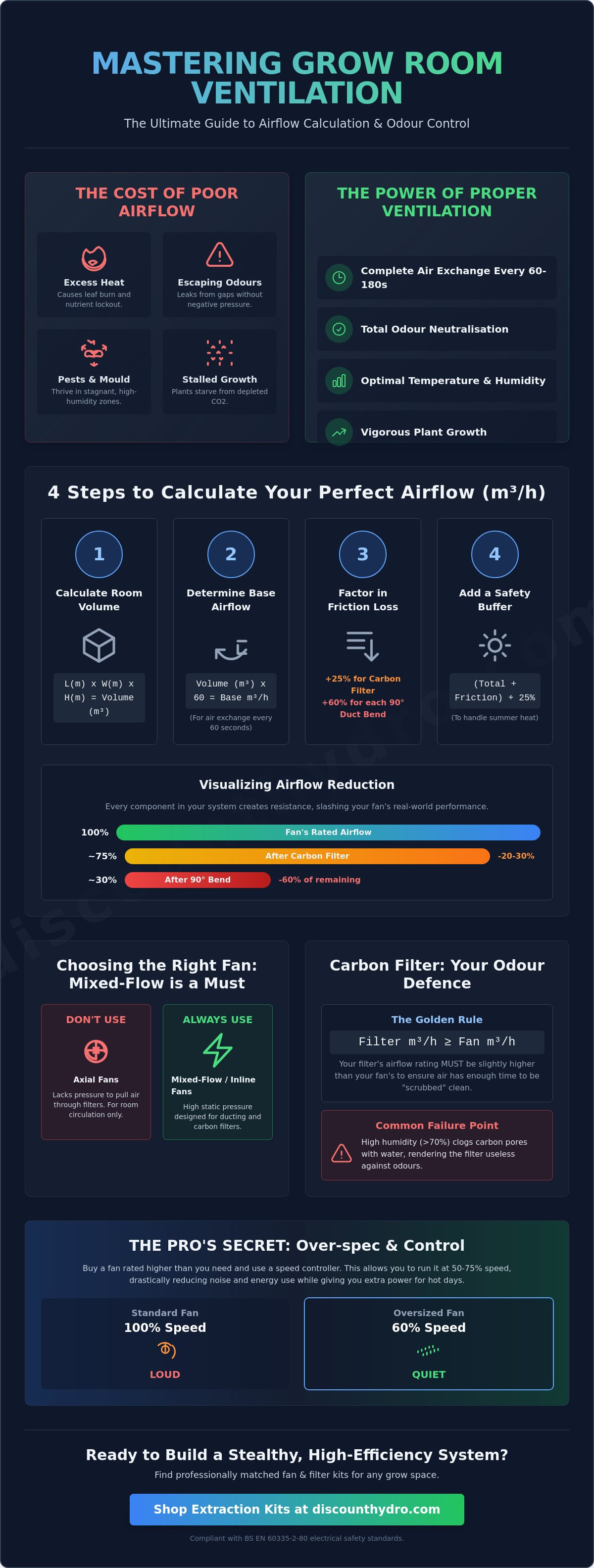
Plants are biological machines that consume CO2 at an incredible rate. To prevent growth from stalling, you need a total air change every 60 to 180 seconds. For a standard 1.2m x 1.2m tent, this usually requires a fan rated for at least 350 m3/h to account for the resistance of your equipment. Heat management is equally vital. Even high-efficiency LED grow lights produce heat that can cause leaf burn and nutrient lockout if it's not extracted. Stagnant air also creates high-humidity zones. These pockets are perfect environments for spider mites and mould. A consistent stream of fresh air disrupts these pests and keeps your environment stable.
Odour Control: The Role of the Carbon Filter
Carbon filters are your primary line of defence against organic odours. They work through a process called adsorption, where odour molecules stick to the surface of virgin activated carbon. This isn't the same as absorption; the molecules are trapped in millions of microscopic pores. To ensure total security, your filter must be rated for a slightly higher airflow than your fan. If your fan is too powerful for the filter, air passes through too fast for the carbon to scrub the scent. Most filters last 12 to 18 months, but efficiency drops quickly if humidity levels go above 70 percent. When the air is too damp, the carbon pores fill with water, leaving no room for odour molecules. Matching your components correctly is the only way to maintain a stealthy garden.
Calculating the Right Fan Size and Filter Capacity
Getting your math wrong is the quickest way to ruin a crop. Most people look at bathroom ventilation standards which suggest four air changes per hour. For high intensity indoor gardening, that's useless. Your plants need fresh air every 60 seconds to replenish CO2 and strip away heat. To find your base requirement, multiply your room length, width, and height in metres to get the total volume. Multiply that volume by 60. This gives you the raw m3/h (cubic metres per hour) required for your space. However, this number is just the starting point before you learn how to install an extractor fan and filter with the right capacity.
The Grow Room Airflow Formula
Raw volume calculations don't account for real world resistance. When Calculating Fan Size, you must factor in friction loss. A carbon filter typically reduces fan efficiency by 20 to 30 percent. Every 90 degree bend in your ducting can drop airflow by another 60 percent. During summer months, external temperatures rise, making it harder to cool your room. We recommend adding a 25 percent buffer to your final calculation to handle these peaks. If your math suggests 300 m3/h, look for a fan rated at 400 m3/h or higher. Over-speccing your equipment allows you to use a speed controller, which significantly reduces noise levels while maintaining control.
Choosing Fan Types: Axial vs. Mixed Flow
Don't waste money on axial fans for extraction. Axial fans move air across a room but can't handle the static pressure of a carbon filter. You need mixed-flow fans like the RVK or Gekko series. These are designed to pull air through dense carbon beds without the motor burning out. When selecting your kit, match the flange size. A 6-inch (150mm) fan needs a 6-inch filter. Stepping down from a large fan to a small filter using reducers creates massive turbulence and noise. For a stealthy setup, 6-inch and 8-inch (200mm) systems are generally quieter than 4-inch (100mm) models because they move more air at lower RPMs. You can find the best prices on extraction kits to match your specific room dimensions in our store.
Using a speed controller with an over-sized fan is the professional's secret. It gives you the headroom to ramp up extraction when heat waves hit, and the ability to dial it down for silent operation at night. Always ensure your filter's maximum m3/h rating is slightly higher than your fan's output. This prevents air from bypassing the carbon pores, ensuring 100 percent odour neutralisation. Once you've calculated your needs, you're ready to move on to the physical installation process.
Step-by-Step Guide: Installing Your Extractor Fan and Carbon Filter
Physical installation is where many growers fail. A loose connection or a saggy ducting run ruins the airflow calculations you did in the previous section. Learning how to install an extractor fan and filter properly ensures your garden stays stealthy and your home is protected from the health risks of poor ventilation, such as mould or excess humidity. You need an airtight seal from the moment the air enters the filter until it leaves the exhaust point. Any gap in your assembly allows untreated air to bypass the carbon, resulting in immediate odour leaks.
Assembling the Extraction Unit
Pulling air through the filter is roughly 15 percent more efficient than pushing air into it. Connect your fan directly to the filter flange using a fast clamp for a rigid, vibration-free join. If you don't have a clamp, use multiple layers of high-quality silver duct tape to ensure no air escapes the connection. The white fabric pre-filter must be fitted over the exterior of the carbon cylinder to trap dust and debris before they can clog the activated carbon pores. This simple sleeve extends the life of your filter by up to six months by preventing the internal carbon bed from becoming saturated with large particles.
Hanging Equipment Safely
Most growers use a grow tent, which features internal roof bars designed to support the weight of heavy extraction kits. Use heavy duty rope ratchets to suspend the filter and fan as high as possible. Heat rises, so your intake point should be at the very top of the space to remove the warmest air first. To kill noise, use bungee cords instead of solid nylon straps; the elastic material absorbs the motor's vibration before it reaches the tent frame, preventing the low frequency "humming" sound that travels through walls. Ensure your exhaust ducting points directly toward an external vent or a well-ventilated room to prevent heat from recycling back into your intake.
Keep your ducting runs short and straight. Every 90 degree bend in your ducting can diminish airflow by as much as 60 percent, forcing your fan to work harder and louder. Stretch the ducting tight to smooth out internal ridges, as these cause turbulence and noise. Secure every join with jubilee clips or heavy duty cable ties for a permanent fit. Finally, handle your electrical safety. Route all power cables along the top of the frame and away from floor-level water sources or nutrient reservoirs. Mastering how to install an extractor fan and filter with straight, tight ducting and secure mounting is the best way to achieve a professional, quiet environment.
Optimising Airflow and Maintaining Your Ventilation System
Installation is only half the battle. To maintain a truly stealthy environment, you must monitor your system's performance weekly. Even if you followed every step on how to install an extractor fan and filter perfectly, dust and humidity will eventually degrade your results. A common mistake is ignoring light leaks through the ducting. Turn off your grow lights and stand inside your space; if you see light entering through ventilation ports, use double-cinch drawstrings or additional ducting bends to block it. Light entering during dark cycles stresses your plants and can ruin a harvest.
Humidity is the silent killer of carbon filters. When relative humidity (RH) exceeds 70 percent, the water molecules in the air saturate the carbon bed. This prevents the adsorption of organic odours because the pores are physically blocked by water. If you smell your garden outside the room, check your hygrometer first. You may need a dehumidifier or higher fan speeds to pull that moisture out before it ruins your expensive carbon. Clean your white pre-filter sleeve every 8 to 12 weeks. A dusty sleeve acts like a chokehold on your fan motor, increasing noise and reducing airflow by as much as 25 percent.
Troubleshooting Common Airflow Issues
Short-circuiting occurs when your fresh air intake is too close to your exhaust point. This causes the fan to suck out the fresh air you just pumped in, leaving the rest of the room stagnant. Position your intake at the bottom and your exhaust at the top on the opposite side. If you hear a whistling sound, you likely have a small tear in your ducting or a loose jubilee clip. For those prioritising stealth, acoustic ducting or a silencer can reduce wind noise by up to 15 dBA. This is essential if you're running high-powered fans in residential areas where noise from vibrating motors can be a major pain.
Seasonal Adjustments
Your ventilation needs change with your feeding schedule. Plants transpiring heavily after receiving a fresh batch of hydroponic nutrient solutions release significant moisture into the air. You must ramp up fan speeds during peak flowering stages to handle this increased humidity and prevent bud rot. In the summer, ambient temperatures can rise by 10 degrees or more, requiring you to run your extractor at 100 percent capacity. Most professional grade carbon filters require replacement every 12 to 18 months. Don't wait for the smell to start escaping; track your filter's age and swap it early to maintain total security. Browse our range of replacement filters and fan controllers to keep your system running at peak efficiency.
Get the Best Prices on Extraction Kits at Discount Hydro
Buying a matched fan and filter kit is the most cost-effective way to secure your environment. It ensures that the flange sizes match perfectly and the fan motor has the correct static pressure to pull through the carbon bed. Piecing together a system from different suppliers often leads to compatibility issues. This makes it harder to learn how to install an extractor fan and filter correctly. At Discount Hydro, we've curated bundles using industry-leading brands like Rhino, Mountain Air, and Gekko to guarantee 100 percent odour neutralisation. It's the simplest way to get professional results without the guesswork.
Our Top-Rated Ventilation Bundles
We offer tailored solutions for every room size. Our 4-inch (100mm) starter kits are designed for 1m x 1m tents, providing the necessary air exchange without taking up excessive space. For residential growers, our silent kits feature over-specced fans and acoustic ducting to keep noise levels below 35 dBA. If you're on a budget, our Gekko value picks offer high-pressure performance at the UK's best prices. These bundles include everything you need: the fan, the filter, ducting, and jubilee clips. You won't have to worry about missing parts during your setup. We stock the latest 2026 models with PWM-controlled EC motors for maximum efficiency.
Why Shop With Discount Hydro?
We're committed to being the UK's most affordable supplier of high-quality equipment. Every order is shipped in plain, discreet packaging to protect your privacy. If you're based near County Durham, you can take advantage of our click-and-collect service for immediate pickup. This allows you to skip shipping times and get your ventilation system running today. Our team has years of experience in the technical side of hydroponics and can provide a hands-on demo of any fan or controller in our inventory. We focus on value and availability so you can focus on your plants.
Whether you're setting up a small propagation tent or a large-scale indoor garden, getting the ventilation right is non-negotiable. Don't risk your crop with inferior equipment or mismatched parts. Our extraction kits are designed to meet the 350 m3/h minimum rating recommended for standard 1.2m tents, ensuring a complete air change every 60 seconds. We've done the math so you don't have to. Visit us online or in-store to see why we're the preferred choice for growers who demand professional results at warehouse prices. We offer the best deals on the market. Check out our inventory and start your build today.
Secure Your Grow Room Environment Today
Maintaining a perfect environment requires more than just high quality gear; it requires precision in your setup. You now understand the importance of creating negative pressure and why keeping your relative humidity below 70 percent is vital for carbon filter longevity. Following this guide on how to install an extractor fan and filter ensures your system remains quiet, efficient, and 100 percent effective at neutralising organic odours. Proper mounting with bungee cords and straight ducting runs will keep your garden stealthy and your plants thriving year round.
Get the professional equipment you need without the retail markup. Shop our full range of Extraction Kits at the UK's best prices. We provide fast UK-wide delivery and discreet packaging as standard to ensure your order arrives safely and privately. For those near County Durham, our click and collect service offers the fastest way to get your gear. Take control of your grow room climate today and enjoy the peace of mind that comes with a high performance ventilation system. Your plants will thank you for the fresh air.
Frequently Asked Questions
Can I run my extractor fan without a carbon filter?
You can run a fan without a filter to move air, but you won't have any odour control. The fan will still regulate temperature and CO2 levels; however, organic scents will leak freely into your home. This is only an option if scent neutralisation isn't a priority for your specific setup.
How often should I replace my grow room carbon filter?
Most professional grade filters last between 12 and 18 months of continuous use. If you consistently operate in humidity levels above 70 percent, the carbon pores will clog with water, requiring replacement sooner. Check for escaping smells to know when the activated carbon is saturated and no longer effective.
Does the fan go before or after the carbon filter?
The fan should go after the filter to pull air through the carbon bed. Pulling air is approximately 15 percent more efficient than pushing it into the filter. This configuration ensures all air is scrubbed of organic particles before it enters the fan motor and ducting system.
How do I stop my extractor fan from being so noisy?
Use a speed controller to lower the RPM or install acoustic ducting to dampen wind noise by up to 15 dBA. Suspending your equipment with bungee cords instead of solid straps stops vibrations from traveling through the tent frame. These methods are essential for maintaining a stealthy residential environment.
What size ducting do I need for a 6-inch extractor fan?
You need 150mm (6-inch) ducting to match the flange of your fan. Don't use reducers to connect smaller ducting, as this creates air turbulence and significantly increases noise levels. Keeping the diameter consistent ensures you maintain the 402 CFM airflow rating found in high performance models like the AC Infinity Cloudline T6.
Will an extractor fan help with high humidity in my grow tent?
An extractor fan is the most effective tool for lowering humidity by replacing damp air with drier air from your intake. Proper ventilation prevents moisture from lingering around the foliage, which reduces the risk of mould. When learning how to install an extractor fan and filter, ensure the exhaust points outside the building to prevent recycling damp air.
Can I wash and reuse my carbon filter?
You cannot wash the internal carbon because water permanently ruins its adsorption properties. You should only wash the white pre-filter sleeve every 8 to 12 weeks to remove dust. Once the carbon inside is spent, you must buy a replacement to maintain effective odour neutralisation in your space.
Do I need an intake fan as well as an extractor fan?
Small grow tents often rely on passive intake through mesh vents, but larger rooms require an active intake fan to manage heat. Ensure your intake fan is less powerful than your exhaust to maintain negative pressure. This balance is a core part of how to install an extractor fan and filter for total environment control and security.