

How to Stop Grow Tent Smelling: The Complete 2026 Odour Control Guide
Odour control is a mechanical failure of airflow management, not a lack of fragrance. If you can smell your plants from the next room, your physics are wrong. You've likely already wasted money on ineffective gels or sprays that only mask the problem. Most growers live with the constant fear of unwanted attention because they don't understand how to stop grow tent smelling through proper ventilation. It's frustrating to deal with leaking scents and confusing equipment specs that don't seem to deliver on their promises.
This guide provides the professional methods for total odour elimination using carbon filtration and negative pressure. You'll learn to master the 80% intake rule and understand the latest ISO 10121-3 standards for activated carbon filters. We'll show you how to size your fan and filter correctly to ensure a 100% smell-proof environment. You can achieve discreet operation and a cost-effective setup without the guesswork, a priority shared by premium providers like Green Express DC. We're breaking down the technical requirements for a truly professional grow room.
Key Takeaways
- Eliminate odours at the source by mastering negative pressure and sealing all gaps in your ventilation setup.
- Discover how to stop grow tent smelling by correctly matching your inline fan’s CFM rating to your specific tent volume.
- Maximize filter lifespan by keeping humidity levels under 65% and utilizing pre-filters to block dust particles.
- Ensure total air scrubbing by securing your carbon filter at the highest point within your grow room.
- Optimize your budget with professional-grade extraction kits and high-efficiency carbon filters for complete scent control.
Understanding Why Your Grow Tent Smells and How Airflow Works
Odour particles, known as terpenes, are microscopic. They don't just sit in the air; they travel through any unsealed gap. If you're searching for how to stop grow tent smelling, you must understand that masking scents with sprays or gels is a temporary and expensive mistake. These products don't remove the molecules. They just add more fragrance to the room. Real elimination requires Carbon filtering to trap and neutralize odour molecules at the source. This is a chemical process where the carbon bed adsorbs the smell before it can escape.
Passive ventilation isn't enough for aromatic flowering plants. Without active extraction, odorous air builds up and eventually seeps out through zippers, seams, and ports. Higher temperatures and humidity levels intensify these scents. Warm air holds more moisture and carries terpenes further. When your grow room gets too hot, the plant's natural oils evaporate faster. This creates a stronger smell that passive airflow cannot manage. High humidity also makes the air heavier and harder to move, which puts extra strain on your extraction fans.
The Concept of Negative Pressure
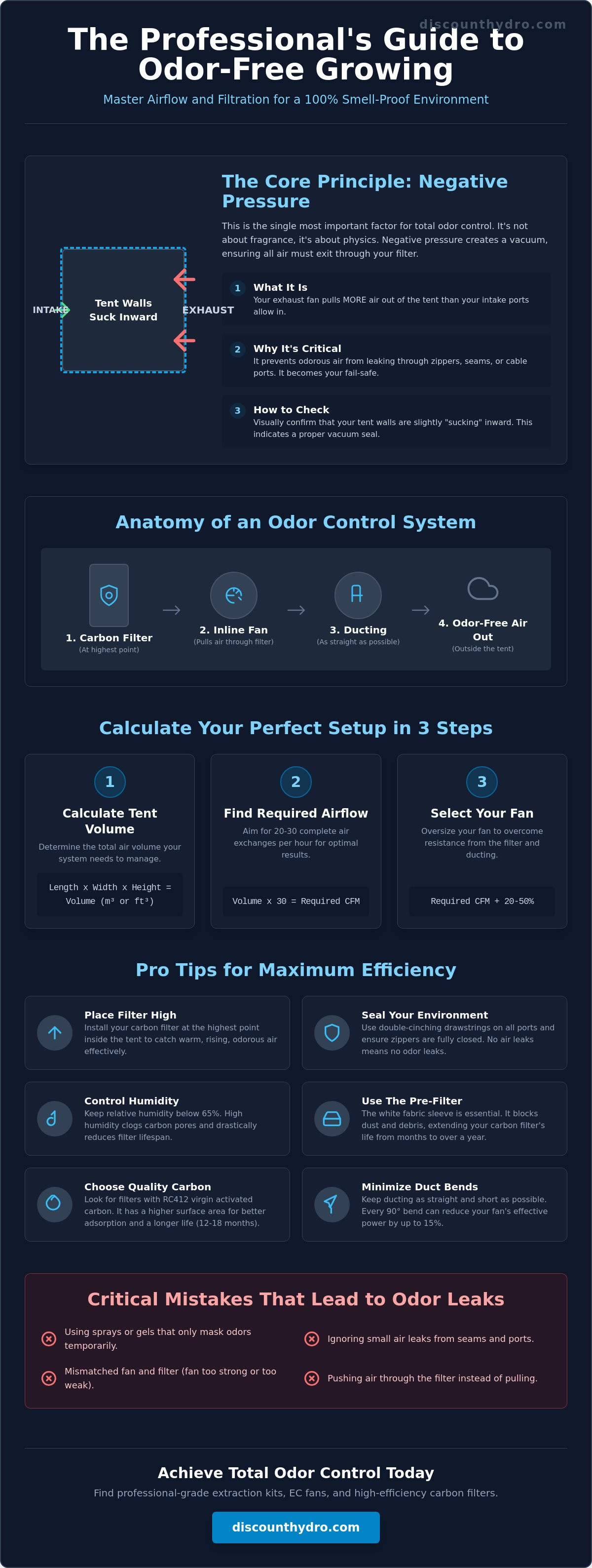
Negative pressure is the single most important factor for odour control. It occurs when your exhaust fan pulls more air out of the tent than your intake allows in. This creates a vacuum effect. You can visually check for this by looking at your tent walls. If they are slightly sucking inward, you have negative pressure. This is your fail-safe. It ensures that air only leaves the environment through your carbon filter, rather than leaking out of small gaps or the zipper. Without this pressure, air will find the path of least resistance, usually a seam or a cable port.
If scents do escape and settle into your home's fabrics, professional deep cleaning from dynamicproclean.com can help eliminate any lingering odours from carpets or upholstery.
Sealing Your Grow Environment
Even the best extraction system fails if the tent isn't sealed. When selecting grow tents, check for light leaks and air gaps. These are exit points for smell. Use the double-cinching drawstrings on every ducting port to create an airtight seal around your pipes. Ensure zippers are fully closed and velcro flaps over the observation windows are pressed down tight. Check for pinhole leaks along the seams. If air can't find a shortcut, it's forced through the filter. This mechanical discipline is the only way to guarantee a 100% smell-proof setup. Cheap tents often have weak zippers that fail over time, so investing in quality hardware is a direct way to manage long-term odour issues.
The Core Solution: Carbon Filters and Extraction Fans
The mechanical core of any odour management system is the extraction kit. This combination of an inline fan and a carbon filter is the only reliable way for how to stop grow tent smelling once plants enter the flowering stage. Activated carbon "scrubs" the air by trapping odour molecules within its porous surface. It's critical to match your fan's CFM or m3h rating to your carbon filter. If the fan is too powerful, air passes through the carbon too quickly for adsorption to occur. If it's too weak, you won't maintain negative pressure. For optimal performance, oversize your fan's CFM rating by 20% to 50% relative to the tent volume. This accounts for efficiency losses from ducting and the filter itself. Every 90-degree bend in your ducting reduces effective power by about 15%. Budget filters often fail within months, while quality units typically last 12 to 18 months before needing replacement.
Choosing the Right Carbon Filter
High-quality filters use RC412 virgin activated carbon. This material has a much higher surface area than lower-grade alternatives. To select the right size, calculate your tent volume (length x width x height) and ensure your system can provide 20 to 30 air exchanges per hour. This rate ensures fresh air for the plants while maintaining a scent-free exterior. Always use the white pre-filter sleeve. It blocks dust and large particles from clogging the carbon pores, extending the unit's life significantly. Following these basic strategies to improve indoor air quality ensures your grow environment remains clean and efficient.
Inline Fan Selection and Placement
Place your fan after the filter in the extraction chain. Pulling air through the filter is more efficient than pushing it. Modern EC fans offer better control and lower electricity costs than traditional AC models. They run cooler and can be dialed down with precision without the humming noise associated with AC speed controllers. Proper mounting is essential for discreet operation. Use bungee cords or acoustic ducting to reduce vibration. This prevents the tent frame from acting as a resonator for fan noise. Secure all connections with jubilee clips or heavy-duty duct tape to stop air leaks. For those looking to upgrade their setup, you can find high-performance extraction fans and carbon filters designed for complete odour control.
How to Set Up Your Odour Control System for Maximum Efficiency
Setting up an extraction system correctly is the difference between a discreet grow and a failed one. Inadequate ventilation can increase indoor pollutant levels, which in a grow environment translates to heat stress and escaping scents. To master how to stop grow tent smelling, follow this five-step installation protocol for professional results.
- Step 1: Calculate the required air exchange. Multiply tent length by width by height to find the volume. For a 1.2m x 1.2m x 2m tent, the volume is 2.88 cubic metres. To achieve 30 air exchanges per hour, you need a fan moving at least 86 m3/h. Always oversize the fan by 25% to account for filter resistance.
- Step 2: Secure the carbon filter. Heat and odours rise. Mounting the filter at the highest point in your tent ensures you pull the warmest, most scented air out first. Use heavy-duty nylon straps or metal chains to hang it from the top frame bars.
- Step 3: Connect the inline fan. Use airtight ducting and metal jubilee clips. Don't rely on plastic zip ties; they loosen over time and cause leaks. The fan should pull air through the filter and push it out of the tent.
- Step 4: Route the exhaust air. Discharge air directly outside or into a separate, well-ventilated room. Recirculating air back into the intake room causes heat spikes and humidity issues.
- Step 5: Test for negative pressure. Zip the tent shut completely. Watch the fabric. If the walls pull inward, the seal is working and all air is being forced through the carbon filter.
Ducting and Connection Tips
Acoustic ducting is the best choice for discreet indoor setups. It features an insulated layer that dampens fan noise and air rush sounds. Pinhole leaks in cheap, single-ply ducting are common exit points for smells. Seal every joint with foil tape, not standard cloth tape, to ensure zero seepage. Keep duct runs as short and straight as possible. Every extra foot of ducting and every 90-degree bend adds friction, which lowers your fan's effective power.
Optimising Intake Air
Your intake must be smaller than your exhaust to maintain the vacuum effect. Passive intake vents work well for small tents, but larger rooms require an active intake fan. Set your intake fan to run at about 80% of the exhaust fan's capacity to prevent the tent from inflating. Ensure intake air is filtered for dust. If you pull dirty air into the tent, your carbon filter will clog and fail long before its 12-month rating. This balance is critical for how to stop grow tent smelling while maintaining plant health.
Common Mistakes That Lead to Grow Room Odours
Many growers fail to maintain a scent-free environment because they ignore the physical limitations of their equipment. High humidity is the primary cause of sudden filter failure. When relative humidity levels exceed 65%, water molecules begin to coat the activated carbon. This prevents the adsorption of odour particles. Once the carbon is "clogged" with moisture, it cannot scrub the air effectively. You might notice breakthrough smells even if your filter is relatively new. Maintaining a dry environment is the only way for how to stop grow tent smelling during the heavy flowering stages. Dust is another major factor. Without a clean pre-filter, fine particles enter the carbon bed and fill the microscopic pores. This permanently reduces the filter's capacity to trap terpenes.
- Opening the tent during dark cycles: This breaks negative pressure instantly. Smells escape into the surrounding room before the fan can recover the vacuum.
- Relying on masking agents: ONA gels and sprays are supplementary. They do not eliminate molecules. Using them as a primary solution is a waste of money.
- Undersized filters: A filter with a lower m3/h rating than your fan will allow untreated air to pass through the carbon bed too quickly.
- Loose ducting: Even a tiny gap in your exhaust line allows odorous air to bypass the filter entirely.
Environmental Factors
The specific type of hydroponics system you use impacts your room's baseline humidity. Open reservoirs and aeroponic misters add significant moisture to the air. This moisture puts a constant strain on your carbon filter. Use a dedicated dehumidifier to keep levels between 45% and 55% during the final weeks of growth. This protects your equipment and ensures the carbon remains bone-dry. Temperature control is equally vital. Warm air carries more odour and expands, making it harder for your extraction system to maintain negative pressure. Keep your grow room under 26°C to minimize the volatile evaporation of plant oils.
Maintenance and Replacement Schedules
You must follow a strict maintenance routine to avoid unexpected scent leaks. Clean or replace your white pre-filter sleeve every 4 to 8 weeks. If it looks grey or brown, it is already restricting your airflow and killing your fan's efficiency. Most professional-grade filters require a full replacement every 12 to 18 months. Don't wait for a breakthrough smell to occur. Carbon has a finite lifespan based on the volume of air it has processed. Once the internal surface area is saturated, it stops working entirely. If you want to maintain a 100% discreet setup, stock up on replacement carbon filters and pre-filters before your current unit reaches its limit. Regular hardware checks are the only way to guarantee long-term performance.
Finding Affordable Odour Control Gear at Discount Hydro
Securing the right equipment is the final step in how to stop grow tent smelling. We provide specialised extraction kits tailored for every tent size, from small hobby setups to large-scale rooms. Our direct-to-grower pricing removes the middleman. This ensures you get premium carbon filters and silent fans at the lowest possible rates. If you need technical assistance, our experts are available at our Chester-le-Street shop or via phone. We help you size your ventilation correctly based on your specific room dimensions. We offer fast UK nationwide delivery. Most orders are dispatched quickly to resolve your odour issues without delay. Our inventory is built for performance and budget. We don't sell gimmicks; we only stock proven hardware designed for reliability.
Complete Ventilation Kits
Buying a matched fan and filter kit saves money and ensures total compatibility. It eliminates the risk of using a fan that is too powerful for the filter's carbon bed. Our "Essentials" range offers reliable performance for those on a tight budget. These kits use standard AC fans and high-grade carbon for effective air scrubbing. Our "Pro" range features EC fans for maximum control and significantly lower running costs. Integrating high-efficiency LED grow lights is a smart way to reduce the heat load in your tent. Lower temperatures mean your extraction system doesn't have to work as hard. This extends the life of your carbon filter and reduces fan noise. Every kit includes the necessary ducting and clips for a secure, airtight installation. We focus on providing the best value for your investment.
The Discount Hydro Advantage
Local growers in County Durham can take advantage of our click-and-collect options. This allows for immediate pickup from our warehouse and zero shipping costs. For those ordering from across the UK, we provide discreet packaging on all orders for your peace of mind. No branding or product descriptions appear on the outside of the box. We also stock a massive selection of hydroponic nutrients to keep your plants healthy. Healthy plants are less prone to stress-induced scent spikes. This makes them easier to manage with a standard carbon setup. Our focus is simple: high-quality gear at warehouse prices. We understand that how to stop grow tent smelling requires reliable hardware that won't fail when you need it most. Shop our full range online or visit us in-store to see why we are the UK's leading choice for affordable grow room equipment. We have the stock ready for immediate dispatch.
Achieve a 100% Smell-Proof Grow Room
Mastering how to stop grow tent smelling is a matter of mechanical discipline. You've learned that negative pressure is your fail-safe and that high-quality RC412 carbon is the industry standard for total adsorption. Avoiding common pitfalls like high humidity and dirty pre-filters will keep your extraction system running at peak efficiency for its full lifespan. These technical adjustments ensure that all odorous air is processed before it ever leaves your tent.
We stock everything you need to build a professional-grade ventilation system. From silent EC fans to matched extraction kits, our range is designed for reliability and value. Take advantage of our competitive warehouse pricing and UK-based expert support to find the right setup for your specific tent size. We offer fast, discreet nationwide delivery to ensure your grow remains private and productive. You can now operate with total peace of mind knowing your scent profile is fully contained.
Browse our range of high-performance carbon filters and fans at Discount Hydro. Start your next cycle with the confidence that your odour control is handled by the best hardware in the industry.
Frequently Asked Questions
Do grow tents keep the smell in by themselves?
Grow tents don't keep smells contained on their own. While the fabric is thick, air constantly leaks through zippers, seams, and cable ports. You must use an extraction system to create negative pressure. This ensures that air only exits the tent through a carbon filter rather than seeping out of the small gaps in the tent's construction.
How long does a carbon filter last in a grow tent?
A standard carbon filter typically lasts between 12 and 18 months. Its lifespan depends on your specific environment. High humidity and heavy dust loads will shorten this duration significantly. You should replace your filter immediately if you notice breakthrough scents outside the grow space or if the airflow drops noticeably.
Why does my grow tent still smell even with a carbon filter?
Scents persist if your humidity is over 65% or if there are air leaks in your ducting. Check that all connections are airtight with metal jubilee clips. If your filter is older than 18 months, the carbon is likely saturated and can no longer adsorb molecules. This is a common issue when searching for how to stop grow tent smelling effectively.
What size extraction fan do I need for my grow tent?
Size your fan by calculating the total cubic volume of your tent. You need a fan that can exchange the air at least 20 to 30 times every hour. Always oversize the fan by 25% to account for the resistance caused by the carbon filter and ducting bends. This ensures you maintain constant negative pressure without straining the motor.
Can I wash or reactivate an old carbon filter?
You cannot wash or reactivate a carbon filter at home. Water ruins the carbon's porosity and makes it useless. Once the internal surface area is saturated with odour molecules, the chemical process of adsorption stops. You must purchase a new unit to maintain effective scent control and protect your grow environment.
Do I need to run my extraction fan 24/7?
Run your extraction fan 24 hours a day. Plants produce odours constantly, and stopping the fan breaks the negative pressure required for how to stop grow tent smelling. Continuous airflow also prevents heat and humidity spikes that can lead to mould and plant stress. Constant ventilation is the only way to ensure total discretion.
Will a dehumidifier help with grow room smells?
A dehumidifier helps indirectly by keeping the carbon dry. Carbon filters lose efficiency when the air is too damp because water molecules block the pores. Keeping humidity below 55% ensures the carbon pores remain open to trap odour molecules effectively. It's a critical tool for extending the life of your filtration hardware.
Are ONA gels safe to use inside the grow tent?
Don't use ONA gels inside the grow tent. These products release strong chemicals that can be absorbed by your plants, potentially altering their natural profile. Use them only in the room outside the tent as a secondary backup. Your primary focus should always be on mechanical filtration and proper airflow management.