

Hydroponic Root Rot: Prevention, Identification, and Treatment Guide
What if the most expensive mistake in your grow room isn't the gear you bought, but the oxygen you're missing? You've invested significantly in professional LED lighting and premium nutrients; seeing your plants suddenly wilt while your reservoir emits a foul, swampy odour is a nightmare scenario. It's a common frustration for growers across the UK who find their hard work undermined by the rapid onset of hydroponic root rot. You aren't alone in feeling the sting of a lost investment when those once-vibrant white roots turn into a brown, slimy mess.
This guide provides the professional-grade techniques you need to identify, treat, and permanently prevent these pathogens from destroying your crop. We'll show you exactly how to salvage your current grow and which hardware upgrades, such as high-output air pumps and temperature control systems, will keep your roots healthy and bright. You'll learn the specific steps to sterilise your setup and the best supplements to fortify your plants against future attacks. From managing water temperatures to increasing dissolved oxygen, we're covering the essential protocols to ensure your hydroponic system remains a high-performance environment.
Key Takeaways
- Identify early symptoms like brown slime and reservoir odours to prevent total crop failure.
- Maintain water temperatures between 18°C and 21°C to stop hydroponic root rot from developing.
- Follow our emergency protocol to physically clean infected root systems and sterilise all system components.
- Increase dissolved oxygen levels by installing high-output air pumps and professional-grade air stones.
- Switch to high-efficiency LED grow lights to lower ambient heat and keep nutrient reservoirs cool.
What is Hydroponic Root Rot? Identifying the Symptoms
Hydroponic root rot is a devastating condition for any grow room. It occurs when anaerobic pathogens, primarily Pythium, thrive in environments with low dissolved oxygen. These water-borne moulds attack the root system, essentially suffocating the plant from the bottom up. While many growers focus on lighting and nutrients, the health of the rhizosphere is the true foundation of a successful harvest.
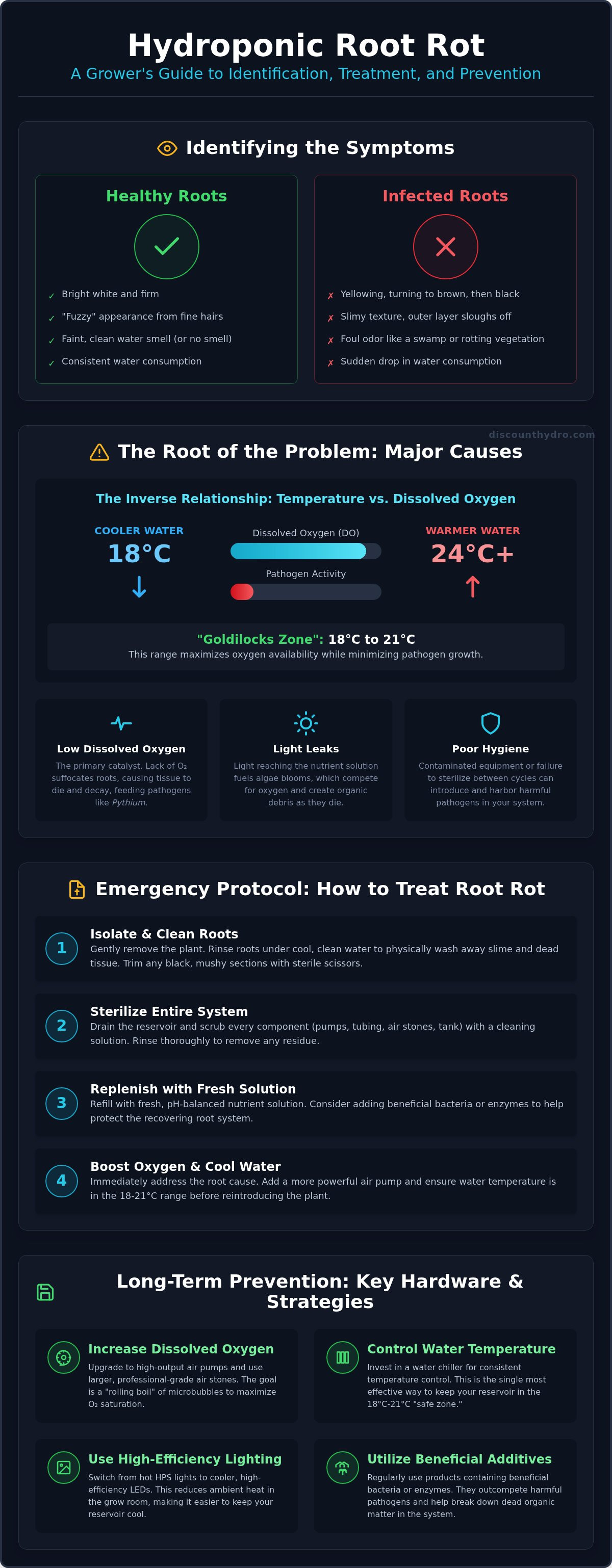
Visual identification is the most reliable method for spotting an infection. Healthy roots are bright white, firm, and often have a "fuzzy" appearance from fine root hairs. In contrast, roots suffering from rot will transition through several stages:
- Yellowing: An early sign of stress and oxygen deprivation.
- Brown Slime: A clear indicator that pathogens have taken hold.
- Black Decay: The final stage where the root tissue is completely necrotic.
The "smell test" is another vital diagnostic tool. A healthy reservoir should have little to no scent, or perhaps a very faint smell of clean water. An infected system will emit a distinct, pungent odour similar to rotting vegetation or stagnant pond water. If your grow room smells like a swamp, you likely have a hydroponic root rot problem.
Early Warning Signs in Your Hydroponic System
Don't wait for the roots to turn black to take action. One of the first indicators is a sudden drop in water consumption. If your reservoir levels aren't dropping at the usual rate, the plants' vascular systems are likely compromised. You might also notice "sloughing," where the outer layer of the root easily slides off when touched, leaving a thin, thread-like core. Pythium acts as the primary fungal culprit in hydroponic setups, thriving in warm, stagnant water where oxygen levels have plummeted.
The Impact on Plant Health and Yield
Once infection sets in, the plant's ability to transport water and minerals is severely restricted. This often manifests as "phantom" nutrient deficiencies; you might see yellowing leaves or burnt tips even if your EC levels are perfect. Because the roots can't absorb what's available, the plant wilts even when sitting in a full nutrient solution.
The speed of infection is critical. In a high-performance system, a minor issue can become a total crop failure in less than 24 hours. Understanding What is Hydroponics? helps growers realise that without soil to act as a buffer, the margin for error is slim. Immediate intervention is the only way to save your investment and protect your final yield.
The Root of the Problem: Major Causes of Rot
Understanding why hydroponic root rot occurs is the first step toward preventing it. While pathogens like Pythium are often present in the environment, they only become a threat when your system's conditions decline. Environmental mismanagement, specifically regarding oxygen and heat, creates the perfect breeding ground for these infections. It isn't just about the presence of a fungus; it's about an environment that allows that fungus to outcompete your plants.
Dissolved Oxygen (DO) deficiency is the primary catalyst for root death. Roots require oxygen to perform cellular respiration; without it, they cannot absorb nutrients or maintain their structural integrity. When DO levels drop, root tissue begins to die, providing a food source for harmful bacteria and fungi. Stagnant water in Deep Water Culture (DWC) or poorly designed ebb and flow systems often results in these low-oxygen "dead zones."
Temperature and Oxygen: The Inverse Relationship
Water temperature and oxygen levels are inextricably linked. Cooler water has a higher capacity to hold dissolved oxygen, whereas warmer water sheds it rapidly. Maintaining your reservoir in the "Goldilocks Zone" of 18°C to 21°C ensures your plants have access to the oxygen they need while keeping pathogen growth in check. This temperature range provides the best balance for nutrient solubility and root health.
Once water temperatures hit 24°C, you enter the danger zone. At this heat, oxygen levels plummet and Pythium activation accelerates. High temperatures stress the plants, making them more susceptible to the pathogens already thriving in the warm, low-oxygen solution. Managing these variables is just as important as your feeding schedule, which you can learn more about in our Hydroponic Nutrients Guide.
Grow Room Hygiene and Light Control
Light leaks are another significant contributor to system failure. When light reaches your nutrient solution, it triggers algae blooms. Algae compete directly with your plants for dissolved oxygen and, as it dies, it creates organic matter that fuels bacterial growth. Using black and white reflective sheeting to cover your reservoir and pots is a simple, cost-effective way to block light and keep temperatures down by reflecting radiant heat away from the root zone.
Poor hygiene practices often introduce the initial pathogens. Contaminated tools, dusty grow room floors, or even using untreated water sources can bring Pythium into your system. Organic matter, such as fallen leaves or dead root fragments left in the reservoir, provides the fuel these pathogens need to colonise. To ensure your system remains oxygenated and clean, consider investing in high-output air pumps from our professional range to maintain maximum DO levels at all times.
Emergency Protocol: How to Treat Hydroponic Root Rot
When hydroponic root rot takes hold, your response time determines whether you harvest or bin the entire crop. This protocol is a structural reset, not a quick fix. You must be aggressive to stop the spread of Pythium across your entire system. If you hesitate, the infection will move from a single plant to your entire reservoir in hours.
- Step 1: Isolation. Immediately remove the most severely infected plants. If the roots are black and mushy, they're likely beyond saving and will only serve as a pathogen factory for your healthy stock.
- Step 2: Physical Cleaning. Take the remaining plants and gently rinse the root masses under lukewarm, clean water. You need to physically remove as much of the brown slime as possible without snapping the delicate white core.
- Step 3: Hardware Sterilisation. Drain your entire system. Scrub the reservoirs, pumps, and airlines with a professional-grade sterilising solution. Pathogens hide in the biofilm inside your tubing; if you don't clean the hardware, the rot will return within days.
- Step 4: The Reset. Re-pot plants into fresh, sterile growing media. Fill your system with a fresh nutrient solution at a lower concentration to reduce stress on the compromised root systems.
Chemical Treatments and Sterilisers
Hydrogen Peroxide (H2O2) is the standard tool for UK growers looking to oxygenate their water and kill pathogens on contact. For a typical 3% concentration, a common dosage is approximately 5ml per litre of nutrient solution. You must choose between a "sterile" or "organic" approach. A sterile system uses chemical oxidisers to keep the water clear. An organic approach uses beneficial bacteria to outcompete the rot. Don't mix the two; sterilisers will kill your expensive beneficial microbes instantly.
Post-Treatment Care and Monitoring
Recovery is a slow process. Reduce your nutrient strength by 50% for the first 48 hours. This allows the damaged vascular system to recover without being overwhelmed by high salt concentrations. Use professional root stimulants to encourage the growth of new, white capillary roots. Watch your reservoir pH closely. Hydroponic root rot causes significant pH fluctuations as the organic matter decays; a stable pH is the first sign that your treatment is working. Keep your air pumps running at maximum capacity to ensure the new roots have the oxygen required for rapid repair.
Long-Term Prevention Strategies for UK Growers
Maintaining a sterile or biologically active system requires discipline. The 14-day reservoir change-out rule is your baseline for peak hygiene. Regular resets prevent nutrient imbalances and ensure that pathogens don't have time to reach critical mass. For UK growers, managing seasonal shifts is the biggest challenge to avoiding hydroponic root rot long-term. Proactive environmental management is always more cost-effective than attempting to save a dying crop.
The Role of Air Stones and Diffusers
Small, clogged air stones are a silent killer in DWC systems. Over time, salt buildup and biofilm restrict airflow, starving your roots of oxygen even if the pump is running. You should upgrade to oversized, high-output air pumps to ensure a constant supply of dissolved oxygen. Selecting a pump based on your total reservoir volume is essential; aim for at least one litre of air per minute for every four litres of nutrient solution. This becomes especially critical during UK summer months when ambient temperatures rise and water naturally sheds its oxygen capacity.
Environmental Control in the Grow Room
Keeping your water cool starts with managing the air around it. Effective extraction and intake fans must move enough air to prevent heat pockets from forming around your reservoir. Lift your tanks off cold concrete floors in winter and insulate them in summer using thermal jackets. This passive cooling technique is a simple way to maintain stability without high electricity costs. Using filtered water is another professional step to reduce the initial pathogen load entering your system.
Switching to high-efficiency LED grow lights is one of the most effective ways to lower your ambient grow room temperature. Unlike HPS lamps, LEDs emit significantly less radiant heat, which prevents your reservoir from warming up directly under the light spread. This hardware change makes it much easier to maintain the ideal temperature range. If you want to outcompete Pythium naturally, introduce beneficial microbes. Professional nutrient brands like Intense Nutrients and Dutch Pro offer supplements designed to colonise the root zone with "good" bacteria, creating a biological shield that prevents harmful fungi from taking hold.
To keep your system running at peak performance and ensure maximum oxygenation, buy high-output air pumps from our professional range today.
Essential Supplies for a Rot-Free Hydroponic Setup
Building a system that resists hydroponic root rot requires more than just good habits; it requires the right hardware. Investing in professional-grade equipment creates a stable environment where pathogens cannot gain a foothold. While basic kits might get you started, high-performance setups rely on specific components designed to manage heat and oxygen levels effectively. Transitioning to a professional setup is the most reliable way to protect your investment in nutrients and lighting.
Why LED Lighting is a Game-Changer for Water Temp
High-Pressure Sodium (HPS) lighting has traditionally been the standard, but its high radiant heat output is a major contributor to reservoir temperature spikes. LEDs produce significantly less infrared heat, meaning your nutrient solution stays within the safe 18°C to 21°C range without the constant need for expensive water chillers. Check out our LED Grow Lights Buyer Guide to find the most efficient fixtures for your space. Switching to LEDs provides an immediate ROI by drastically reducing the electricity costs associated with active cooling and air extraction.
Must-Have Hardware for Serious Growers
Secure Your Harvest with Professional Grade Gear
Managing a high-performance system requires constant vigilance against environmental stressors. You now have the protocols to identify symptoms and execute a reset if hydroponic root rot appears. Prioritise dissolved oxygen levels and switch to LED lighting to reduce radiant heat. These steps create a stable environment that resists pathogens like Pythium. Consistent maintenance and professional hardware are the only ways to prevent crop loss and wasted nutrients. Protecting your investment starts with a clean reservoir and maximum oxygenation throughout the entire growing cycle.
Don't wait for roots to turn brown before taking action. Shop Professional Hydroponic Supplies at Discount Hydro for the industry's most reliable prevention tools. We offer competitive prices on high-output air pumps, root supplements, and the latest LED technology. Our service includes fast UK-wide delivery and click and collect options at our County Durham location. Get the right equipment today and keep your system running at peak performance. Your next successful harvest is just one upgrade away.
Frequently Asked Questions
Can plants recover from root rot in hydroponics?
Plants can recover if you act before the roots turn completely black and necrotic. You must remove the slime physically and sterilise the system to stop the spread. New white capillary roots will eventually emerge if the water temperature and oxygen levels are stabilised. If the plant has wilted beyond the point of standing up, it is usually too late for a full recovery.
How much hydrogen peroxide should I add to my reservoir for root rot?
A standard dosage for 3% hydrogen peroxide is 5ml per litre of nutrient solution. This helps oxygenate the water and kills surface pathogens on contact. Be careful not to exceed this amount, as high concentrations can damage delicate root hairs. You should add it every two to three days because H2O2 breaks down into water and oxygen quickly in the reservoir.
What is the best water temperature for hydroponics to prevent rot?
The ideal range for preventing hydroponic root rot is 18°C to 21°C. Water in this range holds enough dissolved oxygen to keep roots healthy while remaining cool enough to slow the metabolism of harmful bacteria. If your reservoir exceeds 24°C, you significantly increase the risk of an outbreak. Use insulation or LED lighting to maintain these stable temperatures throughout the day.
Is brown root always a sign of rot or can it be nutrient staining?
Brown roots aren't always rotting; they can be stained by dark organic nutrients or humic acid additives. To check, perform the touch test. Healthy stained roots will still feel firm and won't have a foul smell. If the roots are slimy, mushy, or pull away easily from the core, you're dealing with an infection rather than simple staining from your feed.
How do I know if my air pump is powerful enough for my reservoir?
Your air pump should deliver at least one litre of air per minute for every four litres of nutrient solution. For a 100 litre reservoir, you need a pump rated for 25 litres per minute minimum. If you see large, lazy bubbles instead of a fine mist of tiny bubbles, your air stones might be clogged or your pump lacks sufficient pressure for the depth.
Can I use beneficial bacteria and hydrogen peroxide at the same time?
You cannot use these two treatments simultaneously. Hydrogen peroxide is a powerful sterilising agent that doesn't distinguish between good and bad bacteria. If you add H2O2 to a system containing beneficial microbes, you'll kill the expensive additives you've just paid for. Choose either a sterile chemical approach or a biologically active one to manage your system's health.
What does hydroponic root rot smell like?
An infected reservoir smells like rotting cabbage, stagnant pond water, or a swamp. Healthy hydroponic systems should have a neutral or slightly earthy scent. If you notice a pungent, sour, or musty odour when you open your grow tent, it's a primary indicator that hydroponic root rot has taken hold. This smell is often detectable before visual symptoms appear on the foliage.
How often should I clean my hydroponic system to avoid pathogens?
You should perform a complete reservoir change and system flush every 14 days to maintain peak hygiene. Between cycles, you must deep clean all trays, pumps, and airlines using a professional sterilising solution. This prevents the buildup of biofilm and organic matter that fuels pathogen growth. Regular maintenance is the most effective way to ensure your root zone remains healthy and bright white.