

Is Hydroponic Growing Cheaper Than Buying Vegetables? 2026 Cost Comparison
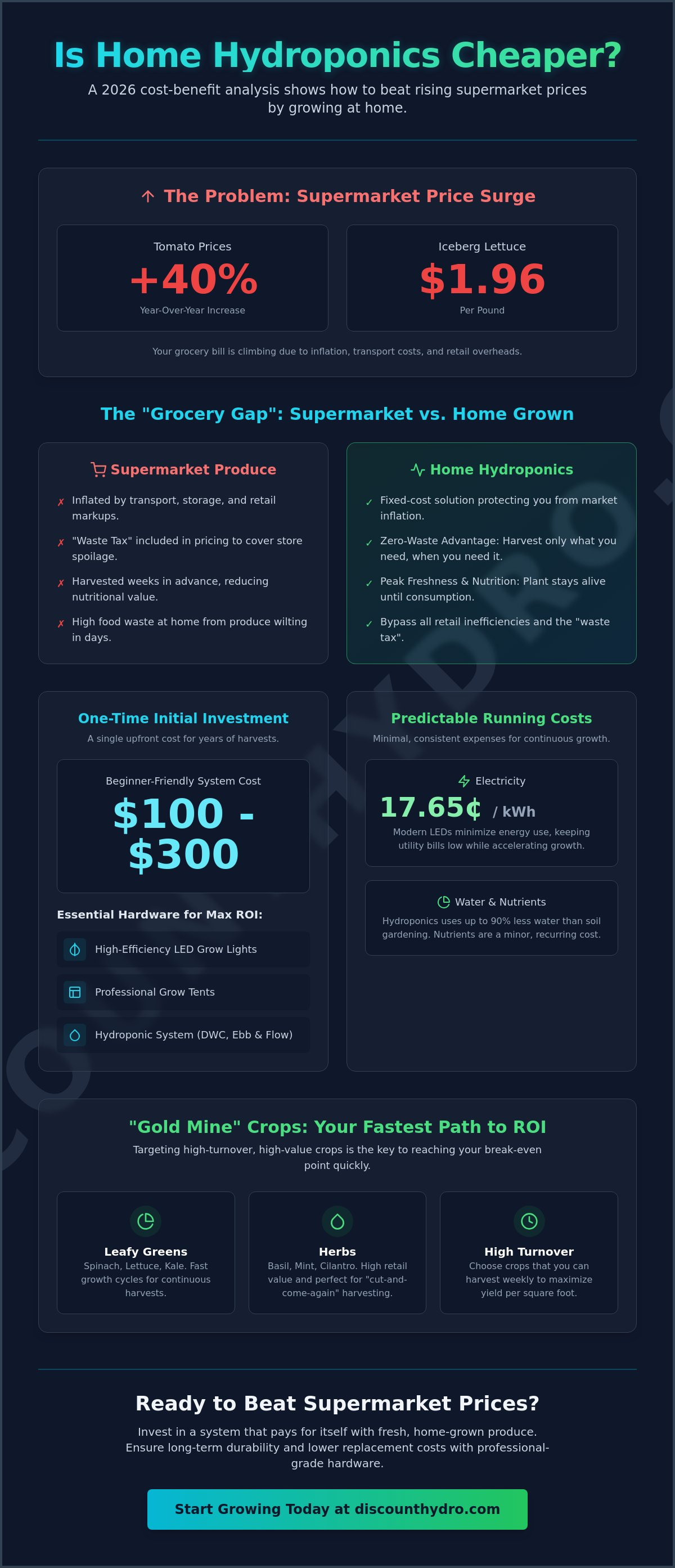
Tomato prices have surged by 40% over the past year, while iceberg lettuce now sits at $1.96 per pound. As supermarket inflation continues to climb, many shoppers are asking: is hydroponic growing cheaper than buying vegetables in the long run? It's a valid concern, especially when you're facing rising costs for fresh produce and high waste from store-bought greens that wilt in days. While a beginner-friendly home system typically costs between $100 and $300 upfront, the efficiency of growing your own food can drastically reduce your monthly grocery spend.
We agree that the initial investment and the potential for high electricity bills can feel like a barrier. This guide provides the exact ROI of home hydroponics for 2026, using current residential electricity rates of 17.65¢/kWh to show you the real numbers. You'll learn how to reach your break-even point faster by selecting the most profitable, high-value crops. We also preview low-cost entry strategies and the best equipment, like LED grow lights and nutrient supplements, to help you beat supermarket prices and secure your own food supply at home.
Key Takeaways
- Learn how to identify the "break-even" point where your initial hardware investment starts paying for itself through weekly grocery savings.
- Discover why targeting high-turnover crops like spinach and basil is the fastest way to prove that is hydroponic growing cheaper than buying vegetables.
- Get a clear breakdown of 2026 running costs, including how modern LED grow lights and specialized plant nutrients impact your monthly utility bills.
- Find out which "Gold Mine" crops offer the highest yield per square foot to maximize the profitability of your indoor space.
- Understand the value of sourcing professional grow tents and systems from specialist retailers to ensure long-term durability and lower replacement costs.
The Economics of Hydroponics vs. Supermarket Prices
Calculating the true cost of fresh produce requires looking beyond the price tag on a shelf. If you want a direct answer: yes, home growing is more cost-effective over time. The primary question of whether is hydroponic growing cheaper than buying vegetables depends on your crop choice and equipment efficiency. In June 2026, data shows tomato prices have increased by 40% year-on-year. Home systems provide a fixed-cost solution that protects your wallet from this level of supermarket inflation.
Success in home farming relies on understanding the "Grocery Gap." This is the difference between the actual cost of growing a plant and the retail price you pay. Supermarket prices are inflated by transport, storage, and retail overheads. By investing in your own hardware, you eliminate these variables. You move from a model of constant spending to one of front-loaded investment with a high return on investment (ROI) through continuous harvests.
Why Supermarket Vegetables Cost So Much
Retail greens are priced for logistics. When you buy a head of lettuce in the UK, you're paying for cold-chain shipping and massive amounts of plastic packaging. These products are often picked weeks before they hit the shelf, which reduces their nutritional value and shelf life. Supermarkets also factor their own food waste into their pricing. If a store throws away 20% of its spinach, the remaining 80% must be priced higher to cover the loss. You're essentially paying a "waste tax" every time you shop.
Using Hydroponics allows you to bypass these inefficiencies. You control the environment, meaning no pesticides and no long-distance shipping. You get professional-grade produce without the retail markup.
The Zero-Waste Advantage
One of the biggest financial drains for UK households is the "soggy bag of lettuce" syndrome. Most store-bought greens begin to degrade the moment they're harvested. Statistics show that high food waste from store-bought greens significantly increases the effective price per edible gram. When you stop throwing away spoiled food, you realize that is hydroponic growing cheaper than buying vegetables over the course of a single year.
- 100% Utilization: You only harvest the exact amount of leaves you need for a meal.
- Extended Freshness: The plant remains alive and growing until you decide to eat it.
- No Spoilage: You eliminate the cycle of buying fresh produce only to throw it away three days later.
The harvest-on-demand economic model eliminates post-purchase spoilage by keeping the plant's root system active until the moment of consumption. This ensures every penny spent on seeds and nutrients results in food on your plate.
Initial Setup Costs: Investing in Your Home Farm
Upfront costs are the primary barrier for most new growers. A beginner-friendly home hydroponic system typically costs between $100 and $300 to get started in 2026. While this initial spend is higher than a single grocery shop, it represents a one-time capital investment. To accurately answer if is hydroponic growing cheaper than buying vegetables, you have to look at the lifespan of the hardware. High-quality components last for years, spreading the initial cost across hundreds of individual harvests.
Efficiency starts with your light source. Selecting high-performance LED grow lights is a non-negotiable step for maximizing ROI. Modern 2026 LED tech converts more energy into usable light for plants rather than waste heat. This keeps your electricity bills low while accelerating growth cycles. You also need to protect this environment. Using professional grow tents helps you maintain a stable micro-environment. This prevents crop failure due to external temperature swings or pests, ensuring your investment actually makes it to the dinner table.
Essential Hardware for Cost-Efficiency
Your choice of system dictates your ongoing maintenance time and cost. Deep Water Culture (DWC) is often the most affordable entry point for beginners. It uses a simple reservoir and air pump. For those looking to scale, Ebb and Flow systems are efficient for managing multiple plants at once. If you're growing for a family, a 1.2m tent is the industry standard for efficiency. It provides enough footprint for a continuous supply of greens without requiring industrial-grade ventilation. Proper airflow and odour control systems are essential to protect your home from humidity and keep your setup discreet.
Consumables: Seeds, Media, and Nutrients
Once your hardware is in place, your running costs shift to consumables. Seeds are incredibly cheap. You can buy hundreds of seeds for the price of a single pre-packaged supermarket salad. Growth speed is then determined by your feed. Choosing the right hydroponic nutrients ensures your plants hit their maximum yield potential in the shortest possible time. To keep costs down, use reusable growing media like clay pebbles. Unlike soil or single-use plugs, clay pebbles can be cleaned and reused for multiple seasons. You can browse our full range of pots, trays, and systems to find the right fit for your budget.
Focusing on durable hardware and reusable media reduces your long-term overhead. By avoiding the need to repurchase soil or low-quality lights, your cost per harvest drops significantly after the first three months. This front-loaded spending is what eventually makes home growing more profitable than retail shopping.
Running Costs: Electricity, Water, and Nutrients
Running costs are the final piece of the ROI puzzle. While your hardware is a fixed cost, your monthly utility spend is variable. Many people fear that lighting an indoor garden will lead to massive bills. When you look at the 2026 data, the reality is different. The question of is hydroponic growing cheaper than buying vegetables is easily answered when you compare a $40 monthly running cost to a $100 supermarket bill for fresh produce.
The 2026 LED revolution has slashed energy consumption across the board. Previous generations of growers used high-pressure sodium bulbs that acted like space heaters. Today, efficiency is the priority. Using the current average residential electricity rate of 17.65¢/kWh, you can run a productive system for less than the cost of a daily coffee.
The Reality of Electricity Bills
A typical 200W LED grow light consumes less power than many common household appliances. It's comparable to running a modern gaming console or a large flat-screen TV. Your light cycle is the biggest factor in your monthly bill. Leafy greens often require an 18/6 cycle, while fruiting plants might move to 12/12. Modern LEDs convert more energy to PAR than heat. This efficiency means you don't need to waste extra electricity on high-powered extraction fans to keep your tent cool. You get more growth per watt than ever before.
Nutrient and Water Maintenance
Water savings are another hidden financial benefit. Traditional soil gardening is often wasteful, but hydroponics uses up to 95% less water. This is because the water stays within the system rather than sinking into the ground. Considering the average monthly water bill ranges from $40 to $70, reducing consumption is vital. At a price of approximately 3 cents per 10 gallons, your garden's water consumption becomes a negligible part of your overhead.
Nutrient dosing is equally efficient. Concentrated plant nutrients are designed for precision. You only add what the plants can actually use. By regularly monitoring pH and EC levels, you avoid nutrient lockout and plant death. This precision feeding ensures you don't waste expensive supplements. It keeps your cost per harvest low and your yield quality high. You aren't just growing food; you're running a high-efficiency production line in your own home. Focusing on these efficiencies ensures that is hydroponic growing cheaper than buying vegetables for your household every single month.
The Yield Advantage: Which Crops Offer the Best ROI?
Maximizing your return on investment requires strategic crop selection. Not every plant thrives in a water-based environment, and some aren't worth the shelf space. Root vegetables like carrots, potatoes, and parsnips are generally poor choices for standard hydroponic systems. They require deep growing media and don't benefit from the high-oxygen liquid environment as much as leafy greens. To ensure that is hydroponic growing cheaper than buying vegetables for your home, you have to focus on high-turnover, high-margin crops.
Growth speed is your primary advantage. Hydroponic plants grow 30-50% faster than those grown in soil. This speed isn't just a technical stat; it's a financial one. Faster growth means more harvests per year. In a standard 1.2m grow tent, you can cycle through crops like spinach or kale every three to four weeks. This allows for up to 12 harvests annually, far outperforming the seasonal limits of traditional gardening or the price fluctuations of retail supermarkets.
High-Margin vs. Low-Margin Vegetables
The "Herb Strategy" is the fastest way to hit your break-even point. A single pack of basil or mint seeds costs very little but can produce hundreds of pounds worth of fresh herbs over a year. Supermarkets sell these in small, plastic-heavy packets at massive markups. By growing them at home, you turn a small spend on nutrients and light into high-value produce. Salad greens offer similar savings. You bypass the "premium" pricing of organic bags and get a cleaner product. Specialty tomatoes also offer a massive yield advantage. With tomato prices up 40% as of June 2026, every kilogram you grow at home represents a significant saving on your weekly shop.
Annual ROI Calculation Table
This table compares the estimated costs of supermarket produce against home-grown hydroponic yields. Figures are based on 2026 data, including the 17.65¢/kWh electricity rate and current retail prices.
| Crop Type | Supermarket Price (per lb) | Hydro Running Cost (per lb) | Potential Annual Saving |
|---|---|---|---|
| Iceberg Lettuce | $1.96 | $0.15 | High |
| Tomatoes | $2.49 | $0.45 | Very High |
| Fresh Basil | $12.00+ | $0.60 | Extreme |
Most beginners find they break even on their initial kit within four to six months if they focus on these "Gold Mine" crops. You also get a quality bonus. Home-grown, vine-ripened produce has a higher nutritional value and better flavour than anything sitting on a retail shelf. Start maximizing your home production today by browsing our professional pots, trays, and systems to find the right fit for your space.
Getting Started for Less with Discount Hydro
Starting your own indoor garden shouldn't break the bank. While we've established that is hydroponic growing cheaper than buying vegetables when looking at long-term yields, your choice of supplier determines your initial margin. Discount Hydro focuses on a no-frills, value-first approach. We don't spend on flashy marketing or unnecessary extras. We prioritize inventory and competitive pricing so you can start your setup for less. This direct-to-consumer model ensures you aren't paying for retail markups found in high-street shops.
Buying from a specialist UK retailer beats generic marketplaces. Sites like Amazon often list unbranded, low-efficiency hardware that fails within months. At Discount Hydro, we stock industry-standard components designed for durability. Our warehouse in County Durham serves as a hub for both UK-wide delivery and local click-and-collect. This logistical efficiency keeps our overheads low, and we pass those savings directly to you. Whether you need a single tray or a full tent setup, we provide the hardware required to beat supermarket inflation.
Value-Driven Kits and Components
Selecting the right LED Grow Lights for your budget is the first step in managing your ROI. We offer a range of lighting options that balance upfront cost with 2026 energy efficiency. Beyond hardware, your nutrient choice impacts your growth speed. We stock high-quality nutrients from trusted brands like Dutch Pro and Intense Nutrients. These concentrates are formulated for precision feeding, ensuring you don't waste money on ineffective supplements. Every order is handled with our commitment to fast, discreet nationwide delivery. We ensure your equipment arrives safely and ready for immediate use.
Expert Support for Your Growing Journey
Accessing local knowledge at our Chester-le-Street location helps you avoid expensive beginner mistakes. Many new growers overspend on oversized systems or unnecessary tech. Our team provides pragmatic advice on scaling your grow to match your family's needs. We stock the technical tools and accessories, like pH meters and EC controllers, that simplify maintenance and prevent crop loss. By getting the right advice from the start, you ensure your system remains a profitable investment rather than a costly hobby. We focus on the hardware that delivers the best yield for every pound spent.
The evidence is clear: is hydroponic growing cheaper than buying vegetables? Yes, provided you source reliable hardware and use efficient feeding schedules. Stop overpaying for supermarket produce and take control of your food costs. Browse our value range and start saving today.
Beat Supermarket Inflation with Home Hydroponics
Supermarket price hikes for tomatoes and greens are a permanent reality in 2026. Shifting from a retail buyer to a home producer allows you to freeze your food costs and eliminate the "waste tax" of spoiled produce. By focusing on high-turnover crops like spinach and basil, you'll reach a break-even point in just a few months. When you calculate the long-term ROI, the answer to is hydroponic growing cheaper than buying vegetables is a definitive yes. It's a pragmatic financial move for any household looking to secure its food supply.
Discount Hydro provides everything needed to launch your indoor farm at the lowest possible price point. We offer competitive prices on top-tier LED brands and specialized nutrients to maximize your growth speed. You can rely on our UK-based expert support to guide your equipment choices and avoid unnecessary spending. Whether you prefer fast nationwide delivery or click-and-collect at our County Durham location, we ensure your hardware arrives ready for work. Take control of your grocery budget today.
Shop Discount Hydro's Value Range and Beat Supermarket Prices
Frequently Asked Questions
Is it really cheaper to grow your own vegetables indoors?
Yes, home hydroponics is cheaper over the long term because you eliminate retail markups and transport costs. Supermarket tomato prices rose 40% in the last year, making store-bought produce a volatile expense. When you analyze the data, is hydroponic growing cheaper than buying vegetables becomes clear once you move past the initial hardware investment. You gain a fixed-cost food source that is immune to supermarket inflation and seasonal price spikes.
How much does a basic hydroponic setup cost to start?
A beginner-friendly home hydroponic system typically costs between $100 and $300 upfront. This investment covers the essential reservoir, pump, and basic lighting required for leafy greens. For those on a tighter budget, DIY systems like the Kratky method can be assembled for as little as $40 to $65. High-end wall systems or larger grow tents can exceed $1,000 but offer significantly higher yields for family-sized production.
Which vegetables are the most profitable to grow at home?
Leafy greens and herbs offer the fastest return on investment due to their high retail prices and fast growth cycles. Basil, mint, spinach, and kale are considered "Gold Mine" crops because they are expensive to buy fresh but cheap to grow. Specialty tomatoes and peppers also provide excellent value. These plants benefit most from the 30-50% faster growth speed seen in hydroponic environments compared to traditional soil gardening.
Does hydroponics use a lot of electricity in the UK?
Modern LED grow lights have made indoor gardening highly energy-efficient. Based on 2026 residential electricity rates of 17.65¢/kWh, running a standard 200W LED light costs less than many common household appliances. Most home growers spend between $15 and $40 per month on electricity and nutrients. This monthly spend is significantly lower than the cost of buying the equivalent amount of fresh, high-quality produce from a premium supermarket.
How long does it take for a hydroponic system to pay for itself?
The payback period for a home hydroponic system is estimated to be 2-4 years for those who regularly grow high-value crops. You can accelerate this timeline by focusing exclusively on expensive herbs and greens, which can lead to a break-even point in under a year. Because hydroponic systems use up to 95% less water than soil, you also save on utility bills while producing a higher volume of food per square foot.
Do I need a lot of space to grow vegetables hydroponically?
You don't need a large garden or a dedicated room to be productive. Vertical hydroponic systems and compact 1.2m grow tents allow you to produce a large volume of food in a very small footprint. This makes indoor growing ideal for apartments or homes without outdoor space. Because you control the environment, you can stack plants vertically to maximize your yield per square foot of floor space.
Is hydroponic food as healthy as store-bought organic produce?
Hydroponic produce is often healthier than store-bought options because it is harvested at peak ripeness. Retail vegetables lose nutritional value during long-distance shipping and weeks of cold storage. In a home system, you control the exact nutrient intake of the plant and eliminate the need for pesticides. This results in cleaner, more nutrient-dense food that hasn't been sitting on a shelf or treated for extended shelf life.
Can I grow vegetables year-round with hydroponics?
Yes, the ability to grow regardless of the weather is a major advantage. Indoor systems provide a stable micro-environment that allows for continuous harvests even in the middle of winter. This year-round production ensures you always have access to fresh greens without paying "out of season" retail prices. Consistent production is another reason why is hydroponic growing cheaper than buying vegetables when you look at your total annual grocery spend.