

LED Fixtures for Indoor Growing: The 2026 Buyer’s Guide
Upgrading to high-efficiency led fixtures can slash your energy consumption by up to 75% compared to traditional HPS systems. You're likely tired of opening electricity bills that drain your budget or managing excessive heat in your grow tent. It's difficult to navigate technical terms like PAR and PPFD when your main goal is simply a better harvest. You need reliable tools that provide a clear return on investment without the headache of constant equipment maintenance.
This 2026 buyer's guide shows you how to choose the perfect equipment to optimize yields and reduce operational costs. You'll learn how to identify high-efficiency units that meet the latest DLC V3.0 standards, ensuring you get the most light for every watt. We provide a direct look at current efficiency benchmarks and utility rebate requirements to help you build a more profitable indoor garden. By the end, you'll know exactly which features translate to denser harvests and lower monthly expenses.
Key Takeaways
- Understand why the industry shift from HPS to high-performance led fixtures is essential for lowering heat and energy overhead in 2026.
- Identify the specific PAR and PPF metrics that drive photosynthesis to ensure your equipment delivers actual growth results.
- Determine whether bar-style or quantum board fixtures better suit your grow space dimensions for maximum light uniformity.
- Explore top-rated equipment recommendations, such as the Omega Black 720W LED, designed for high-efficiency indoor cultivation.
- Master optimal hanging heights and avoid common wattage fallacies to prevent light burn and unnecessary energy waste.
Why High-Performance LED Fixtures are Essential for Modern Growers
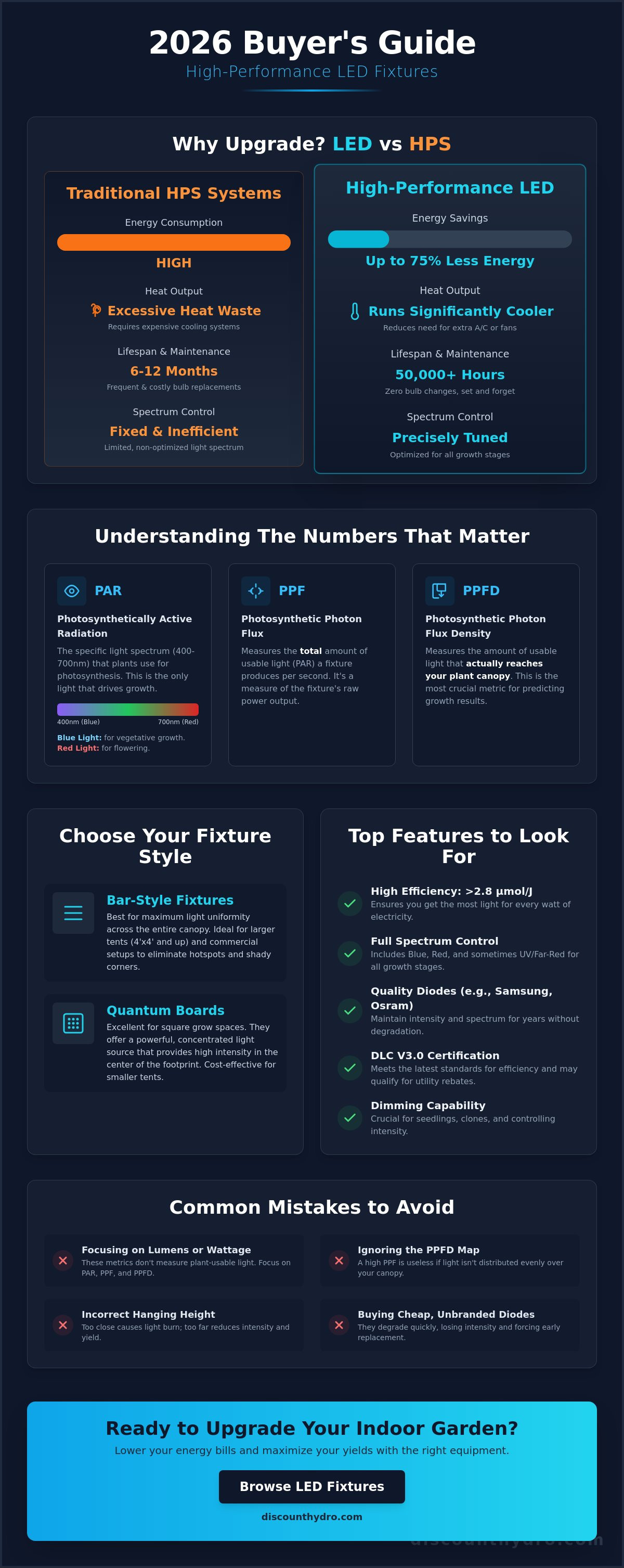
High-performance led fixtures are precision tools. They aren't just standard bulbs; they're specialized semiconductor arrays designed to trigger photosynthesis. Understanding what a grow light is helps you see why the industry has moved away from old High-Pressure Sodium (HPS) systems. HPS lights waste energy as heat. Modern led fixtures convert that power into usable light for your plants. Transitioning to LED in 2026 is a financial necessity for any serious indoor garden.
Heat stress kills yields. Traditional bulbs act like space heaters in your grow tent. This forces you to run expensive air conditioning or high-powered fans. Modern LEDs run significantly cooler. Your plants stay in their optimal temperature zone without constant struggle. You'll also see a major return on investment through these key areas:
- Lower Energy Bills: LEDs produce more light per watt than any other technology.
- Zero Bulb Changes: Stop spending money on replacement HPS lamps every six months.
- Improved Quality: Precise spectrum control leads to better plant structure and terpene profiles.
- Reduced Water Usage: Lower heat means less evaporation and more efficient nutrient uptake.
The Shift from Traditional Lighting to LED
Old tech like HPS or Metal Halide (MH) requires massive head height. You can't put them close to the canopy without burning the leaves. LED fixtures change this. Their design allows for closer proximity. You can grow in shorter tents or stack shelves in vertical setups. This efficiency also changes your extraction needs. You don't need oversized, noisy fans just to suck out the heat from a single bulb. Smaller, cheaper ventilation systems work perfectly. It's about maximizing every square inch of your grow space.
Energy Efficiency and Operational Costs in the UK
UK energy prices remain a primary concern for growers. Every watt matters. Electrical efficiency in this context is measured in micromoles per watt (µmol/J). This number tells you exactly how much plant-usable light you get for your money. High-performance units often reach over 2.8 µmol/J. Lower heat output means your cooling fans run less often. This double-saving on electricity makes the initial purchase price of led fixtures a smart financial move. You'll pay more upfront but spend much less every month. It's a direct path to lower overheads and higher profit margins.
Technical Specifications: Understanding PAR, PPF, and Spectrum
Stop looking at lumens. They measure how bright a light looks to people, not how well plants grow. Photosynthetically Active Radiation (PAR) covers the 400 to 700 nanometer waveband. This is the only light range your plants use for photosynthesis. When comparing led fixtures, look at the PAR map instead of the raw wattage. High-quality components from brands like Samsung and Osram ensure the diodes don't degrade quickly. These name-brand chips maintain their output for years, providing a consistent spectrum that cheaper, generic alternatives can't match. Buying cheap diodes is a mistake. They lose intensity fast, which forces you to replace the entire unit much sooner than expected.
The Importance of Full Spectrum Light
Modern marketing often uses "Full Spectrum" as a buzzword. In practice, it means the light mimics natural sunlight by including a mix of wavelengths. Blue light (400 to 500nm) is critical during the vegetative stage to keep plants short and bushy. Red light (600 to 700nm) drives the flowering process and increases harvest weight. Some advanced led fixtures now include UV for oil production and Far-Red to trigger faster flowering cycles. If you're starting from seed, look for "dim-to-propagate" settings. This allows you to lower the intensity so you don't fry delicate young plants with excessive power.
Measuring Light Intensity: PPF vs. PPFD
You need to understand the technical specifications of LED grow lights to make an informed purchase. Photosynthetic Photon Flux (PPF) measures the total amount of light a fixture produces per second. It's a useful number for comparing raw power. However, Photosynthetic Photon Flux Density (PPFD) is more important. It measures how many of those photons actually land on your plant canopy. A high PPF is useless if the light isn't distributed evenly across your tent. Higher numbers aren't always better; if the light is too intense without enough CO2, you'll cause light stress. Always check the manufacturer's PPFD map to see the "footprint." Use a PAR meter to verify these numbers in your own environment. Tent walls and hanging heights change the results significantly.
If you're ready to upgrade your setup, browse our latest led fixtures to find the right specs for your grow room size.
Choosing the Right LED Fixture for Your Grow Space
Selecting the correct led fixtures requires a pragmatic look at your floor space. Don't buy power you can't use. Over-lighting leads to light burn and heat issues that stunt growth. You need to match the actual power draw to your cultivation area to maintain a healthy environment. High-wattage units in small spaces are a waste of money and will damage your plants. For a deeper look at specific calculations and rules, see the LED Grow Lights: The Ultimate 2026 Buyer’s Guide.
Cooling is another vital factor. Most 2026 led fixtures use passive cooling. These units rely on large aluminum heat sinks to dissipate heat without noisy fans. Passive cooling is more reliable because there are no moving parts to fail. Active cooling uses fans to keep the unit small, but these are louder and require more maintenance. If you prioritize a silent, long-lasting setup, choose a passively cooled model.
Matching Wattage to Your Grow Tent Size
Your tent size dictates your light choice. If you haven't picked a space yet, read our guide on Choosing a Grow Tent first. Use these ranges as a baseline for high-intensity flowering:
- 0.6m x 0.6m Tents: 100W to 150W is sufficient for this footprint.
- 1.2m x 1.2m Tents: 480W to 650W provides full coverage for heavy yields.
- 1.5m x 1.5m Tents: 720W to 1000W is the standard for large-scale indoor kits.
These ranges provide enough light for heavy yields without needing supplemental CO2. Avoid the temptation to exceed these limits. Excessive intensity causes light bleaching and stunting. It also drives up leaf surface temperatures, making it harder for your plants to transpire properly.
Fixture Form Factors: Bars vs. Boards
Bar-style fixtures are the industry standard for larger tents. They use multiple strips to spread light evenly across the canopy. This prevents hot spots in the center and weak light in the corners. If you're growing in a 1.2m tent or larger, bars are the most efficient choice. Board-style fixtures are compact and cost-effective. They work well for propagation or small 0.6m spaces where you don't need a massive footprint. Always look for a detachable driver. Mounting the driver outside your tent helps keep temperatures stable during the summer. This simple change can reduce your internal tent temperature by several degrees.
Top LED Fixture Recommendations for 2026
Performance and price are the two most important factors when upgrading your grow room. Choosing high-output led fixtures from our LED Fixtures collection ensures you get the best light intensity for your budget. Buying from a UK specialist provides clear logistical advantages. You get fast delivery and reliable customer support. It's much better than waiting for overseas shipping or dealing with unexpected import taxes. Our inventory focuses on equipment that balances high efficiency with long-term durability. We prioritize products that deliver a high return on investment for both hobbyists and commercial growers. We act as a no-frills digital warehouse, passing the savings on to you through competitive pricing and bulk availability.
The Omega Black 720W LED: Professional Power
The Omega Black 720W LED is a top-tier choice for serious results. It delivers a massive 720W output. This makes it the standard for 1.2m x 1.2m grow spaces. It features a tested efficiency rating of 2.7 µmol/j. This ensures maximum photon output for every penny spent on electricity. The full spectrum coverage supports vigorous growth from the vegetative stage through to heavy flowering. It features a robust build quality designed for continuous use in humid indoor environments. The bar-style design prevents hot spots. It ensures your plants in the corners get the same intensity as those in the center. The unit is built for reliability. It's a pragmatic choice for anyone who needs consistent performance without the premium price tag of other high-end brands.
Compact Solutions for Small-Scale Cultivation
Not every setup requires 720W of power. If you're working with a smaller footprint, we recommend fixtures in the 100W to 200W range. These compact units are often "plug and play" designs. They're perfect for beginners who want a simple setup. You get the same professional spectrum as the larger bar lights but in a smaller package. These models are ideal for propagation or small 0.6m tent kits. They use high-efficiency diodes to keep heat low and yields high. It's a cost-effective way to start growing without compromising on light quality. These units are far superior to generic purple lights found on mass-market sites. They provide the specific wavelengths your plants need for actual growth. Browse the full LED Fixtures range to see current deals and mid-range options for smaller spaces.
Don't settle for underpowered lighting that stunts your harvest. View our high-efficiency led fixtures and start saving on your energy bills today.
Installation Tips and Common Mistakes to Avoid
Proper installation of your led fixtures ensures you don't waste the efficiency you paid for. Many growers make the mistake of assuming more wattage always equals more yield. This "more is better" fallacy often leads to light toxicity and nutrient lockout. If you push the light intensity too high without balancing other environmental factors, you'll see stunted growth and bleached leaves. It's a pragmatic balance between photon output and plant health. High intensity without proper CO2 levels or temperature control is just a waste of electricity. You'll end up with crispy leaf edges and airy flowers instead of the dense harvest you're looking for.
Optimising Hanging Heights and Intensity
For vegetative growth, keep your lights between 18 and 24 inches above the canopy. This height provides a broad footprint and prevents young plants from stretching or burning. As you move into the flowering stage, you can gradually lower the lights to 12 to 18 inches to increase intensity. Use your dimmer switch to save energy during the early weeks. You don't need 100% power for seedlings or cuttings. Light intensity dictates nutrient uptake; the harder you drive your plants with light, the more fuel they require to process that energy. This is why using high-quality hydroponic nutrients is essential when running high-performance LEDs.
Safety and Maintenance in the Grow Room
Maintenance is simple but critical. Dust and grime on your diodes block light and reduce the efficiency of your led fixtures. Clean the diodes gently with a dry, lint-free cloth when the lights are off and cool. Never use harsh chemicals or wet cloths that could damage the circuitry. Safety should be your first priority when hanging heavy equipment over your crop. Use high-quality ratchet hangers to secure your lights to the tent frame. These allow for easy, one-handed height adjustments as your plants grow taller. If your grow tent gets too hot during the summer months, move the LED drivers outside the tent. Most modern fixtures have long enough power cables to allow this. It removes a major heat source from the growing environment. This simple step helps you maintain the 24 to 28 degree Celsius sweet spot without running your extraction fans at full speed all day.
Ready to start your next cycle? Shop the full LED Fixtures collection at Discount Hydro for the best prices on professional-grade equipment.
Upgrade Your Indoor Garden Efficiency Today
Investing in high-performance led fixtures is the most pragmatic way to lower energy overhead while maximizing your harvest potential. You now have the technical knowledge to navigate PAR and PPFD metrics to find the perfect match for your grow tent dimensions. Diode quality and spectrum control are the primary drivers of plant health and final yield density. Balancing these factors with proper hanging heights and nutrient management creates a stable, high-yielding environment. We prioritize value and availability, ensuring you get professional-grade gear without unnecessary markups.
Discount Hydro is a UK-based specialist offering expert support and competitive discount pricing on top horticultural brands. We provide fast nationwide delivery and a convenient click-and-collect service to get your equipment to you when you need it. Our warehouse is stocked with the latest technology to help you scale your garden efficiently. Browse the full LED Fixtures collection at Discount Hydro for competitive prices and fast UK delivery. Take control of your energy bills and start producing higher quality yields today.
Frequently Asked Questions
Are LED fixtures better than HPS for indoor growing?
Yes, led fixtures are the superior choice for modern indoor cultivation. They offer higher electrical efficiency and produce significantly less heat than HPS systems. This allows you to maintain optimal temperatures without oversized cooling fans. While the initial cost is higher, the long-term savings on electricity and bulb replacements make LED the more pragmatic investment for any serious setup.
How many LED fixtures do I need for a 1.2m x 1.2m grow tent?
One high-powered bar-style fixture is usually sufficient for a 1.2m x 1.2m footprint. You should look for a unit with an actual power draw between 480W and 650W. This provides the necessary light intensity to cover the entire canopy from edge to edge. Using a single, well-designed fixture ensures uniform light distribution and simplifies your cable management.
What is the best wattage for an LED grow fixture?
The ideal wattage depends entirely on your specific growing area. A professional benchmark is to aim for roughly 30 to 40 watts of actual LED power per square foot of canopy. For a small 0.6m tent, a 100W to 150W unit works well. Larger 1.5m spaces require 720W to 1000W fixtures to drive heavy yields and ensure deep light penetration.
Do LED fixtures produce enough heat for my plants in winter?
LED fixtures run much cooler than traditional lighting. In uninsulated UK grow rooms during winter, you might need a supplemental heat source like a tube heater. They don't emit the same intense radiant heat as HPS bulbs. This is a massive advantage in the summer, but you'll need to monitor your root zone temperatures closely when the ambient air gets cold.
What is the difference between full spectrum and blurple LED fixtures?
Full spectrum led fixtures use white light diodes to mimic the sun's natural output. This technology supports all stages of plant growth and is easier for you to work under. "Blurple" lights are an older technology that only uses blue and red diodes. They're less efficient and often lead to nutrient deficiencies because they lack the broader light range plants need for health.
How long do professional LED grow fixtures last?
Most professional units are rated for 50,000 to 100,000 hours of continuous use. If you run your lights on a standard 12/12 cycle, this equates to over 10 years of reliable performance. Unlike HPS systems, there are no bulbs to change every six months. The light intensity will eventually degrade very slowly, but the fixture remains functional far longer than any other lighting type.
Can I use a regular household LED fixture for my plants?
No, household LEDs are designed for human visibility, not photosynthesis. They lack the specific wavelengths and high intensity required to grow healthy botanical crops. Using a standard bulb will result in weak, stretching plants and disappointing yields. Specialized horticultural fixtures are necessary to provide the PAR levels required for actual growth and flower production.
Should I leave my LED fixtures on 24 hours a day?
No, plants need a dark period for respiration and hormone regulation. While some growers use a 24-hour cycle for seedlings, a 18/6 cycle is better for vegetative growth. For the flowering stage, a strict 12/12 cycle is essential to trigger the plant's natural reproductive cycle. Constant light can cause stress and lead to issues with plant development.