

Propagation All: The Ultimate Buying Guide for Successful Cuttings and Seedlings
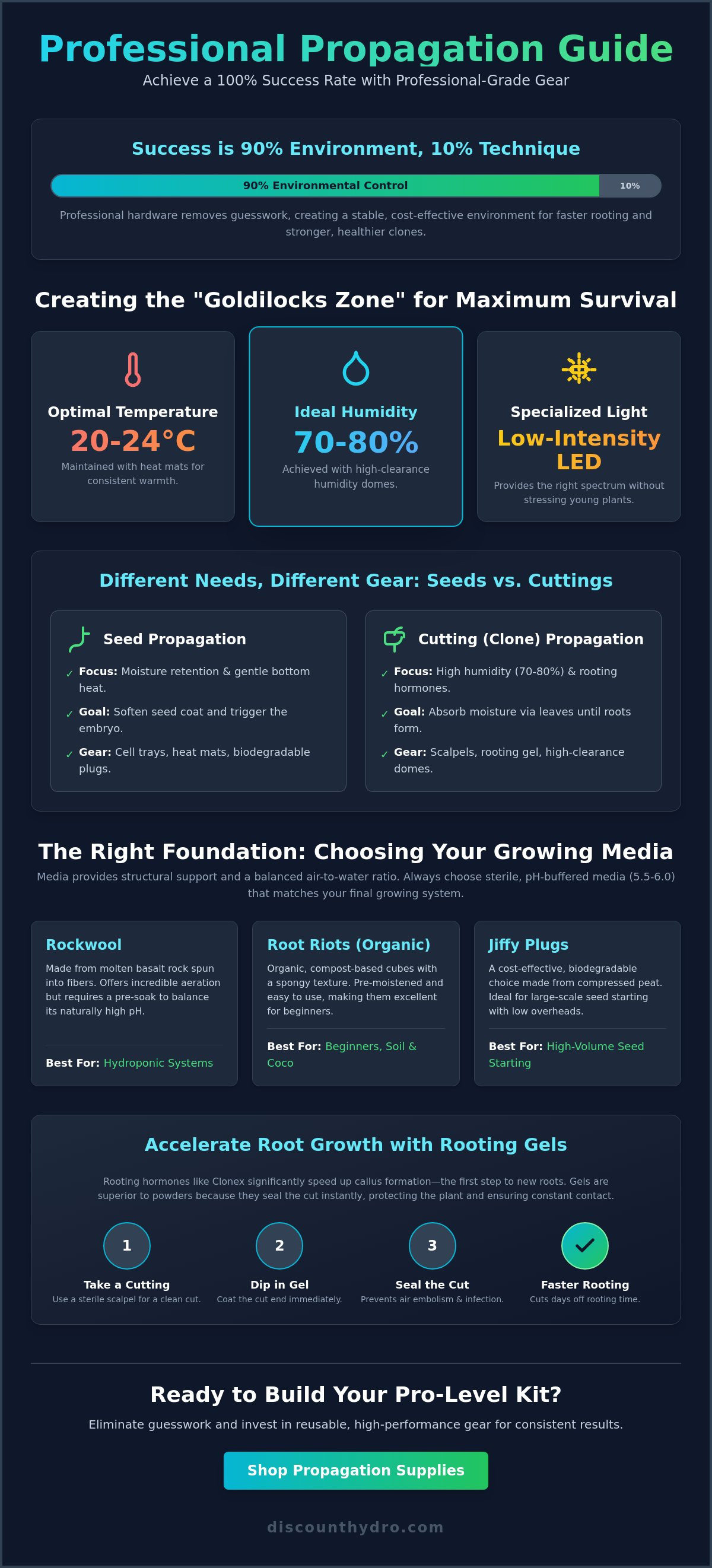
Professional propagation success is 10% technique and 90% environmental control through the right hardware. If you've dealt with high failure rates or slow rooting times, you know that standard hobbyist gear often falls short. It's frustrating to watch expensive cuttings wilt because humidity levels or temperatures weren't dialed in. You need a reliable system that removes the guesswork from the equation.
This guide covers propagation all the way from cell trays and humidity domes to the technical media that professional growers use to achieve a 100% success rate. Discover the specific tools needed for faster rooting and healthier, stronger clones. You don't need to overcomplicate the process. You just need the right professional-grade supplies to create a stable, cost-effective environment.
We'll preview the essential heat mats, specialized LED lighting, and high-performance media that form a reusable propagation setup. This is your roadmap to better yields and more efficient plant production.
Key Takeaways
- Learn to select growing media and rooting hormones that accelerate callus formation and root development.
- Discover how to maintain the 20-24°C "Goldilocks zone" and 70-80% humidity levels for maximum survival rates.
- Identify the essential hardware for propagation all types of plants, including sterile scalpels and high-clearance humidity domes.
- Assess your production volume and space to build a cost-effective, reusable propagation kit.
- Eliminate guesswork by using professional-grade supplies designed to provide the perfect balance of light, air, and moisture.
What is Propagation Gear and Why Does It Matter?
Plant propagation is the technical process of creating new plants from seeds or cuttings. While nature does this on its own, indoor growers need a level of control that the outdoor environment simply can't provide. Specialised gear ensures the perfect balance of humidity, temperature, and light. This is essential for propagation all through the year, regardless of the UK weather. Without environmental control, your success rate depends on luck rather than science.
Using professional supplies reduces the risk of rot and fungal infections. Young plants are vulnerable. High-quality propagators and sterile growing media create a controlled zone where pathogens are kept at bay. This hardware doesn't just help plants grow; it protects them. When you use professional-grade tools, you're investing in the biosecurity of your entire grow room. This leads to:
- Higher survival rates for delicate cuttings.
- Faster germination times for seeds.
- Stronger root systems that can handle transplanting.
- Reduced waste of expensive plant materials.
The Difference Between Seed and Cutting Equipment
Seeds and cuttings are biologically different. Seed propagation focuses on moisture retention and gentle bottom heat. The goal is to soften the seed coat and trigger the embryo. Cuttings, or clones, require 70-80% humidity and specific rooting hormones. They don't have roots yet, so they must absorb moisture through their leaves. A "one size fits all" approach often leads to lower success rates. You can't treat a fresh cutting like a hardy seedling and expect it to survive. Specialised equipment allows you to adjust these variables for maximum efficiency.
Why Discount Hydro Focuses on Professional Quality
We provide direct access to the same gear used by commercial nurseries. Our inventory isn't built on flimsy, disposable plastics. We focus on value-driven kits that save money in the long run. Professional-grade propagation supplies are built for reuse and high performance. By choosing quality hardware, you avoid the cost of constant replacements and the frustration of failed crops. If you're interested in how these systems integrate into modern setups, you can read more about What is Hydroponics? to see the full potential of soil-free growing. Our gear is selected for its ability to deliver consistent, predictable results every time you start a new cycle.
Choosing the Right Growing Media and Rooting Hormones
Success starts with the substrate. Growing media provides the structural support and air-to-water ratio required for new roots to thrive. Cuttings and seedlings have zero margin for error. If the media is too wet, they rot. If it's too dry, they wilt and die within hours. Understanding plant propagation basics is vital here. You need a sterile environment that encourages rapid cell division. For successful propagation all growing media must provide a consistent balance of moisture and oxygen to prevent damping off.
Media choice should always match your final growing system. Whether you move into soil, coco, or a full hydroponic rig, the transition should be seamless. pH-buffered media is another non-negotiable factor. Sensitive young plants can't handle wild fluctuations in acidity. Most high-quality plugs come pre-buffered to around pH 5.5 to 6.0. This ensures that nutrients remain available the moment the first root hair appears.
Media Comparison: Rockwool vs. Root Riots vs. Jiffy Plugs
Rockwool is the standard for hydroponic systems. It's made from molten basalt rock spun into fibers. It offers incredible aeration but requires a pre-soak to balance its naturally high pH. Root Riots are organic compost-based cubes with a spongy texture. They're excellent for beginners because they come pre-moistened and work well for both soil and coco growers. Jiffy Plugs are the cost-effective, biodegradable choice. They're ideal for large-scale seed starting where you need to move high volumes quickly without high overheads. Choosing the right plug for propagation all depends on your specific irrigation method and final transplant destination.
The Role of Rooting Gels like Clonex
Rooting hormones significantly accelerate "callus" formation. This is the essential first step where the plant tissue transforms to produce roots. Gels are superior to powders for several reasons. A gel like Clonex stays in contact with the stem, sealing the cut instantly. This prevents air embolisms from entering the plant's vascular system. These hormones stimulate rapid root cell development, often cutting days off your rooting time. Once those roots emerge, you'll need to transition to a proper feeding schedule. Check out our Hydroponic Nutrients Guide to learn how to support this new growth. Using professional-grade propagation supplies removes the variables that cause crop failure and ensures your clones get the best possible start.
Propagators and Climate Control: Creating the Perfect Environment
Propagators function as high-efficiency mini-greenhouses. Their primary job is to maintain a constant 70-80% relative humidity level. This is vital because unrooted cuttings cannot draw water from the media yet. They rely on the moist air to stay hydrated through their leaves. Without this sealed environment, cuttings wilt and die in minutes. For successful propagation all professional growers rely on high-clearance domes that provide enough air volume to prevent stagnation while trapping essential moisture.
Temperature control is the next critical factor. The "Goldilocks zone" for rooting sits between 20-24°C. If your media drops below 20°C, metabolic processes slow down significantly. This leads to stalled growth and increased vulnerability to pathogens. Conversely, temperatures exceeding 24°C often encourage bacterial rot in the warm, damp conditions. Consistency is key. Fluctuations stress the plant and delay the transition from callus to root development. A stable environment ensures the plant spends its energy on rooting rather than surviving stress.
Adjustable vents are often overlooked but essential for the hardening off process. Fresh cuttings need high humidity initially. As roots begin to form, the plants must acclimate to the lower humidity of the main grow room. By gradually opening the vents over several days, you lower the humidity in a controlled way. This strengthens the plant's cuticle and prevents transplant shock. It's a simple feature that makes a massive difference in final survival rates. If you skip this step, even the healthiest clones can collapse once they leave the propagator.
Heated Propagators and Heat Mats
Bottom heat is a physiological trigger for root development. It encourages roots to grow downwards, reaching toward the warmth of the media. This creates a deep, robust root system much faster than ambient heating alone. You don't always need a dedicated heated propagator. Using separate heat mats with standard propagators offers a modular setup. This allows you to remove the heat once roots are established while still using the dome. Modern heating elements are highly energy efficient. They provide steady, low-wattage warmth designed for 24/7 operation during the winter months.
Lighting for Seedlings and Cuttings
Lighting requirements for propagation are very specific. High-intensity LED grow lights designed for flowering can actually damage clones. They force the plant to photosynthesize at a rate it cannot sustain without a root system. This results in bleached leaves and stunted growth. Low-wattage LED strips or T5 fluorescent lights are much better. They provide the blue-spectrum light needed for vegetative growth without the heat or intensity. Optimal light cycles are typically 18/6 or 24/0. Keeping your propagation all under the right light spectrum ensures your clones stay green and healthy until they are ready for transplanting.
Top Picks from Our Propagation Collection
Maintaining a sterile environment is the single most important factor for propagation all successful growers prioritize. While some sources suggest using household scissors, this is a major technical error. Scissors crush the delicate vascular tissue of the stem, which restricts water uptake and slows down rooting. They also harbor bacteria and fungi from previous use. Professional sterile scalpels provide a surgical-grade cut that heals instantly without infection. This precision ensures the plant energy is directed toward root production rather than fighting off pathogens. You can find these essential tools in our range of professional propagation supplies at competitive prices.
Humidity domes are the structural backbone of your environment. We stock durable, high-clearance lids that accommodate taller cuttings without crowding the leaves. These domes use high-clarity plastic to allow maximum light penetration while trapping the moisture discussed in previous sections. For growers starting from scratch, complete propagation kits offer the best value. These bundles include the tray, dome, and media, ensuring all components fit together perfectly to maintain a consistent seal.
Essential Hardware for Every Grower
Heavy-duty plastic trays are a standard in our inventory. Unlike flimsy alternatives that crack under the weight of wet media, these are built for repeated use across multiple seasons. We recommend specific scalpel brands known for their stainless steel blades and ergonomic handles. Precision work requires a tool that won't slip or dull mid-cut. High-quality trays and scalpels are a one-time investment that prevents the recurring cost of failed clones and broken equipment.
- Sterile Scalpels: Surgical precision for clean, infection-free cuts.
- High-Clearance Domes: Durable plastic with adjustable vents for humidity control.
- Heavy-Duty Trays: Rigid construction to support heavy, saturated media.
Accessories that Make a Difference
Small accessories often determine the final success rate. Digital thermometers and hygrometers allow you to monitor the internal environment of the dome in real-time. This removes the guesswork from propagation all year round. Labels and pens are also essential for tracking different varieties and rooting dates. Without them, you risk "mystery plant" syndrome once it's time to transplant. High-quality spray bottles are necessary for maintaining humidity and delivering light foliar feeds to unrooted cuttings. Finally, graduated syringes and pipettes ensure precise dosing of rooting gels and early-stage nutrients, preventing the chemical burn that often kills young seedlings.
Buying Guide: How to Build Your Propagation Kit
Space is your first constraint. Decide whether you'll propagate inside a dedicated grow tent or on a simple shelving unit. A tent offers superior climate control and contains humidity, while shelves are better for small-scale hobbyist setups with limited room. Once you've identified the location, calculate your volume. Standard propagation trays typically hold between 24 and 77 plugs. Match your kit size to the number of plants you intend to finish. Overbuying leads to wasted media, while underestimating your needs results in staggered growth cycles that are harder to manage.
Budgeting requires a focus on the essentials. Prioritise the propagator and the growing media over high-end lighting in the initial stages. A high-quality heated base or heat mat will do more for your success rate than an expensive LED fixture if the environment is too cold. Invest in the hardware that maintains the 20-24°C rooting zone first. This approach ensures your propagation all fits within a practical budget while delivering professional results. Use this checklist to ensure you have a complete setup:
- Growing Media: Rockwool, Root Riots, or Jiffy plugs.
- Rooting Hormone: A high-strength gel for sealing cuts.
- Propagator: A durable tray and high-clearance humidity dome.
- Sterile Scalpel: For precision cutting without tissue damage.
Common Mistakes to Avoid When Buying
Many growers buy a propagator that is too shallow. If the leaves of your cuttings touch the plastic lid, condensation will build up and cause rot. Always choose a high-clearance dome for taller cuttings. Another common error is skimping on sterile tools. Using old scissors instead of a fresh scalpel often introduces "damping off" disease, which can wipe out an entire tray overnight. Finally, avoid over-lighting. Seedlings and clones don't need the same intensity as flowering plants. Using a light that is too powerful causes light stress and stalls root development.
Ready to Start? Browse the Full Collection
We stock over 48 specialised products to help you achieve a 100% success rate. Our inventory includes everything from professional-grade gels to heavy-duty heated systems built for commercial use. We offer fast UK delivery on all orders to get your project moving quickly. If you're local, use our click-and-collect service from our County Durham store for immediate access to your gear. Our focus is on providing the best value hardware for propagation all year round. Shop the full Propagation All collection here and secure the tools you need for stronger, healthier clones.
Start Your Next Grow Cycle with Professional Gear
Achieving a 100% success rate with your clones isn't about luck. It's about using the right hardware to maintain the 20-24°C rooting zone and high humidity levels. You've seen how sterile scalpels prevent disease and why pH-buffered media like Root Riot cubes provide the best start for new roots. Professional propagation all starts with reliable environmental control and high-performance supplies that eliminate the variables causing crop failure.
We offer an expert-curated selection of 48+ products at competitive prices. Whether you need Clonex rooting gel or heavy-duty heated propagators, our inventory is designed for efficiency and durability. Benefit from fast UK-wide delivery and get your setup ready for the next season. Don't let poor equipment hold back your yields. You have the knowledge to build a cost-effective, reusable system that delivers stronger, healthier plants every time.
Browse all 48+ Propagation Products and Start Growing Today
Frequently Asked Questions
What is the best temperature for plant propagation?
The optimal temperature for most plant propagation is between 20°C and 24°C. Maintaining this specific range ensures metabolic processes remain active without encouraging bacterial growth. If temperatures drop below 20°C, root development slows significantly. Using a heat mat or a heated propagator is the most effective way to keep your media within this zone, especially during colder months in the UK.
Do I really need rooting gel for my cuttings?
Rooting gel isn't strictly mandatory, but it's essential for achieving a high success rate with cuttings. Gels seal the cut stem instantly, which prevents air embolisms from blocking the plant's vascular system. They also provide a concentrated dose of hormones that trigger rapid cell division. For successful propagation all professional growers use high-quality gels to cut days off rooting times and protect vulnerable tissue.
How long does it take for cuttings to root in a propagator?
Most cuttings take between 7 and 14 days to show visible roots in a controlled propagator. This timeline depends on the plant species, the health of the mother plant, and the environmental conditions you provide. Providing consistent bottom heat and maintaining 70 to 80% humidity will keep the process on the faster end of this scale. Check your plugs daily after the first week.
Can I reuse my propagation media like Rockwool or Root Riots?
You shouldn't reuse propagation media like Rockwool or Root Riots. These materials are designed for single use because they harbor pathogens and mineral salts after the first grow. Attempting to sterilise and reuse them often leads to "damping off" and high failure rates in subsequent cycles. Always start with fresh, sterile media to ensure your young plants have a clean environment for root development.
Why are my cuttings wilting inside the propagator?
Cuttings usually wilt inside a propagator because the humidity is too low or the light is too intense. Since unrooted cuttings can't draw water from the media, they rely on moisture in the air. If the vents are open too wide or the dome isn't sealed, they'll lose water faster than they can absorb it. Ensure your dome is misted and check that your lights aren't too close.
What is the best light cycle for new seedlings?
An 18/6 light cycle is the standard for new seedlings and cuttings. This provides enough energy for vegetative growth while allowing a short rest period for metabolic processes. Some growers prefer a 24/0 cycle for faster initial development, but 18/6 is often more cost-effective. Use low-intensity blue-spectrum lighting to encourage compact, sturdy growth in your propagation all year round setups.
Is a heated propagator worth the extra cost?
A heated propagator is absolutely worth the investment for anyone growing in unheated spaces or during winter. Ambient air temperature is rarely enough to keep the growing media at the required 20-24°C. Heated bases provide consistent bottom heat, which is the primary trigger for root formation. This hardware pays for itself by significantly reducing crop failure and speeding up the turnaround time between cycles.
How do I prevent mould and fungus in my propagation tray?
Prevent mould and fungus by ensuring proper hygiene and controlled airflow. Always use sterile tools and fresh media for every batch. If you see fuzzy growth, increase the airflow by slightly opening the propagator vents for short periods each day. Avoid over-saturating your plugs; they should be moist but not waterlogged. Removing any dead or decaying leaf material immediately will also stop fungal pathogens.