

Scalpel for Plant Cuttings: The Professional Choice for Propagation
Standard garden scissors are often the primary cause of propagation failure in professional grow setups. While they seem convenient, the crushing action of a standard blade collapses the delicate vascular tissue of your clones, leading to stem rot and delayed rooting. Using a dedicated scalpel for plant cuttings is the most efficient way to maintain the integrity of your plants and ensure a high success rate.
We know the frustration of losing valuable clones to disease or poor stem health. You need a setup that delivers consistent, professional results every time you take a cutting. This guide explains why surgical scalpels are the superior choice for clean propagation and how they help you avoid the common pitfalls of crushed stems and pathogen transmission.
You'll learn the technical reasons why precision blades outperform traditional shears and how to integrate sterile, disposable tools into your workflow. We'll cover the essential factors for faster rooting times and a 100% success rate so you can scale your production with confidence and precision.
Key Takeaways
- Understand how precision shearing keeps xylem and phloem pathways open for immediate nutrient uptake and faster rooting.
- See why a scalpel for plant cuttings is the industry standard for preventing disease transmission in sterile grow environments.
- Evaluate the benefits of single-use disposable blades versus reusable stainless steel handles for your specific production scale.
- Learn the exact node selection and workspace preparation steps used by commercial growers to maximize clone survival.
- Explore how to integrate precision cutting tools with high-quality rooting media and nutrients for a complete propagation system.
Why Use a Scalpel for Plant Cuttings?
A propagation scalpel is a high-precision tool designed for surgical accuracy during the cloning process. Unlike standard kitchen or garden shears, a scalpel for plant cuttings uses a thin, razor-sharp blade to separate plant tissue without applying compressive force. This tool is the foundation of successful vegetative (asexual) propagation, ensuring that the parent plant and the new clone remain healthy throughout the transition. Most professional scalpels use surgical-grade stainless steel. This material is harder and more resistant to corrosion than the carbon steel found in common hardware store tools. This specialized steel allows the blade to maintain a microscopic edge through dozens of cuts, reducing the risk of tearing delicate cell walls. Using professional tools isn't just about convenience; it's about maintaining the biological integrity of your inventory.
The Role of Sterility in Propagation
A fresh cut is an open wound that's highly susceptible to infection. Pathogens, fungi, and bacteria thrive in the warm, moist environments required for rooting. Using a sterile scalpel for plant cuttings prevents these microorganisms from entering the vascular system of the clone. In a professional grow room, "clean" is a baseline, but "sterile" is the functional requirement. Wiping a pair of scissors with a rag isn't enough to eliminate microscopic spores. Sterile, individually wrapped scalpels ensure that every single cut starts with a zero-pathogen count. This level of hygiene protects your mother plants from cross-contamination, which is vital when you're maintaining expensive genetics over multiple growth cycles. It's a low-cost insurance policy for your entire propagation setup.
Anatomy of a Clean Cut
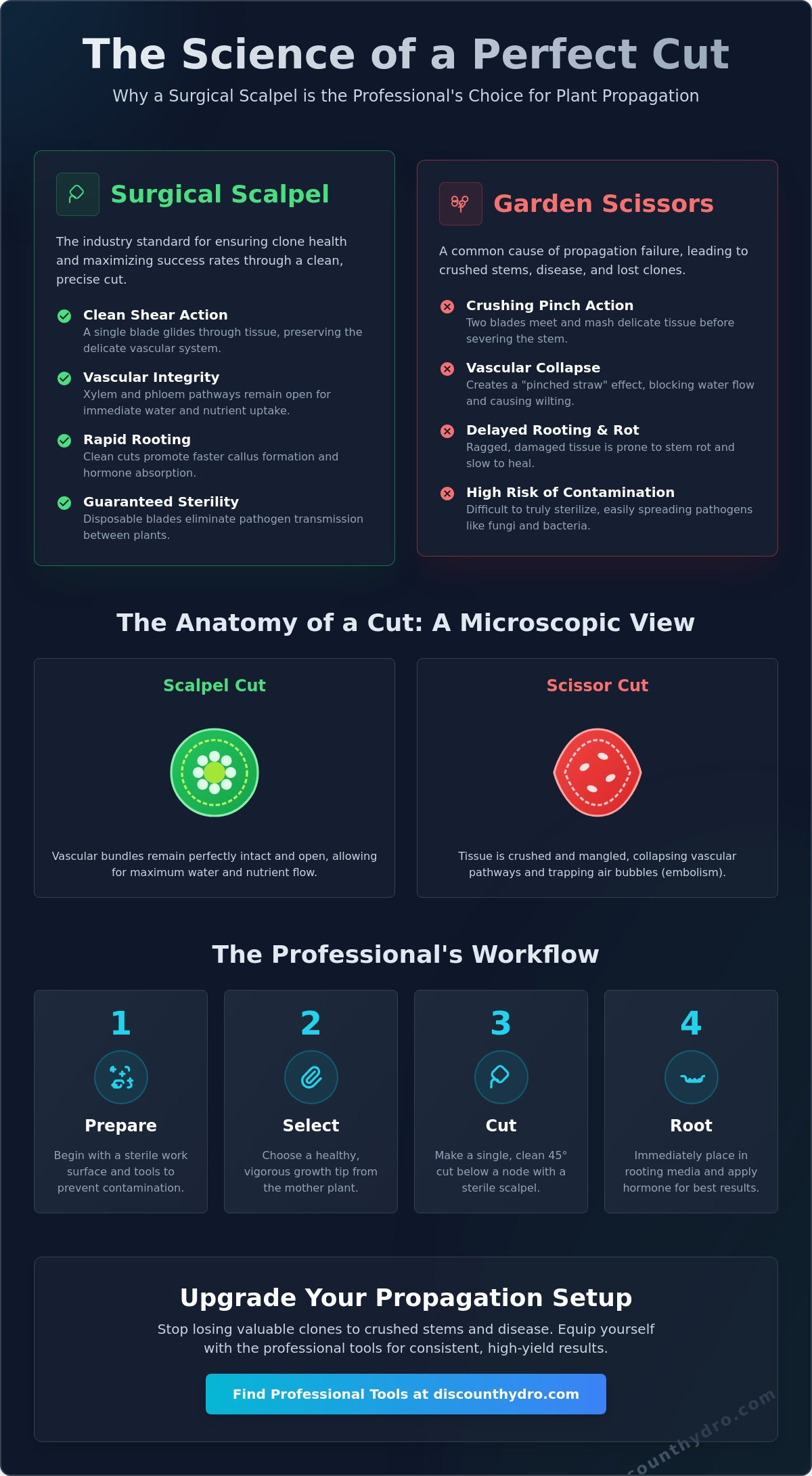
The biology of a successful clone starts at the cellular level. When you use scissors, the two blades meet and crush the stem before they actually sever it. This action collapses the xylem and phloem, which are the internal tubes responsible for transporting water and nutrients. A scalpel shears through the tissue with almost zero resistance. This clean separation facilitates faster callus formation, the critical first step toward root development. By making a precise, angled cut, you increase the surface area for rooting hormones to penetrate. You do this without leaving ragged edges that trap stagnant moisture and invite rot. Serious growers choose these tools because they provide a level of control and predictability that standard household tools can't match. It is the most pragmatic way to ensure your propagation setup operates at peak efficiency with minimal waste.
Scalpel vs. Scissors: The Science of Stem Health
Understanding tool mechanics is the difference between a mediocre success rate and a professional-grade result. Scissors work via compression. The two blades meet and pinch the stem tissue before the edge actually severs it. This mechanical pressure causes micro-fractures in the outer epidermis and internal structures. A scalpel for plant cuttings operates through pure shearing. The single, ultra-thin blade glides through the cell walls with minimal resistance. This precision prevents the mashing effect that occurs with even the sharpest garden snips. When you use a surgical edge, you preserve the structural integrity of the plant's foundation.
The internal plumbing of a plant consists of the xylem and phloem. These tubes must remain open to facilitate water uptake and hormone transport. When you use sharp, clean tools, you ensure these pathways aren't crushed shut. A crushed stem acts like a pinched straw; it creates a physical barrier that prevents the clone from drinking. This often leads to an embolism, where air bubbles block the vascular flow, causing the cutting to wilt and die before roots can form. Precision blades eliminate this risk by leaving the vascular bundles perfectly intact.
Vascular Integrity and Rooting Speed
Cleanly severed vascular bundles are more receptive to rooting hormones. Because the tissue isn't mangled, the hormone can penetrate the cambium layer directly. This leads to faster callus formation and more uniform root initiation across the base of the stem. Clones taken with a scalpel for plant cuttings maintain higher turgor pressure. They don't struggle with water stress in the first 48 hours, which is the most critical window for survival. This speed is essential for maintaining a tight production schedule.
Comparing Tool Lifespans
Maintenance is a hidden cost in propagation. Scissors and snips lose their factory edge after only a few dozen cuts on woody or fibrous stems. Sharpening them is time-consuming and often imprecise. In contrast, using a scalpel ensures you have a surgical edge for every batch of clones. Disposable options are cost-effective, while reusable handles allow for instant blade swaps. You can find high-quality propagation supplies that prioritize this efficiency. Avoid using kitchen knives or box cutters; their blades are too thick and act like wedges, splitting the stem rather than cutting it. Most utility blades are also coated in machine oils that can be toxic to fresh plant wounds.
Choosing Between Disposable and Reusable Scalpels
Selecting the right hardware for your grow room depends on your production volume and budget. For high-efficiency setups, the choice between a single-use tool and a permanent handle system is a matter of long-term cost management. Industry experts agree that you always want to use a sharp knife or precision blade to ensure the plant's energy is directed toward root initiation. A professional scalpel for plant cuttings provides this surgical edge without the maintenance required for traditional garden tools. Most growers choose their system based on the frequency of their cloning cycles.
Disposable Scalpels: Pros and Cons
Disposable units feature a plastic handle and a factory-set blade. They're usually individually wrapped and pre-sterilized with gamma radiation. This ensures maximum hygiene for every batch. These are the most pragmatic choice for beginners or low-volume hobbyists. You don't have to worry about cross-contamination between different plant varieties because you simply discard the tool after use. While the price per unit is low, the cost adds up if you're taking hundreds of cuttings every week. They're ideal for quick, occasional propagation tasks where setup time needs to be minimal.
Professional Handle Systems
Commercial operations typically invest in stainless steel handles paired with bulk packs of replaceable blades. A weighted metal handle offers superior ergonomics and control compared to lightweight plastic. It allows for a steadier hand during delicate cuts near nodes. Changing blades is a fast process; you can swap a dull edge for a fresh one in seconds using a pair of pliers for safety. This system is significantly more cost-effective for large-scale propagation. You can buy replacement blades in packs of 100, which drives the price per cut down to a fraction of the cost of disposables. Handles must be sterilized using high-strength isopropyl alcohol between sessions to maintain a clean environment.
Choosing the right blade shape is equally important for stem health:
- #10 Blade: Features a large, curved cutting edge. It's best for making rolling cuts on thicker, woody stems.
- #11 Blade: A straight, triangular blade with a sharp point. It's perfect for precision work on soft-tissue plants and reaching into tight spaces.
For most professional setups, a scalpel for plant cuttings with a #11 blade is the standard for soft-stem propagation. If you're managing a diverse nursery, keep both shapes on hand to handle different tissue densities. This ensures you never have to force a cut, which protects the vascular integrity of your clones.
Step-by-Step Guide: Taking Cuttings with a Scalpel
Efficiency in the grow room starts with organized preparation. Clear your workspace of all debris and sanitize your surfaces with a high-strength disinfectant. You should also sterilize secondary equipment, such as tweezers or trays, using 70% isopropyl alcohol. Have your rooting hormones and growing media prepped and ready before you open a new scalpel for plant cuttings. Speed is essential; minimizing the time the internal stem tissue stays exposed to the air reduces the risk of environmental stress and contamination.
Professional growers often use a "Double Cut" method to ensure the highest success rates. First, take a larger cutting from the mother plant using clean snips to move the material to your sterilized workstation. Second, use your scalpel to perform the final precision trim. This second cut should be made just below a node, where the highest concentration of natural rooting auxins exists. This two-step process keeps the final rooting site away from the dust and pathogens found in the main grow area.
The 45-Degree Angle Technique
A 45-degree angle is the industry standard for a reason. It significantly increases the surface area of the exposed cambium layer, allowing for more direct contact with rooting gels and nutrients. Execute this cut in one fluid motion. Don't saw at the stem or apply heavy pressure. A single, clean slice prevents the ragged edges that often lead to localized tissue death or fungal infection. Position the blade about 0.25 inches below the node to give the new roots ample space to emerge without compromising the stem's structural strength.
Immediate action is required once the final cut is made. Submerge the stem into a rooting gel or solution within seconds. This prevents air from entering the vascular system, which stops the embolism issues we covered in previous sections. Once coated, transfer the clone into your chosen media, such as rockwool cubes or peat plugs. You can find everything you need for this process in our catalog of propagation supplies.
Safety and Disposal Protocols
Surgical blades are extremely sharp and become dangerous in the humid, often slippery conditions of a grow room. Always cut away from your body and keep your fingers clear of the blade's path. If you're using a reusable handle, ensure the blade is locked firmly in place before you start. Dispose of used blades in a dedicated, puncture-proof sharps container. Don't throw them directly into the trash, as they easily pierce through plastic bags and create a safety hazard for staff. If a nick occurs, stop immediately, clean the wound with an antiseptic, and apply a waterproof bandage before you continue working. Maintaining a safe environment is just as important as maintaining a sterile one.
Essential Propagation Tools at Discount Hydro
Discount Hydro stocks a comprehensive inventory of professional propagation supplies. A high-quality scalpel for plant cuttings is essential for any commercial cloning operation. We provide sterile, disposable scalpels in bulk packs. This ensures a fresh edge for every batch. Buying in packs of 10 reduces the cost per clone and eliminates the downtime associated with cleaning reusable tools. Our inventory is selected for reliability and technical performance in high-humidity environments.
Successful propagation requires more than a sharp blade. You must pair your precision tools with proper environmental controls. We stock propagation trays, humidity domes, and heat mats designed to maintain the 100% humidity levels required for new cuttings. Our range includes basic starter kits and advanced systems for large-scale production. Keeping your workspace equipped with professional-grade hardware is the most pragmatic way to ensure a 100% success rate.
Complete Propagation Kits
Using a professional scalpel is only effective if your setup supports root development. Precision cuts need the correct mineral balance to trigger growth. Choosing the right hydroponic nutrients for clones is vital. These solutions feature lower nitrogen levels and higher phosphorus to encourage root initiation without burning delicate tissue. We offer specialized starter solutions that work alongside rooting gels to seal the stem and provide immediate nourishment.
Lighting is a critical factor in early development. New cuttings lack the root mass to handle high-intensity discharge lamps. They require soft, full-spectrum light that doesn't generate excessive heat. Integrating specialized LED grow lights provides the precise wavelengths needed for photosynthesis while keeping the environment cool. This prevents wilting and ensures your clones stay turgid while establishing roots.
Why Shop with Discount Hydro?
We prioritize value for the British grower. Our pricing structure is designed for transparency and competitive savings. We offer professional tools at rates that beat standard garden centers. Whether you need a single scalpel for plant cuttings or bulk propagation media, we maintain deep stock levels to prevent delays in your growing cycle. Our logistical network ensures fast UK-wide delivery. You can replace dull blades or empty nutrient bottles before they impact your production schedule. We provide direct, technical information with a focus on results. Get the products you need at the prices you want. Shop our full range of propagation tools now to upgrade your cloning setup.
Optimize Your Propagation Results
Success in the grow room depends on the quality of your initial cuts. Switching to a professional scalpel for plant cuttings ensures you preserve the vascular integrity of every clone. This simple change eliminates the crushing damage caused by scissors. It significantly reduces the risk of stem rot. By maintaining a sterile environment and using surgical-grade steel, you provide your plants with the best start for rapid root development.
Precision propagation is a high-yield strategy for any serious grower. We maintain a large inventory of professional tools to support your production goals. Our UK-based warehouse ensures fast delivery for all urgent needs. You won't have to wait to start your next cycle. We offer bulk discount options on all our surgical-grade blades and handles. This makes it easier to scale your operations without increasing your overhead costs.
Browse our Professional Scalpels and Propagation Tools to find the right hardware for your setup. Investing in the right tools leads to more consistent results and higher survival rates in every batch. Upgrade your setup today and watch your clones thrive.
Frequently Asked Questions
Why is a sterile scalpel better than a sharp kitchen knife for cuttings?
A surgical scalpel is significantly thinner than a standard kitchen knife. This prevents the wedge-effect that crushes plant tissue during the cut. Kitchen blades are designed for durability and often carry machine oils or food residues that contaminate fresh wounds. Using a dedicated scalpel for plant cuttings ensures a cleaner shearing action and maintains a sterile environment for the clone's vascular system. It's the most efficient way to prevent stem rot.
Can I clean and reuse a disposable scalpel with isopropyl alcohol?
You can clean a disposable scalpel with 70% isopropyl alcohol, but the blade will lose its surgical edge after the first few cuts. These tools are designed for single-session use to guarantee maximum sterility and sharpness. Reusing them increases the risk of cross-contamination and tissue tearing as the microscopic edge dulls. For the best results, use a fresh blade for every batch of clones to maintain consistency and health.
What is the best scalpel blade size for taking plant cuttings?
The #11 blade is the industry standard for soft-tissue propagation because its straight, triangular edge allows for precision in tight spaces. If you are working with thicker, woody stems, a #10 blade with a curved belly provides better leverage for rolling cuts. Most professional setups rely on the #11 for its ability to make clean slices near nodes without damaging adjacent foliage or stems during the process.
How often should I change my scalpel blade during a large propagation session?
Change your blade every 20 to 50 cuts or as soon as you feel any resistance during the slice. A dull blade requires more pressure, which leads to crushed stems and micro-fractures. In large commercial sessions, swapping blades frequently is a low-cost way to maintain a high success rate. It prevents the spread of pathogens across your inventory while ensuring every clone has the best start possible.
Does using a scalpel really improve the rooting speed of my plants?
Using a scalpel for plant cuttings improves rooting speed by keeping the xylem and phloem pathways open. Cleanly sheared tissue forms a callus faster than crushed or torn tissue. This allows the plant to begin root initiation immediately after you apply rooting hormones. Faster establishment reduces the time clones spend in the humidity dome, which lowers the risk of rot and increases overall production efficiency in your grow room.
How do I safely dispose of used scalpel blades in the UK?
Used blades must be placed in a yellow sharps container that meets UN3291 standards for clinical waste. Once full, these containers should be taken to a local pharmacy or a designated council waste facility that accepts medical sharps. Do not place loose blades in your standard household recycling or refuse bins. This ensures safety for waste management staff across the UK and complies with local safety regulations.
What is the best angle to cut a plant stem for cloning?
A 45-degree angle is the most effective choice for cloning because it maximizes the surface area of the cambium layer. This larger area allows for better absorption of rooting gels and nutrients. The angle also prevents the cutting from sitting flat against the bottom of the propagation media. This helps maintain oxygen levels at the wound site and prevents anaerobic rot during the critical first week of growth.
Should I use a different scalpel for different plant species?
Use a fresh, sterile blade when moving between different plant species or mother plants to prevent the transmission of latent diseases. Viruses and bacteria travel easily on a used blade from one variety to another. Using a new scalpel for each variety is a pragmatic way to protect your entire grow room from infection. It is a small investment that ensures the long-term health of your genetic library.