

Soundproof Grow Tent UK: The 2026 Guide to Silent Indoor Gardening
It's 2 AM in London, and you're lying wide awake, convinced that the low-frequency thrum of your extraction fan is vibrating right through the floorboards and into the flat below. This constant anxiety is a reality for many indoor gardeners who worry that a simple mechanical "hum" might attract the wrong kind of attention. You already know that standard setups often fail to contain the noise of high-powered fans and water pumps, leaving your hobby far from discreet.
Finding a high-quality soundproof grow tent uk is the most effective way to kill that noise at the source and secure your peace of mind. In this 2026 guide, we'll show you exactly how to eliminate grow room noise using advanced acoustic engineering and high-density materials. You'll learn why upgrading from 600D to 1680D fabric makes a 50% difference in sound dampening and discover the specific hardware needed for a near-silent environment. We'll also cover how to ensure your equipment arrives with the discreet delivery and setup you require for total privacy.
Key Takeaways
- Learn why high-density fabric is essential for maintaining privacy and plant health in UK terraced houses and flats.
- Understand the technical superiority of 1680D Oxford cloth over standard materials for effective noise absorption and reflection.
- Discover how to optimise your ventilation system using phonic ducting and strategic positioning to eliminate air movement noise.
- Find out why investing in a premium soundproof grow tent uk model provides better long-term value than budget DIY alternatives.
- Explore curated silent hardware combinations designed to deliver professional results without the disruptive decibel output.
Why Noise Control is Essential for UK Indoor Growers
A soundproof grow tent uk is a high-density enclosure engineered to dampen decibel output and mitigate kinetic energy. These tents use multi-layered materials, often featuring thick foam cores or heavy-duty Mylar, to block sound waves. In the UK, where 19% of the population lives in flats and millions reside in terraced housing with shared party walls, managing noise isn't optional. It's a technical requirement for a successful indoor environment. Your tent acts as the primary acoustic barrier, providing the first line of defence in your environmental control system.
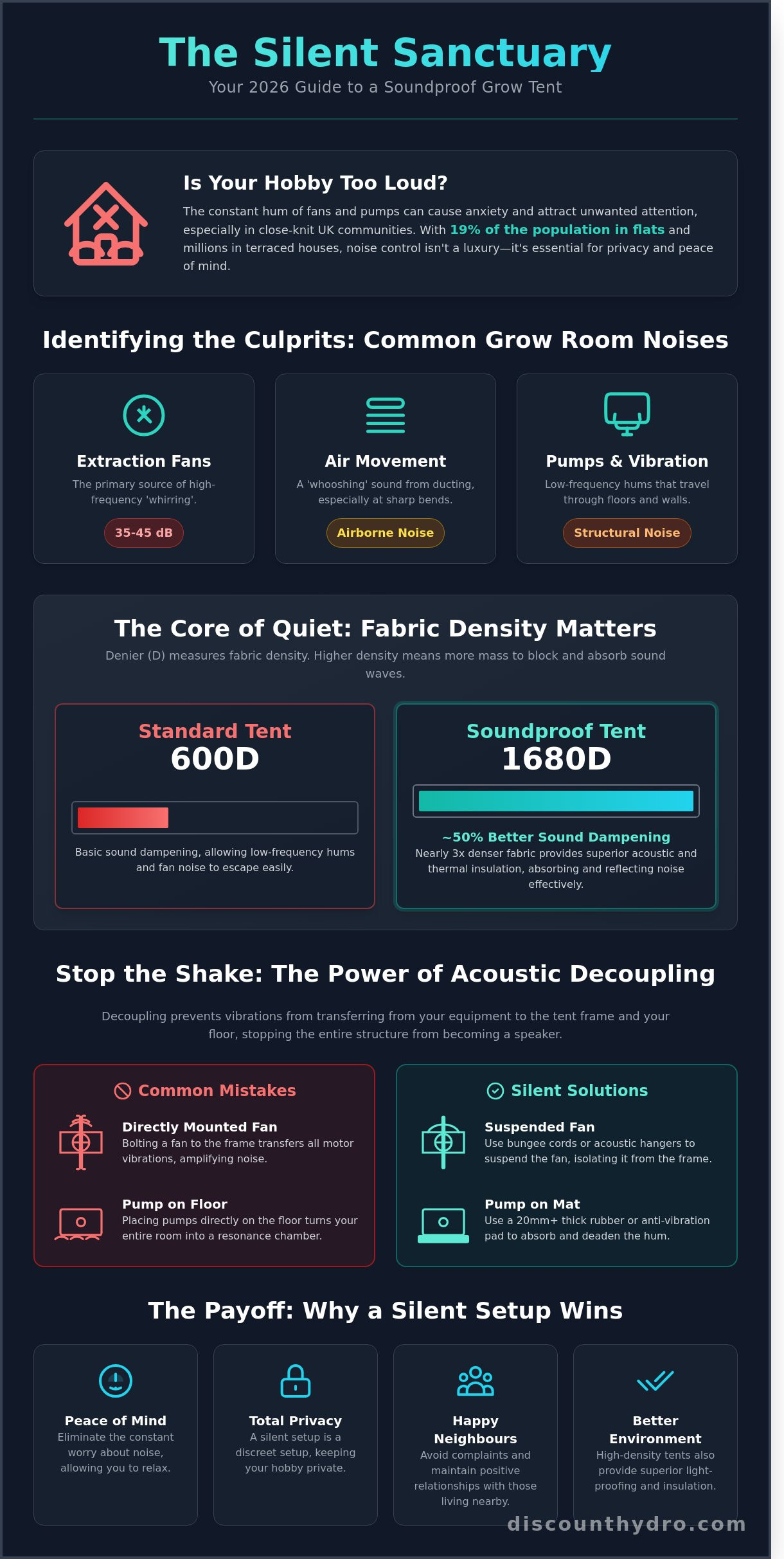
Understanding the science of soundproofing involves distinguishing between airborne and structural noise. Airborne noise is the sound of a fan motor whirring through the air. Structural noise is the low-frequency vibration from a water pump or extractor fan vibrating through floorboards. Without a dedicated soundproof grow tent uk, these sounds can easily penetrate standard brickwork and timber flooring used in British construction. Effective noise control ensures your plants thrive in a stable environment while your home life remains undisturbed.
Identifying Common Grow Room Noise Sources
High-frequency 'whirring' usually comes from extraction fans. Even a quality 100mm fan can produce 35-45dB of noise if it isn't properly shielded. Air movement creates a 'whooshing' sound, especially when you use non-insulated ducting or when air hits sharp 90-degree bends in your setup. Vibration is a different beast entirely. Pumps and fans transfer kinetic energy directly into the building's skeleton. This low-frequency hum can travel through three floors of a standard semi-detached house if the equipment isn't decoupled from the floor.
The Legal and Social Benefits of a Silent Setup
Keeping your setup quiet ensures a positive relationship with neighbours. Constant low-frequency hums are often more irritating than loud, intermittent noises. A silent grow room also improves your own quality of life. You don't want to hear a fan drone while you're watching TV or trying to sleep. Beyond personal comfort, a silent setup keeps your indoor garden a private, personal endeavour. It ensures your hobby remains your business alone, without drawing any unnecessary attention from the street or adjacent properties.
The Science of Soundproofing: Fabric Density and Acoustic Decoupling
Soundproofing a grow room isn't about guesswork; it's about managing physics. To achieve a truly quiet environment, you have to address both airborne noise and structural vibrations. Choosing a high-quality soundproof grow tent uk starts with understanding how material density blocks sound waves. Thicker walls act as a physical barrier, reflecting high-frequency noise back into the enclosure while absorbing lower frequencies before they escape into your home.
Fabric Density: 600D vs 1680D Mylar
Denier (D) is a technical unit of measurement used to determine the linear mass density of fabric, where a higher rating directly correlates to increased thickness and better decibel reduction. While a standard 600D tent is common for entry-level setups, a 1680D Oxford cloth tent is significantly quieter because the material is nearly three times as dense. This thickness provides a superior thermal and acoustic seal, which is vital for maintaining stable environments in the unpredictable UK climate. Premium 1680D fabrics are heavier and far more durable, ensuring that the internal hum of equipment doesn't leak through the fabric pores over time.
Mass alone won't solve every noise issue if the tent has weak points. Sound leaks through the smallest gaps, much like water through a crack. This makes dual-layer zips and light-proof baffles essential components of a silent setup. These features create a physical labyrinth that forces sound waves to bounce and dissipate energy. Additionally, a sturdy steel frame with reinforced corners is necessary to prevent "drumming." Cheap, thin poles can vibrate in sympathy with your extraction system, effectively turning the entire tent into a speaker that amplifies low-end frequencies.
Acoustic Decoupling Techniques
Decoupling is the process of separating vibrating equipment from the tent structure to stop kinetic energy from becoming audible noise. This is a critical step when installing various hydroponic system components that rely on motors or moving air. If a fan is bolted directly to a frame, the vibration travels through the poles and into the floor. You can break this path by using bungee cords or specialized acoustic hangers to suspend extraction fans in mid-air.
For floor-standing equipment, the rules are similar. Use 20mm thick rubber mats or anti-vibration pads under water pumps and reservoirs to soak up mechanical hums. These small adjustments can reduce ambient noise by as much as 15dB, which is the difference between a loud hum and a gentle whisper. If you're ready to quieten your grow, you can find the best prices on 1680D tents and silencing accessories in our current range.
Comparing Soundproof Tents vs. Standard Grow Tents
Choosing between a budget model and a dedicated soundproof grow tent uk depends on your proximity to neighbours and your long-term budget. Standard tents typically use 600D Oxford cloth. While this fabric keeps light in, it does almost nothing to stop the low-frequency hum of extraction fans. Premium acoustic models use 1680D or even 2000D fabric, which provides a physical mass barrier against sound waves.
Investing more upfront saves you from the headache of DIY soundproofing later. Thicker walls don't just dampen noise; they provide superior thermal insulation. In a typical UK spare room, temperatures can fluctuate wildly during winter. A high-density tent maintains a stable internal environment, reducing the workload on your heaters and fans. This efficiency lowers your electricity bills over time.
Durability is the final factor. High-humidity environments quickly degrade cheap zips and thin Mylar. Professional-grade tents feature reinforced corners and steel poles that won't buckle under the weight of heavy carbon filters and silencers. These tents are built for years of continuous use, whereas budget alternatives often show light leaks and frayed seams within 12 months.
Performance Benchmarks: Decibel Reduction
Fabric density is the primary driver of noise control. A standard 600D tent provides negligible decibel (dB) reduction, often less than 3 dB. Switching to a 1680D high-density fabric can cut noise levels by 10 to 12 dB. For context, a standard 100mm extraction fan runs at approximately 55 dB. Inside a premium tent, this noise level drops to about 43 dB; this is comparable to a quiet library. The "closed-door" test reveals that most sound leakage occurs at the zips and ventilation ports. High-end tents use double-flapped zips and extra-long port sleeves to create an airtight, sound-dampening seal.
Cost-Benefit Analysis for the UK Grower
A budget tent might cost £70, but you'll likely spend an extra £80 on acoustic ducting and silencers to keep it quiet. When you are choosing a grow tent, look at the total system cost. A premium soundproof grow tent uk might cost £160, but it often removes the need for expensive secondary dampening. Premium hardware also holds its value. A well-maintained 1680D tent can retain up to 65 percent of its original retail price on the UK second-hand market, whereas budget tents are often disposed of after a single cycle due to wear and tear.
How to Organise Your Silent Grow Tent Setup
Effective noise reduction starts with a tactical layout. Follow these five steps to ensure your soundproof grow tent uk setup remains discreet and efficient.
- Step 1: Location selection. Place your tent in a room with solid masonry walls. Avoid placing equipment against shared party walls. Concrete floors are better than timber joists because they don't vibrate or amplify low-frequency hums.
- Step 2: Phonic ducting. Replace standard aluminium ducting with acoustic (phonic) ducting. This product uses a glass wool or foam core to absorb air noise, typically reducing the "whoosh" sound by 12 to 15 decibels.
- Step 3: EC fan integration. Use EC fans for your ventilation. These motors allow for digital speed control without the 50Hz electronic hum found in cheaper AC fans.
- Step 4: Sealing leaks. Sound travels like water. Double-cinch every cable sock and use foam tape to seal any gaps in your ventilation joins.
- Step 5: Maintenance. Clean fan blades every 90 days. Even a 2-gram build-up of dust causes imbalance, leading to vibrations that travel through the tent frame.
Advanced Airflow Management
Air velocity is a primary source of noise. Upgrading from a 4-inch (100mm) to a 6-inch (150mm) ducting system increases the cross-sectional area by over 120%. This allows you to move the same volume of air at a much lower speed, significantly cutting wind noise. Using an extraction fan with filter is also vital. The carbon filter provides necessary backpressure that stabilises the fan blades, preventing them from wobbling or creating turbulent air patterns. Keep ducting runs as straight as possible. Every 90-degree bend in your ducting can increase noise levels by 30% and reduce airflow efficiency by a similar margin.
Choosing Silent Hardware
The type of technology you choose dictates the baseline noise of your room. EC motors are the industry standard for silence because they use permanent magnets, eliminating the magnetic buzz common in older hardware. Switching to LED grow lights provides a dual benefit. They lack the noisy magnetic ballasts found in HPS kits and run much cooler. This lower heat output means your extraction fans can run at 30% or 40% power rather than full speed. If you use hydroponics, swap traditional diaphragm air pumps for piezo-electric models. These operate at roughly 35dB, which is quieter than a whisper.
Get the best deals on professional ventilation kits and silent fans today. Shop our full range at Discount Hydro
The Discount Hydro Solution: Best Value Silent Equipment
We've spent years curating a range that focuses on one thing: performance at the UK's best prices. Our selection of high-density equipment is built for growers who need to keep noise levels at an absolute minimum without overspending. By sourcing directly and focusing on high-spec materials, we ensure your soundproof grow tent uk setup performs like a professional facility while staying within a hobbyist budget. We don't believe in overcomplicating things; we just provide the thickest fabrics and the quietest fans available today.
Premium Tents for Maximum Silence
The secret to a quiet grow is mass. Our premium tents use 1680D Mylar fabric, which is three times denser than the 600D standard found in most budget shops. This extra thickness provides a heavy acoustic barrier that traps the sound of air movement and mechanical vibrations inside the unit. These tents are fully compatible with our high-performance hydroponic nutrients and automated irrigation systems. We've also ensured that port sizes are oversized. This allows you to fit thick, insulated acoustic ducting without crimping the pipe, which helps maintain maximum airflow with zero air whistle.
Value Kits and Bundles
We take the guesswork out of silencing your space by offering pre-configured kits. These bundles pair ultra-quiet EC fans with double-walled acoustic ducting. EC motors are essential for a soundproof grow tent uk because they don't produce a digital hum when dimmed, unlike older AC technology. Our favorite combinations include:
- Small Spaces: 4-inch EC extraction kits with 1680D compact tents.
- Large Spaces: 8-inch silenced fans with oversized carbon filters for maximum scrub and minimum noise.
For growers in County Durham, our Chester-le-Street centre offers a click and collect service for immediate pickup. This allows you to get your gear the same day and speak with our staff about your specific requirements. Privacy is a priority for every customer, so every order from Discount Hydro arrives in plain, discreet packaging. There are no logos or descriptions on the outside of the boxes to indicate what's inside. Our team is always available to provide expert advice on matching fans to tent sizes for the quietest possible operation.
Upgrade to a Silent Grow Setup
Success in indoor gardening depends on managing your environment without attracting unwanted attention. High-density 1680D fabric is the industry standard for noise suppression, offering a significant upgrade over the 600D material found in standard alternatives. When you combine heavy-duty canvas with acoustic decoupling for your extraction fans, you create a garden that's virtually undetectable from the next room. This guide proves that finding a quality soundproof grow tent uk is about prioritising fabric density and smart equipment placement.
Discount Hydro provides the UK's best prices on 1680D tents, ensuring you get professional-grade hardware for less. We offer fast, discreet nationwide delivery on all orders; you can also get expert support from our Chester-le-Street shop. Don't let noise issues disrupt your hobby when the right gear is this affordable.
Shop our range of High-Density Silent Grow Tents
Your journey toward a completely silent grow starts with the right foundation.
Frequently Asked Questions
Can I make my existing grow tent soundproof?
You can improve the noise insulation of a standard tent by adding mass-loaded vinyl or heavy acoustic blankets to the exterior. Adding 5kg per square metre of sound-deadening material can reduce noise leakage by up to 25 decibels. It's often cheaper to buy a dedicated soundproof grow tent uk model than to retrofit an old one with expensive specialist materials.
Is a 1680D grow tent worth the extra money for noise reduction?
A 1680D thread count tent provides a 3x thicker barrier compared to standard 600D models. This density significantly dampens the hum of internal fans and equipment. While the initial cost is higher, the durability and sound suppression make it a top choice for growers in UK terraced houses or flats where stealth is a priority.
How do I stop my grow tent fan from vibrating?
Use bungee cords or acoustic hangers instead of solid plastic ties to suspend your fan from the tent poles. Rigid connections transfer 90% of motor vibrations directly to the frame, creating a low-frequency drone. Switching to rubberised mounts can lower structural noise by 15 decibels immediately.
What is the quietest extraction fan for a grow tent in the UK?
EC fans like the Systemair Stratos or Phresh Hyper Fan are currently the quietest options on the UK market. These units operate at roughly 35 to 45 decibels, which is similar to the volume of a quiet library. They use 50% less energy than traditional AC motors and offer precise speed control without the humming noise found in cheaper alternatives.
Does acoustic ducting really work to reduce noise?
Acoustic ducting reduces air rushing noise by up to 50% compared to standard aluminium flexi-ducting. It features a layer of glass wool insulation that absorbs high-frequency sounds from moving air. For the best results, ensure the ducting is pulled tight and has no sharp 90-degree bends, as these cause turbulence that increases noise levels.
Will soundproofing my tent cause it to overheat?
Adding external insulation can raise internal temperatures by 2 to 5 degrees Celsius if ventilation isn't adjusted. Soundproofing materials like foam or blankets act as thermal insulators, trapping heat from lights. You must ensure your extraction fan is rated for the extra resistance and that air intake remains unobstructed to maintain a steady 24 to 26 degree environment.
Can neighbours hear a grow tent through a wall?
Neighbours are unlikely to hear a well-set-up tent, but low-frequency vibrations can travel through shared brick walls. A standard extractor fan produces 60 decibels, which is the same as a normal conversation. By using a soundproof grow tent uk and decoupled fans, you can drop this below the 30-decibel ambient noise floor of a typical bedroom at night.
How can I silence the air intake on my tent?
Install an intake silencer or build a simple baffle box lined with acoustic foam to break up sound waves. Air rushing into a 100mm or 150mm port creates a whistling effect that's easily detectable. Using a larger diameter intake duct than your exhaust duct reduces air velocity and cuts intake noise by approximately 40%.