

The Ultimate Guide to Heated Propagators for Seeds: Boost Your Germination Success in 2026
Over 64% of gardeners plan to expand their planting activities in 2026, but success depends on consistent soil temperatures. A cold windowsill or fluctuating room heat often results in failed germination and wasted resources. If you want reliable growth during cold UK winters, a heated propagator for seeds is an essential tool for your indoor setup. Precision heat acts as the engine for germination; it keeps your growing media at the exact temperature required for fast, healthy root development.
You likely understand the struggle with leggy seedlings that fail after transplanting. This guide focuses on the technical requirements of successful propagation to help you achieve 100% germination rates. You'll learn to balance heat and humidity within a controlled indoor ecosystem. We explain the functional differences between basic heat mats and thermostatic models to ensure your setup remains energy-efficient. This analysis covers everything from tray selection to light integration, providing the practical information needed to upgrade your propagation equipment for the 2026 season.
Key Takeaways
- Understand the metabolic triggers that activate seed enzymes through consistent soil warming and technical environmental control.
- Compare unregulated heat mats with precision thermostatic units to maintain optimal germination environments for different plant species.
- Identify critical hardware features like shatter-resistant lids and adjustable vents to manage humidity and prevent damping off.
- Integrate a heated propagator for seeds with LED grow lights to ensure sturdy, healthy seedling development without leggy growth.
- Source professional-grade propagation supplies that offer long-term durability and high transactional value for your indoor setup.
The Science of Seed Germination: Why Use a Heated Propagator?
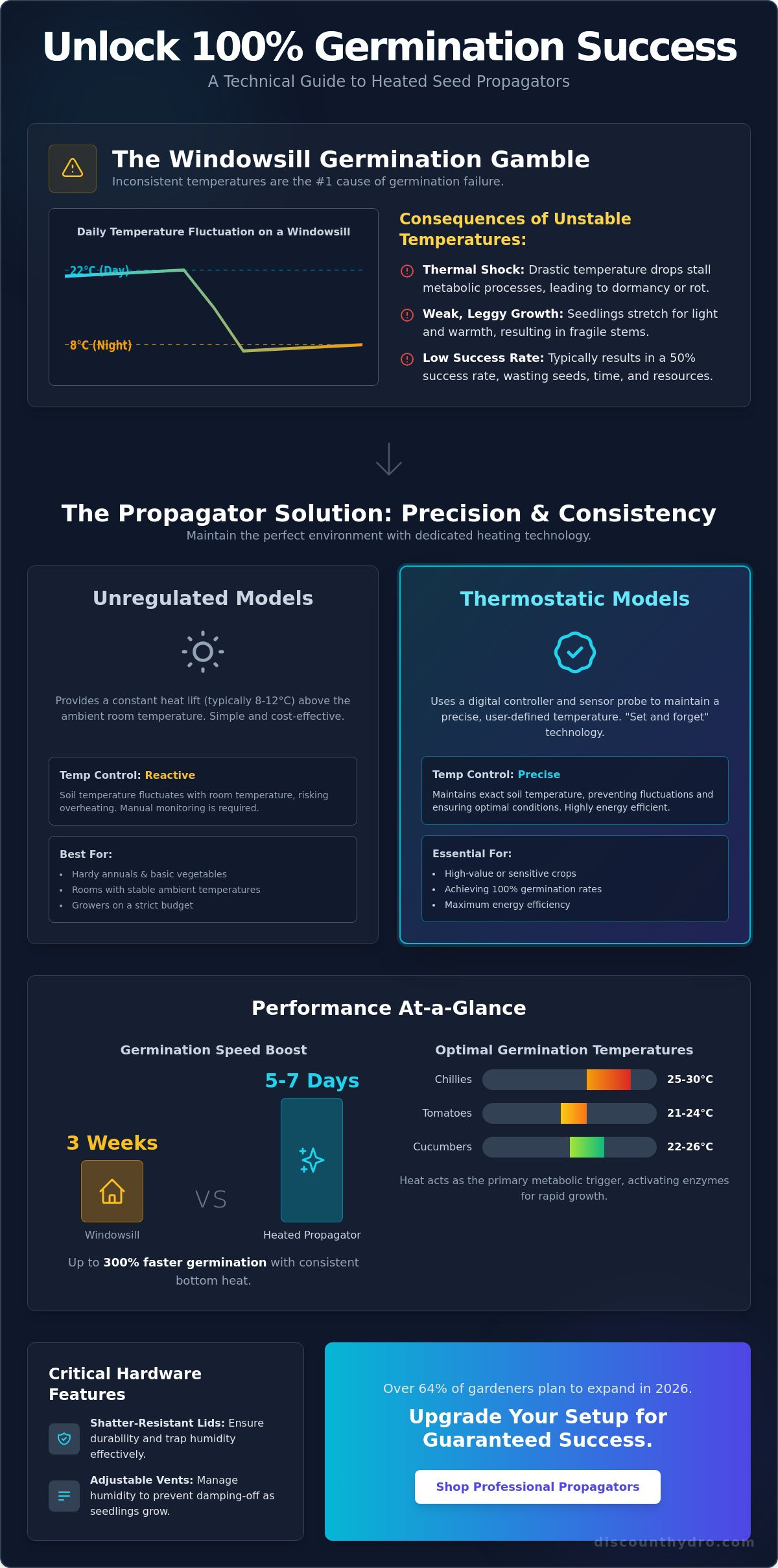
A heated propagator for seeds is an electrically warmed unit designed to create a stable, tropical micro-climate. It bridges the gap between cold UK winters and the high-heat requirements of many popular crops. Understanding The Science of Seed Germination is critical for any grower. Heat serves as the primary metabolic trigger. It activates specific enzymes within the seed coat that break down stored starches into usable sugars. This chemical reaction provides the energy needed for the embryo to expand and the radicle to emerge. Without this thermal signal, seeds often remain dormant. They sit in damp media until they eventually rot.
UK ambient temperatures in early spring rarely meet these biological needs. Most exotic flowers and vegetables require 21°C to 27°C to initiate growth. Using a propagator accelerates these timelines by up to 300%. What takes three weeks in a standard tray might only take five to seven days with consistent bottom heat. This rapid development is a major advantage. It reduces the time the seed is vulnerable to soil-borne pathogens. Faster germination means a longer growing season and earlier harvests.
Optimal Germination Temperatures for Common Crops
Consistency is more important than hitting a high peak temperature once. Fluctuations damage cellular development. Most varieties have a specific "sweet spot" for success:
- Chillies: 25°C to 30°C. These require the highest heat levels to break dormancy.
- Tomatoes: 21°C to 24°C. Standard room temp is often too low for reliable results.
- Cucumbers: 22°C to 26°C. High humidity and steady heat prevent stunted growth.
Advanced hydroponics setups benefit from this early-stage heat. Starting seedlings in a controlled propagator ensures they develop a robust root system before moving into a high-flow system.
The Problem with Windowsill Germination
Traditional windowsill growing often fails due to the "cold bridge" effect. Even double-glazed windows allow significant heat transfer during January and February. A seed tray might reach 22°C in direct sunlight but plummet to 8°C or 10°C once the sun sets. This thermal shock stalls seedling growth. It forces the plant to restart its metabolic processes daily. This cycle leads to weak, leggy stems. A heated propagator for seeds eliminates this risk. They provide the stability required for sensitive varieties by maintaining a constant temperature regardless of external weather shifts. This reliability is the difference between a 50% and a 100% success rate.
Thermostats vs. Unregulated Heating: Understanding the Tech
Choosing the right heating technology for your heated propagator for seeds depends on your environment and the sensitivity of your plants. Propagators fall into two technical categories: unregulated and thermostatic. Unregulated models use fixed-wattage heating elements. They provide a constant lift in temperature, typically between 8°C and 12°C above the ambient room air. These units are reliable and cost-effective but don't have a feedback loop. If your indoor temperature rises during the day, the tray temperature climbs proportionally. This leads to heat stress if you don't monitor it manually.
A thermostatic heated propagator for seeds uses a digital controller and a sensor probe to maintain a precise target. This set and forget technology is the industry standard for high-value crops that require optimum soil temperatures to trigger metabolic activity. The thermostat switches the heating element on or off based on real-time data from the root zone. This precision prevents the thermal fluctuations that often stall growth in basic setups. It also ensures superior energy efficiency. The unit only draws power when necessary, reducing operational costs over a long growing season.
When to Choose an Unregulated Model
Unregulated models are suitable for hardy annuals and basic vegetable starts like brassicas that tolerate slight temperature swings. These units work best in rooms with stable ambient temperatures, such as a heated spare room. You must use a manual soil thermometer to check the media daily. If the room warms up, you might need to vent the lid or turn the unit off to avoid cooking the delicate root systems. It's a pragmatic, entry-level choice for growers on a strict budget.
The Case for Digital Temperature Control
Digital control is essential for difficult-to-germinate species. These units often feature external probes that you insert directly into the growing media. This ensures you're monitoring the actual root zone temperature rather than just the air inside the dome. For growers using a professional grow tent, a thermostatic propagator allows for seamless integration into a larger climate-controlled environment. You can maintain a perfect 24°C for your seedlings even if the larger tent environment fluctuates during light cycles. If you're looking for reliable hardware, browse our full range of propagation supplies to find the right fit for your setup.
Key Features to Look for in a Seed Propagator
A high-quality heated propagator for seeds requires more than just a heating element. The physical build determines how well you maintain a controlled environment for seedlings. Prioritize high-clarity, shatter-resistant lids. These materials ensure maximum light penetration from your overhead fixtures. Cheaper plastics often cloud over time; this blocks essential radiation and slows metabolic activity. Look for impact-resistant polymers that withstand high humidity without warping. Durability is a key factor for growers who need equipment to last multiple seasons.
Ventilation is another non-negotiable feature. Adjustable vents allow you to regulate the internal atmosphere and prevent "damping off," a fungal condition caused by excessive moisture and stagnant air. Height clearance is equally important. Ensure the lid provides enough vertical space for the first 2-3 weeks of growth. If the lid is too low, leaves will touch the condensation on the plastic. This increases the risk of rot and disease. Scalability also matters. You can choose from compact windowsill bay units for small batches or large-scale professional trays that accommodate hundreds of starts at once.
Humidity Domes and Airflow Management
Maintaining a 70-80% humidity level is the target for new starts. This environment prevents the media from drying out too quickly. Use the vents to gradually harden off plants by introducing them to lower humidity levels. Start with closed vents to trap moisture during the initial 48 hours. After the first few days, open them slightly to introduce fresh air. This process strengthens the plant's cuticle. Stagnant air is a primary cause of fungal pathogens, so reliable airflow through adjustable vents is your best defense.
Drainage and Reservoir Systems
Effective moisture management requires a balance between hydration and drainage. Many professional-grade trays incorporate capillary matting. This material pulls water from a reservoir and delivers it consistently to the base of your pots. It's an efficient alternative to manual misting routines that can lead to uneven saturation. Proper drainage hole design is vital to prevent root rot. Standing water at the base of the tray will suffocate young roots. Choose systems with raised internal ribs to keep the pots above the water level while maintaining contact with the capillary mat. This setup ensures your heated propagator for seeds operates as a self-sustaining ecosystem during the critical early stages of development.
The Propagation Ecosystem: Heat, Light, and Nutrients
A heated propagator for seeds provides the thermal energy required for germination, but heat alone is insufficient for long-term health. Once the radicle emerges, the plant requires Photosynthetically Active Radiation (PAR) to begin building tissue. Without adequate light, the metabolic energy provided by the heat is wasted on rapid, weak stem elongation. This is why successful growers integrate LED grow lights directly into their propagation setup. Position these fixtures 15cm to 30cm above the propagator dome to ensure intense, even coverage without overheating the internal environment.
Managing Vapor Pressure Deficit (VPD) is the next technical hurdle. In the early stages, seedlings haven't developed a root system capable of high water uptake. They rely on the high humidity inside the dome to stay hydrated. A heated propagator for seeds keeps the media warm, which increases evaporation and maintains a low VPD. This reduces the transpiration pull on the young leaves. As the first true leaves appear, you must transition from plain water to hydroponic nutrients. This provides the minerals like nitrogen and phosphorus that are not present in inert starting media.
Supplementing Light for Early Starts
UK winter light levels are too low to sustain healthy growth. Seedlings started in January or February often become "leggy" as they stretch toward the nearest light source. This makes them prone to snapping or failing after transplant. Supplementing with T5 fluorescent tubes or low-wattage LED strips provides the blue-spectrum light required for compact, sturdy growth. Maintain an 18/6 light cycle. This provides 18 hours of active growth and 6 hours of rest, which is the standard for most indoor vegetable and flower starts.
Rooting Stimulants and Media
The choice of growing media impacts how well your heated propagator for seeds performs. Rockwool cubes and coco coir are industry standards for their excellent air-to-water ratios. If you're working with cuttings, using rooting hormones in a heated environment significantly reduces the time it takes for roots to strike. Start your first weak feed at approximately 25% strength once the root system is visible at the bottom of the media. This ensures the plant has the building blocks for its first major growth spurt. For professional-grade equipment, visit our shop to buy propagation supplies today.
Professional Propagation Supplies at Discount Hydro
Achieving 100% germination success requires professional hardware that withstands continuous use. Our inventory features high-durability propagation equipment designed for the 2026 growing season. We focus on a no-frills, low-price approach to professional-grade gear. This ensures you get the best transactional value without paying for unnecessary branding. Every heated propagator for seeds in our range is selected for its thermal efficiency and material longevity. These units utilize high-impact polymers and reliable heating elements to provide the stable root zone temperatures discussed in previous sections.
Logistics and availability are core to our service. We offer nationwide UK delivery on all orders to ensure your setup is ready before the spring surge. For local growers, we provide a click-and-collect service at our County Durham warehouse. This allows for immediate access to essential supplies without shipping delays. Our stock levels are maintained to support both small-scale hobbyists and large-scale indoor operations. We prioritize stock availability and price transparency to keep your production costs low and your efficiency high.
Complete Propagation Kits
We provide turnkey solutions through our complete propagation bundles. These kits integrate all the components of the propagation ecosystem into a single purchase. Bundles typically include high-clearance humidity domes, heavy-duty seedling trays, and precision heat mats. Many of our professional kits also feature integrated LED grow lights to prevent the leggy growth common in early-season starts. These scalable options allow you to expand your capacity as your garden grows. You can browse our full inventory and buy heated propagator for seeds units directly through our specialized propagation category.
Why Buy From Discount Hydro?
Our business is built on expert knowledge of indoor growing environments and technical hardware. We understand the specific requirements of maintaining Vapor Pressure Deficit (VPD) and root zone stability. You benefit from fast UK shipping and the most competitive pricing on industry-standard brands. We don't use complex marketing narratives; we provide functional equipment that delivers results. If you need assistance with sizing your tray or selecting the right wattage for your heat mat, you can contact our team for direct technical advice. We help you choose the right tools to ensure your seedlings are sturdy, healthy, and ready for transplanting into your larger grow tents or hydroponic systems.
Maximize Your 2026 Germination Rates
Successful seed starting requires technical precision. You now understand how a heated propagator for seeds functions as the metabolic engine for your indoor garden. Using thermostatic control ensures you maintain the optimum root zone temperature regardless of external fluctuations. Balancing this heat with overhead LED grow lights and specific nutrient feeds ensures seedlings remain sturdy and ready for transplanting. High-quality hardware with adjustable ventilation and shatter-resistant materials provides the long-term durability needed for multiple growing seasons.
We stock professional-grade equipment at competitive trade prices. Our inventory is ready for immediate dispatch with fast UK nationwide delivery. You can also use our click and collect service at our County Durham warehouse for rapid access to gear. Shop our full range of heated propagators and start your grow today. Start your season with the right technical foundation. Reliable germination is the first step toward a high-yielding harvest.
Frequently Asked Questions
How long should I leave a heated propagator on each day?
Leave your heated propagator for seeds switched on 24 hours a day during the germination phase. Constant warmth is required to maintain the metabolic trigger within the seed coat. Fluctuations in media temperature can stall development and lead to poor success rates. Once seedlings are established and the first true leaves appear, you can begin to reduce the heat or turn the unit off during peak daylight hours.
What temperature should I set my heated propagator to for tomatoes?
Set your thermostat between 21°C and 24°C for tomato germination. This range provides the thermal signal required for rapid enzyme activation without causing heat stress. Use a digital probe to monitor the media temperature directly rather than relying on air temperature. Setting the heat too high can dry out your growing media too quickly; this kills the emerging radicle before it can establish.
Can I use a heated propagator for taking cuttings?
Yes, heated units are highly effective for striking cuttings. Bottom heat stimulates root development by increasing cellular activity at the base of the stem. Maintain high humidity by keeping vents closed for the first 48 hours to prevent wilting. Using a heated propagator for seeds and cuttings ensures a higher success rate for sensitive clones that otherwise struggle in cold ambient air.
Do I still need grow lights if I use a heated propagator?
Yes, grow lights are essential once seeds have germinated. Heat triggers the initial growth process, but seedlings require PAR (Photosynthetically Active Radiation) to produce energy through photosynthesis. Without supplemental lighting, seedlings will stretch toward the nearest light source and become leggy. Position LED strips or T5 tubes 15cm to 30cm above the lid to ensure compact and sturdy plant development.
Why are my seedlings falling over (damping off) in the propagator?
Seedlings fall over due to damping off, a fungal condition caused by stagnant air and excessive moisture. This usually happens when vents are kept closed for too long. Increase airflow by opening the adjustable vents on your humidity dome. Ensure your growing media is damp but not saturated. Always clean your trays between uses to eliminate dormant pathogens that thrive in warm, wet environments.
Is it expensive to run a heated seed propagator in the UK?
No, these units are highly energy-efficient. Most consumer-grade propagators draw between 8W and 50W of power. Thermostatic models are even more cost-effective because they only draw power when the sensor detects a drop below your target temperature. Given the low wattage, the operational cost per day is negligible even with current UK energy rates. It's a low-cost investment for significantly higher germination success.
Can I put my heated propagator in an unheated greenhouse?
You can use a propagator in an unheated greenhouse, but you must check the unit's lift capacity. Unregulated models typically only raise the temperature 8°C to 12°C above ambient levels. If the greenhouse drops to 2°C, the tray might only reach 14°C, which is too low for many species. For greenhouse use, a high-wattage thermostatic model is recommended to combat extreme external cold.
How do I clean my propagator between uses to prevent disease?
Clean your unit using a mild horticultural disinfectant or a 10% bleach solution. Scrub the base tray, humidity dome, and vents to remove any organic debris or mineral build-up. Rinse thoroughly with clean water and allow the unit to air dry completely before storage. Proper sanitation prevents the carry-over of fungal spores like Pythium between growing cycles, ensuring your next batch starts in a sterile environment.