

What Happens if a Hydroponic Pump Fails? A Critical Survival Guide
A silent pump at 2:00 AM can destroy a £500 crop before you even finish your morning tea. You've worked hard to maintain your reservoir and lighting, so the fear of a sudden mechanical breakdown is a valid concern for any serious grower. Understanding what happens if a hydroponic pump fails is the first step in protecting your investment from avoidable disasters.
This guide provides the technical breakdown you need to manage a hardware crisis. You'll learn the immediate risks to your root zones, exactly how many hours your plants have before permanent damage occurs, and the specific steps to take to keep them alive during the downtime. We'll show you how to identify if your unit is truly broken or simply blocked by salt buildup. We will also cover how to set up a low-cost redundant system to ensure your harvest stays on track, including a 4-step emergency manual watering schedule to bridge the gap until your replacement parts arrive.
Key Takeaways
- Understand exactly what happens if a hydroponic pump fails, from the sudden loss of dissolved oxygen to the immediate threat to your root zone.
- Discover survival timelines for different setups and why systems like NFT are particularly vulnerable to rapid plant wilting during a power or pump failure.
- Learn to identify early warning signs of mechanical trouble, such as motor groaning or grinding, to prevent a total system shutdown before it occurs.
- Master essential emergency triage techniques, including manual reservoir aeration, to keep your crops alive while you troubleshoot or replace equipment.
- Find out how to protect your investment by implementing a fail-safe strategy with reliable backup pumps and high-quality components.
The Immediate Impact of Hydroponic Pump Failure
The water pump functions as the heart of your hydroponic setup. It's responsible for the continuous circulation of the nutrient solution. If the pump cuts out, the entire life support system for your plants collapses. Knowing what happens if hydroponic pump fails can be the difference between a quick fix and a dead crop. The immediate consequence is a total stop in dissolved oxygen delivery. This creates a lethal environment for the root zone within a very short window. Secondary issues like nutrient stratification and bacterial blooms follow, often leading to permanent damage.
The Role of Oxygen in the Root Zone
Roots don't just soak up water; they need to "breathe" to facilitate nutrient uptake. In active systems, water movement maintains dissolved oxygen levels between 5 and 8 parts per million (ppm). When the pump stops, this oxygen is rapidly exhausted. Stagnant water leads to a "drowning" response where the plant can no longer process energy. Anaerobic conditions set in quickly, often within 30 minutes of a power cut or mechanical failure. This lack of oxygen is the primary cause of sudden wilting.
Nutrient Stagnation and pH Swings
Constant circulation keeps hydroponic nutrients properly mixed and accessible. In a dead system, salts can settle, and the solution becomes stagnant. This allows harmful bacteria to bloom, which drastically alters the pH balance. A pH swing from 5.8 to 7.0 can happen in just a few hours in a small reservoir. Additionally, non-circulating water absorbs heat from grow lights more quickly. A temperature rise of just 3 degrees Celsius can significantly reduce the water's ability to hold what little oxygen remains, triggering a rapid nutrient lockout.
In systems like Nutrient Film Technique (NFT) or aeroponics, the risk of root desiccation is extreme. Roots that aren't submerged rely on a constant film or mist of water. If the pump fails, these roots can dry out and die in less than 60 minutes. Once the fine root hairs are destroyed, the plant's ability to recover is severely limited. Even if you restore flow later, the vascular system may be too damaged to transport water to the foliage, resulting in a total loss of the plant.
System-Specific Consequences: How Long Have You Got?
Survival time isn't universal across every grow room. Understanding what happens if hydroponic pump fails depends entirely on your chosen hydroponic setup. Some systems offer a generous safety net, while others leave you with less than 60 minutes before total crop failure.
NFT (Nutrient Film Technique) and Aeroponics
These are the highest-risk systems during a pump failure. Because there's no growing medium to hold water, roots rely on a constant mist or a moving film of nutrients. You have a survival window of 30 minutes to 2 hours. If your grow tent temperature exceeds 25°C, plants hit the "wilting point" fast. Once the delicate root hairs dry out, the damage is often permanent. The lack of a buffer makes these systems incredibly vulnerable to power cuts or mechanical hitches.
DWC (Deep Water Culture) and RDWC
In DWC, your plants sit in a reservoir of water. If the water pump fails but the air pump stays on, you've got 12 to 24 hours to fix the issue. The real danger here isn't dehydration; it's stagnant water. Knowing what happens if hydroponic pump fails in a DWC setup is vital because oxygen levels in the water drop below 4mg/L within a few hours without circulation. This creates a perfect environment for Pythium, also known as root rot, to destroy your harvest. If you're worried about your current hardware, check our range of reliable water pumps to ensure your reservoir stays oxygenated.
Ebb & Flow (Flood and Drain) and Drip Systems
These systems provide the largest margin for error, usually between 12 and 48 hours. The specific time depends on your substrate choice.
- Coco Coir or Rockwool: These materials are highly absorbent. They can hold enough moisture to keep plants hydrated for two days.
- Clay Pebbles: These dry out quickly. You'll likely see wilting within 8 to 12 hours.
Signs of a Failing Hydroponic Pump: Spotting Trouble Early
Preventative maintenance is always cheaper than a total crop loss. You can buy a reliable replacement pump for £20 to £45, which is a tiny fraction of the cost of a full harvest of peppers or leafy greens. Spotting a problem early saves your bottom line and prevents the total system collapse that occurs when water stops moving.
This mindset of proactive diagnosis is key in many technical fields; for instance, automotive experts like Topdon Norge AS emphasize similar principles for vehicle maintenance to prevent costly breakdowns.
Listen for mechanical groaning or grinding. These sounds indicate the motor is struggling to turn the impeller. If the motor seizes, the water flow stops instantly. You should also monitor the flow rate daily. A 15% drop in pressure often signals a partial blockage or a failing capacitor. A pump that feels hot to the touch is another red flag. Most submersible models use the surrounding water for cooling; if the casing is warm, the motor is working too hard and will likely fail within days.
Mechanical vs. Electrical Warning Signs
Check your impeller for calcium build-up or salt crystallisation every 30 days. These hard deposits create friction that burns out motors. If the pump stops suddenly, check your RCD or fuse box. A tripped circuit often points to faulty wiring or water ingress in the plug. Understanding what happens if hydroponic pump fails helps you identify these electrical faults before they become fire hazards. Always keep a spare 3-amp fuse and a backup pump on hand to ensure 100% uptime.
Environmental Indicators in the Grow Room
Your plants often show signs before the hardware does. Unexplained wilting in specific areas of a tray suggests a drop in delivery pressure. Watch your reservoir temperature closely. A failing pump can cause water temperatures to spike by 5°C or more. This heat reduces dissolved oxygen and stresses roots. Look for algae growth in delivery lines as well. Slow-moving or stagnant water encourages blooms that wouldn't survive in a high-flow environment. If you see these signs, you already know what happens if hydroponic pump fails and must act fast to save the crop.
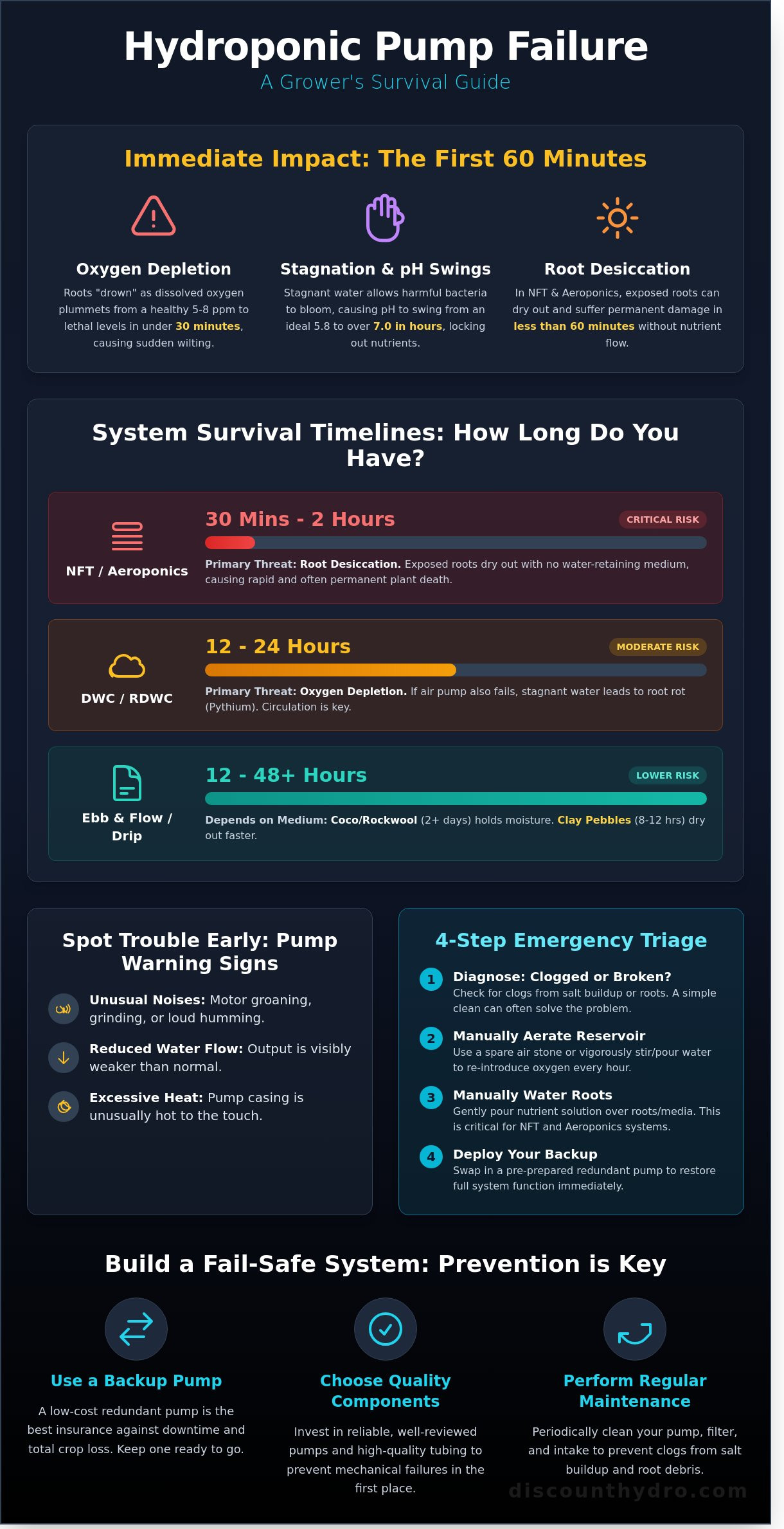
Emergency Triage: How to Fix a Hydroponic Pump or Save Your Crops
When you realise what happens if hydroponic pump fails, the clock starts ticking immediately. For NFT systems, you have roughly 60 minutes before root damage begins. Follow these five steps to stabilise your environment before the crop wilts.
- Step 1: Aerate the reservoir manually. Use a clean jug to scoop water and pour it back from a height of 30cm. This introduces vital oxygen. Repeat this for 5 minutes every 2 hours.
- Step 2: Isolate the pump. Unplug the unit and check the intake grate for root mass or stray clay pebbles. Even a small obstruction can drop flow rates by 85% or cause a total blockage.
- Step 3: The "tap test". If the motor hums but doesn't spin, give the side of the pump a firm tap against a hard surface. This often unseats a jammed impeller caused by grit.
- Step 4: Switch to manual feeding. Use a 5-litre pressure sprayer to keep exposed roots damp.
- Step 5: Kill the heat. Dim your grow lights by 50% or raise them by 40cm. This reduces the plants' transpiration demand, meaning they'll survive longer without active irrigation.
How to Fix Common Pump Issues Fast
Airlocks are a frequent culprit after reservoir changes. Submerge the pump fully and tilt it at a 45-degree angle to let trapped air bubbles escape. If the motor is seized, soak the impeller assembly in a 10% white vinegar solution for 15 minutes. This dissolves mineral salts that build up from high-EC nutrient solutions. If the pump is hot to the touch, the thermal cut-out has likely tripped. These safety switches often reset once the unit cools below 30°C, so let it sit in a bucket of fresh water for 20 minutes.
Manual Watering Strategies
Understanding what happens if hydroponic pump fails is the first step to saving your grow. Your watering frequency depends on your substrate. In coco coir or rockwool, manual "flooding" every 4 to 6 hours is usually enough to maintain moisture. For NFT systems with bare roots, you must use a hand sprayer every 30 minutes to prevent the root tips from browning. Don't leave plants sitting in stagnant water. If the pump isn't clearing the tray, stagnant pools will cause Pythium within 24 hours. Always ensure your drainage channels are clear before manual feeding.
Building a Fail-Safe Grow Room with Discount Hydro
Experienced growers follow a strict rule: two is one and one is none. If your primary pump stops, your entire crop is at risk immediately. Understanding what happens if hydroponic pump fails is only the first step; preventing the fallout requires having a physical backup ready for instant deployment. A secondary pump often costs between £15 and £45, yet it protects a harvest that might be worth thousands of pounds. Don't wait for a breakdown to realise your system's vulnerability. High-performance setups demand hardware that can run 24/7 without overheating or losing pressure.
Essential Backup Equipment
Always keep a spare submersible pump that matches your system’s specific head height requirements. If your reservoir sits 1.5 metres below your grow trays, a pump with a 1.2 metre maximum head will fail to deliver water. Battery-powered air pumps are equally vital for oxygenating nutrient solutions during power cuts. These units often provide up to 20 hours of emergency aeration to keep roots healthy. Installing check valves and inline filters prevents 85% of common blockages caused by root debris or salt build-up. These small components ensure the motor doesn't burn out prematurely, saving you from expensive emergency replacements.
Professional Grade Solutions
Investing in high-quality LED grow lights and professional pumps pays off through increased reliability and lower heat output. Commercial-style setups should integrate a redundant pump system. This involves two pumps running in parallel; if one unit stops, the other maintains enough flow to prevent root desiccation. Modern smart monitors can now send an alert to your smartphone if the flow rate drops by more than 15% or if the power fails entirely. Organise your grow room so that all equipment is easily accessible. You need to be able to swap out a faulty pump in under five minutes to minimise plant stress. Keeping your cables labelled and your spare parts in a dedicated "emergency kit" box ensures you aren't searching for tools while your plants wilt.
For growers seeking maximum durability, sourcing components from specialists in harsh environments can be a smart move. For example, marine electrical suppliers like BIVO offer pumps and fittings designed for constant water exposure, providing an extra layer of reliability for critical systems.
Protect Your Yield with Fail-Safe Hardware
A pump failure starts a 15-minute countdown in aeroponic setups before roots begin to dry out. Even in DWC systems, you've only got about 2 hours before oxygen depletion becomes a critical threat to your plants. Understanding what happens if hydroponic pump fails is vital for any serious grower. Routine checks every 24 hours and keeping a spare pump on site are the only ways to ensure your crop doesn't wilt. We've seen entire harvests worth over £2,000 lost because of a £20 part failing at the wrong time.
Don't risk your investment on low-grade equipment. Get professional-grade reliability with UK nationwide delivery available on all our stock. We provide the UK’s best prices on top-tier grow room hardware and offer expert advice from seasoned growers who've managed these systems for years. Whether you need a primary submersible pump or a secondary backup for emergencies, we've got the inventory ready for immediate dispatch. Secure your grow room today and keep your nutrient flow stable.
Shop reliable hydroponic pumps and backup equipment at Discount Hydro
Your plants depend on constant flow, so make sure your hardware is up to the task.
Frequently Asked Questions
Can I use a standard aquarium pump as a temporary replacement?
Yes, you can use a standard aquarium pump as a temporary fix if the Litres Per Hour (LPH) rating matches your reservoir size. Most 100 litre tanks require a pump that moves at least 300 LPH to maintain proper circulation. While these pumps are often cheaper, they lack the durability of industrial hydroponic models and may clog within 14 days of continuous use in nutrient-rich water.
How long can my plants survive in a DWC system without a pump?
Plants in a Deep Water Culture (DWC) system typically survive for 4 to 6 hours before oxygen depletion causes permanent root damage. Understanding what happens if hydroponic pump fails is crucial because dissolved oxygen levels can drop by 50 percent in less than 3 hours. If you don't restore flow within this window, the roots will begin to suffocate and turn brown.
What is the most common reason for a hydroponic pump to stop working?
Mineral salt buildup is the primary cause of pump failure, accounting for roughly 70 percent of all hardware breakdowns. Nutrient solutions contain high concentrations of salts that crystallise around the impeller over a 3 month period. You should soak your pump in a weak citric acid solution every 30 days to prevent these deposits from seizing the motor.
Will a power cut kill my hydroponic plants?
A power cut won't kill your plants instantly, but you face significant risks if the outage lasts longer than 120 minutes. Most systems have enough residual moisture to keep roots hydrated for a short time. For longer blackouts, you'll need a battery backup or a £50 petrol generator to keep the aeration and irrigation cycles running during the emergency.
How do I know if my pump is broken or just has an airlock?
A broken pump is usually silent, while an airlock produces a faint humming or vibrating sound without moving any water. Airlocks affect approximately 15 percent of new installations when air bubbles get trapped in the impeller housing. You can usually fix this by submerging the pump fully and tilting it at a 45 degree angle to let the trapped air escape.
Should I leave my pump running 24/7 or use a timer?
You should run your pump 24/7 in DWC and NFT systems to ensure constant oxygenation and nutrient delivery. Ebb and flow systems are different; they typically run on a timer for 15 minutes every 2 to 3 hours. Continuous operation prevents the stagnant zones that lead to root rot in 90 percent of water-based setups, so don't cut the power to save on bills.
Is it possible to revive plants that have wilted due to pump failure?
You can revive wilted plants if you restore the water and oxygen supply within 12 hours of the initial pump failure. Plants have an 80 percent recovery rate if the root mass is still firm and white. If the roots have turned slimy or brown, you'll need to treat the reservoir with a peroxide-based additive to stop pathogens from spreading through your system.