

Fungus Gnat Treatment UK: The Grower’s Guide to Total Eradication (2026)
Did you know there are over 250 species of fungus gnats in Britain? These pests thrive in warm indoor environments, where their life cycle can complete in just three to four weeks at 22°C. If you've seen small flies hovering around your pots, you're likely already dealing with a larval infestation that's actively stunting your plant growth. Finding an effective fungus gnat treatment uk solution is critical before your root systems suffer permanent damage.
It's frustrating to watch your crop suffer because of damp media or overwatering. You need a clean, professional grow space without resorting to harsh chemicals that might compromise your plants. This guide shows you how to identify these pests and implement a dual-action strategy for total eradication. You'll learn how to use biological controls like Steinernema feltiae to kill larvae and physical traps to stop adults. We'll cover everything from moisture management to the specific products required to keep your grow room pest-free for good.
Key Takeaways
- Identify sciarid flies accurately and understand their 17-day life cycle to time your eradication efforts perfectly.
- Apply biological controls like beneficial nematodes for a professional-grade fungus gnat treatment uk that destroys larvae in the soil.
- Master the use of yellow sticky traps and physical media barriers to eliminate adult flies and prevent egg-laying.
- Implement strict hygiene and humidity management protocols to stop pests from entering your grow room or grow tents.
- Source high-performance pest control concentrates and specialist growing media at competitive trade prices.
What are Fungus Gnats and Why are They in Your Grow Room?
Fungus gnats, or Sciarid flies, are the most common pest in UK indoor gardens. You'll recognize them as tiny black flies crawling on your growing media or hovering near the base of your plants. Don't confuse them with fruit flies that swarm around rotting kitchen waste. Shore flies are another common lookalike, but they have distinct white spots on their wings and thicker bodies. Fungus gnats are delicate, mosquito-like, and attracted to high moisture. They are more than a nuisance; they are a direct threat to your crop's health.
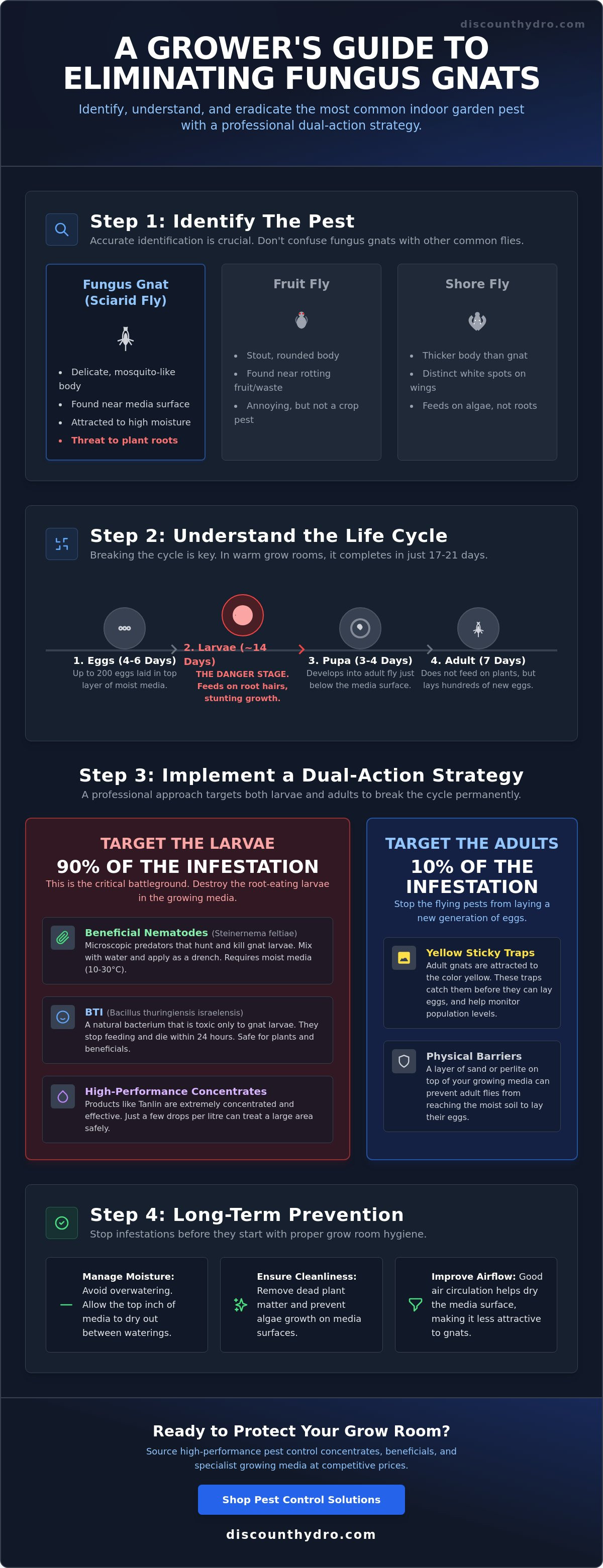
The typical life cycle lasts about 17 days, though this accelerates in warm grow rooms. This short window explains why you see "waves" of flies every few weeks. While the adults don't eat your plants, they lay hundreds of eggs in the top layer of your media. The resulting larvae are translucent worms with black heads. These "crawlers" feed on delicate root hairs, which immediately disrupts nutrient uptake. If you notice wilting or unexplained yellowing despite correct nutrient levels, you likely need a targeted Fungus gnat biology assessment to confirm an infestation. Finding an effective fungus gnat treatment uk solution starts with recognizing these early warning signs before the population explodes.
The Danger to Indoor Crops
Larvae damage is a gateway for secondary infections. When gnats chew through root tissue, they leave open wounds. These wounds are perfect entry points for Pythium, also known as root rot. Young clones and seedlings are particularly vulnerable because their root systems are small. A minor infestation can wipe out an entire tray of propagations in days. Most infestations start with overwatering. Saturated media provides the exact anaerobic conditions these pests need to thrive. If your pots feel heavy and the top inch of media never dries out, you're inviting an infestation.
Fungus Gnats in Hydroponics vs Soil
Gnats aren't limited to soil. They thrive in damp coco coir and rockwool slabs used in hydroponic setups. Algae often forms on the surface of these media under intense LED grow lights. This algae provides a secondary food source for the larvae. Automated feeding systems, like drippers or flood and drain tables, can accidentally sustain a gnat population by keeping the top layer of the media permanently wet. In these systems, the gnats often hide in the drainage channels or underneath the pots. Total eradication requires managing these damp micro-climates alongside your primary fungus gnat treatment uk plan.
Stopping the Cycle: Larvae Treatments that Actually Work
Killing adult flies is only 10% of the battle. While sticky traps catch the flyers, they don't stop the hundreds of eggs and larvae currently destroying your root systems. A professional fungus gnat treatment uk strategy must focus on the growing media where 90% of the population resides. If you only target the adults, you'll see a fresh wave of pests every few days as the next generation matures. You need to break the cycle at the larval stage to see real results.
Bacillus thuringiensis israelensis (BTI) is one of the most effective tools for this task. It's a naturally occurring bacterium that produces toxins specifically targeting gnat larvae. When the larvae ingest the BTI, they stop feeding and die within 24 hours. This biological approach is highly precise; it won't harm your plants, pets, or other beneficial insects. Many growers use BTI as a preventative drench every time they water to ensure populations never gain a foothold. You can find RHS advice on fungus gnats that confirms these biological controls are the preferred method for sustainable indoor gardening.
Nematodes: The Organic Predator
Nematodes are microscopic roundworms that hunt gnat larvae. The specific species you need is Steinernema feltiae. These predators enter the gnat larvae and release bacteria that kill the host, allowing the nematodes to reproduce and move on to the next victim. To apply them, mix the nematode powder with room-temperature water and drench your pots or add them directly to your reservoir. They require a temperature range between 10°C and 30°C and moist media to survive. Don't let your pots dry out completely during treatment, or the nematodes will perish before the job is done.
Concentrates and Soil Drenches
For high-performance grow rooms, Tanlin (formerly Nilnat) is a staple fungus gnat treatment uk option. It's extremely concentrated; just a few drops per litre of water are enough to treat large volumes of media. Unlike some harsh pesticides, it's safe to use throughout the growth cycle. If you prefer a more aggressive physical approach, a hydrogen peroxide (H2O2) drench can work. A 3% solution diluted at a ratio of one part peroxide to four parts water will fizz on contact with the larvae, killing them instantly. However, be careful as H2O2 also kills beneficial bacteria. Always re-introduce your hydroponic nutrients and microbial additives after a peroxide treatment to maintain root health. You can find all the professional drenches and equipment you need at Discount Hydro to get your environment back under control.
Adult Control: Sticky Traps vs. Physical Barriers
Removing adult flies is essential for stopping the reproductive cycle. While larvae treatments handle the immediate threat to your roots, adults can lay up to 200 eggs in just a few days. Effective adult control prevents these flies from depositing eggs back into your growing media. Combining physical traps with surface barriers creates a multi-layered defense. This approach is a core part of Integrated Pest Management (IPM) for fungus gnats, ensuring you aren't just reacting to an infestation but actively suppressing it. For many growers, this is the most cost-effective fungus gnat treatment uk strategy available for long-term success.
Adult flies are primarily a reproductive threat. They don't eat your plants, but they travel between pots, spreading the infestation throughout your grow room. If you ignore the flyers, your larvae treatments will eventually fail as new generations are constantly introduced. You must address the visible flies at the same time you treat the media. This dual-attack method is the only way to achieve total eradication in a high-performance environment.
Using Sticky Traps as a Monitoring Tool
Yellow sticky traps are the industry standard for catching adult sciarid flies. Gnats are naturally attracted to the specific yellow wavelength. Don't waste money on blue traps; those are designed for thrips and won't catch gnats effectively. To get the best results, place your traps at the base of the plant or just above the media surface. Gnats are weak flyers and spend most of their time crawling or hovering low. Use these traps to monitor your progress. If your daily catch count drops, your larvae treatment is working. If the traps remain covered, you need to increase the frequency of your soil drenches. It's a simple, visual data point that tells you exactly how well your pest control plan is performing.
Surface Barriers and Mulches
Physical barriers stop the cycle at the source. Applying a 1-inch layer of dry perlite or pumice granules like LAVA-LITE creates an inhospitable environment for egg-laying. Adult flies need moist organic matter to deposit their eggs. A dry, abrasive top layer acts as a "no-go" zone, making it impossible for them to reach the damp media below. It also prevents newly hatched adults from emerging. This physical barrier is a permanent fungus gnat treatment uk solution that doesn't rely on chemicals. High air circulation from floor fans also helps; gnats cannot fly or land easily in turbulent air. Electronic fly zappers are rarely effective in a grow room since gnats stay low and away from the light sources typically used in those devices. Stick to barriers and traps for better value and better results.
Grow Room Hygiene and Prevention Strategies
Prevention is the most cost-effective fungus gnat treatment uk strategy. High-performance grow rooms require a sterile environment to prevent pests from ever gaining a foothold. Most infestations aren't accidental; they're the result of poor hygiene or contaminated media. Adopting a "Clean In, Clean Out" policy ensures that every piece of equipment, from your pots to your trimmers, is disinfected before use. This professional approach separates hobbyists from serious growers who prioritize crop security and yield consistency.
Floor hygiene is often overlooked but remains a primary breeding ground. Spilled coco coir, damp rockwool, or standing water on the floor of your grow tents provides the perfect habitat for gnats. Larvae don't just stay in the pots; they can thrive in any damp organic matter. Mop up runoff immediately and sweep up any loose media. If your floor is dirty, your plants are at risk. Quarantine is equally vital. Never introduce a new clone or plant into your main room without a 14-day isolation period. Use this time to inspect the media and apply a preventative drench to kill any hitchhiking larvae.
Watering Practices to Discourage Pests
Common advice often suggests "letting the soil dry out" to kill gnats. This is impractical for high-frequency fertigation in coco or hydroponics where plants require constant moisture. Instead, use bottom-feeding systems or gravel mulches to keep the top layer of media dry while the roots stay hydrated. Ensure your trays have proper drainage so water doesn't stagnate. Proper water management doesn't just stop gnats; it's a core part of a broader strategy, similar to what you'll find in our guide on spider mites. Dry surface conditions make it impossible for gnats to survive without stressing your plants.
Environmental Controls
Environmental stability is your best defense. Use oscillating fans to create constant air movement across the surface of your pots. Gnats are weak flyers and cannot land or lay eggs in turbulent air. Intake filters are another essential investment. They stop adult flies from being sucked into your grow room from the outside environment. Maintain a Vapor Pressure Deficit (VPD) that promotes rapid plant growth; healthy plants produce stronger natural defenses against root damage. Upgrade your setup with professional grow tents and ventilation systems to maintain a sterile, pest-resistant environment. Controlling your humidity and airflow is a permanent fungus gnat treatment uk solution that works 24/7.
Professional Pest Control Supplies at Discount Hydro
Discount Hydro provides the most reliable fungus gnat treatment uk solutions for professional and hobbyist growers. We only stock products proven to work in UK indoor environments. Our inventory includes industrial-strength concentrates and bulk physical traps designed for rapid results. If you're in County Durham, visit us for direct collection and expert product advice. For growers nationwide, we offer fast UK delivery to stop an infestation before it spreads to your entire crop. Speed is essential when dealing with sciarid flies. Every day you wait is another day of root damage and lost yield.
Our business model focuses on value. We understand that pest control is an overhead that growers want to minimize. By stocking professional-size concentrates and bulk packs of traps, we ensure you get the lowest price per treatment. We don't sell gimmicks or unproven home remedies. Everything in our warehouse is selected for its efficacy in high-performance grow rooms. Whether you are running a single tent or a large-scale commercial facility, we have the stock levels to support your needs immediately.
Our Top Recommended Gnat Killers
- Tanlin (Nilnat): This is our top recommendation for high-value larvae control. One small bottle treats thousands of litres of nutrient solution. It's a cost-effective choice for large-scale operations using hydroponic systems or large soil volumes.
- Bulk Yellow Sticky Traps: We supply these in various pack sizes to suit any room. They are essential for the monitoring and adult control strategies mentioned in previous sections.
- Diatomaceous Earth: This provides a sharp, microscopic physical barrier. It shreds larvae on contact and is a natural, non-toxic addition to any pest management kit.
Setting Up a Gnat-Proof Grow Room
Your choice of environment dictates your long-term pest risk. Our grow tent buyers guide highlights the importance of fine-mesh vents. These screens allow for maximum airflow while blocking adult gnats from entering your workspace. Using cheap, unsterilised media is the most common way to introduce pests. We supply premium, pre-sterilised growing media that arrives clean and ready for use. Combining a secure tent with professional-grade media significantly reduces the need for reactive fungus gnat treatment uk plans later in the cycle. Shop our full range of pest control tools at Discount Hydro to secure your grow room today at the UK's most competitive prices.
Secure Your Yield with Professional Pest Control
Total eradication is possible when you combine biological larvae control with physical adult barriers. You've learned that targeting only the flyers allows the next generation to continue destroying your root systems. By maintaining strict hygiene and using sterile media, you create an environment where sciarid flies cannot survive. Implementing these professional standards ensures your plants stay healthy and your nutrient uptake remains efficient throughout the grow cycle.
Discount Hydro is your partner in maintaining a sterile grow space. We offer competitive discount pricing on professional fungus gnat treatment uk products, including high-value concentrates and bulk traps. Our UK-based team provides expert support to help you choose the right tools for your specific setup. With fast, discreet nationwide shipping on all nutrients and tools, we help you protect your investment without overspending. Don't let a small infestation turn into a crop-wide disaster. Browse our professional-grade pest control range for fast UK delivery and get your grow room back to peak performance today.
Frequently Asked Questions
Will fungus gnats kill my plants if left untreated?
Severe infestations can kill young plants and seedlings by destroying their limited root systems. In mature plants, the larvae chew through root hairs, which leads to stunted growth and nutrient uptake issues. These wounds also create entry points for root rot pathogens like Pythium. You must address the infestation early to prevent permanent crop damage and yield loss.
Can I use "Mosquito Bits" for fungus gnat treatment in the UK?
Mosquito Bits are primarily a US product, but UK growers can find equivalent BTI (Bacillus thuringiensis israelensis) solutions. These biological treatments target sciarid fly larvae without harming your plants or beneficial microbes. Look for UK-registered biological control agents or professional concentrates like Tanlin for similar results. Always check for current regulations regarding non-native microbial controls before application.
Is it safe to use gnat treatments during the flowering stage?
Biological treatments like nematodes and BTI are completely safe for use during the flowering stage. These products are applied as a soil drench and don't come into contact with your flowers or foliage. This ensures your consumable crops remain free from chemical residues. Avoid using systemic pesticides or heavy sprays late in the cycle to maintain the purity of your final harvest.
How do I tell the difference between fungus gnats and fruit flies?
Fungus gnats are mosquito-like with long legs and thin bodies, typically found crawling on damp growing media. Fruit flies have stouter, rounder bodies and are often seen with distinctive red eyes. While fruit flies are attracted to fermenting sugar and kitchen waste, fungus gnats are drawn to moisture and decaying organic matter in your pots or grow tents.
What is the fastest way to get rid of fungus gnats in coco coir?
The fastest fungus gnat treatment uk for coco involves a 3% hydrogen peroxide drench to kill larvae on contact, combined with yellow sticky traps for adults. Coco coir requires high-frequency watering, so you should follow up with a concentrated biological drench like Tanlin in your reservoir. This ensures the media stays protected even with constant nutrient delivery, preventing the population from rebounding.
Do cinnamon or apple cider vinegar traps actually work for gnats?
Cinnamon and apple cider vinegar are largely ineffective for controlling sciarid flies in a professional grow room. Cinnamon has minor antifungal properties but won't stop a settled larval infestation. Vinegar traps are designed for fruit flies and don't attract fungus gnats at all. Use yellow sticky traps and professional-grade biological predators for a reliable fungus gnat treatment uk that actually delivers results.
Can fungus gnats live in a purely hydroponic (DWC) system?
Fungus gnats thrive in DWC systems by breeding in damp clay pebbles or on rockwool surfaces. They feed on the algae that grows where light hits the moist media. If you don't use light-blocking covers on your net pots, gnats will quickly colonize your reservoir. Maintain high hygiene standards and use intake filters to keep these pests out of your hydroponic setup.
How long does it take for nematodes to start killing larvae?
Nematodes start hunting and infecting larvae within hours of application to your growing media. You'll usually see a significant drop in the gnat population within three to five days. Because nematodes only target the larval stage, you must continue using sticky traps for at least two weeks to catch the remaining adults and fully break the reproductive cycle.