

How to Make Your Grow Room Stealthy: The Complete Guide to Discreet Indoor Gardening
The most successful indoor garden is the one that remains completely undetected. If you're running powerful LED grow lights and high-cfm extraction fans, you're likely concerned about light leaks and mechanical noise. It's frustrating to worry that a pungent plant odor or a bright glow from a door frame might give your project away. Learning how to make your grow room stealthy is a technical requirement for any serious indoor gardener who values privacy and operational security.
This guide provides a professional strategy for achieving total discretion. You'll learn how to eliminate light leaks, dampen fan noise to a whisper, and neutralize 100% of odors using industrial-grade carbon filters and silent inline fans. We'll examine the specific hardware and installation techniques required to create a silent, scent-free environment that blends into your home's background noise. This article covers everything from light-proofing grow tents to selecting high-efficiency EC motor fans for near-silent operation.
Key Takeaways
- Eliminate 100% of organic odours by mastering negative pressure with activated carbon filters and high-performance extraction systems.
- Reduce mechanical sound to a whisper by upgrading to EC motor fans and acoustic ducting to dampen vibration and air turbulence.
- Learn how to make your grow room stealthy by using full-spectrum LED grow lights that lower thermal signatures and prevent light leaks.
- Optimize your layout by selecting the best room locations and using grow tents to create a discreet, double-walled gardening environment.
- Manage operational security by monitoring electricity consumption and using professional-grade timers to avoid unusual utility spikes.
Neutralising the Odour Signature: Carbon Filters and Extraction
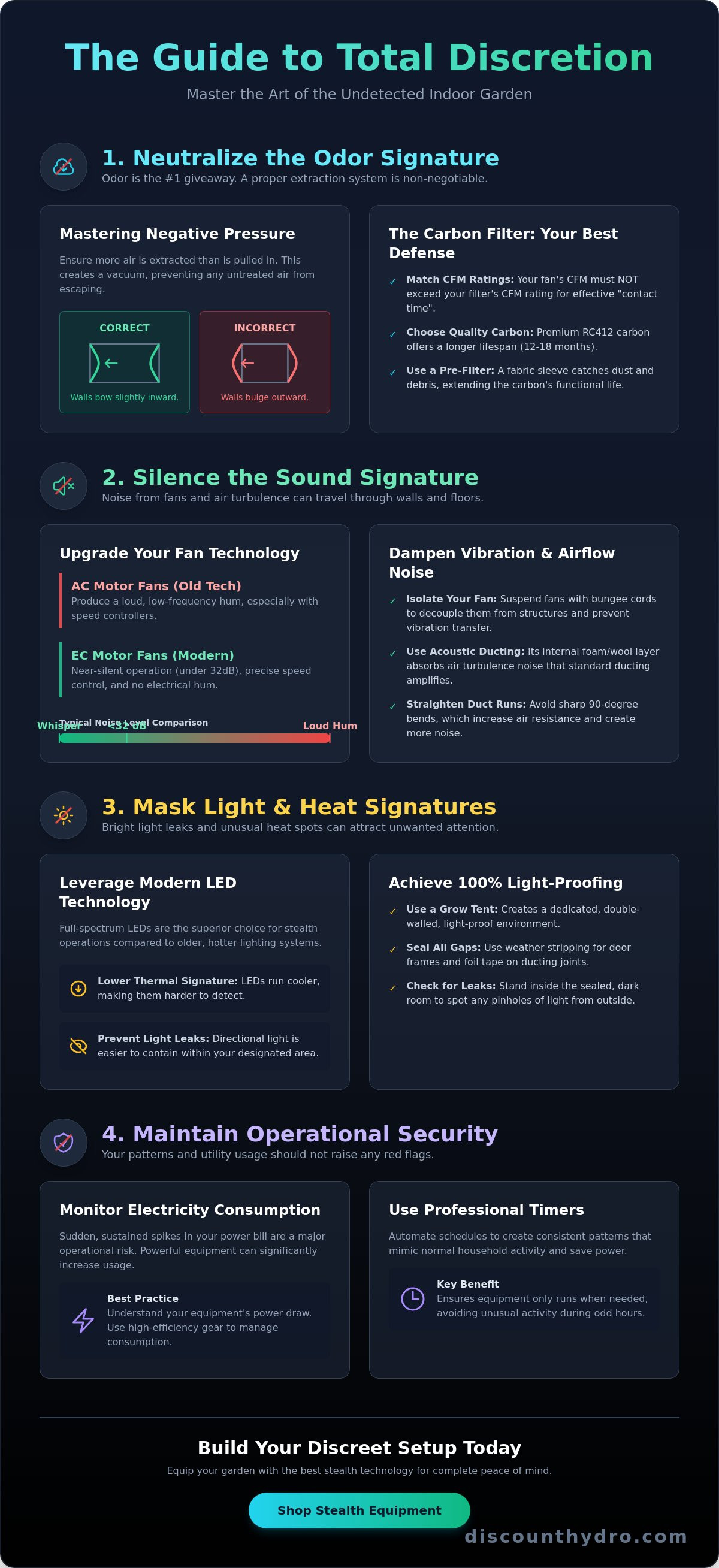
Odour is the primary signature that compromises an indoor garden. Total discretion requires a robust extraction system that maintains constant negative pressure. This setup ensures that no air escapes through cracks, door frames, or vents without being processed. Learning how to make your grow room stealthy starts with the science of adsorption. Activated carbon filters work by trapping Volatile Organic Compounds (VOCs) within a dense bed of charcoal. As air passes through the filter, the porous surface area of the carbon captures scent molecules. The exhausted air remains completely neutral.
Efficiency depends on "contact time." This is the duration the air remains inside the carbon bed. If your extraction fan is too powerful for your filter, air moves through too quickly for effective scrubbing. You must match your fan's CFM (Cubic Feet per Minute) or m3/h rating to the filter's capacity. For example, a 400 CFM fan requires a filter rated for at least 400 CFM to ensure total odour removal. While researching different types of grow lights, remember that higher-intensity units can increase room temperatures. Elevated heat often intensifies plant odours and requires more frequent air exchanges to maintain a scent-free environment.
Choosing the Right Carbon Filter
Standard filters use lower-grade carbon that saturates quickly. Premium filters feature RC412 Australian virgin carbon or similar high-density beds for longer operational life. You must replace your filter before it reaches full saturation. Most professional-grade units last 12 to 18 months under continuous use. Always use a pre-filter sleeve. This fabric layer catches dust and debris. It prevents carbon pores from clogging and extends the unit's lifespan by several months. Sudden scent leaks usually indicate a saturated carbon bed or a torn pre-filter.
Maintaining Negative Pressure
Negative pressure occurs when the volume of air being extracted is greater than the volume being pulled in. This creates a vacuum effect. You can verify this by looking at your grow tent walls; they should bow inward slightly. If the walls bulge outward, unscrubbed air is leaking through zippers and seams. To maintain this seal, ensure your intake fans are smaller than your primary extraction fan. Seal door frames with weather stripping. Use silver foil tape on all ducting joints to prevent air bypass. This systematic approach is essential for anyone learning how to make your grow room stealthy.
Silencing the Sound Signature: Fans and Acoustic Ducting
Managing noise is just as critical as odour control when learning how to make your grow room stealthy. Sound signatures originate from three distinct sources: the mechanical hum of the fan motor, the turbulence of air moving through ducting, and the physical vibration of equipment against the building's structure. Older AC motors are notorious for producing a low-frequency buzz, especially when used with speed controllers. Modern Controlled Environment Agriculture technology has shifted toward Electronically Commutated (EC) motors. These units offer silent, precise speed control without the electrical hum. High-end silent inline fans now operate at noise levels below 32 decibels; this is comparable to a whisper.
Structural vibration is often the most overlooked risk. If you bolt a fan directly to a ceiling joist, the sound will travel through the entire house. Suspend your extraction units using bungee cords or heavy-duty rubber straps instead. This simple decoupling technique prevents kinetic energy from turning your ceiling into a speaker. For high-powered setups, adding a fan silencer to the intake or exhaust side of the run can drop decibel levels significantly. These rigid tubes use internal baffles to straighten air flow and kill sound waves before they exit the system.
The Role of Acoustic Ducting
Standard aluminium ducting offers zero sound insulation. Every gust of air creates a "whooshing" sound that's easily heard through walls. Acoustic ducting features a thick internal layer of glass wool or foam that absorbs this turbulence. It's bulkier than standard flexi-pipe, but the noise reduction is substantial. Keep your ducting runs as straight as possible. Every 90-degree bend increases air resistance and noise. If you need a quiet environment, investing in high-quality ventilation accessories is a non-negotiable step for total discretion.
Strategic Fan Placement
Position your extraction fan in the centre of your grow area. Using the internal space of a tent as a sound buffer helps contain mechanical noise before it reaches the room's walls. For large-scale extraction, consider building or purchasing "fan boxes" lined with acoustic foam to encase the motor unit. A common professional tactic involves using a larger fan, such as an 8-inch model, and running it at 40% capacity rather than running a 4-inch fan at maximum speed. This provides the same air exchange with significantly less motor strain and wind noise. This strategic approach is a fundamental part of how to make your grow room stealthy.
Masking Light and Heat Signatures with LED Technology
High Pressure Sodium (HPS) lighting presents two major risks for discreet gardening: intense thermal radiation and high-wattage light leakage. These units generate significant heat that can be detected via thermal imaging on lofts or outbuildings during winter months. Switching to LED grow lights is a fundamental step in how to make your grow room stealthy. Modern LED fixtures convert a much higher percentage of energy into usable light rather than waste heat. This reduction in thermal output makes it far easier to keep external wall temperatures consistent with the rest of the property, preventing suspicious "hot spots" on rooflines.
High-quality grow tents use high-denier fabric, typically ranging from 600D to 1680D, to prevent internal light from "glowing" through the canvas. Cheaper, thinner materials often allow light to bleed through the fabric seams or the material itself. This visible glow is a dead giveaway at night. Using a professional-grade tent ensures that the intense brightness remains contained within the gardening area. If you're looking for the best value on light-proof equipment, browse our current range of grow tents to find a model with reinforced zippers and light-tight stitching.
Eliminating Light Leaks
Light escaping through intake vents or ducting ports is a common failure point. Use "light traps" or double-angled ducting to create a path for air that simultaneously blocks light waves. Conduct a "Dark Room Test" by standing inside your setup with the grow lights on while the external room lights are off. Look for pinhole leaks around zippers, stitching, and cord ports. Seal these immediately with silver foil tape or heavy-duty velcro patches. For windows within the grow room, apply blackout vinyl or reflective sheeting directly to the glass behind heavy curtains. This double-layer approach ensures zero visibility from the street, even when high-intensity lights are active.
Thermal Stealth in 2026
Modern LEDs operate with 30-50% lower electricity consumption compared to older HPS technologies. This efficiency reduces the need for massive, high-speed extraction fans that create noticeable mechanical noise. If you're growing in a loft or attic, insulate the floor and walls to prevent heat from transferring directly to the roof tiles. LED efficiency directly contributes to a lower thermal signature by minimizing the infrared heat radiated toward external structures. This technical advantage is a core component of how to make your grow room stealthy in a residential setting. Maintaining a stable temperature also prevents the "snow-melt" effect on roofs, which is a common indicator of indoor heating anomalies.
Strategic Placement: Where to Build Your Stealth Room
The location of your garden determines the amount of effort required to maintain total discretion. Choosing the right spot is the first step in learning how to make your grow room stealthy. Lofts and attics are popular because they are rarely visited by guests, but they require specific technical considerations. Floor joists in many residential lofts aren't designed for heavy loads. You must reinforce the floor to support the combined weight of large pots, growing media, and water reservoirs. Extraction can often be routed through the eaves, which is a significant advantage for masking air movement and heat dissipation.
Basements provide the best natural insulation for indoor gardening. The surrounding earth regulates temperature and dampens mechanical noise from fans. If a basement isn't available, a spare bedroom can work, but it requires more aggressive light-proofing on windows and door frames. The "Room within a Room" concept is the gold standard for apartment dwellers. By placing a professional grow tent inside a locked cupboard or a walk-in wardrobe, you create a double-walled barrier. This setup traps any residual light or sound before it ever reaches the main living area.
Utilising Loft Spaces
Loft spaces often have sloped ceilings that make standard rectangular tents difficult to fit. Use specialized loft-shaped tents to maximize your available footprint under the roofline. Attics experience extreme temperature fluctuations. You'll need to manage high heat in the summer and freezing temperatures in the winter using automated controllers. Disguise the entrance to the loft by placing standard household storage boxes around the hatch. This ensures the access point looks like a typical storage area rather than a high-tech garden entry. Using eaves for extraction helps dissipate heat signatures into the atmosphere more effectively than venting through a window.
Stealth in Small Spaces
Converting a built-in wardrobe into a self-contained environment is a highly effective tactic for small properties. Focus on "stealth furniture" designs that blend into the room's existing decor. Humidity control is paramount in confined spaces. Excessive moisture can cause damp spots or mould on external walls; this serves as a visible indicator of an indoor grow. Always vent your exhaust air directly outside or into a well-ventilated chimney. This technical discipline is essential for anyone researching how to make your grow room stealthy in a high-density living environment. If you're planning a discreet setup, check our latest inventory of compact grow systems to find equipment designed for tight spaces.
Operational Stealth: Maintenance and Electrical Safety
Operational stealth extends beyond hardware into your daily habits and electrical infrastructure. Managing electricity consumption is vital to avoid unusual utility bill spikes that might trigger external inquiries. While high-efficiency LEDs reduce the load, the total draw of fans, pumps, and lights still requires professional management. Never use standard household timers for high-draw lighting; the inductive load can weld the internal contacts, leaving your lights on 24/7. Use a dedicated contactor relay to handle the surge. This ensures your light cycle remains consistent and your electrical system stays safe. This level of technical oversight is a core part of how to make your grow room stealthy.
Discreet waste management is another pillar of a successful operation. Used hydroponic nutrients should be diluted and disposed of through standard domestic drains. Spent growing media like coco coir or perlite should be mixed with garden soil or disposed of in small, manageable increments over several weeks. Avoid placing large quantities of gardening waste in your domestic bin at once. Creating a "Stealth Schedule" is equally important. Time your maintenance visits to coincide with normal household activity. Avoid entering the grow area when visitors are present or during quiet hours when the sound of opening a heavy tent zipper might carry through walls.
Electrical Best Practices
Safety and stealth are inseparable. Never use cheap household extension leads to power your garden. These cables aren't rated for continuous high-amperage use and can overheat, posing a significant fire risk. Every circuit in your grow room must be protected by a Residual Current Device (RCD). This adapter cuts power instantly if it detects a ground fault, preventing shocks and electrical fires in damp environments. Organise all cables using velcro ties or cable trays. Keeping wires off the floor prevents trip hazards and ensures that any accidental water spills don't come into contact with live connections. Proper cable management is a technical requirement for anyone learning how to make your grow room stealthy.
The Stealth Maintenance Routine
Discretion requires constant vigilance. Follow this four-step weekly routine to ensure your system remains undetected:
- Step 1: Check carbon filter performance. Sniff the exhaust air directly to ensure no organic scents are bypassing the charcoal bed.
- Step 2: Inspect all ducting joins. Ensure jubilee clips are tight and look for any tears in the acoustic insulation that could leak sound or unscrubbed air.
- Step 3: Monitor fan acoustics. Listen for new clicking, grinding, or vibrating sounds that indicate motor wear or debris in the impeller.
- Step 4: Verify light-proofing. Turn off external lights and check that all tent zippers, door seals, and window blackouts remain 100% light-tight.
Consistent maintenance prevents the small failures that lead to total exposure. This systematic approach is the final piece in understanding how to make your grow room stealthy for long-term success. If you need to upgrade your safety equipment, browse our full range of electrical accessories today.
Secure Your Stealth Setup Today
Total stealth is the result of technical discipline and high-performance hardware. You've seen that neutralizing odors requires constant negative pressure and premium carbon filtration. Silencing mechanical noise depends on upgrading to EC motor technology and using acoustic ducting to kill air turbulence. Masking thermal signatures with high-efficiency LEDs and securing light-tight grow tents provide the final physical barriers. Mastering how to make your grow room stealthy ensures your indoor garden remains a private, efficient operation that doesn't disrupt your household or attract unwanted attention.
Success depends on using reliable, professional-grade equipment. We provide competitive pricing on professional LED lighting and grow tents, along with expert-selected kits for discreet indoor gardening. Take advantage of our UK-wide fast delivery on all stealth equipment to get your setup running securely. Browse our range of silent fans and carbon filters at Discount Hydro and secure your setup today. With the right technical approach, your garden will stay completely undetected.
Frequently Asked Questions
How can I stop my grow room from smelling?
You stop odors by installing an activated carbon filter and maintaining negative pressure within the space. This technical setup pulls all air through a charcoal bed to adsorb scent molecules before they escape the room. It's the most effective method for anyone learning how to make your grow room stealthy. Replace the carbon bed every 12 to 18 months to prevent scent leaks and ensure your environment remains 100% odor-free.
Are LED grow lights better for stealth than HPS?
LED grow lights are superior for stealth because they generate far less infrared heat than HPS units. This lower thermal output prevents hot spots on external walls that could be detected from outside the property. LEDs also use significantly less electricity, which keeps your utility bills within a normal residential range and reduces the need for large, noisy cooling fans.
Can neighbours hear my extraction fans through the wall?
Neighbors can only hear fans if they are poorly installed or lack proper insulation. You should suspend your extraction fan with bungee cords to stop mechanical vibrations from traveling through the building's frame. Using acoustic ducting with an internal glass wool layer will also dampen the sound of rushing air to a whisper, making the operation blend into standard household background noise.
How do I hide my grow room from thermal imaging?
Hiding from thermal imaging requires managing the heat signature of your exhaust and walls. Use high-efficiency LEDs and insulate the grow area to prevent heat transfer to roof tiles or external brickwork. Venting air into a chimney or through eaves helps the thermal signature blend into the property's natural heat loss, making the garden invisible to external thermal sensors.
What is the quietest fan for a stealth grow room?
Fans using EC (Electronically Commutated) motor technology are the quietest options available for indoor gardening. These motors operate at decibel levels below 32 dB, which is comparable to a whisper. They don't produce the low-frequency mechanical hum common in older AC fans, allowing for precise speed control and near-silent operation even at higher extraction rates.
How do I light-proof a window for an indoor garden?
Light-proof a window by applying blackout vinyl or reflective sheeting directly to the glass surface behind your curtains. This creates a primary seal that stops light from high-intensity LEDs from escaping into the street at night. Adding a second layer using a heavy blackout curtain ensures that no pinhole leaks remain, providing total visual discretion from the outside.
Is it possible to grow in a loft without being noticed?
Growing in a loft is possible if you address floor weight limits and thermal signatures. Reinforce the joists to support your equipment and use thick insulation to prevent "snow-melt" patterns on the roof during winter. Routing your extraction air through the eaves is a professional tactic to mask air movement and heat dissipation in an attic environment.
How much electricity does a stealth grow room use?
Electricity usage varies by setup, but modern components are designed for high efficiency. A typical LED system consumes 30% to 50% less power than traditional lighting setups with the same output. Understanding how to make your grow room stealthy includes monitoring your meter to ensure your consumption patterns don't look unusual for a standard residential home. Using professional timers also helps manage these electrical loads safely.