

Fan Ducting Buying Guide: Best Grow Room Ventilation
Your high-performance extraction fan is effectively useless if your fan ducting is leaking air or collapsing under pressure. Most growers focus on the motor and overlook the tubes. Poor airflow architecture is the main reason tents sound like jet engines and odour control fails. You need a system that works without constant maintenance or the risk of structural failure.
We know that vibrating vents and heat leaks are a waste of time and money. This guide provides the technical specs to build a whisper-quiet, airtight ventilation system using professional-grade components. We'll show you how to select the right materials, from four-layer AC Infinity ducting to specialist PhonicTrap acoustic solutions. You'll learn how to secure connections and choose the best galvanised steel Y-pieces or reducers for maximum efficiency. You'll get a durable setup that lasts multiple cycles and keeps your environment perfectly controlled. Master the technical details of airflow management and find the perfect ducting components to optimize your indoor garden's environment.
Key Takeaways
- Understand how proper airflow management reduces static pressure and prevents premature fan failure in your grow room.
- Compare the durability and light-proofing benefits of black combi vs. traditional silver aluminium fan ducting for your specific setup.
- Learn to use galvanised steel reducers and Y-pieces to create professional, airtight connections across your entire ventilation system.
- Reduce noise levels significantly by implementing PhonicTrap acoustic solutions and secure Fast Clamps for vibration control.
- Select high-spec components like AC Infinity four-layer ducting to guarantee a leak-proof environment that withstands high-pressure extraction.
Understanding Fan Ducting for Efficient Grow Room Ventilation
Think of your ventilation setup as the circulatory system of your indoor garden. While the extraction fan acts as the heart, the fan ducting represents the arteries. It's responsible for moving stale, CO2-depleted air out of the grow space and pulling fresh air in. If you choose the wrong materials or install them poorly, you create static pressure. This resistance forces your fan to work harder, which increases energy consumption and causes the motor to fail prematurely. Understanding HVAC ducting basics is essential for anyone building a high-performance environment.
Airtightness is a non-negotiable requirement. Without a sealed system, you lose negative pressure. This loss allows untreated air to escape through tent zips or gaps, leading to total failure in odour control. High-quality fan ducting ensures that every cubic metre of air passes through your carbon filter before exiting the building. Professional setups depend on these airtight connections to maintain a discreet and stable environment.
The Role of Ducting in Heat and Humidity Management
Modern LED grow lights are highly efficient, but they still generate significant heat that can build up in the canopy. Your ducting diameter directly affects the Volume of Air (CFM) your system can move. A 100mm duct has significantly more resistance than a 150mm or 200mm line. By positioning your intake and exhaust ducting at opposite ends of the room, you prevent hot spots and ensure a uniform temperature. This consistent airflow also manages humidity spikes during the dark cycle, preventing mould from settling on your plants.
Why Standard Domestic Ducting Often Fails in Indoor Gardens
Many beginners try to save money by using cheap, single-layer aluminium foil ducting from local DIY shops. These domestic products aren't designed for the high-pressure environment of a grow room. They're prone to pinhole leaks that let light and odours escape. High-power fans often cause thin ducting to whistle or vibrate against the tent frame, creating excessive noise. Professional-grade fan ducting is built with multiple layers or acoustic insulation to withstand frequent adjustments as you move lights and equipment throughout the cycle. Durability is a priority for any serious operation.
Comparing Ducting Types: Flexible, Combi, and Acoustic Solutions
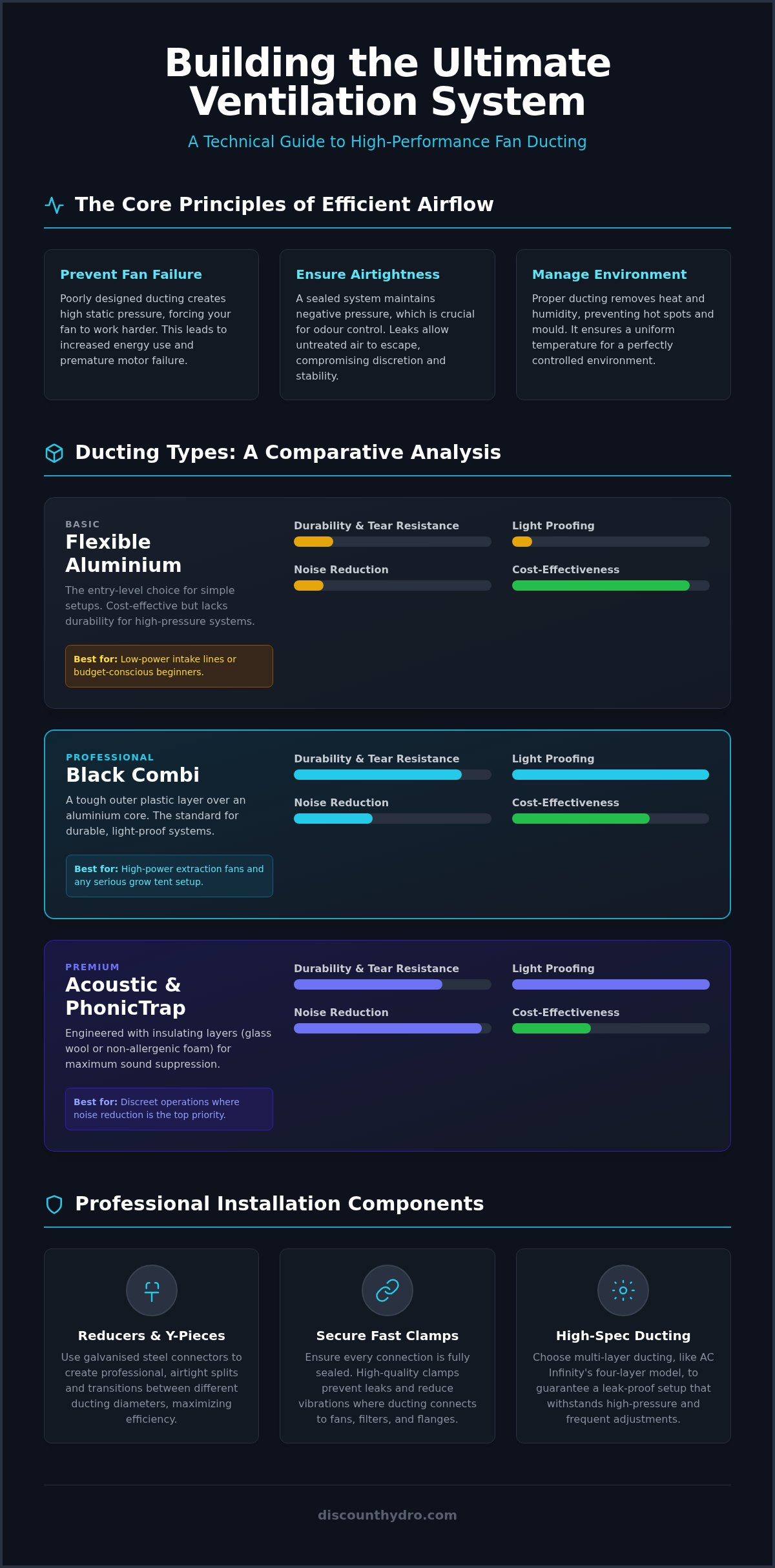
Choosing the correct fan ducting depends on your budget and your environment's specific needs. Standard silver aluminium is the entry-level choice for basic setups. However, high-performance gardens often require the durability of Combi or the noise suppression of acoustic variants to maintain a stable environment. Each material offers different levels of light-proofing, sound dampening, and physical resilience.
Flexible Aluminium vs. Black Combi Ducting
Silver Aluminium Ducting is the traditional, cost-effective choice for budget-conscious growers. Available in 5m or 10m lengths, it's lightweight and easy to manipulate. While it works for simple intake lines, it's prone to pinhole leaks and tearing. It also offers zero light-proofing, which can be a significant issue in light-sensitive environments.
For any professional grow tent setup, Black Combi Ducting is the superior option. Products like GAS Black Combi Premium feature an aluminium inner core protected by a tough outer plastic layer. This double-layer defense ensures total light-proofing and significantly higher tear resistance. It withstands the high pressure of powerful extraction fans without collapsing or whistling. If you're frequently moving lights or adjusting equipment, the extra durability of Combi ducting prevents accidental damage that could ruin your environment's sealed integrity.
Noise Control with Acoustic and PhonicTrap Ducting
Managing noise is essential for discreet operations, especially in high-traffic areas or buildings with shared walls. G.A.S Acoustic Professional Ducting uses a layer of HVAC-certified glass wool insulation to absorb sound waves. This material is designed to meet professional ventilation standards for sound attenuation, effectively killing the "whoosh" of high-velocity airflow. While effective, traditional acoustic ducting can be bulky and the glass wool may cause skin irritation during installation.
PhonicTrap represents the premium, non-allergenic alternative for maximum sound suppression. It features a specialized three-layer design that targets airflow noise without the mess of glass wool. It's highly flexible and arguably the best choice for ultra-quiet operation. Investing in these acoustic solutions is a pragmatic choice for growers who need to keep decibel levels to a minimum. You can browse our full range of professional ducting to find the right balance of price and performance for your specific room layout.
When selecting your ducting, consider the following technical factors:
- Silver Aluminium: Best for budget builds and short, straight runs.
- Black Combi: Essential for light-proofing and long-term durability in tents.
- Acoustic: Ideal for reducing fan noise in sensitive locations.
- PhonicTrap: The gold standard for non-itch, high-performance sound dampening.
Selecting the Right Diameter and Metal Work Connectors
Efficient ventilation depends on matching your fan ducting diameter exactly to your extraction fan's spigot. Common sizes in the UK include 100mm, 125mm, and 150mm. Using the wrong size creates gaps that lead to air leaks and odour control failure. To maintain a high-performance environment, you must follow the fundamental principles of duct design, which prioritise smooth airflow and minimal resistance.
Professional setups rely on heavy-duty galvanised steel connectors. Unlike plastic alternatives, galvanised steel won't crush under the pressure of tight clamps or corrode in high-humidity rooms. These components provide a rigid, permanent foundation for your flexible ducting runs, echoing the durability found in industrial construction projects supported by LEDA Formwork Solutions. They're built for reliability and value, ensuring your system remains airtight for multiple grow cycles.
Using Reducers and Splitters for Complex Setups
Not every piece of equipment in your garden will have the same connection size. Metal Work Reducers bridge these gaps, allowing you to connect a 150mm (6-inch) fan to 125mm (5-inch) ducting or filters. Our range covers transitions from 100mm up to 250mm to suit any industrial or hobbyist fan.
When splitting airflow between two tents or multiple intake points, Y-Pieces are superior to T-Pieces. The angled design of a Y-Piece provides a smoother path for moving air, which reduces turbulence and noise. Avoid 'stepping down' your ducting diameter too drastically. Forcing air from a 200mm fan into a 100mm duct creates massive back-pressure. This strains the motor and significantly reduces your actual air exchange rate.
Joining and Extending Ducting Runs
Long runs or custom layouts often require joining multiple lengths of fan ducting. Metal Work Male Couplings fit inside the ducting to connect two flexible sections securely. If you need to join two male-ended metal components, such as a reducer directly to a silencer, use a Metal Work Female Coupling. These connectors ensure your joints are as strong as the rest of the run.
Planning your layout carefully prevents wasted material and unnecessary bends. To ensure you have enough slack for adjustments and corners, calculate your required distance and add a 20% efficiency buffer to your total ducting length. This extra length allows for smooth curves rather than sharp 90-degree angles that kill airflow and increase static pressure.
Professional Installation: Clamps, Flanges, and Airflow Optimization
Mechanical security is the foundation of an efficient ventilation system. Every connection in your fan ducting run must be perfectly sealed to maintain negative pressure and total odour control. While many beginners rely on duct tape, it is a temporary fix that inevitably peels under the heat and humidity of a grow room. Professional installations use galvanised steel components to ensure a permanent, airtight seal that doesn't leak air or drop in performance over time.
Airflow optimization is equally critical for the longevity of your extraction fan. You should keep your ducting runs as straight as possible. Every 90-degree bend in your system reduces airflow by roughly 20%. This resistance creates back-pressure that forces the motor to work harder, increasing both your electricity bills and the noise level of the fan. Planning a layout with smooth, sweeping curves rather than sharp angles is the most cost-effective way to improve your environment's stability.
Securing Airtight Seals with Fast Clamps
The Metal Work Pro Metu Fast Clamp is the industry standard for growers who prioritise a quiet environment. It features an internal lining of polyethylene foam that acts as a gasket, suppressing vibrations before they can travel through the fan ducting. This foam layer also ensures an airtight fit on slightly irregular spigots. For simpler areas of the garden, such as connecting intake fans near hydroponic nutrients storage, budget Fast Clamps provide a reliable and reusable alternative to tape or plastic ties. These metal clamps are essential for preventing the whistling sounds often caused by high-pressure air escaping through small gaps.
Wall Flanges and Back Draft Dampers
Venting through a wall or ceiling requires a structural connection to prevent the ducting from sagging or tearing. Metal Work Square Wall Flanges offer a professional solution with pre-drilled holes for easy mounting. These flanges provide a rigid point of contact that handles the weight of the ducting run without putting stress on the tent fabric or plasterboard. They ensure that your exhaust point remains fixed and secure throughout the entire grow cycle.
For those integrating ventilation into permanent building structures, adhering to professional renovation standards is key; understanding how to navigate structural elements like roof parapets with guidance from Powerpillar Ltd can help ensure your exhaust setup remains secure and weather-tight.
To maintain total environmental control, you must manage what happens when your fans are switched off. A Metal Work Back Draft Damper uses two spring-loaded blades that open with airflow and snap shut when the pressure drops. This prevents cold winter air from crashing your room temperature during the dark cycle. It also acts as a physical barrier against pests, stopping spider mites or other insects from entering your garden through the exhaust line. You can buy professional installation accessories here to complete your ventilation setup with high-quality, galvanised steel components.
Top Fan Ducting Recommendations from Discount Hydro
Selecting the right fan ducting is the final step in building a professional ventilation system. Discount Hydro stocks a massive 21-product collection designed for various room scales and budgets. Whether you need the absolute silence of acoustic solutions or the industrial strength of galvanised steel, these recommendations represent the most reliable components currently available for UK growers. Our inventory focuses on high-performance brands like AC Infinity and G.A.S. to ensure your environment remains stable and secure.
For maximum airflow in tight corners, we recommend using Metal Work Elbows. Flexible ducting often kinks when forced into a 90-degree turn, which kills efficiency. A galvanised steel elbow maintains a perfect, smooth radius that allows air to move without restriction. This is a pragmatic upgrade for any permanent installation where space is at a premium. If you need a versatile all-rounder, GAS Black Combi Premium remains our top seller for its superior light-proofing and tear resistance.
Best for Noise Reduction and Discretion
Discreet operation is a priority for many indoor gardens. PhonicTrap is the best choice for ultra-quiet operation without the mess of traditional acoustic ducting. It features a non-allergenic, three-layer design that effectively kills the sound of high-velocity airflow. We stock PhonicTrap in a specific diameter range from 4 to 10 inches to match most standard extraction fans. Unlike cheaper alternatives, it doesn't use glass wool, so it won't irritate your skin during installation.
If you're managing a larger room with a higher volume of air, standard Acoustic Ducting in 5m or 10m lengths offers the best value for money. It uses HVAC-certified insulation to absorb fan noise. Pairing this with a silenced extraction fan creates a stealth setup that's virtually undetectable from outside the grow space. This combination is essential for maintaining a low profile in residential buildings or shared environments.
Best for Durability and Long-Term Use
AC Infinity Flexible Four-Layer Ducting is the gold standard for durability. It's built with multiple layers of aluminium and thermoplastic to resist tears and pinhole leaks, even in high-traffic grow areas. It's significantly tougher than domestic-grade foil and can handle the high static pressure generated by modern, high-output fans. This product is designed for growers who want a "set and forget" solution that lasts for multiple years of continuous use.
For the most robust setups, professional-grade galvanised steel Metal Work components are essential. These connectors, reducers, and Y-pieces won't crush or degrade over time, providing a solid foundation for your ventilation architecture. You can shop the full Fan Ducting collection here to find the right fit for your setup. Whether you need individual clamps or 10-metre runs of acoustic tubing, we provide the technical components required to optimize your garden's environment at competitive prices.
Optimize Your Airflow for Professional Results
Efficient ventilation is the backbone of a successful indoor garden. By selecting the right fan ducting, you ensure that heat and humidity are managed without compromising your fan's lifespan. Remember that using galvanised steel connectors and airtight Fast Clamps is a pragmatic investment that prevents odour leaks and reduces vibration. High-performance setups depend on these technical details to maintain a stable environment that supports healthy plant growth throughout every cycle.
Discount Hydro provides everything you need for a professional installation. We stock premium brands like AC Infinity and G.A.S., alongside heavy-duty galvanised steel 'Metal Work' components built to last. With our specialist range of PhonicTrap and acoustic solutions, you can achieve a whisper-quiet system that operates with total discretion. Take advantage of our UK-wide fast delivery and competitive pricing to get your ventilation system running at peak efficiency today. Build a setup that is reliable, functional, and cost-effective. Ready to upgrade your garden's architecture? Browse the Full Fan Ducting Collection at Discount Hydro and build a system that works as hard as you do.
Frequently Asked Questions
What size fan ducting do I need for my grow room?
Match the diameter exactly to your extraction fan's spigot. Standard UK sizes are 100mm, 125mm, and 150mm. If you haven't purchased a fan yet, calculate the total volume of your room to ensure the fan ducting can handle the required air exchange. Larger diameters generally offer less resistance and quieter operation, making them a better choice for high-output systems where efficiency is a priority.
Is acoustic ducting really worth the extra cost?
Yes, acoustic ducting is a pragmatic investment if noise suppression is a priority. It uses internal insulation to absorb sound waves from the fan and the rushing air. It significantly lowers decibel levels compared to standard aluminium foil. This makes it essential for setups in residential areas or shared buildings where discretion is required to maintain a low profile and avoid disturbing neighbours.
Can I use a 6-inch fan with 4-inch ducting using a reducer?
You can use a reducer, but it isn't recommended for high-performance environments. Reducing the diameter from 150mm to 100mm creates massive static pressure and back-pressure. This forces the fan motor to work harder, increases noise levels, and significantly reduces the actual volume of air moved. It's always better to match the ducting size to the fan's output to ensure maximum airflow and motor longevity.
How do I stop my ducting from whistling or vibrating?
Use professional Fast Clamps with polyethylene foam linings to suppress vibrations at the connection points. Ensure all fan ducting runs are pulled tight and secured to prevent sagging or flapping. Whistling is usually caused by small air leaks or sharp bends; check all joints and use galvanised steel connectors to ensure a perfect, airtight seal that eliminates noise and maintains negative pressure.
What is the difference between Combi ducting and standard foil ducting?
Combi ducting features an additional outer layer of tough plastic over the aluminium core. This makes it significantly more durable, tear-resistant, and 100% light-proof. Standard foil ducting is a single layer of aluminium that is prone to pinhole leaks and accidental damage during installation. Combi is the superior, long-term choice for active grow rooms where equipment is frequently moved or adjusted.
How often should I replace my fan ducting?
Replace your ducting if you notice any tears, pinhole leaks, or significant dust buildup inside the tube. High-quality multi-layer options like AC Infinity can last multiple years under normal conditions. However, cheaper single-layer foil should be inspected after every grow cycle. Keeping the interior clean and leak-free is vital for maintaining the negative pressure required for total odour control and environmental stability.
Does the length of the ducting affect my fan's performance?
Yes, longer runs increase resistance and reduce the fan's effective airflow. Every metre of ducting and every 90-degree bend adds friction that slows down the air. Keep runs as short and straight as possible to maintain efficiency. If you must use a long run, consider increasing the diameter or using a more powerful fan to compensate for the inevitable loss in pressure.
How do I connect ducting to a carbon filter securely?
Slide the ducting over the filter's flange and secure it with a galvanised steel Fast Clamp. Don't rely on duct tape alone, as the heat and humidity will eventually cause the adhesive to fail. For a professional, airtight finish, ensure the ducting is pulled tight and overlaps the flange completely before tightening the clamp for a secure, vibration-free connection that prevents air leaks.