

Fungus Gnat Control: How to Eradicate Sciarid Flies in Grow Rooms
The tiny flies hovering over your pots are the final stage of a problem that's already damaging your crop. While adult sciarid flies are a nuisance that can contaminate your harvest, the larvae are the real threat as they feed directly on delicate root hairs. Permanent fungus gnats control isn't about luck; it's about using the right technical tools to break the reproductive cycle. You need a setup that prevents these pests from ever establishing a foothold in your substrate.
It's common to feel like you're losing the battle when infestations keep returning every few weeks. You want a clean, professional grow room where your plants can thrive without underground interference. This guide provides the specific biological and physical tactics required for total eradication. We'll show you how to use predatory mites, nematodes, and physical barriers to protect your root zones. By the end, you'll have a clear plan to maintain a pest-free environment and ensure your nutrients are actually reaching the plant instead of feeding a colony of flies.
Key Takeaways
- Identify sciarid flies and recognise the visual signs of larval damage to delicate root hairs.
- Understand the 3-4 week life cycle to implement effective fungus gnats control that targets more than just adult flies.
- Compare biological treatments like predatory nematodes against physical solutions for high-efficiency pest management.
- Follow a professional two-step eradication strategy to clear infestations from both the air and the growing media.
- Establish quarantine protocols and proper media storage to prevent new pests from entering your grow room.
Identifying Fungus Gnats and Understanding the Damage
Sciarid flies are a persistent issue in indoor cultivation. While they look similar to fruit flies, their habits are different. Fruit flies seek out decaying fruit, but sciarid flies target moist growing media. You'll see them as tiny black flies wafting near the surface of your soil, coco, or rockwool. Effective fungus gnats control starts with accurate identification. According to this Fungus gnat overview, these pests belong to the families Sciaridae and Diadocidiidae. In a grow room, they thrive because of the constant high humidity, warmth, and presence of moist organic matter.
Grow rooms provide a perfect incubator. High-intensity LED Grow Lights and consistent irrigation create the exact conditions these pests need to multiply. If you see small, dark insects crawling on the rims of your pots, you likely have an established population. Discount Hydro provides the extraction and ventilation equipment necessary to manage the humidity levels that attract these pests. Proper airflow across the top of your pots is a simple but effective first step in making the environment less hospitable.
Adults vs. Larvae: Which is the Real Threat?
Adult flies are primarily a nuisance and a contamination risk for your flowers or fruit. However, they also act as vectors for fungal diseases like Pythium and Fusarium. They carry spores from pot to pot, spreading root rot throughout your system. The larvae are the primary destroyers. These legless, translucent worms live in the top few centimetres of the media, where they consume delicate root hairs. In soil and coco coir, larvae thrive on organic matter but will quickly pivot to living tissue if the population grows too large. At 25 degrees Celsius, the sciarid fly life cycle completes in approximately three weeks.
Symptoms of a Root-Zone Infestation
Because the damage happens underground, you might not notice the problem until the plant shows visible stress. Look for these specific signs:
- Unexplained wilting: Plants may droop even when the media is sufficiently moist.
- Yellowing leaves (chlorosis): This is particularly common in young plants and cuttings that lack the root mass to survive feeding.
- Slowed nutrient uptake: Damaged roots cannot process hydroponic nutrients effectively, leading to stunted growth and pale foliage.
- Loss of vigour: Overall plant health declines as the root system is compromised.
Maintaining proper fungus gnats control is vital for protecting your investment in high-quality nutrients and equipment. Without a healthy root zone, your plants cannot reach their full genetic potential. Once you identify these symptoms, you must act immediately to break the reproductive cycle before it spreads to every pot in your grow tent.
The Fungus Gnat Life Cycle: Why They Keep Coming Back
Treating only the flying adults is a common mistake that leads to recurring infestations. Adult sciarid flies represent only a small fraction of the total population in your grow room. The majority of the problem exists beneath the surface of your substrate as eggs and larvae. Effective fungus gnats control requires a strategy that addresses every stage of the reproductive loop. If you only use contact sprays on the flies you see, the next generation is already developing in the pots, ready to emerge within days.
Environmental conditions in indoor gardens often accelerate this process. According to the Fungus gnat life cycle, these pests can move from egg to adult in as little as three weeks when temperatures are consistent. High humidity and damp substrate are the primary triggers. Overwatering doesn't just stress your plants; it creates a saturated breeding ground that attracts females looking for a place to deposit their eggs. Keeping the top layer of your media dry is one of the simplest ways to disrupt this cycle.
Your choice of substrate also dictates how easily these pests can establish a colony. Organic-rich soil and coco coir are highly susceptible because they retain moisture and provide the fungal growth larvae feed on. In contrast, inert options like clay pebbles or rockwool are less attractive because they drain rapidly and lack the organic surface area needed for egg survival. This makes fungus gnats control significantly harder in traditional potting mixes compared to pure hydroponic systems.
Egg and Larval Stages in the Media
Females are highly productive during their short adult life. A single fly can lay up to 200 eggs in the top 1 to 2 inches of damp media. These eggs hatch into translucent, legless worms with distinct black heads. This larval stage is the most destructive phase. They stay hidden in the root zone, feeding on organic matter and delicate root hairs. Because they are sensitive to desiccation, they rarely move deep into the pot, staying where the moisture is highest near the surface.
The Pupal and Adult Emergence
Once the larvae mature, they pupate just below the surface before emerging as winged adults. These flies are weak fliers but can easily move between grow tents or open pots. They use air currents from circulation fans to travel across the room, quickly spreading an infestation from a single mother plant to your entire crop. Heat and stagnant air accelerate their development, making extraction and environmental control your first line of defence against a population explosion.
Comparing Control Methods: Biological, Physical, and Chemical
Successful fungus gnats control requires a coordinated strike against both the aerial adults and the subterranean larvae. Relying on a single method often leads to failure because it ignores half of the population. Professional growers use a combination of biological, physical, and chemical tools to maintain a clean environment. This IPM for fungus gnats strategy is the industry standard for propagation and indoor cultivation. By layering these defences, you ensure that any pests surviving one treatment are caught by the next.
Chemical treatments are often seen as a last resort. While synthetic soil drenches provide a rapid knockdown, they can sometimes stress sensitive root systems or clash with organic feeding schedules. Neem oil is a popular organic alternative, acting as a growth regulator that prevents larvae from maturing. However, for most indoor setups, a combination of biological and physical controls offers the best long-term results without the risk of chemical residue.
Biological Warfare: Nematodes and Mites
Beneficial nematodes, specifically Steinernema feltiae, are highly effective against the larval stage. These microscopic organisms are applied as a soil drench. Once in the media, they actively hunt gnat larvae, entering their bodies and releasing bacteria that kills the host within 48 hours. For these biologicals to work, the media must remain moist and temperatures should stay between 15°C and 30°C. Predatory mites, such as Hypoaspis miles, provide a second layer of defence. These mites live on the surface of the media and consume both gnat larvae and thrips pupae, making them a versatile tool for general pest management.
Physical Traps and Barriers
Yellow sticky traps are the gold standard for monitoring and catching adult flies. They should be placed just above the media surface where the flies are most active. While they won't stop an infestation on their own, they are essential for identifying the size of the population. Physical barriers like Diatomaceous Earth (DE) work by mechanically killing larvae. DE consists of fossilised algae that act like microscopic razors, shredding the bodies of larvae as they move through the top layer of the media.
Top-dressing your pots with 1 to 2 inches of dry media, such as perlite or fine sand, can also prevent females from laying eggs. This creates a dry "dead zone" that the flies cannot penetrate. Discount Hydro provides the specialized growing media and high-quality sticky traps needed to implement these physical barriers effectively. Combining these with fast UK-wide delivery ensures you can respond to outbreaks before they compromise your crop.
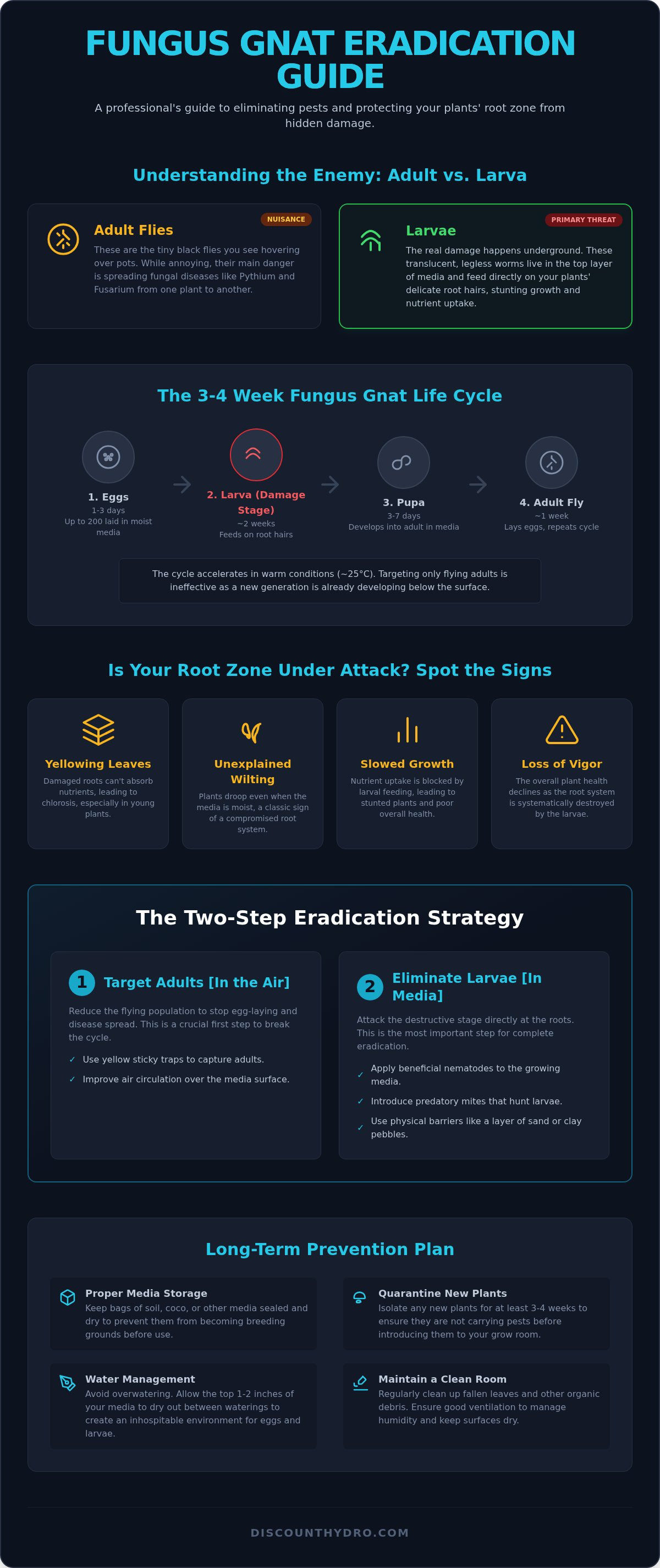
Step-by-Step Eradication Strategy for Indoor Growers
Eradicating an infestation requires a systematic approach that hits every stage of the life cycle simultaneously. Relying on just one tool will leave survivors that quickly restart the population. This four-step strategy for fungus gnats control ensures you target the flying adults and the hidden larvae in the root zone. Start by deploying yellow sticky traps at the base of every plant to achieve an immediate knockdown of the breeding adults. This reduces the number of new eggs being laid immediately.
Once you've addressed the air, focus on the substrate. Apply a biological drench using predatory nematodes to hunt down larvae in the top two inches of the media. This dual-action approach is the most reliable method for fungus gnats control in indoor environments. Following this, adjust your irrigation schedule to allow the surface to dry out completely between waterings. Finally, apply a physical barrier such as diatomaceous earth or a layer of dry perlite to the surface. This prevents any remaining larvae from emerging and stops new flies from reaching the moist media below. You can find all the necessary tools and yellow sticky traps at Discount Hydro for fast UK-wide delivery.
Managing Irrigation and Humidity
Controlling moisture is the most effective way to disrupt gnat breeding long-term. Implementing a strict "wet-dry" cycle forces the top layer of media to become inhospitable for egg-laying. In high-performance systems where drying out isn't always possible, use high-powered extraction fans to lower the humidity at the plant canopy and media surface. This increased airflow accelerates surface evaporation. Bottom-feeding or using sub-irrigation systems also helps by keeping the top few centimetres of the media bone dry while still delivering nutrients to the roots below.
Long-Term Maintenance and Monitoring
A clean grow room is less likely to suffer from repeat outbreaks. Regularly sweep the floors and remove any standing water or decaying plant matter, as these serve as secondary breeding sites. Keep monitoring traps in place even when you don't see flies; they act as an early warning system for new pests entering the room. Replace yellow sticky traps every one to two weeks, or sooner if the surface becomes covered in insects, to ensure they remain effective. Consistent monitoring allows you to catch the first sign of a new generation before it becomes a full-scale infestation.
Preventing Future Infestations in Your Grow Room
Prevention is always more cost-effective than eradication. The most common way pests enter a clean environment is through new plants or contaminated media. Establish a strict quarantine protocol for any new cuttings or plants brought into your facility. Keep them in a separate area for at least 14 days to monitor for adult fly activity or larval movement in the substrate. Implementing these early fungus gnats control measures prevents a single plant from compromising your entire crop.
Storage habits also dictate your risk level. Open bags of soil or coco coir are an open invitation for sciarid flies. Store all growing media in sealed, airtight containers in a cool area. Similarly, keep your hydroponic nutrients and additives tightly capped to avoid attracting pests. Using high-quality, sterile media from a reputable supplier ensures you aren't introducing dormant eggs into your warm, humid grow room. To stop flies from entering through your ventilation system, fit fine mesh or insect filters over all air intake fans.
Sterilising Your Setup Between Cycles
A deep clean between every harvest is mandatory for long-term fungus gnats control. Remove all organic debris, dead leaves, and spilled media from the floor. Scrub your pots, trays, and reservoir tanks with professional-grade disinfectants to kill any remaining eggs or pupae. Never reuse soil or coco coir from a previous crop that suffered an infestation; the risk of carry-over is too high. Take the time to inspect your LED grow lights and cable fixtures. Dust buildup on heat sinks can occasionally harbour pests or spores, so keep your equipment wiped down and professional.
Choosing the Right Products at Discount Hydro
Maintaining a pest-free environment requires having the right tools on hand before an outbreak occurs. We stock a full range of yellow sticky traps, media toppers, and environment control equipment designed for the UK market. Our inventory includes everything needed for rapid response, with fast UK-wide delivery to keep your project on track. If you are dealing with other issues like spider mites or thrips, our team can provide technical advice on the best products for your specific system. We focus on value and availability, ensuring you get professional-grade solutions at competitive prices.
Secure Your Harvest with Proactive Pest Management
Success in the grow room depends on maintaining a clean, pest-free environment from day one. Breaking the sciarid fly reproductive cycle requires more than just catching a few adults. You must target the larvae in the substrate while simultaneously monitoring for new arrivals. Implementing a dual-action strategy with biological controls and physical barriers ensures your root systems remain healthy and productive throughout the entire cycle. Consistent hygiene and proper irrigation management are your best defences against recurring infestations.
Discount Hydro is your reliable source for professional equipment and technical support. We provide competitive prices on all essential supplies, from high-quality sticky traps to specialized media additives. Our team offers expert advice for indoor growers to help you navigate complex pest issues effectively. With fast UK-wide delivery, you can respond to outbreaks immediately before they compromise your crop's vigour.
Shop professional pest control and sticky traps at Discount Hydro to maintain total fungus gnats control in your setup. Take action now to protect your plants and ensure a clean, high-yielding harvest.
Frequently Asked Questions
Are fungus gnats the same as fruit flies?
No, these are distinct species with different feeding habits. Fruit flies are drawn to decaying sugar and overripe fruit. Fungus gnats target damp growing media and decaying organic matter in your root zone. You can tell them apart by their appearance; gnats have longer legs and look similar to tiny mosquitoes, while fruit flies have rounder bodies and often show red eyes.
Will fungus gnats kill my indoor plants?
Heavy infestations can kill seedlings and young cuttings by destroying their delicate root hairs. While established plants usually survive, the damage leads to stunted growth and nutrient deficiencies. The larvae also create entry points for soil-borne diseases like Pythium. Effective fungus gnats control is necessary to prevent these pests from compromising your entire crop health and final yield.
Can I use vinegar traps for fungus gnat control?
Vinegar traps are ineffective for sciarid flies because these pests are not attracted to acetic acid. Vinegar works for fruit flies, but fungus gnats require yellow sticky traps. These traps use a specific colour frequency to lure the flies. For a professional setup, place the traps horizontally just above the media surface where the adults are most active.
Does cinnamon really kill fungus gnat larvae?
Cinnamon acts as a natural fungicide rather than a direct insecticide. It can reduce the fungal growth that larvae feed on, but it won't eradicate an established population in a professional grow room. You're better off using specialized biological controls or physical barriers. Relying on kitchen spices often leads to persistent infestations that return within a single reproductive cycle.
How long does it take to get rid of a fungus gnat infestation?
Expect the eradication process to take three to four weeks. This timeline matches the typical life cycle from egg to adult in a warm indoor environment. You must maintain your treatment schedule throughout this period to catch new larvae as they hatch. If you stop too early, any surviving eggs in the media will restart the infestation within days.
Can fungus gnats live in hydroponic systems without soil?
Yes, these pests thrive in any system with high moisture and organic debris. They frequently colonise coco coir, rockwool, and even the algae that grows on top of hydroponic slabs. Even in pure water systems, they can survive in the stagnant areas of trays or on moist root masses. Good drainage and surface airflow are vital regardless of your chosen substrate.
Is it safe to use nematodes on edible plants?
Beneficial nematodes like Steinernema feltiae are completely safe for use on edible crops. They are microscopic organisms that target specific insect larvae and don't leave any chemical residues on your harvest. Because they are a biological solution, they won't clash with organic feeding regimes or affect the quality of your produce. This makes them a preferred choice for professional indoor growers.
What is the best way to prevent gnats when using coco coir?
The best prevention method in coco is managing surface moisture. Use a layer of dry perlite or clay pebbles as a topper to create a barrier that flies cannot penetrate to lay eggs. Always store your coco bags in a sealed container and avoid overwatering during the early stages of growth. High-powered extraction fans also help by keeping the top of the pots dry and inhospitable for fungus gnats control.