

Grow Stones for Hydroponics: The Ultimate Guide to High-Aeration Media
The standard clay pebble you've relied on for years might actually be the bottleneck slowing down your harvest. It's frustrating to deal with heavy 50L bags that are expensive to ship, only to end up battling fungus gnats and poor drainage that leads to root rot. You need a medium that stays sterile, weighs significantly less, and keeps oxygen levels at a maximum. Using a high-performance grow stones hydroponic setup solves these common issues by providing superior aeration compared to traditional aggregates. This shift is essential for any grower looking to maximize yield without the back-breaking labor of moving heavy substrates.
With Mother Earth Hydroton currently priced at $13.73 for a 10L bag as of May 2026, switching to modern engineered stones offers a more efficient, reusable path to faster growth cycles. You'll discover how these lightweight substrates transform root zone oxygenation and why they've become the primary choice for UK indoor growers this year. We will look at how they stack up against 2026 market alternatives like coco coir and pumice to ensure your root zone stays pest-free and productive. This guide gives you the practical facts you need to upgrade your system today.
Key Takeaways
- Learn why engineered stones are 50% lighter than traditional clay pebbles, making your system easier to move and reducing shipping costs.
- Discover how the unique porous structure of a grow stones hydroponic setup maximizes root zone oxygenation to accelerate your plant growth cycles.
- Find out how the sharp micro-edges of recycled glass media create a natural barrier that deters fungus gnats and other common root pests.
- Master the essential two-step preparation process to remove fine particles and ensure your media is perfectly pH-balanced before use.
- Get expert advice on sourcing high-performance substrates at the UK's best prices to keep your indoor garden cost-effective and productive.
What Are Grow Stones in Hydroponics?
Engineered grow stones are a high-performance substrate designed to replace traditional aggregates like clay pebbles or perlite. Unlike natural stones, these are manufactured from 100% recycled glass. The production process involves grinding waste glass into a fine powder, mixing it with calcium carbonate, and firing it in a specialized kiln. This heat causes the mixture to expand and harden into a cellular, "popcorn" like structure. The result is a lightweight, highly porous medium that provides an ideal environment for roots. If you are researching What Are Grow Stones? you'll find they offer a sterile and sustainable alternative to mined media.
When setting up a grow stones hydroponic system, you will typically encounter two main varieties. The first is GS-1, which is the standard size used as a primary substrate in pots or trays. The second is LIFT, a larger, coarser stone specifically designed for drainage layers at the bottom of containers. Using these products is significantly more eco-friendly than using expanded clay. While clay requires intensive strip mining of limited natural resources, these stones repurpose glass that would otherwise end up in a landfill. They are a permanent solution for the modern grower, as they don't break down or lose their structure over time.
The Science of Porosity and Aeration
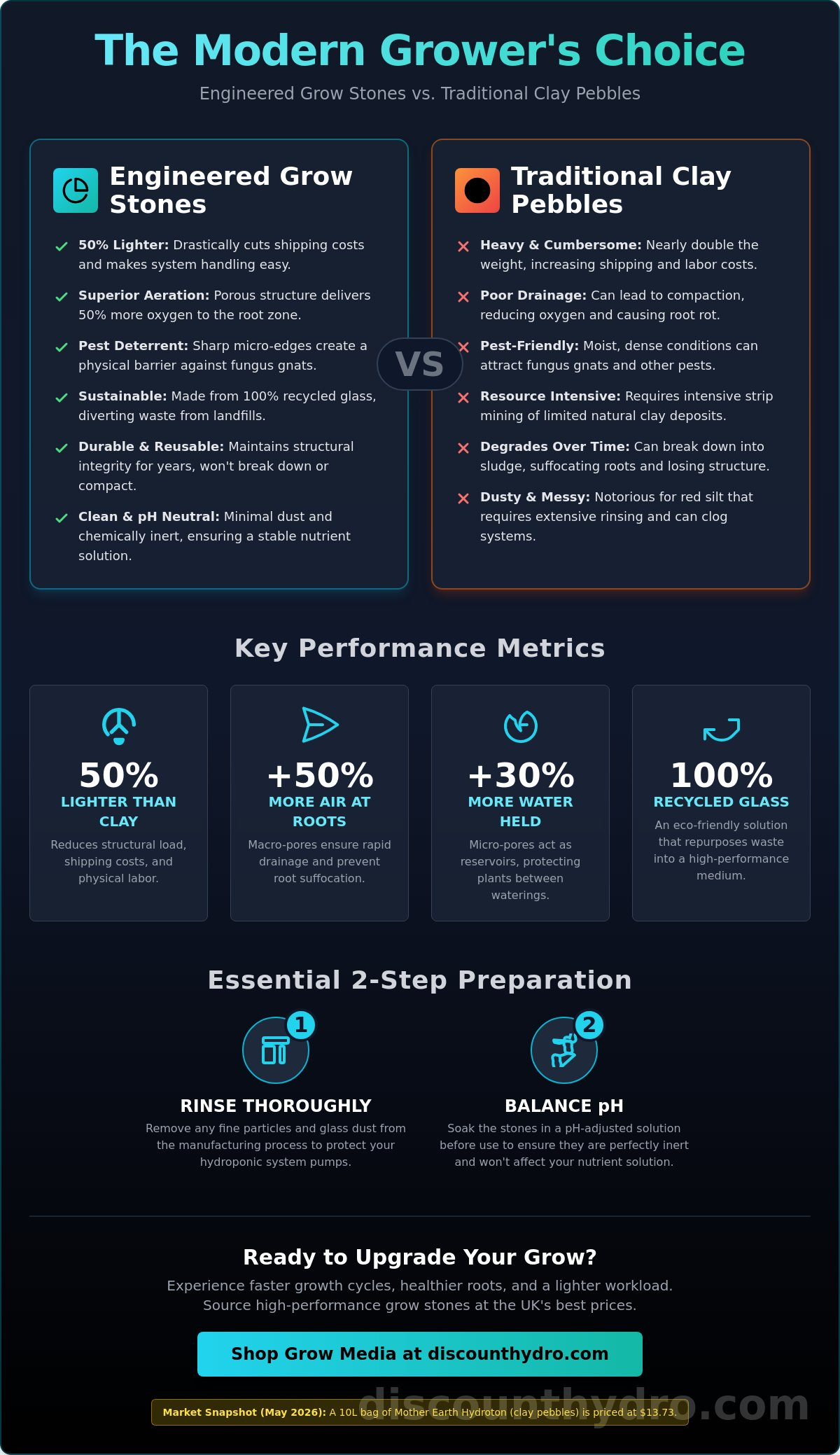
The performance of this medium comes down to its unique cellular structure. It features a dual-pore system: macro-pores and micro-pores. Macro-pores allow for rapid drainage and ensure that 50% more air reaches the root zone compared to standard clay pebbles. Simultaneously, the micro-pores act like tiny reservoirs, holding 30% more water to protect plants between irrigation cycles. Porosity is the measure of void spaces in a medium that determines its capacity to hold oxygen and water simultaneously for root uptake. This balance ensures that roots never suffocate, even in high-frequency watering schedules.
Recycled Glass vs. Natural Stone
It's a common mistake to think that decorative pebbles or river rocks can work in a professional setup. Natural stones are heavy, lack internal surface area, and often contain minerals that can swing your pH levels unpredictably. They also have zero Cation Exchange Capacity (CEC), meaning they can't help buffer nutrients. In contrast, engineered stones are chemically inert and pH neutral. They won't interfere with your nutrient solution, which is vital when you are learning What is Hydroponics? and how to maintain a stable environment. These stones provide the stability of rock with the aeration of a high-tech sponge.
Grow Stones vs. Clay Pebbles: Which Media Wins?
Choosing between traditional clay pebbles and modern grow stones often comes down to performance versus habit. While expanded clay has been the industry standard for decades, it carries significant logistical baggage. Clay is heavy. A 50L bag of clay pebbles can weigh nearly double what the same volume of recycled glass stones weighs. This weight difference impacts everything from your initial shipping costs to the physical labor of resetting a room. When you're managing a grow stones hydroponic setup, you are working with a medium that is roughly 50% lighter than clay. This makes it a far more efficient choice for large scale operations where every kilogram of substrate adds up.
Dust is another factor that separates these two materials. Clay pebbles are notorious for the red silt they leave behind, which requires extensive rinsing to prevent clogged pumps and filters. Glass based stones are significantly cleaner. They don't break down or crumble under the pressure of aggressive root growth. While clay can eventually degrade and turn into a sludge that suffocates roots, engineered stones maintain their structural integrity for years. You can find these and other common hydroponic growing media options analyzed for their physical properties to see how they compare in professional settings.
Weight and Logistics for the UK Grower
For growers in the UK, shipping costs for bulky items are a constant concern. Lighter bags mean lower delivery fees and easier handling. If you're building a multi tier vertical system, the structural load is a critical safety consideration. Using a substrate that is 50% lighter allows you to stack more levels without risking shelf failure. For those local to the North East, our Click and Collect service at County Durham makes it even easier to pick up these lightweight materials without the wait. You can browse our current stock and compare growing media prices to see the savings for yourself.
Root Zone Performance Comparison
Performance in the root zone is where grow stones truly pull ahead. The irregular, jagged shape of the stones creates a superior interlocking effect. This provides better physical stability for your plants, preventing them from leaning or shifting as they gain weight. Because the stones are more porous, they maintain higher Dissolved Oxygen (DO) levels around the roots. This increased aeration directly influences how efficiently your plants can process food. You should consult our Hydroponic Nutrients Guide to understand how high aeration media affects your feeding schedules and EC levels. Better oxygenation leads to faster nutrient uptake and shorter overall growth cycles.
The Performance Benefits of Engineered Grow Stones
Engineered stones provide more than just basic support for your plants. They offer functional advantages that solve specific problems in a grow stones hydroponic system. One of the most significant benefits is the material's ability to resist compaction. Unlike organic media or lower quality aggregates, these stones don't slump or settle over long growth cycles. This ensures that the oxygen pathways you establish at the start of the season remain open until harvest. The irregular, cellular structure also provides excellent thermal insulation. This acts as a buffer against rapid temperature fluctuations in the nutrient solution, protecting sensitive root hairs from heat stress.
The wicking capability of these stones is another standout feature. They can move water upwards through the pot efficiently, which is a major advantage for top fed systems or when starting young plants. This capillary action ensures the entire root zone stays moist without becoming waterlogged. You can find more details on how these properties compare to other hydroponic growing media in technical research from Oklahoma State University. Their data confirms that the high surface area and non-toxic nature of recycled glass makes it a top tier choice for professional growers.
Integrated Pest Management (IPM) Benefits
Fungus gnats are a common headache in indoor gardens, but grow stones offer a physical solution known as the 'GnatNix' effect. The micro-edges of the stones are incredibly sharp at a microscopic level. When you apply a 2 to 3cm top layer of fine stones, it creates a lethal barrier for pests. It prevents adult gnats from reaching the moist media to lay eggs and stops larvae from emerging. This physical deterrent is a much cleaner alternative for a grow stones hydroponic setup than using chemical pesticides in your grow room. For a complete strategy on keeping your garden clean, check out our Spider Mites Guide to master total pest prevention.
Optimising Drainage in Deep Water Culture (DWC) and Ebb & Flow
In systems like Ebb & Flow, preventing 'wet feet' is essential for root health. Using a 'LIFT' layer of coarser grow stones at the bottom of your pots ensures that water drains away completely after each cycle. This prevents stagnant pools from forming at the base of the container, which is a primary cause of root rot. If you're using high intensity lights in modern Grow Tents, managing the humidity levels around the pots is easier when your media drains effectively. Fast drainage reduces excess evaporation from the substrate surface, helping you maintain a more stable environment for your plants to thrive.
How to Prepare, Use, and Reuse Your Grow Stones
Proper preparation ensures your system stays clog free and your pH remains stable. When you first open a bag of media, you'll find a fine layer of 'glass dust' caused by friction during transit. This powder can settle in your reservoir and damage pumps if it isn't removed. Place your stones in a large bucket or mesh sieve and rinse them thoroughly with a hose until the water runs completely clear. This simple step prevents mechanical failures later in the cycle.
Although recycled glass is chemically inert, the kiln firing process can leave a slight alkaline residue on the surface. A quick pH buffer is best practice for any grow stones hydroponic setup. Soak the rinsed stones in water adjusted to a pH of 5.5 to 5.8 for at least 4 hours. This stabilizes the medium so it won't swing your nutrient solution once the plants are in place. After soaking, drain the water and you're ready to pot up.
Setup Best Practices
When potting, fill your containers and give them a light shake to help the irregular edges interlock. This provides the physical support your plants need as they grow taller. If you're using these stones in a mix, a ratio of 30% stones to 70% coco coir is ideal for increasing aeration without losing too much water retention. Be careful not to leave large air pockets around the root ball during transplanting. It's vital to check the pH of your reservoir again after the first 24 hours of use to ensure the system has fully stabilized.
Sterilisation and Longevity
The biggest financial benefit of this medium is its permanence. You don't need to buy new substrate every season. After harvest, remove the main root mass and soak the stones in a solution of 12% food grade Hydrogen Peroxide (H2O2) or a mild bleach solution (1 part bleach to 10 parts water). This kills pathogens and helps break down organic matter. To remove stubborn micro roots, use a high quality enzyme formula or simply agitate the stones in a large tub of water. Once cleaned and dried, they're as good as new. You can buy growing media at the UK's best prices to start your permanent garden today.
Maintaining your media this way offers the best long term discount for your grow room. While other substrates like rockwool or coco are single use or difficult to clean, these stones last for years. This durability makes them the most cost effective choice for serious indoor growers who want to minimize waste and recurring costs. A single investment now pays off over dozens of harvest cycles.
Sourcing Quality Growing Media at Discount Hydro
Finding the right substrate is only half the battle; sourcing it at a price that doesn't eat into your margins is the other. Discount Hydro is committed to providing the UK's best prices on all bulky items, ensuring that a grow stones hydroponic setup remains an affordable reality for every indoor gardener. Bulky media is notoriously expensive to ship, but our logistical network is designed to handle high-volume orders with efficiency. We focus on a no-frills, warehouse-style approach that passes the savings directly to you. You can browse our full selection of Growing Media online to compare the latest deals on recycled glass and other high-performance aggregates.
Speed is essential when you're ready to start a new cycle. We offer fast UK-wide delivery to get your supplies to your door without delay. For those located in the North East, our Click and Collect service at our County Durham warehouse allows you to bypass shipping fees entirely. This is the most cost-effective way to stock up on large 50L bags or pallet-sized orders. We maintain deep stock levels of top-tier brands like Intense Nutrients, ensuring you have the professional-grade supplements needed to complement your high-aeration media from day one.
Why Buy from the UK's Hydroponics Specialist?
Buying from a dedicated specialist means you're getting products from a team that understands the technical demands of a grow stones hydroponic system. We don't just shift boxes; we curate an inventory that meets the needs of professional growers who prioritize yield and efficiency. Our website features a dedicated 'Hot Products' and 'Deals' section where we list seasonal savings and clearance items. This is the best place to find significant discounts on substrates, pots, and nutrient kits. We keep our communication direct and our prices competitive because we know that availability and cost are your primary concerns.
Complete Your Setup
A high-performance root zone is most effective when paired with the right environmental controls. To truly maximize the benefits of your increased aeration, you need to ensure your lighting is up to the task. We recommend pairing your new substrate with modern LED Grow Lights to drive the metabolic rates that your oxygen-rich roots can now support. This combination is the standard for top-tier UK gardens in May 2026, offering the best balance of energy efficiency and plant health.
Get the best prices on grow stones and media today at Discount Hydro. Whether you're looking for a sterile drainage layer or a permanent primary substrate, we have the stock ready for immediate dispatch. Don't settle for overpriced retail media when you can get professional-grade supplies at warehouse prices.
Upgrade Your Root Zone for Maximum Efficiency
Transitioning to a grow stones hydroponic system is one of the most effective ways to boost root zone oxygenation while cutting down on physical labor. You've seen how these recycled glass stones outperform clay pebbles by being 50% lighter and providing a permanent, reusable substrate that doesn't degrade. The added benefit of physical pest deterrents like the GnatNix effect means you spend less time fighting gnats and more time managing your harvest. It's a pragmatic choice for any grower who values long-term efficiency over habit.
Discount Hydro is your source for these high-performance materials at the UK's best prices. We offer fast UK-wide delivery to get your setup running immediately; alternatively, you can use our Click and Collect service at our County Durham warehouse to save on shipping. We stock the leading hydroponic brands to ensure your garden has everything it needs to thrive. Invest in a medium that works as hard as you do. Shop the UK's best prices on grow stones and media at Discount Hydro and start building a more efficient, pest-free grow room today. Your plants will thank you for the extra oxygen.
Frequently Asked Questions
Are grow stones better than clay pebbles for hydroponics?
Grow stones offer better performance metrics than clay pebbles for high-aeration systems. They weigh 50% less than expanded clay and provide 50% more aeration to the root zone. This makes them significantly easier to ship and handle while simultaneously boosting plant metabolic rates. You get more air and better water retention in a lighter package, which is why many UK growers have switched their setups in 2026.
Do I need to wash grow stones before using them?
You must rinse the media thoroughly before its first use. Handling and transit create fine glass dust that can settle in your reservoir or clog your pump filters if left unwashed. Use a mesh sieve or bucket and rinse with a hose until the water runs completely clear. This simple maintenance step protects your mechanical equipment and ensures your nutrient solution remains free of sediment from the start.
Can grow stones be reused for multiple crops?
This media is a permanent substrate and can be reused for dozens of harvest cycles. Unlike organic substrates that decompose or lose their shape, these stones maintain their cellular structure indefinitely. You simply need to clean them with a 12% Hydrogen Peroxide solution or a mild bleach mix between harvests. This process removes old root matter and sterilizes the medium for your next batch of plants without any degradation.
Will grow stones affect the pH of my nutrient solution?
They are chemically inert but may have a slight alkaline residue from the kiln-firing process. A 4-hour soak in pH-adjusted water (5.5 to 5.8) is recommended before you begin potting. This prevents initial pH swings in your grow stones hydroponic reservoir and ensures your nutrient levels stay stable from day one. Skipping this step can lead to minor fluctuations that require more frequent monitoring during the first week.
How do grow stones help control fungus gnats?
The sharp micro-edges of the stones act as a physical barrier against pests. This 'GnatNix' effect prevents adult fungus gnats from reaching the moist areas of your media to lay eggs. It also stops larvae from emerging, effectively breaking the pest cycle without the need for chemical pesticides. A 2cm top layer is usually enough to create a lethal environment for these common indoor garden pests in any system.
Are grow stones sharp enough to damage plant roots?
Plant roots are not damaged by the jagged edges of the media. Roots easily navigate the porous, cellular structure of the stones to find water and oxygen pockets. The interlocking nature of these stones actually provides better physical support for the plant's weight than smooth, round pebbles. This stability is vital as your plants gain mass and require a firm anchor in the pot to stay upright.
Can I mix grow stones with coco coir or soil?
You can mix them with coco coir or soil to significantly improve drainage and aeration. A common professional ratio is 30% stones to 70% coco coir. This blend provides the high water retention of coco with the superior oxygen levels of a grow stones hydroponic substrate. It's an ideal way to customize your media for specific feeding schedules or high-frequency irrigation systems where drainage is a priority.
How much grow stone media do I need for a standard 10L pot?
You need exactly 10 liters of media to fill a standard 10L pot. Hydroponic substrates are sold by volume rather than weight, so a 10L bag will fill a 10L container perfectly. If you're using a LIFT layer for drainage at the bottom, you might use 2L of coarse stones and 8L of standard GS-1 media. Always account for a small amount of settling when you first water the pots during setup.