

Herbal Hydroponics: The Ultimate How-To Guide for Professional Yields at Home
Stop wasting £2.00 on those sad, plastic-wrapped supermarket herb pots that wither within 48 hours of hitting your kitchen counter. It's a frustrating cycle for UK flat dwellers who face 8 hours of dim winter light and the inevitable invasion of fungus gnats from damp soil. Switching to herbal hydroponics isn't just a hobby; it's a strategic move for anyone tired of paying premium prices for subpar flavour. You don't need a sprawling garden to achieve professional results.
You likely already know that indoor plants struggle when temperatures drop and natural light vanishes in November. We're here to help you bypass these seasonal limits by using professional-grade equipment to grow gourmet basil, mint, and coriander year-round. This guide promises to turn your urban living space into a high-yield, soil-free zone with superior taste that puts shop-bought produce to shame. You'll learn which nutrient profiles boost essential oils and how to build a system that pays for itself in 6 months.
Key Takeaways
- Understand the science behind why hydroponic systems produce herbs 30-50% faster than traditional soil-based gardening.
- Identify the most effective equipment for herbal hydroponics, including why Deep Water Culture (DWC) is the professional choice for basil and mint.
- Learn why grow tents and LED lighting outperform windowsill gardening by creating a stable, high-yield micro-climate for sensitive plants.
- Follow a step-by-step guide to assembling your grow space and setting the perfect LED height to ensure seedling success.
- Master professional "pinch-out" pruning and harvesting techniques to maximize your yield and keep your plants bushy all year round.
What is Herbal Hydroponics and Why Switch from Soil?
Growing herbs at home used to mean messy bags of compost and limited windowsill space. Herbal hydroponics changes that by removing soil from the equation entirely. When asking What is Herbal Hydroponics, it's defined as the cultivation of culinary and medicinal plants in a water-based, nutrient-rich solution. This method gives you total control over the environment, ensuring your basil, mint, and parsley get exactly what they need without the guesswork of traditional gardening.
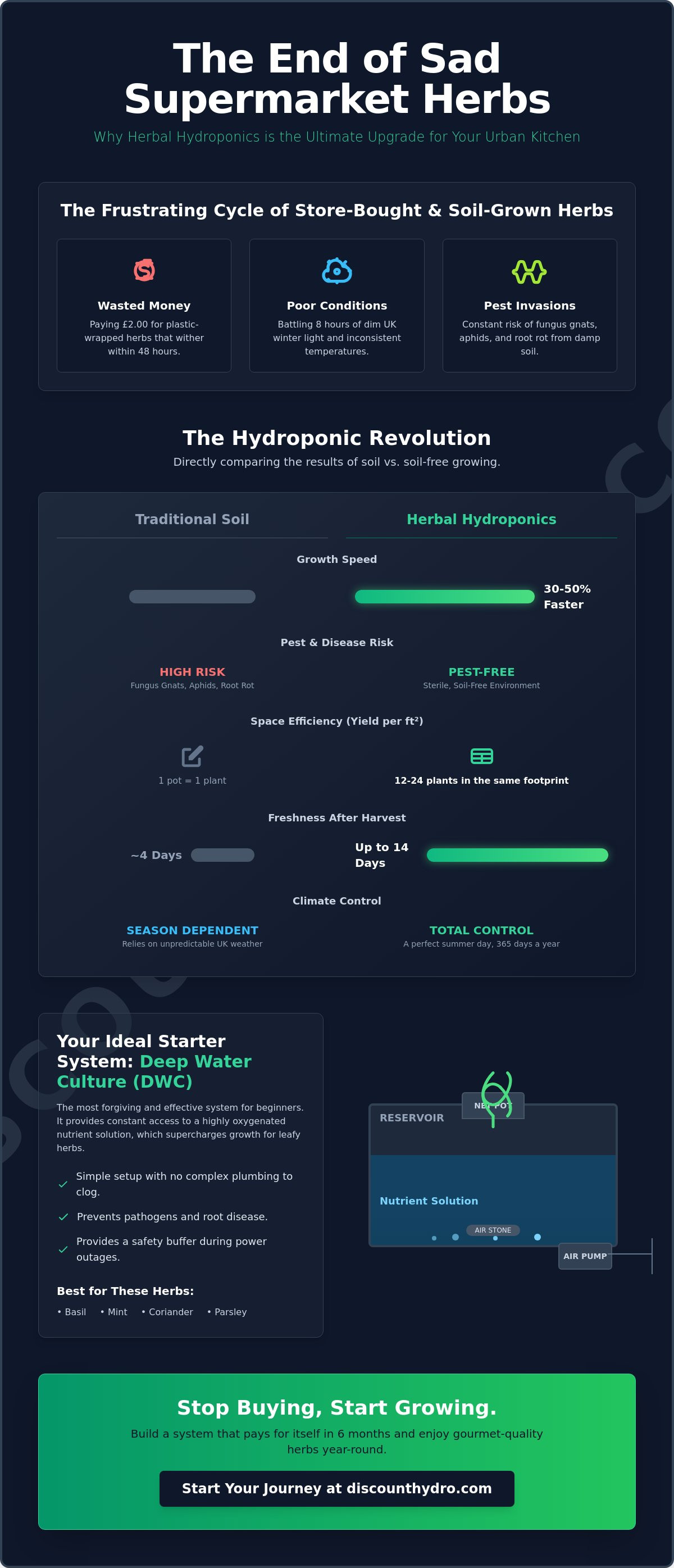
The science behind this approach is simple but effective. In soil, a plant’s root system must grow extensively to search for nutrients and water. This consumes a massive amount of energy. In a hydroponic system, those nutrients are delivered directly to the roots in a highly oxygenated solution. Because the plant doesn't waste energy hunting for food, it grows 30% to 50% faster than it would in a garden bed. You'll see visible growth daily, which means more frequent harvests for your kitchen.
Cleanliness is another major driver for the switch. Soil is a breeding ground for pests like fungus gnats, aphids, and various soil-borne pathogens that can ruin a crop overnight. By going soil-free, you eliminate these risks, creating a sterile and professional growing environment right in your home. It's the most hygienic way to grow food in a kitchen setting. Additionally, vertical hydroponic systems allow you to stack your garden. You can grow 12 to 24 herb plants in the same floor space normally occupied by a single large pot, making it the perfect solution for UK urban dwellers with limited square footage.
The Flavour Advantage: Hydroponics vs. Traditional Gardening
There's a common myth that hydroponic produce is "watery" or lacks punch. The reality is the opposite. Because you control the exact mineral balance, you can "stress" the plants slightly before harvest to increase essential oil production. This results in more aromatic rosemary and more pungent thyme. Modern data shows that hydroponic herbs often contain higher concentrations of vitamins and minerals than supermarket alternatives. While those "living" pots from the shop often wilt within 4 days, home-grown herbal hydroponics produce stays fresh for up to 14 days when harvested correctly.
Hydroponics in the UK: Solving the Light and Weather Problem
The UK climate isn't exactly herb-friendly for most of the year. Between October and March, natural light levels aren't sufficient to sustain rapid growth, and the damp cold often leads to root rot in soil. Indoor hydroponics solves this by using artificial LED lighting and climate control to mimic a perfect summer day, 365 days a year. You don't have to wait for the "growing season" to have fresh coriander for a curry. For a broader look at the basics, see What is Hydroponics? A Beginner’s Guide to Soil-Free Growing.
Choosing the Right Hydroponic System for Your Herbs
Successful herbal hydroponics starts with selecting a system that matches your plant's specific growth habits. Leafy herbs like basil and mint require different conditions than woody perennials like rosemary or thyme. You need a setup that balances oxygen, water, and nutrient delivery without overcomplicating the process. Matching the right hardware to your herbs ensures faster growth cycles and more potent essential oils.
Deep Water Culture (DWC) remains the gold standard for fast-growing basil and mint. These plants have high transpiration rates and thrive with constant access to water. For those looking at larger harvests, the Nutrient Film Technique (NFT) is the preferred choice for professional UK herb farms. NFT systems use a thin film of nutrient solution that flows over the roots, providing a constant supply of food and air. If you want to grow a diverse range of herbs in one tray, Ebb and Flow systems offer the most versatility. They flood the root zone and then drain away, which prevents waterlogging in more sensitive species.
Deep Water Culture (DWC) for Beginners
DWC is the most forgiving system for anyone new to herbal hydroponics. The setup is simple. It uses a reservoir filled with nutrient solution, an air pump with an air stone, and net pots to hold the plants. The air pump is critical. It provides 100% oxygen saturation to the roots, which accelerates growth and prevents pathogens. Unlike other methods, DWC has no complex plumbing to clog. If the power cuts out, your herbs remain in the water, giving you a safety window that other systems don't provide. Focus on basil, coriander, and parsley for the best results in DWC.
Nutrient Management and Water Chemistry
Water chemistry determines how well your herbs thrive. You must maintain a pH balance between 5.5 and 6.5. This is the sweet spot where nutrients remain chemically available to the roots. If the pH level rises above 7.0, your herbs will show signs of yellowing and nutrient deficiency. You also need to track Electrical Conductivity (EC). This measures the total dissolved salts in your water and tells you the strength of your feed. Young herbs need a lower EC, usually around 0.8 to 1.2, while established plants can handle up to 1.8. Check out our Hydroponic Nutrients: A Beginner’s Guide to Feeding Your Plants for a breakdown of mixing ratios. High-quality kits make this process easier. You can find the UK's best deals on testing equipment at Discount Hydro to keep your levels precise.
When Choosing the Right Hydroponic System, consider your available space and the time you can commit to maintenance. Systems that automate the feeding cycle reduce the risk of human error. This ensures your herbs stay healthy even if you miss a day of checking the reservoir. Accurate monitoring prevents root burn and ensures a consistent harvest throughout the year.
The Professional Edge: Why Tents and LEDs Beat the Windowsill
Windowsill gardening in the UK is a gamble that rarely pays off for serious growers. During a typical British winter, daylight hours drop to as little as 7 or 8 hours of weak, indirect sun. This isn't enough to sustain high-yield herbal hydroponics. Temperatures near glass panes also fluctuate wildly, often swinging from 18°C during the day to 5°C at night. These shifts stress plants, leading to stunted growth or total crop failure.
Moving your setup into a controlled environment changes the results immediately. A grow tent allows you to dictate every variable. Sensitive herbs like coriander thrive in these stable conditions. Instead of battling drafts, you use extraction fans to pull in fresh CO2 and remove excess humidity. This constant airflow prevents damp and keeps your living space smelling fresh rather than like a greenhouse. It turns a casual hobby into a reliable, year-round production line for your kitchen.
LED Grow Lights: The Engine of Your Garden
Old-fashioned "blurple" lights are a thing of the past. These pinkish LEDs lacked the spectral depth needed for high-quality oil production in herbs. Modern growers use high-efficiency full-spectrum LEDs that mimic the sun's natural output. These units provide the exact wavelengths required for both vegetative growth and essential oil development. When choosing a light, don't just look at the wattage pulled from the wall. You need to focus on PAR (Photosynthetically Active Radiation), which measures the light intensity your plants actually "eat."
High-quality LEDs run cooler than traditional HPS bulbs, saving you money on electricity and cooling. For a detailed breakdown of the latest tech, check out our LED Grow Lights: The Ultimate 2026 Buyer’s Guide for current recommendations. Investing in the right spectrum ensures your basil and mint grow thick stems and lush leaves instead of stretching toward a dim window.
The Benefit of Grow Tents for Herbal Cultivation
A grow tent is more than just a cupboard; it's a high-performance reflector. Most quality tents feature 95% reflective Mylar lining. This ensures that light hitting the floor or walls bounces back onto the undersides of the leaves, maximizing your herbal hydroponics efficiency. You won't waste a single watt of power. The sealed environment also acts as a primary defense against pests. It is much harder for spider mites to colonize a tent than an open windowsill pot.
Tents also help you manage the "bolting" problem. Many herbs go to seed and become bitter when they sense the days getting longer or the room getting too hot. By using a simple timer on your lights, you can maintain a strict 18-hour light cycle. This tricks the plants into staying in their tasty vegetative state for much longer, providing you with a continuous harvest of fresh, aromatic leaves.
Step-by-Step: Setting Up Your First Herbal Hydroponic Garden
Setting up your first herbal hydroponics kit requires a systematic approach for fast growth and high yields. Start by selecting a dedicated space like a garage or spare room. Assemble your grow tent first. A 60cm x 60cm tent works well for a compact home herb garden. Ensure the floor is level and the frame is secure to support the weight of your lighting and extraction gear without sagging.
Install your LED lighting next. For seedlings, hang the light 50cm to 75cm above the plant canopy. This prevents light burn while providing enough energy for photosynthesis. As plants mature, you can lower the lights to 30cm to increase intensity. Connect your system to a digital timer for a consistent 18-hour light cycle to mimic long summer days.
Prepare the reservoir by filling it with clean water. Add your hydroponic nutrients according to the manufacturer's feeding schedule. Mix base nutrients thoroughly before adding any extras or boosters. Use a pH meter to adjust the solution to between 5.5 and 6.5. This specific range is vital for nutrient uptake in herbs like basil, parsley, and coriander.
Move plants into the system once roots are established. If you're using clay pebbles, rinse them to remove dust before use. Position the rockwool cube in the net pot and surround it with pebbles for stability. For the first 14 days, check that the water level reaches the bottom of the pots so the roots don't dry out before they reach the reservoir.
Mastering herbal hydroponics requires a strict maintenance schedule to keep plants healthy. Follow these routine tasks:
- Check pH levels every 48 hours using a calibrated digital pen.
- Adjust the solution immediately if it drifts outside the 5.5 to 6.5 range.
- Perform a full reservoir change every 7 to 10 days to prevent salt build-up.
- Clean the tank with a food-safe sanitiser during changes to prevent root rot.
Propagation: From Seed to Hydroponic System
Starting seeds in rockwool cubes is more reliable than direct sowing. Rockwool provides the ideal air-to-water ratio for germination. Once roots emerge from the bottom, move them into the main system. If you're moving plants from windowsills to high-intensity LEDs, do it over 3 days to avoid light shock. You can also take 10cm cuttings from healthy herbs to clone your favourite varieties quickly.
Environment Control: Airflow and Temperature
Airflow prevents stagnant pockets where mould develops. Install an extraction fan at the top of your tent to pull out warm air and CO2-depleted air. Keep temperatures between 18°C and 24°C for optimal production. Use a 6-inch oscillating fan to create a gentle breeze. This strengthens stems by simulating natural wind and prevents pests like spider mites from settling on your herbs.
Maintenance, Harvesting, and Maximising Your Yield
Success in herbal hydroponics requires more than just a high-quality setup. You need to manage your plants actively to ensure they reach their full potential. Regular maintenance prevents system failures and keeps your harvest cycle moving quickly. It's the difference between a struggling plant and a kitchen full of fresh produce.
Pruning is the most effective way to increase your yield. Use the "pinch-out" technique by removing the central growing tip just above a leaf node. This simple action redirects growth hormones to the side shoots. Instead of a single tall stem, you'll develop a bushy plant with multiple harvest points. When you start harvesting, follow the one-third rule. Never remove more than 33% of the plant's total foliage at one time. Taking too much causes physiological shock, which can stop growth for 10 days or more.
System hygiene is equally vital. Flush your setup every 4 weeks by running plain, pH-balanced water through the lines for 24 hours. This process dissolves mineral salt deposits that accumulate from concentrated nutrients. If you see brown, crispy leaf tips, it's a sign of nutrient burn. If the top leaves are turning pale or white, they're likely too close to your lights. Adjust your LED height to fix light stress immediately.
The Best Herbs for High-Yield Hydroponics
Basil is the top performer in water-based systems. It responds to herbal hydroponics with explosive growth, often doubling in size every 14 days. Mint is another excellent choice. Growing mint in a dedicated hydroponic module is the only way to stop its invasive roots from taking over your entire garden. For woody perennials like Rosemary and Thyme, keep the roots oxygenated. These plants prefer slightly drier conditions, so use a free-draining medium like perlite within your net pots to prevent root rot.
Scaling Your Garden with Discount Hydro
Building a custom system is the most cost-effective way to grow. Buying professional components like separate LED drivers, high-output lamps, and specific nutrient additives offers far better value than pre-packaged all-in-one kits. You get higher quality gear for a lower total spend. We're committed to providing the UK’s best prices on professional LED lighting and premium nutrients. Growers in County Durham can take advantage of our click and collect service for immediate pickup. For everyone else, we offer fast nationwide delivery to get your gear to your door without delay.
Scale Your Home Harvest with Professional Gear
Transitioning from a basic windowsill setup to a dedicated indoor system is the most effective way to increase your yields. High-performance LEDs and climate-controlled tents provide the 18 to 24 hours of light and specific humidity levels needed for optimal growth. Maintaining consistent nutrient cycles and airflow ensures your herbal hydroponics project stays healthy from seedling to harvest. Using professional-grade components prevents the common failures associated with DIY or entry-level kits.
Discount Hydro holds a massive stock of industry-leading brands like Omega and Dutch Pro to help you achieve professional results at home. We provide specialist advice for all skill levels and offer UK-wide fast delivery on every order. You don't have to guess which parts work together; our inventory is selected for compatibility and performance. It's time to stop settling for small harvests and start growing with the right tools.
Shop the UK’s best prices on professional hydroponic equipment at Discount Hydro
Get your new system running today and enjoy a more productive garden.
Frequently Asked Questions
Is herbal hydroponics more expensive than soil gardening?
Starting a herbal hydroponics system costs more upfront than buying a bag of soil, but it saves money over time. You can buy a basic starter kit for approximately £40, whereas a bag of compost is only £5. However, hydroponic herbs grow 30% to 50% faster, giving you more harvests per year. You'll spend less on water and nutrients since the system recycles the solution.
Which herbs are the easiest for a beginner to grow hydroponically?
Basil, mint, and parsley are the most reliable choices for beginners. Basil seeds usually germinate within 7 days and thrive in warm, nutrient-rich water. Mint is incredibly hardy and grows so fast it can take over a system if you don't prune it regularly. These varieties don't require complex pH management, making them perfect for your first home setup.
How much electricity does a small herbal hydroponic setup use?
A small indoor herb garden uses less than £3 of electricity per month. A typical 20W LED grow light running for 16 hours a day consumes about 0.32kWh daily. Based on the UK energy price cap of 24.5p per kWh, you'll pay roughly 8p per day to run your lights. Small air pumps add negligible costs to your monthly utility bill.
Do hydroponic herbs taste different from soil-grown herbs?
Hydroponic herbs often have a cleaner, more consistent flavour because you control their exact nutrient intake. Many growers find the taste more intense. Research indicates that hydroponically grown basil can contain up to 20% more essential oils than soil-grown plants. This results in a stronger aroma and punchier taste for your cooking and garnishes.
How often do I need to change the water in my hydroponic system?
You should replace the entire nutrient solution every 14 to 21 days. This prevents mineral salt buildup and keeps oxygen levels high for the roots. Between full changes, top up the reservoir with plain, pH-balanced water every 5 days. Keeping a regular schedule ensures your herbal hydroponics setup remains free from root rot and harmful pathogens.
Can I grow herbs hydroponically without a grow tent?
You don't need a grow tent to successfully produce herbs indoors. Unlike larger or more sensitive crops, herbs stay compact and don't require high-intensity heat management. A kitchen worktop or a dedicated shelf works perfectly. You just need a quality LED light and a spot with decent airflow to keep the plants healthy and prevent mould growth.
How do I prevent algae from growing in my hydroponic reservoir?
Keep your nutrient solution in total darkness to stop algae growth immediately. Algae needs light to survive, so use opaque black or green plastic reservoirs instead of clear containers. If you see green slime, add 3ml of 3% hydrogen peroxide per litre of water to kill it without harming your herbs. Always cover any gaps where light might leak into the water.
What is the best light cycle for indoor herbs?
Set your grow lights to stay on for 14 to 16 hours each day. Herbs need a long day to produce enough energy for rapid growth, but they also require at least 8 hours of darkness to rest. Use a simple plug-in timer to automate this cycle. Consistent lighting prevents the plants from bolting or becoming leggy and weak.