

Low Maintenance Hydroponic System: The 2026 UK Grower’s Guide
Did you know that a modern hydroponic setup uses up to 90% less water than traditional soil gardening while potentially saving a UK household over £415 a year on supermarket bills? Many growers hesitate to start because they fear complex plumbing leaks or the constant chore of daily nutrient testing. It's frustrating when a hobby designed to save money ends up feeling like a second job with high electricity costs and technical failures. You shouldn't have to monitor your reservoir every hour just to keep a few herbs alive.
This guide explains how to build a high-quality low maintenance hydroponic system using the most reliable "set-and-forget" methods available in 2026. You'll learn how to achieve a 20% higher yield than traditional gardening without the stress of constant intervention. We'll cover the shift toward gravity-fed systems, the impact of new UK pH solution regulations on your maintenance routine, and how to select energy-efficient LED grow lights that keep your monthly running costs low. We'll also explore why passive irrigation and stable growing media are the keys to a successful, hands-off indoor garden.
Key Takeaways
- Identify the core pillars of a low maintenance hydroponic system to reduce your workload from daily chores to simple weekly checks.
- Discover how the Kratky method and gravity-fed systems provide reliable automation without the need for electric pumps or complex plumbing.
- Select high-efficiency LED grow lights and stable growing media like coco coir to minimize heat and maintain a consistent pH environment.
- Follow a streamlined 5-step checklist to choose the right system for your space and optimize water quality for a hands-off harvest.
What Defines a Low Maintenance Hydroponic System?
A true low maintenance hydroponic system is defined by its reliability and the frequency of human intervention. While traditional setups might require daily nutrient checks and pump inspections, a low-maintenance approach shifts the schedule to a weekly or even fortnightly basis. The objective is to eliminate "points of failure" like mechanical pump jams, clogged drippers, or electrical timer glitches. By stripping away complex plumbing, you create a more stable environment where plants thrive without constant supervision. This is particularly vital for UK growers who may face fluctuating indoor temperatures that can stress active systems.
Three pillars support this hands-off approach: no moving parts, passive irrigation, and stable pH environments. In a professional grow room, simplicity often outperforms high-tech automation. The trade-off is straightforward. You might sacrifice a small percentage of potential growth speed for the peace of mind that your crop won't die while you're at work or away for the weekend. Avoiding complex pumps and timers reduces the risk of a total system collapse, which is the primary fear for most beginners entering the hobby.
Passive vs. Active Hydroponics
Passive systems rely on capillary action or gravity rather than electricity to deliver nutrients. This fundamental difference is why they are the gold standard for low-effort cultivation. Hydroponics encompasses various techniques, but passive methods like the Kratky setup remove the need for air pumps and water pumps entirely. Active systems use mechanical components to move water or oxygenate the root zone. While active systems are often better for heavy-feeding crops that require high oxygenation, "low-active" hybrids, such as a simple DWC bucket with a single air stone, can offer a middle ground. These hybrids provide faster growth while remaining far simpler than complex multi-bucket recirculating systems.
The "Set and Forget" Philosophy
Achieving a two-week maintenance window depends heavily on your reservoir size and the stability of your environment. Larger volumes of water are more resistant to pH swings and nutrient concentration changes. As plants grow, their consumption increases; therefore, your system must be sized for the final flowering stage, not just the seedling phase. If your reservoir is too small, the water level will drop quickly, causing the pH to spike and potentially damaging the roots. Selecting the right growing media also plays a critical role in this philosophy. The buffer effect in low-maintenance media like coco coir provides a safety net by holding nutrient-rich water and stabilizing the root zone against sudden fluctuations. This ensures that your plants stay healthy during periods of neglect, allowing you to focus on the harvest rather than the hardware.
The Kratky Method: The Easiest Soil-Free Setup
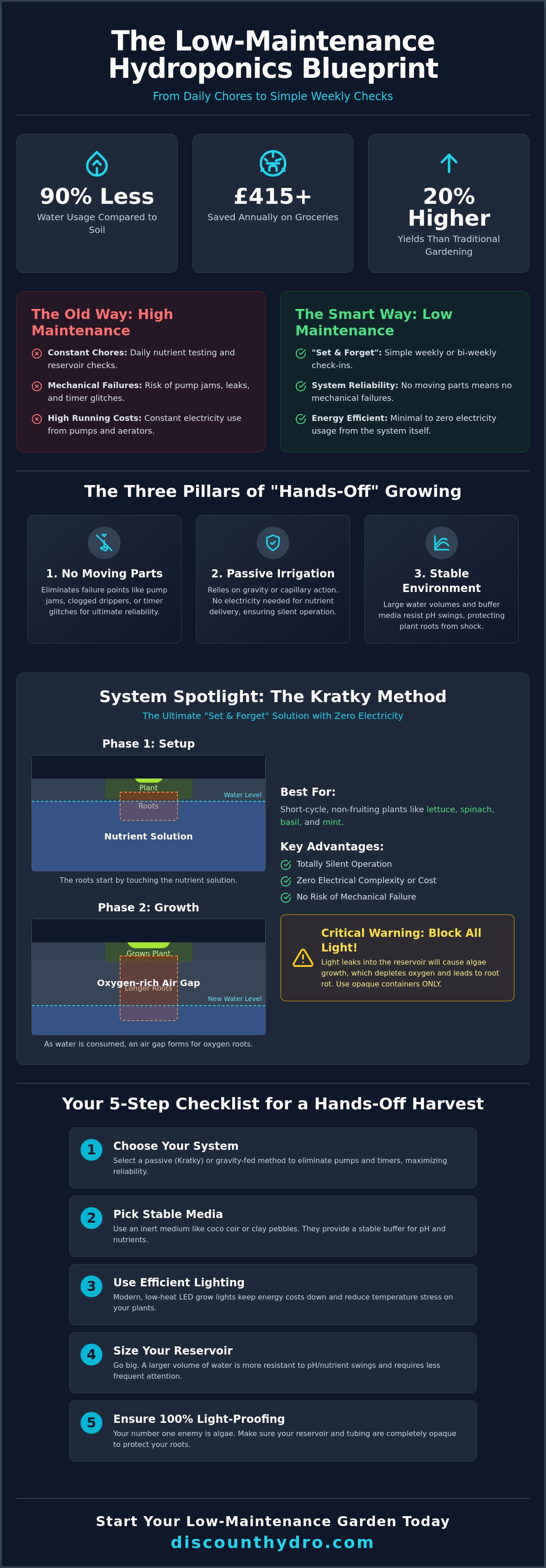
The Kratky method is the ultimate low maintenance hydroponic system for growers seeking zero electrical complexity. It operates on a passive air gap principle. As your plants consume the nutrient solution, the water level naturally recedes. This process creates a gap where specialized air roots develop to absorb oxygen while the lower roots continue to drink from the reservoir. Because it requires no pumps or timers, it's a silent and cost-effective way to grow indoor crops without the risk of mechanical failure.
Short-cycle plants like lettuce, spinach, and herbs such as basil or mint are the best candidates for this technique. For these varieties, a single reservoir of water can often last the entire life cycle of the plant. This "one-and-done" approach eliminates the need for daily monitoring. However, success depends on avoiding common pitfalls. Light leaks are the most frequent cause of failure. Any light reaching the nutrient solution will trigger algae growth, which depletes oxygen and can lead to root rot. You must ensure your containers are completely light-proof to protect the root zone.
Setting Up Your First Kratky Container
Choose an opaque vessel to prevent light penetration. While many beginners use glass jars, these must be covered with dark tape or sleeves. Opaque buckets are a more professional choice for larger herbs. You'll need to secure the plant in a net pot within the lid using growing media like clay pebbles. During the initial setup, the bottom of the net pot should just touch the nutrient solution. As the plant grows, the water level drops; you must avoid refilling the container to the top. Drowning the newly formed air roots is a common mistake that kills the plant within days. For a broader look at different vessel types, the University of Minnesota Extension guide to small-scale hydroponics provides excellent foundational data.
Optimising the Kratky Environment
Temperature control is the most important factor for static water. If the water gets too warm, it loses the ability to hold dissolved oxygen, leading to plant stress. Using hydroponic nutrients formulated for static systems ensures the minerals remain available to the plant without settling. While the system is passive, you should still check the pH levels occasionally. Do this with minimal disturbance to the root zone. If you are looking for high-quality components to build your setup, you can shop professional hydroponic supplies here to ensure your gear meets industrial standards.
Gravity-Fed Systems: Professional Automation Without Pumps
Gravity-fed systems provide a professional-grade low maintenance hydroponic system for growers who need more than basic jars but want to avoid the risks of electrical pumps. By using simple physics, these systems deliver nutrient solutions to your plants only when they need it. This method is exceptionally reliable for larger, thirsty plants like tomatoes or peppers that would quickly outgrow a static setup. While the original research on non-circulating hydroponics by Dr. B.A. Kratky demonstrated how effectively plants can grow in still water, gravity-fed technology adds a layer of automated replenishment that scales effortlessly. You can start with a single pot and expand to a 100-pot commercial array without adding a single pump or timer.
This scalability ensures that as your hobby grows, your hardware doesn't become obsolete. You simply add more pots and longer lines to your existing reservoir. In a low maintenance hydroponic system, the lack of moving parts translates directly to longevity. Most gravity-fed components last for years with only basic cleaning between harvests. This makes them a superior investment for anyone looking to transition from a casual hobbyist to a serious indoor gardener.
The AquaValve Technology Explained
The AquaValve is the core component that makes this level of automation possible. It acts as a float valve, controlling water flow based on the actual consumption of the plant. When the plant drinks, the valve opens to refill the tray to a specific level, then shuts off completely. This creates a natural wet-and-dry cycle that is essential for root health and oxygenation. Maintenance is minimal. You only need to ensure the supply lines stay clear of salt buildup from your nutrients. For growers who spend time away from home, gravity systems are the safest option. No electricity means no risk of pump failure, leaks caused by backpressure, or electrical issues while you're away.
Choosing the Right Reservoir
Your reservoir is your fuel tank. Sizing it correctly is the difference between a truly hands-off experience and a weekly chore. Aim for a tank capacity that provides a 7 to 14 day autonomous period based on your plant count and their growth stage. Flexi-tanks are a specific favourite for UK grow tents because they are lightweight, collapsible, and fit into tight spaces where rigid plastic drums won't. Proper positioning is vital. You must place the reservoir at least 150mm higher than the highest valve in the system. This height creates the necessary pressure to push water through the lines without mechanical assistance. It's a simple, reliable solution for consistent growth and healthy plants.
Essential Gear for a Low-Maintenance Grow Room
High-performance hardware is the foundation of any low maintenance hydroponic system. While previous sections detailed the physics of water delivery, the physical environment determines how often you must intervene. Selecting the right LED grow lights is your first priority. Unlike older HPS bulbs, modern LEDs emit far less radiant heat. This reduction in temperature directly impacts your maintenance schedule by slowing down evaporation. When water evaporates, nutrient concentrations spike, which forces you to adjust the reservoir more frequently. High-quality lighting keeps your environment stable and your workload low.
Even with a hands-off setup, you still need to manage the environment. A high-quality grow tent provides the necessary light-proofing and odour control. It also contains any accidental spills, protecting your home. These tents are designed for quick assembly and offer dedicated ports for ventilation, making them the standard choice for modern UK growers. Professional gear ensures that your "set-and-forget" philosophy doesn't lead to environmental failures.
Lighting and Temperature Control
Modern LEDs eliminate the need for high-powered, noisy cooling fans and complex ducting. Positioning your lights correctly prevents the nutrient reservoir from warming up, which is essential for preventing root rot in the static or gravity-fed systems discussed earlier. 720W LED units are the current 2026 industry standard for efficiency because they offer the optimal balance between power consumption and light penetration for standard 1.2m tents. Keeping the heat away from your water is the easiest way to maintain high oxygen levels without using expensive chillers.
Media and Nutrients for Stability
Your choice of growing media acts as a safety net. Coco coir is the best buffer for pH swings in passive systems because of its high cation exchange capacity. Mixing it with clay pebbles improves drainage and aeration. For UK growers, using "clean" mineral nutrients is vital. Organic nutrients often contain particles that clog the narrow lines of gravity-fed systems. Stick to reliable brands like Intense Nutrients or Dutch Pro. These formulations are designed to stay in suspension without settling. Including a Cal-Mag supplement is also necessary for long-term reservoirs to prevent common deficiencies that occur when you aren't flushing the system daily. You can browse our full range of grow room essentials to find the best prices on these high-performance components.
Your 5-Step Checklist for a Hands-Off Harvest
Success with a low maintenance hydroponic system depends on a solid initial setup. Follow this checklist to ensure your indoor garden runs efficiently with minimal interference. By getting the fundamentals right, you reduce the need for daily corrections and emergency fixes.
- Step 1: System Selection. Match your hardware to your crop. Use Kratky setups for leafy greens and herbs. Switch to gravity-fed systems for larger fruiting plants like peppers or tomatoes.
- Step 2: Water Quality Check. Most UK tap water is slightly alkaline. Test your base water and use "pH Down" to reach the optimal 5.8 level for vegetables. If your tap water is exceptionally hard, consider an RO filter to start with a clean slate.
- Step 3: Precise Nutrient Dosing. Use high-quality mineral nutrients. These stay stable in reservoirs for longer periods without fermenting or clogging lines. Avoid organic additives in "set and forget" systems.
- Step 4: Environment Stabilisation. Set your Vapour Pressure Deficit (VPD) targets. Proper VPD ensures plants transpire at a healthy rate. This reduces the risk of nutrient burn or calcium deficiencies during long maintenance windows.
- Step 5: Scheduled Monitoring. Commit to a 10-minute weekly visit. This consistency prevents small issues from becoming harvest-ending problems.
Weekly Maintenance Routine
Your weekly check should be fast and systematic. Start by measuring the Electrical Conductivity (EC) and pH levels in your reservoir. If the EC has risen significantly, your plants are drinking more water than nutrients. If it has dropped, they are hungry. Perform a quick visual inspection of the leaves for discolouration and check the root zones for a healthy white appearance. When you need to top up the reservoir between full changes, follow the "half-strength" rule. Adding full-strength nutrients to a half-empty tank often leads to toxic salt levels. Use a half-strength solution to maintain a safe balance for your plants.
Troubleshooting Common Issues
Even the best systems face challenges. Identifying early signs of spider mites or other pests is vital. Look for tiny white speckles on the upper surface of leaves. If your pH drifts significantly, it usually indicates a root health issue or a reservoir that has become too warm. Keep your water cool and your environment clean to avoid these setbacks. If you are ready to start your journey, shop our range of complete hydroponic systems for the best UK prices and reliable delivery.
Start Your Hands-Off Harvest Today
Transitioning to a low maintenance hydroponic system is the most efficient way to secure high-quality indoor yields without the burden of constant monitoring. You now have the blueprint for success; from choosing passive irrigation methods to selecting media that buffers against pH swings. By removing complex pumps and timers, you eliminate the most common points of failure for any indoor garden. This approach allows you to focus on the harvest rather than the hardware. Consistency in your weekly checks ensures that your environment remains stable and your plants stay healthy.
Get everything you need for a professional setup in one place. Browse our range of low-maintenance hydroponic systems and kits for the best value on the market. We provide competitive pricing on top brands like Omega and Intense Nutrients, backed by fast UK-wide delivery to your door. Our expert UK-based support team is available to answer all your indoor growing queries and help you select the right gear. Start your hands-off garden today and experience the reliability of a professional-grade system. You'll enjoy a productive, stress-free harvest with every cycle.
Frequently Asked Questions
Can I use a low maintenance hydroponic system for all plant types?
Most plants thrive in these setups, but you must match the system to the crop. Leafy greens and herbs are perfect for passive Kratky jars. Larger, thirstier plants like tomatoes or peppers perform better in gravity-fed systems that can replenish water automatically. Avoid root crops like carrots or potatoes; they require deep, specialized media that isn't compatible with standard low-maintenance hardware.
Does a low maintenance system produce lower yields than a high-tech one?
A low maintenance hydroponic system still delivers the 20% yield increase over soil gardening typical of hydroponics. While ultra-high-tech aeroponic systems might offer slightly faster growth, they carry a much higher risk of total crop failure. Passive and gravity-fed systems provide a more stable environment, ensuring consistent results without the stress of mechanical or electrical breakdowns.
How often do I really need to check my reservoir in a Kratky system?
Weekly inspections are usually sufficient for a Kratky setup. Once the plant has established its air roots in the gap above the water, it becomes largely self-sufficient. Your primary task during the weekly check is ensuring the nutrient solution hasn't been entirely consumed. You don't need to adjust the water level daily; doing so could actually drown the air roots and kill your plant.
What is the best nutrient brand for a gravity-fed hydroponic setup?
Clean mineral nutrients are the best choice for gravity-fed lines. Brands like Dutch Pro and Intense Nutrients are highly recommended because their formulations stay in suspension and won't clog narrow valves or pipes. Avoid using thick organic nutrients or heavy supplements. These can settle at the bottom of your tank and cause blockages that stop the flow of water to your plants.
Do I need an air pump for a Kratky or Auto-pot system?
No air pump is required for these specific methods. Kratky systems use a natural air gap to provide oxygen to the root zone. Auto-pot and other gravity-fed systems use float valves to create wet and dry cycles in the tray. Both techniques allow the roots to breathe naturally without the need for noisy, electricity-consuming air stones or pumps.
Can I leave my low maintenance system alone for a two-week holiday?
Yes, provided your reservoir is sized correctly for your plant count. A 14-day autonomous window is achievable if you calculate your plants' consumption and provide a sufficient buffer. You must also ensure your grow room temperature is stable. High heat will increase evaporation and nutrient concentration, which could stress your plants while you're away from home.
How do I prevent algae growth in my water reservoir?
Total light exclusion is the only way to prevent algae growth. Algae requires light to photosynthesise; therefore, your reservoir and root zone must be completely dark. Use opaque buckets or light-proof covers for all water containers. Ensure your net pots are filled to the top with clay pebbles to block any light from reaching the nutrient solution below.
Is coco coir better than clay pebbles for a low maintenance setup?
Coco coir is generally better for stability because it acts as a natural pH buffer. Clay pebbles are excellent for drainage but offer no protection against sudden pH swings. Many successful growers use a 70/30 mix of coco coir and clay pebbles. This combination provides the water retention of coco with the oxygen-rich drainage of pebbles, creating a perfect environment for a low maintenance hydroponic system.