

Neem Oil for Plants UK: The Complete 2026 Guide to Organic Pest Control
Applying neem oil to your indoor garden without a precise plan is often more dangerous to your plants than the pests you're trying to kill. If you've struggled with persistent spider mites or thrips, you know the frustration of watching healthy foliage decline. Many UK growers hesitate to use organic solutions because they fear burning leaves under intense LED grow lights or getting the mixing ratios wrong. This professional-grade guide to neem oil for plants uk removes that guesswork, giving you a clear, repeatable strategy for total pest control.
You'll learn how to navigate the 2026 regulatory landscape where neem is sold for leaf health rather than as a registered pesticide. We'll break down the exact emulsifiers you need to ensure a stable mix and explain why soil drenches might be the safer alternative for your specific setup. By the end of this article, you'll have the technical knowledge to maintain a clean, vibrant grow room without risking the health of your plants. It's time to move beyond basic garden care and implement a professional organic management routine that actually delivers results.
Key Takeaways
- Understand how Azadirachtin functions as a natural Insect Growth Regulator to disrupt pest life cycles and stop molting permanently.
- Master the essential mixing ratios for neem oil for plants uk to achieve perfect emulsification using horticultural soaps or surfactants.
- Prevent phytotoxicity and leaf burn by following the "Dark Cycle" rule for safe application under high-intensity LED grow lights.
- Identify high-quality cold-pressed oils to ensure your organic pest management routine maintains maximum potency and effectiveness.
- Implement a proactive protection strategy for your grow tents and media to maintain a clean, pest-free environment.
What is Neem Oil for Plants? A Professional UK Grower’s Overview
Neem oil is a natural byproduct of the neem tree, specifically extracted from its seeds and fruit. Professional growers use neem oil for plants uk as a versatile tool for managing common indoor pests. Unlike harsh synthetic chemicals, it offers a biological approach to plant protection. It works through a dual-action mechanism, acting as both a repellent and a systemic growth regulator. It doesn't just kill on contact; it disrupts the life cycle of insects to prevent future outbreaks. This makes it a foundational component of integrated pest management for any serious indoor garden.
Many professional growers rely on this oil because it targets destructive pests while remaining relatively safe for beneficial insects like ladybirds, provided you don't spray them directly. It's biodegradable and leaves no toxic residue in your growing media or hydroponic systems. Understanding What is Neem Oil? requires looking at its chemical makeup, which includes over 100 biologically active compounds. These compounds work together to protect your foliage and maintain a clean environment in your grow room.
The Origin and Purity of Neem
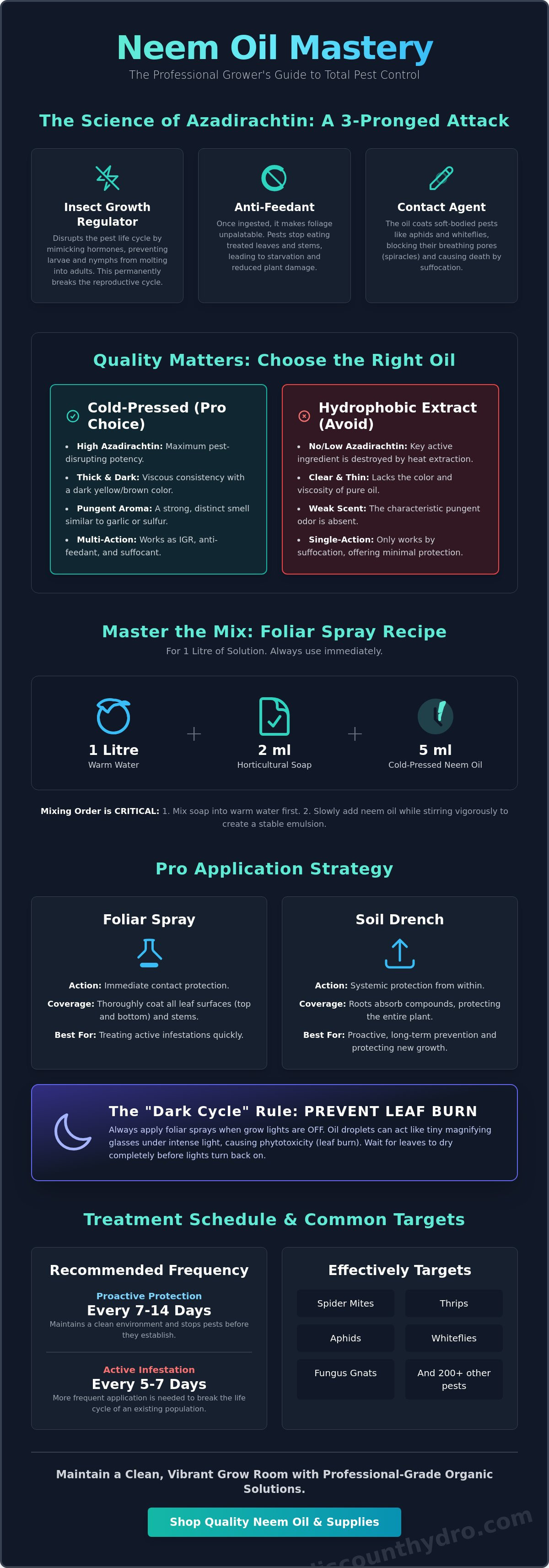
The extraction method determines the oil's effectiveness. Cold-pressed neem oil is the non-negotiable standard for high-performance horticulture. Heat extraction processes often destroy Azadirachtin, the primary active ingredient responsible for pest disruption. Pure, high-quality oil is thick, dark, and carries a distinct, pungent aroma similar to garlic or sulfur. If the oil lacks this scent or appears too clear, it's likely a hydrophobic extract. These inferior products won't provide the same level of protection for your indoor garden.
Why UK Growers Choose Neem Over Chemicals
UK indoor growers often work in enclosed environments like grow tents where chemical fumes can linger. Organic solutions are the pragmatic choice because they don't compromise air quality or leave long-term residues on herbs and leafy greens. Pests like spider mites and thrips frequently develop resistance to single-compound synthetic pesticides. Because neem oil for plants uk contains a complex cocktail of ingredients, insects find it nearly impossible to build an effective defense. This makes it a reliable choice for resistance management. It's suitable for a wide range of crops, ensuring your fruits and vegetables remain healthy throughout the growth cycle.
The Science of Azadirachtin: How Neem Oil Eliminates Pests
Azadirachtin is the powerhouse behind neem oil for plants uk. It isn't just a simple oil; it's a complex chemical disruptor. While many retailers sell "hydrophobic extract of neem oil," this version often lacks the vital Azadirachtin found in cold-pressed products. Without this compound, the oil only works via suffocation. True cold-pressed neem provides a multi-stage attack on invaders. The Science of Azadirachtin shows that it mimics the hormones insects need to grow and lay eggs. This confusion between developmental stages is what eventually collapses a pest population.
The oil also acts as an anti-feedant. Once an insect tastes the treated foliage, it stops eating. This starvation happens quickly, even if the insect doesn't die immediately. For soft-bodied pests like aphids or whiteflies, the oil coats their bodies and blocks their breathing pores, leading to death by suffocation. This immediate physical effect combined with long-term chemical disruption makes it a superior organic choice for growers who want to avoid synthetic residues.
Hormonal Disruption and Life Cycle Interference
Neem acts as an Insect Growth Regulator (IGR). It doesn't usually kill adults on contact. Instead, it prevents larvae and nymphs from molting into their next stage of development. By breaking the reproductive cycle, you stop the next generation from ever appearing. This is why you won't see an instant "knockdown" like you might with synthetic chemicals. Patience is key; the population will collapse over several days as the current generation fails to reproduce. It's a long-term solution that targets the root of the infestation rather than just the visible symptoms.
Systemic vs. Contact Action
You can apply neem as a foliar spray or a soil drench. Foliar application provides immediate contact protection on the leaves. However, neem also has systemic properties. When used as a soil drench, the roots absorb the active compounds and distribute them throughout the plant's vascular system. This protects new growth that hasn't been sprayed yet. To keep your environment pristine, ensure your grow tents are well-ventilated during application to manage humidity levels and prevent stagnant air.
Neem remains active on the plant for about 3 to 7 days when sprayed, though it breaks down faster under intense light. In the soil, its systemic protection can last slightly longer. Regular applications every 7 to 14 days are standard for maintaining a pest-free environment in a professional grow room. This schedule ensures that any new arrivals are immediately met with an unpalatable and growth-disrupting environment.
How to Mix and Apply Neem Oil: Ratios and Methods
Success with neem oil for plants uk depends entirely on your mixing technique. Pure neem oil is hydrophobic, meaning it won't naturally dissolve in water. If you skip the emulsification step, the oil will float on top. This results in an uneven spray that can clog your equipment and cause localized leaf burn. The golden rule is to always use a surfactant, such as a mild horticultural soap or a dedicated wetting agent, to bridge the gap between oil and water molecules. Following proper How to Mix and Apply Neem Oil protocols ensures the active ingredients stay in suspension for a uniform application.
Temperature is a critical factor often overlooked by beginners. You must use lukewarm water for mixing. Cold water causes the oil to thicken and clump, making it impossible to emulsify correctly. Once mixed, the solution begins to biodegrade immediately. For maximum potency, you must use your mixture within 8 hours of preparation. Any leftover solution should be discarded; the Azadirachtin loses its effectiveness rapidly once diluted and won't deliver the results you need the following day.
Step-by-Step Mixing Guide
Precision is key for a safe and effective spray. For a standard 1-litre batch, measure 5ml of pure cold-pressed neem oil and 2-3ml of liquid horticultural soap. Always emulsify the oil and soap in a small container first before adding the mixture to your full volume of lukewarm water. Failure to emulsify leads to uneven application and significant leaf damage as concentrated oil droplets "cook" the plant tissue under your lights.
- Maintenance Ratio: 5ml neem oil and 2ml soap per litre of water.
- Active Infestation Ratio: 5ml neem oil and 3ml soap per litre of water.
- Water Temp: Aim for approximately 20-25°C to keep the oil fluid and easy to mix.
Foliar Spraying vs. Soil Drenching
Foliar spraying is the most common method for tackling visible pests. Focus your efforts on the undersides of the leaves. This is where spider mites and aphids typically congregate and lay eggs. If you're dealing with root-dwelling larvae or fungus gnats, a soil drench is more effective. This involves watering the diluted mixture directly into your growing media. For preventative maintenance, apply once a week. During an active outbreak, increase the frequency to once every 3 days until the pest population collapses. Consistent application ensures that any newly hatched larvae are immediately exposed to the treatment before they can reproduce.
Avoiding Common Mistakes: Safety and Phytotoxicity
Phytotoxicity is the most common reason indoor growers fail with neem oil for plants uk. This term refers to the toxic effect a substance has on plant tissue. When you apply an oil-based spray, it leaves a thin film on the leaf surface. If you expose this film to intense light immediately, it acts like a magnifying glass. This concentrates heat and light energy, effectively cooking the delicate cells of your plants. This damage appears as yellow or brown spotting and can lead to total leaf drop if the application is too heavy.
The "Dark Cycle" rule is your primary defense against this damage. You should only apply neem sprays right after your lights turn off or shortly before they are scheduled to come on. This gives the moisture time to evaporate and the oil time to settle before the next period of high-intensity illumination. Don't spray during the peak of your light cycle. Additionally, perform a 24-hour patch test on a single leaf before treating your entire garden. If that leaf shows signs of wilting or discoloration after a full day, your mixture is likely too concentrated or the plant is too sensitive for foliar application.
Neem Oil and High-Intensity Lighting
Modern LEDs produce significant PAR (Photosynthetically Active Radiation) which intensifies the interaction with oil droplets. This magnifying effect is why proper setup is crucial. You can find detailed advice on optimizing your environment in our LED grow lights guide. After spraying, increase your fan speed and extraction rates. Moving air helps the spray dry faster, reducing the window for potential light damage and preventing moisture from spiking your humidity levels. High humidity immediately after spraying can lead to fungal issues like powdery mildew, negating the benefits of your pest control efforts.
Storage and Shelf Life
Raw neem oil is sensitive to light and temperature. Store your supply in a cool, dark place to prevent the active Azadirachtin from breaking down. In typical UK winters, pure neem oil often solidifies into a thick paste. Don't use a microwave to melt it; high heat destroys the chemical properties. Instead, place the bottle in a bowl of warm water until it returns to a liquid state. If the oil develops a rancid smell that overpowers its natural nutty aroma, or if it fails to emulsify even with soap, it has likely expired. Freshness is vital for potency; using old oil is a waste of time and resources.
Maintaining a clean, pest-free environment requires the right tools and a consistent routine. If you need to upgrade your setup or restock on essentials, browse our full range of plant nutrients and supplements to keep your garden in peak condition.
Choosing the Best Neem Oil for Your Indoor Garden
Selecting the right neem oil for plants uk is the difference between a successful harvest and a failed pest management strategy. You must look for "100% Cold-Pressed" on the label. This extraction method preserves the Azadirachtin content discussed in previous sections. Many general retailers sell "Hydrophobic Extract of Neem Oil" at a lower price point. While this might look similar, the active insect growth regulator has been removed. These products only work by smothering insects. For a professional-grade routine, cold-pressed oil is the non-negotiable standard. Quality matters.
Evaluate value based on concentration rather than just the bottle price. Ready-to-use (RTU) sprays are convenient for small houseplants but offer poor value for dedicated grow rooms. A 250ml or 500ml concentrate goes much further. Buying from a specialist UK grow shop ensures product freshness. General marketplaces often stock old inventory that has sat in warm warehouses. Heat and light degrade the active compounds over time. Fresh stock from a specialist supplier guarantees the potency you need for high-value crops. When identifying reputable UK brands, look for those that provide a clear analysis of their oil's origin. A professional supplier will specify the concentration of the active ingredients.
Horticultural Grade vs. Cosmetic Neem
Horticultural grade neem is filtered specifically for plant use. Cosmetic neem oil, often found in health shops, sometimes contains fragrances or stabilizers. These additives are not tested for phytotoxicity on foliage and can cause unexpected leaf damage. Horticultural grades prioritize high Azadirachtin levels. Stick to reputable UK hydroponic suppliers to ensure the product is safe for your growing media and nutrient systems. Pure horticultural oil should have a thick consistency and a strong, characteristic scent. Avoid any product that doesn't clearly state "Cold-Pressed" on the front of the packaging. Investing in quality oil protects your investment in LED grow lights and high-end nutrients by preventing crop loss.
Essential Accessories for Neem Application
Effective application requires more than just the oil. A high-quality pressure sprayer is essential for achieving the fine mist needed for total coverage. Cheap trigger sprays often produce large droplets that lead to pooling and leaf burn. You also need a dedicated horticultural soap or surfactant to ensure perfect emulsification. Without these, your neem oil for plants uk won't stay in suspension. For a complete strategy on dealing with specific invaders, see our Spider Mites guide. Having the right tools ensures your organic routine is efficient and repeatable. Precision leads to results.
Secure a Pest-Free Harvest with Professional Organic Protection
Master the application of neem oil for plants uk to transform your indoor garden into a resilient, pest-free environment. Success relies on the precision of your routine. By focusing on proper emulsification and timing your sprays with the dark cycle, you eliminate the risk of leaf burn while effectively disrupting the reproductive cycles of thrips and spider mites. This biological approach ensures your plants remain healthy and vibrant without the need for aggressive synthetic chemicals that leave unwanted residues in your grow room.
Maintaining these professional standards requires high-quality supplies and reliable logistics. Shop Professional Neem Oil and Pest Control at Discount Hydro to access competitive trade pricing and fast UK-wide delivery on all essentials. Our team offers the specialist hydroponic knowledge required to help you select the most effective products for your specific setup. Don't let persistent pests compromise your hard work. Take full control of your environment today and watch your foliage thrive under a clean, organic management routine.
Frequently Asked Questions
Is neem oil safe for all plants?
No, it isn't safe for every species, particularly those with very thin, hairy, or waxy leaves. Plants like ferns or some succulents can be highly sensitive to oil coatings. You should always perform a patch test on a single leaf 24 hours before treating your entire garden. If the leaf shows signs of wilting, yellowing, or spotting, avoid using foliar sprays on that specific variety.
Does neem oil kill beneficial insects like ladybirds?
Neem oil is generally safe for beneficial insects as long as they aren't sprayed directly while the solution is wet. It primarily affects pests that ingest treated plant tissue, such as aphids or thrips. To protect pollinators and predators, apply the mixture during the dark cycle or at dusk. Once the spray has dried on the foliage, it poses minimal risk to ladybirds or bees.
How often should I apply neem oil for prevention?
You should apply the mixture every 7 to 14 days for effective preventative maintenance. This routine ensures that new growth is protected and any stray pests are deterred before an infestation begins. Using neem oil for plants uk as a regular leaf care product helps maintain a clean environment. If you notice an active outbreak, increase the frequency to once every 3 days until the population collapses.
Can I use neem oil in a hydroponic reservoir?
No, you should never add pure neem oil directly into a hydroponic reservoir. The oil will not mix with the nutrient solution and will eventually coat the roots, pumps, and sensors. This leads to root suffocation and equipment failure. If you want systemic protection in a hydro setup, use it as a carefully timed foliar spray or a dedicated root drench in a separate container.
Why does my neem oil turn solid in the bottle?
Pure cold-pressed neem oil naturally solidifies at temperatures below 20°C due to its high fatty acid content. This is a sign of high quality and purity. If your oil is solid, place the bottle in a bowl of warm water for several minutes until it returns to a liquid state. Don't use boiling water or a microwave, as excessive heat destroys the active Azadirachtin compounds.
Can I use washing up liquid as an emulsifier for neem oil?
You can use a mild, fragrance-free washing up liquid, though a dedicated horticultural soap is a safer choice for delicate plants. The soap acts as a surfactant to break the surface tension so the oil can mix with water. Standard household detergents often contain harsh degreasers or synthetic scents that might strip the natural waxes from your leaves, increasing the risk of phytotoxicity.
How long does it take for neem oil to work on spider mites?
It usually takes 3 to 7 days to see a significant reduction in spider mite numbers. Because neem oil for plants uk functions as an insect growth regulator, it doesn't provide an instant knockdown kill. It works by stopping the mites from feeding and preventing larvae from molting. You must be patient and maintain a consistent application schedule to break the entire reproductive cycle.
Does neem oil smell, and how long does the scent last?
Yes, pure neem oil has a very strong, pungent aroma often compared to a mix of garlic, sulfur, and burnt nuts. The scent is most powerful during the application process but typically dissipates within 24 to 48 hours. If you're growing indoors, ensuring your extraction fans and carbon filters are functioning at full capacity will help clear the smell from your grow room more quickly.