

Sticky Fly Traps for Grow Room: The Ultimate Pest Monitoring Guide (2026)
Your sticky traps are the most critical diagnostic sensors in a modern Integrated Pest Management (IPM) strategy, not just simple bug killers. Many growers wait until they see a swarm of insects to act, but professional setups use these tools for immediate detection. If you've struggled with thrips or found sticky residue on your foliage from poor placement, you need a more precise monitoring system. High-quality sticky fly traps for grow room environments provide the technical data required to protect your harvest before pests cause irreparable damage.
It's common to feel frustrated when fungus gnats or thrips threaten your yield. This guide explains how to use sticky traps to identify, monitor, and eliminate indoor pests effectively. You'll get clear instructions on the differences between yellow and blue traps and where to hang them for the best results. We'll show you how to reduce adult flying insect populations and identify specific species to keep your grow room running at peak efficiency. This is the most efficient way to ensure your plants stay healthy and your pest control costs stay low.
Key Takeaways
- Learn how to deploy sticky fly traps for grow room environments as a professional early warning system to catch fungus gnats and thrips.
- Identify the specific light wavelengths that attract different pests to choose between yellow and blue adhesive traps.
- Determine the exact placement heights near the plant canopy and growing media to maximise capture rates and avoid foliage residue.
- Master the "Grid Count" method and magnification techniques to accurately track pest population trends and evaluate your control strategy.
- Discover why UV-resistant, high-tack adhesives are essential for maintaining long-term effectiveness under intense LED grow lights.
Why Sticky Fly Traps are Essential for Grow Room Pest Management
A glue trap is a non-toxic, adhesive-coated card designed to capture and hold flying insects. In an indoor garden, these tools serve as your first line of defense. Using sticky fly traps for grow room setups allows you to identify infestations before they spiral out of control. These traps target the most common pests that plague indoor growers, including fungus gnats, thrips, whiteflies, and leaf miners. Unlike expensive chemical sprays or biological controls that require specific environmental conditions, adhesive traps work immediately. They offer a high-value, low-cost solution for any serious grower looking to protect their harvest.
Think of these cards as an early warning system. Pests like fungus gnats often start in the growing media and move toward the plant canopy. By the time you see them flying around your lights, the damage is already happening. Traps catch the first few scouts. This gives you time to adjust your nutrients or environment before your plants suffer. It's a pragmatic approach to pest control that prioritizes prevention over expensive cures. If you don't have these in your room, you're growing blind.
Sticky traps are far more cost-effective than chemical alternatives. A single pack of cards can protect an entire room for a fraction of the price of a high-end pesticide. They don't expire quickly and don't require specialized spray equipment. You'll catch multiple species with the same tool. This versatility makes them an essential inventory item for any scale of operation. Using sticky fly traps for grow room monitoring ensures you aren't wasting money on broad-spectrum treatments when you only have a specific pest problem.
The Role of Sticky Traps in Integrated Pest Management (IPM)
Integrated Pest Management relies on accurate data. These traps provide a visual snapshot of your room's health at any given moment. Because they don't use toxic chemicals, they won't interfere with your plant's development or leave residues on your flowers. Prevention starts with your environment. Keeping clean grow tents is the first step, but traps ensure that any breach in your bio-security is logged instantly. They're the most efficient way to maintain a controlled environment without relying on harsh pesticides.
Trapping vs. Monitoring: Knowing the Difference
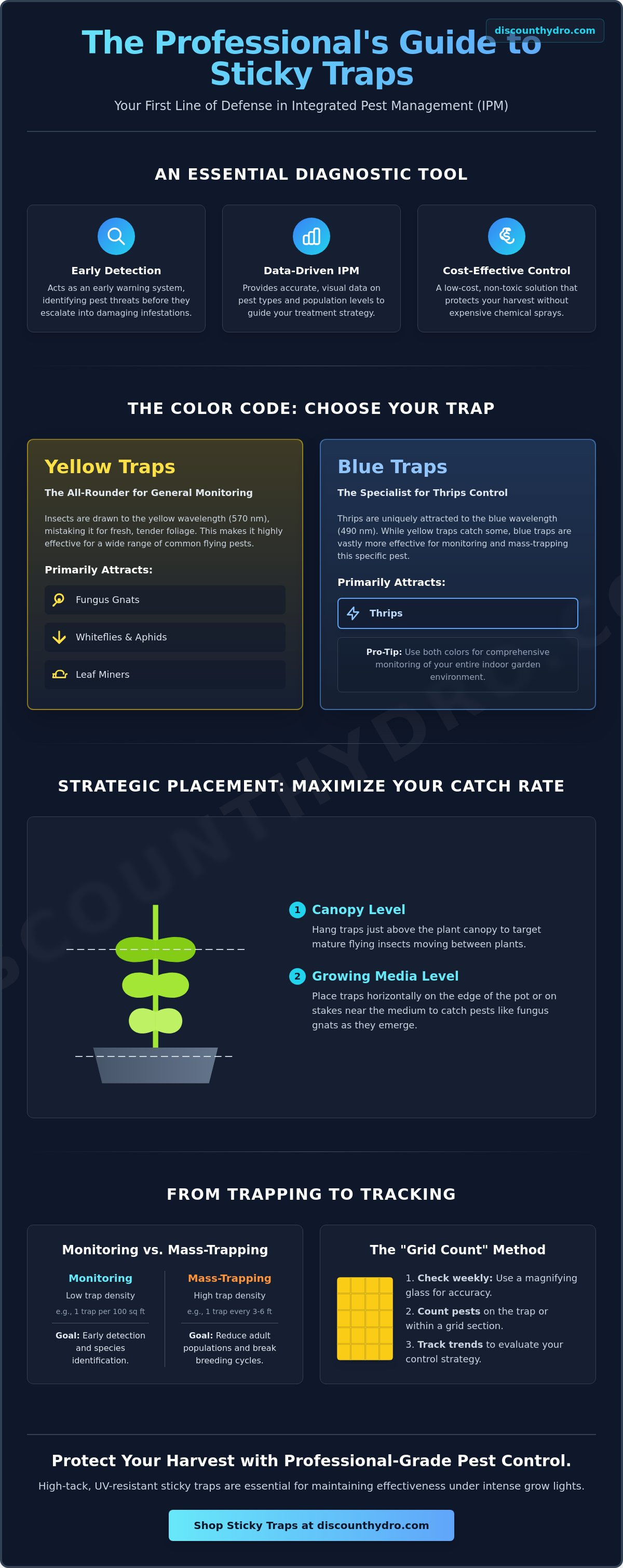
You must understand the two ways to use these tools. Monitoring is the priority for high-value indoor crops. It involves placing a few strategic traps to identify which species are present and how fast their population is growing. Mass-trapping uses a much higher density of cards to physically pull adult insects out of the air. This helps break the breeding cycle by removing the adults before they can lay more eggs in your media.
- Monitoring: Detects pests early. Identifies species. Guides your treatment plan.
- Mass-trapping: Reduces adult populations. Slows the breeding cycle. Works as a secondary control method.
For most growers, monitoring is the most valuable function. It tells you exactly what you're fighting so you don't waste money on the wrong nutrients or treatments. It's about being efficient with your time and your budget.
Yellow vs. Blue Sticky Traps: Choosing the Right Colour
Success in pest management depends on understanding phototaxis. This is the scientific term for how insects move toward or away from specific light wavelengths. By using sticky fly traps for grow room monitoring, you're exploiting this biological response. Most flying pests are naturally attracted to specific colours that signal food, mates, or ideal breeding grounds. Choosing the wrong colour means you'll miss the early signs of an infestation. This leads to crop damage that could've been avoided with a simple, low-cost card.
Professional growers don't guess which colour to use. According to Pesticide Environmental Stewardship, specific wavelengths are proven to attract certain species. While yellow is the industry standard for general monitoring, blue serves a highly specialized purpose. Using both colours simultaneously creates a comprehensive data set for your garden. This allows you to identify multiple threats at once and adjust your environmental controls accordingly. It's a pragmatic way to stay ahead of pest cycles.
When to Use Yellow Sticky Traps
Yellow traps are the universal choice for most indoor gardens. They reflect a spectrum of light that mimics healthy, vigorous foliage. This makes them irresistible to a wide range of common threats. If you're dealing with Fungus Gnats (Sciarid flies), Whiteflies, or Aphids, yellow is your primary tool. They're ideal for general-purpose monitoring in any hydroponic setup. Because they attract such a broad variety of pests, they provide the best overall snapshot of your room's health. Most growers find that yellow cards are their most frequently replaced asset due to their high capture rate.
The Specialist Power of Blue Sticky Traps
Blue traps are specifically engineered to target the Western Flower Thrips (Frankliniella occidentalis). While thrips might occasionally land on yellow cards, they're significantly more attracted to the blue spectrum. If you see silver streaks on your leaves or distorted new growth, blue traps are essential. A major advantage of blue cards is their selectivity. They're often less attractive to beneficial insects like hoverflies or parasitic wasps compared to yellow. This makes them a precise tool for thrips detection without disrupting your wider IPM strategy. For the best results, you should stock up on professional-grade sticky traps to ensure you're prepared for any specific outbreak.
- Yellow: Best for Fungus Gnats, Whiteflies, and Aphids. Mimics healthy leaves.
- Blue: Best for Western Flower Thrips. Highly selective.
- Combined: Provides the most accurate monitoring data for all flying pests.
Using the right colour is about efficiency. You don't want to waste time treating for gnats when your real problem is thrips. By deploying both colours, you ensure that no pest goes unnoticed. This dual-colour approach is the gold standard for modern indoor cultivation.
Maximising Effectiveness: Where to Hang Sticky Traps
Placement is the difference between a successful monitoring program and a wasted investment. Simply hanging sticky fly traps for grow room setups in random corners won't provide the data you need. Insects don't fly aimlessly; they follow specific environmental cues like light, CO2 levels, and humidity. To catch them, you must position your traps where they're most likely to travel. If your traps are too far from the action, you'll suffer from a false sense of security while pest populations explode. Efficiency requires a technical approach to every square meter of your garden.
Airflow is a critical factor that many growers overlook. Strong extraction fans and oscillating fans can blow smaller insects like whiteflies right past an adhesive surface. You should place traps in areas with moderate air movement but avoid direct "wind tunnels" created by high-powered fans. High-velocity air can also cause your plants to sway into the adhesive. This leads to "sticky leaf" syndrome, where resinous glue transfers to your foliage. This residue is difficult to remove and can clog the stomata of the leaves, reducing transpiration and overall plant health. Maintain at least a 10cm gap between any trap and your plants.
Positioning for Fungus Gnats (Sciarid Fly)
Fungus gnats are weak fliers that spend most of their time near the root zone. They emerge from the top layer of your coco coir or soil after the larvae pupate. Because of this, you should place traps horizontally across the rims of your pots or hang them vertically within 15cm of the growing media surface. High moisture levels and an abundance of hydroponic nutrients in the substrate often increase gnat activity. If you're seeing high counts on these low-level traps, it's a direct signal to check your irrigation frequency and drainage efficiency.
Positioning for Thrips and Whiteflies
Thrips and whiteflies prefer the succulent new growth at the top of the plant. They're also highly attracted to the intense spectrum emitted by your led grow light. For these pests, hang your traps vertically just above the plant canopy. You must adjust the height of these traps weekly as your plants stretch toward the light. Another professional tactic is placing traps near intake vents or doorways. This catches "hitchhiker" pests the moment they enter the room, preventing them from ever reaching your main crop. This proactive placement is the most cost-effective way to use sticky fly traps for grow room biosecurity.
- Intake Vents: Catch pests before they settle.
- Pot Rims: Target fungus gnats at the source.
- Upper Canopy: Monitor for thrips and whiteflies near the light source.
By using these specific locations, you turn a simple piece of plastic into a precision sensor. You'll get faster results and spend less on replacement cards over the course of your cycle.
Monitoring and Identification: Reading Your Traps
Catching insects is only the first step. To manage a room effectively, you must identify exactly what is stuck to the adhesive. Most pests are too small for the naked eye to see in detail. You should use a 30x or 60x jeweller's loupe to inspect the surface of your sticky fly traps for grow room. This level of magnification reveals the anatomical features needed for a precise diagnosis. Without this data, you might apply the wrong treatment, wasting both time and money on ineffective nutrients or sprays. Precise identification is the hallmark of a professional grower.
Identifying Common Pests on the Adhesive
Learn to distinguish between the primary threats found in indoor gardens. Fungus gnats look like small, dark mosquitoes under a lens. Look for a distinct "Y" pattern in their wing veins; this is a definitive marker. Thrips are much smaller and have slender, cigar-shaped bodies that are typically yellow, brown, or black. Whiteflies are the easiest to spot as they look like tiny white moths against the yellow background. Aphids are less common on traps but appear as small, pear-shaped bodies with long legs and antennae. Knowing these differences allows you to choose the right biological or chemical response.
Tracking Data for Better Yields
Professional growers use the "Grid Count" method to track infestations. Instead of counting every single insect on a crowded card, count the pests in one square inch and multiply by the trap's total surface area. Keep a grow log of these numbers to track population trends throughout your cycle. This data helps verify if a specific spider mites treatment or other pest protocol is actually working. If the numbers don't drop after treatment, you need to change your strategy immediately. Data doesn't lie.
Replace your traps every 4-6 weeks to ensure the adhesive remains effective. If more than 50% of the surface is covered in debris or insects, the trap is "full" and its capture rate will plummet. When trap counts remain high despite physical removal, it's a clear signal to switch to predatory mites or nematodes. High counts indicate that the breeding cycle in your growing media is outperforming your monitoring tools. You can order bulk sticky traps now to ensure your monitoring program never has a gap.
- Fungus Gnats: Dark, mosquito-like, "Y" wing vein.
- Thrips: Slender, cigar-shaped, very small.
- Whiteflies: Small white moth appearance.
- Replacement: Every 4-6 weeks or at 50% coverage.
Consistent monitoring turns your traps into a database. You'll begin to notice seasonal trends, such as increased gnat activity during humid months. This foresight allows you to stock up on supplies before the pests arrive. It's a pragmatic, value-driven approach to crop protection.
Professional-Grade Pest Control at Discount Hydro
Discount Hydro is the UK's leading supplier for high-performance pest management tools. We offer the best prices on bulk sticky fly traps for grow room setups to ensure you never run out during a critical cycle. Our inventory is built for professional results; we focus on durability and capture rates rather than flashy packaging. We understand that an infestation requires an immediate response. That's why we provide fast UK delivery and convenient click-and-collect options for all our pest control products. You'll find everything from basic traps to organic sprays in our digital warehouse.
Our adhesives are specifically engineered for the intense environment of an indoor garden. Standard garden centre traps often fail under high-output LED heat, but our UV-resistant glue stays tacky for weeks. This ensures consistent monitoring data from the day you hang them until they're full. We prioritize technical performance and monetary value in every product we stock. It's a no-frills approach designed for growers who prioritize efficiency and cost-savings.
Why Our Traps Outperform Generic Garden Centre Brands
Most generic brands only offer single-sided adhesive, which halves your potential capture area. Our professional-grade cards are double-sided for maximum efficiency. They're designed to withstand the high-humidity levels found in modern grow rooms without curling or losing their grip. The easy-peel backing ensures a mess-free setup; this is essential when you're working in tight spaces between your plants and lights. You get more capture surface for less money.
- Double-Sided Adhesive: Maximum surface area for pest capture.
- UV-Resistant Glue: Won't dry out or melt under intense heat.
- Moisture Proof: Performs perfectly in high-humidity environments.
- Bulk Savings: Lower unit costs on multi-pack purchases.
Essential Accessories for Your Pest Strategy
A complete monitoring program requires more than just traps. You should stock up on 30x loupes for identification, scalpels for taking clean foliage samples, and gloves to prevent the transfer of oils or pathogens. Integrating these tools with our hydroponics starter kits ensures your garden begins with a clean, sterile foundation. This proactive approach is the most effective way to avoid outbreaks before they start. Shop our full pest control range at the best prices today to secure your harvest. We provide the technical supplies you need to maintain a professional, pest-free environment without the high markup of other retailers.
Secure Your Yield with Professional Monitoring
Effective pest management starts with accurate data. You've learned that selecting between yellow and blue cards is a tactical choice based on insect phototaxis. Strategic placement near the canopy or growing media ensures you catch pests before they spread. Integrating sticky fly traps for grow room setups into your daily routine allows for early detection and precise identification using a jeweller's loupe. This proactive approach protects your harvest and reduces the need for expensive, broad-spectrum treatments.
Discount Hydro provides the technical supplies you need to maintain a professional environment. We offer a Best Price Guarantee on all UK pest control supplies and fast nationwide delivery for urgent grow room issues. Our expert-selected inventory is built for serious indoor growers who demand efficiency and value. Don't wait for a swarm to ruin your hard work.
Buy Professional Sticky Fly Traps at Discount Hydro today and take control of your garden's health. You've got the tools and the knowledge to grow with confidence.
Frequently Asked Questions
Do sticky fly traps actually kill pests or just monitor them?
Sticky traps perform both functions simultaneously. They physically kill adult flying insects by permanently sticking them to the high-tack adhesive surface. While their primary professional role is monitoring population density to guide treatment, mass-trapping can significantly reduce the number of adults available to breed. Removing these adults prevents them from laying thousands of eggs in your growing media, effectively slowing the infestation cycle.
How many sticky traps do I need for a 1.2m x 1.2m grow tent?
You should deploy between 4 and 6 traps for a standard 1.2m x 1.2m tent. Place one trap in each corner and at least one near your intake vents or center canopy. Using this specific density of sticky fly traps for grow room monitoring ensures you catch pests regardless of their entry point. It's a low-cost way to ensure no corner of your garden remains unmonitored.
Can I use yellow sticky traps outdoors as well as in a grow room?
Yes, these traps are effective in greenhouses and outdoor gardens. They're commonly used to manage aphids and whiteflies on fruit trees and vegetables. You should be aware that outdoor use carries a higher risk of catching non-target species like bees or butterflies. In a controlled indoor environment, this risk is almost entirely eliminated, making them a much more precise tool for pest management.
Are sticky fly traps safe to use around my plants and nutrients?
They are completely non-toxic and safe for all indoor environments. The adhesive contains no pesticides or volatile organic compounds that could contaminate your nutrients or plant tissue. The only physical risk is the glue touching your foliage, which can clog leaf pores. Maintain a clear gap between the cards and your plants to ensure your garden stays clean and your growth remains unaffected.
Why are my sticky traps catching beneficial insects like ladybirds?
Beneficial insects are naturally attracted to the same bright yellow spectrum as pests. Ladybirds and lacewings often land on traps while they are actively hunting for aphids or gnats. If you're using biological controls, try placing traps lower near the pot rims. You can also switch to blue traps for thrips monitoring, as blue is generally less attractive to many common predatory insect species.
What is the difference between yellow and blue sticky insect traps?
The difference is the specific light wavelength used to attract different species. Yellow is the universal standard for catching fungus gnats, whiteflies, and aphids. Blue is a specialized spectrum proven to be more effective at attracting Western Flower Thrips. Most professional setups use a combination of both sticky fly traps for grow room colours to ensure every potential flying threat is identified and tracked.
How often should I replace the sticky traps in my grow room?
Replace your traps every 4 to 6 weeks to maintain maximum adhesive strength. You should swap them earlier if more than 50% of the surface is covered by insects, dust, or debris. Accumulated dust from fans or coco coir can coat the glue, allowing larger pests to walk across the surface without getting stuck. Keeping fresh traps ensures your pest count data remains accurate and reliable.
Will sticky traps get rid of a fungus gnat infestation on their own?
Traps alone won't eliminate an established infestation. They only target the flying adult stage of the life cycle. You must address the larvae living in your growing media using biological controls or by adjusting your irrigation frequency. Traps are an essential monitoring tool and a secondary control method, but they must be part of a wider strategy that includes media treatments and environmental management.