

Choosing the Best Plant Trimming Scissors for High-Yield Indoor Gardening (2026)
Precision harvesting is a technical task that requires specific mechanical advantages. It isn't just about having a sharp edge. Using standard household shears in a high-yield indoor garden is a mistake. Those tools crush stems and increase the risk of plant disease. High-quality plant trimming scissors are essential for maintaining crop health and ensuring rapid recovery after a harvest.
You know that hand fatigue and sticky blades can ruin your productivity. Dull equipment damages delicate tissues and slows down your entire operation. We focus on providing professional-grade tools that solve these common bottlenecks. Efficiency in the grow room starts with the right equipment at the right price.
This guide explains how to select and maintain the perfect trimming tools for your setup. You will find details on blade materials like titanium and stainless steel. We also provide strategies for faster harvest times and cleaner cuts. Learn how to protect your investment and achieve better results with tools built for multiple seasons of heavy use.
Key Takeaways
- Distinguish between straight-tip precision snips and curved-blade tools to handle different stages of the indoor harvest.
- Choose plant trimming scissors with non-stick coatings to prevent resin buildup and maintain high cutting speeds.
- Reduce physical strain and palm bruising by utilizing ergonomic handles and high-action spring mechanisms.
- Master the isopropyl alcohol cleaning method to ensure sterile cuts and long-lasting tool performance.
- Source high-performance harvest equipment at competitive prices with fast delivery across the UK.
Essential Types of Plant Trimming Scissors and Snips
Precision in a grow room isn't optional. High-yield indoor gardening requires specialized tools to maintain plant health and improve harvest speed. Standard household shears crush delicate tissues. Professional-grade plant trimming scissors provide clean, surgical cuts that promote faster healing and prevent disease entry points. Using the correct edge for the specific task ensures your botanical structures remain healthy and productive throughout the cycle.
Success in a hydroponic environment depends on having a variety of edges to manage different growth stages. You need specialized equipment for everything from initial propagation to the final harvest. The following categories represent the industry standard for professional indoor growers:
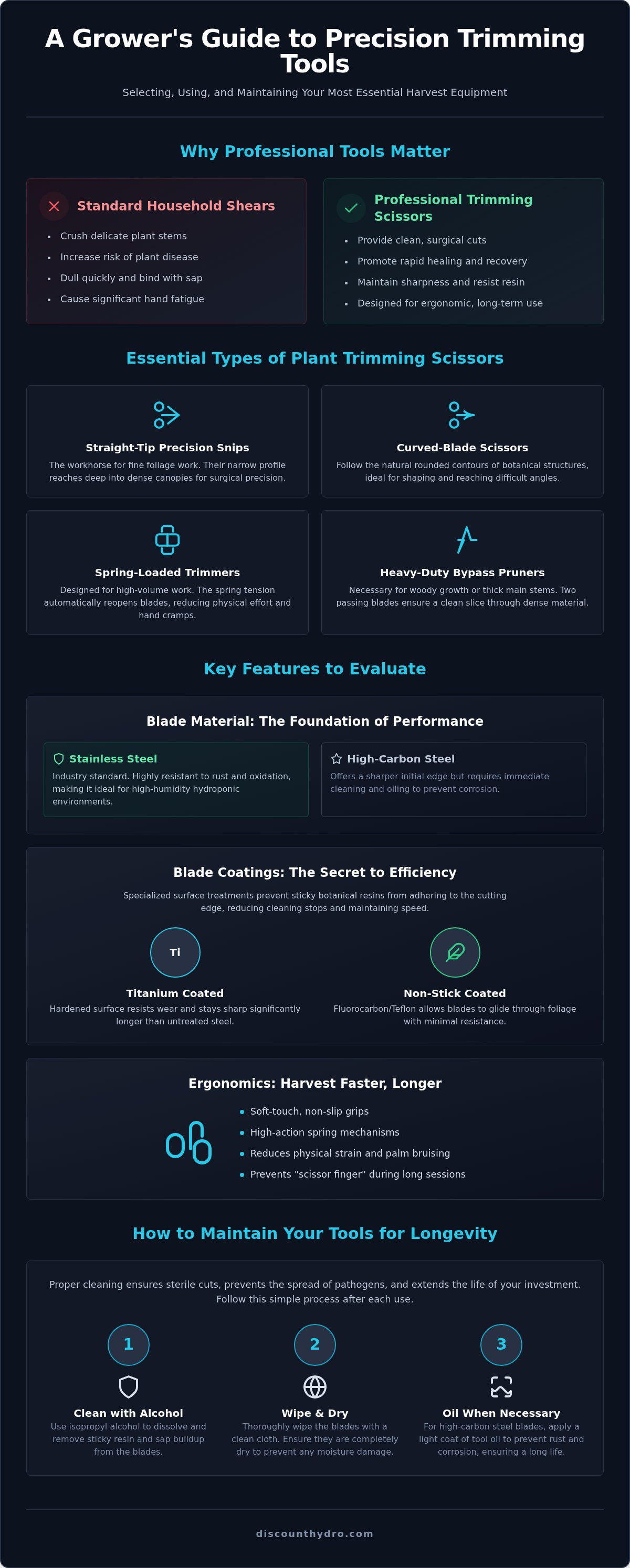
- Straight-tip precision snips: These are the workhorses for fine foliage work. Their narrow profile allows you to reach deep into dense canopies without damaging surrounding structures.
- Curved-blade scissors: These follow the natural rounded contours of botanical structures. They're ideal for shaping and reaching difficult angles that straight blades might miss.
- Spring-loaded trimmers: Designed for high-volume work, these tools use tension to reopen the blades automatically. This reduces the physical effort required for every individual snip.
- Heavy-duty bypass pruners: For woody growth or thick main stems, Pruning Shears with a bypass action are necessary. They work like scissors, where two blades pass each other, ensuring a clean slice through dense material.
Straight vs. Curved Blades: Which Do You Need?
Straight blades offer maximum accuracy for vertical cuts. They excel at removing individual leaves or stems with surgical precision. Growers prefer them for the "clean-up" phase where detail is paramount. Curved blades provide a different mechanical advantage. They allow you to "roll" the cut around a rounded flower or fruit, maintaining a consistent distance from the center. Most professional kits include both to handle various botanical shapes efficiently and maintain a high-quality finish.
Spring-Loaded vs. Traditional Action
Fatigue is the biggest enemy during a long harvest session. Spring-loaded plant trimming scissors combat this by doing half the work for you. The spring tension forces the handles apart after every snip. This prevents hand cramps, palm bruising, and "scissor finger." Traditional shears still have a place in the toolkit, however. They offer more tactile feedback and resistance. Some growers prefer this for high-stakes precision cuts where a slip could be costly. When choosing spring-loaded models, look for integrated locking mechanisms and high-quality steel springs that stay seated during rapid, repetitive use.
Key Features to Evaluate: Blade Material, Shape, and Action
Professional plant trimming scissors are built to withstand the rigorous demands of a high-yield harvest. While generic shears might work for a few cuts, they quickly succumb to the sticky resins and high humidity common in indoor grow rooms. Selecting the right features ensures your tools remain functional season after season without requiring constant replacement. The durability of your equipment depends heavily on the specific metallurgy and engineering of the cutting head.
The choice between stainless steel and carbon steel is the first technical decision. Stainless steel is the industry standard for hydroponic environments due to its natural resistance to rust and oxidation. This is vital when working near nutrient reservoirs or in high-humidity grow tents where metal surfaces are constantly exposed to moisture. High-carbon steel plant trimming scissors offer a sharper initial edge and better retention, but they require immediate cleaning and oiling to prevent corrosion. Most modern growers opt for stainless steel to minimize maintenance time and ensure tool longevity in challenging indoor conditions.
Blade Coatings and Resin Resistance
Resinous plant varieties produce sticky sap that quickly binds blades together. Titanium-bonded blades provide a hardened surface that resists wear and stays sharp significantly longer than untreated steel. Fluorocarbon or Teflon coatings act as a lubricant, allowing the blades to glide through dense foliage with minimal resistance. Non-stick coatings are specialized surface treatments designed to prevent botanical resins and sap from adhering to the cutting edge during use. Using these treated blades reduces the frequency of cleaning stops. For more technical data on selecting the right edge for specific plant tissues, consult the NC State Extension guide on pruning tools.
Handle Design and Ergonomic Standards
Ergonomics directly impact your harvest efficiency. Soft-touch, rubberized grips are superior to hard plastic in moisture-heavy grow tent environments. They provide a secure hold even when your hands are damp or covered in sap. Sizing is equally important; a tool that's too large for your palm will cause muscle strain within minutes. Many professional models now feature ambidextrous designs, allowing you to switch hands to distribute the physical workload. Integrated locking mechanisms are a safety requirement for grow room environments, ensuring sharp edges are protected when not in use. These locks also prevent accidental blade damage during transport or storage. You can find a wide range of professional hydroponic hand tools that feature these ergonomic standards at warehouse prices.
Maximising Efficiency During Large-Scale Trimming Sessions
A successful indoor harvest requires more than just high yields. It requires an efficient processing system. Large-scale sessions often last several hours; without a plan, productivity drops as fatigue sets in. Developing a consistent rhythm is the most effective way to maintain speed. Many professional growers use the "top-down" method. This involves starting at the apex of a branch and working downwards. It keeps the workspace organized and prevents resin from transferring back onto processed botanical material.
Physical toll is a significant bottleneck. "Scissor finger" and palm bruising occur when using poorly designed tools for extended periods. High-quality plant trimming scissors with ergonomic handles and soft-touch grips are essential for long sessions. These features distribute pressure across the hand rather than concentrating it on a single point. To avoid downtime, always keep multiple pairs of scissors on hand. A common warehouse-style rotation involves three pairs: one in active use, one soaking in isopropyl alcohol, and one drying. This ensures you never stop the workflow to scrape off resin buildup.
Ergonomic Techniques for Hand Health
Proper finger placement provides the leverage needed for clean cuts without excessive force. Avoid gripping the handles too tightly. Rest your index finger along the spine of the tool for better directional control. Regular stretching breaks are mandatory. Take five minutes every hour to flex your wrists and fingers. This prevents long-term joint strain. Choosing tools with low-resistance springs is another way to protect your hand health. These mechanisms require minimal pressure to close. This significantly reduces the cumulative load on your thumb and palm muscles over a multi-hour harvest.
Optimising Your Harvest Workflow
Your workspace setup determines your processing speed. Workspace height should allow you to sit upright with your elbows at a 90-degree angle. This prevents back and neck strain. Visibility is equally critical for precision. Proper illumination helps you distinguish between leaf and stem quickly. For detailed advice on setting up your environment, see our LED Grow Lights Guide. Organize your area with dedicated trays for raw material and finished products. Keeping your tools, cleaning solutions, and bins within arm's reach eliminates wasted movement. Whether you prefer wet trimming for speed or dry trimming for specific botanical qualities, the right tool placement ensures a faster, cleaner result.
How to Clean and Maintain Your Trimming Tools for Longevity
Maintenance is the foundation of tool longevity and harvest hygiene. Neglecting your equipment leads to cross-contamination and mechanical failure. Plant trimming scissors represent a significant investment in your indoor garden's productivity. Proper care ensures they remain sharp and functional for multiple seasons. High-yield environments produce significant amounts of organic residue that can quickly seize moving parts. A proactive cleaning schedule prevents this buildup from compromising your efficiency.
The cleaning process starts with the right solvent. Isopropyl alcohol (ISO) is the industry standard for breaking down complex botanical resins. It's effective, evaporates quickly, and leaves no harmful residue on the blades. While many growers use a simple wipe-down method, a deep soak is necessary for heavy-duty sessions. This chemical breakdown is the first step before any mechanical cleaning or sharpening takes place. Using clean tools prevents the spread of pathogens between different botanical groups in your grow room.
Removing Sticky Resin and Sap
Choose between 70% and 99% ISO based on your specific needs. 99% alcohol dissolves thick sap almost instantly, making it the fastest choice for rapid cleaning. 70% alcohol stays liquid longer, providing better disinfection properties for tools used in propagation. For heavily fouled blades, use a "scrub and soak" method. Submerge the cutting head in a shallow tray of ISO for five minutes, then use a soft-bristled brush to remove the loosened material. Organic buildup creates a physical layer on the metal that increases friction and prevents the blades from meeting flush, which effectively dulls the cutting edge. Regular removal of this layer maintains the tool's original factory sharpness.
Long-Term Storage and Blade Protection
Grow tents are high-humidity environments that accelerate metal oxidation. Rust can ruin a pair of stainless steel snips if they're left damp. Always dry your tools completely with a lint-free cloth after cleaning. Once dry, apply a small drop of food-grade mineral oil to the pivot point. This keeps the action smooth and provides a protective barrier against moisture. Avoid using industrial lubricants or WD-40, as these can be toxic to delicate plant tissues. Store your scissors in the locked position to protect the fine tips from accidental damage. If the edges begin to drag, use a fine-grit diamond file to hone the bevel. This restores the surgical precision needed for delicate foliage work. Maintain your workflow with professional plant trimming scissors and cleaning accessories from our warehouse.
Professional-Grade Trimming Solutions at Discount Hydro
High-yield gardening demands reliable equipment that doesn't break the budget. We provide direct warehouse pricing on a curated selection of essential hydroponic hand tools. You don't need to overpay for retail branding when professional-grade plant trimming scissors are available at competitive rates. Our inventory is managed to support serious growers who prioritize technical performance over narrative marketing. Whether you're managing a small grow tent or a large-scale facility, we have the stock to meet your requirements.
Logistics are critical during a harvest window. We offer fast UK nationwide delivery to ensure you have your tools exactly when you need them. For growers located in County Durham, our click-and-collect service provides immediate access to our full range of snips, pruners, and scalpels. This no-frills approach keeps costs low and ensures that your investment goes directly into the quality of the steel and the ergonomics of the tool.
Essential Tools for Propagation and Maintenance
Maintaining an indoor garden is a continuous cycle. It doesn't stop at harvest. Precision trimming is vital during the propagation phase to ensure successful cloning and healthy regrowth. Pairing your plant trimming scissors with the right Hydroponic Nutrients ensures that mother plants recover quickly after cuttings are taken. While scissors handle most foliage work, we also stock surgical scalpels for high-precision cloning tasks where a clean, single-cell cut is mandatory for root development.
Different botanical structures require specific maintenance strategies. For specific maintenance tips on root-based crops or unique indoor varieties, read our guide on How to Grow Ginger. Our selection includes bypass pruners for woody stems and fine-tipped snips for delicate leaf removal. Having the right tool for each specific growth stage prevents accidental damage and keeps your plants in peak condition throughout their lifecycle.
Why Discount Hydro is the Choice for UK Growers
Our business model is built on efficiency and value. We operate as a straightforward digital warehouse. This means we avoid unnecessary overheads to pass the savings on to you. We don't act as hobbyist friends; we act as pragmatic suppliers for the serious indoor gardener. Our focus is entirely on product quality and price. Every tool in our shop is selected based on its ability to perform in a high-humidity, high-resin environment. You get the equipment you need without any distractions or price markups. Shop our full range of Trimming Scissors here to upgrade your harvest kit today.
Upgrade Your Harvest Efficiency Today
Selecting high-performance plant trimming scissors is a direct investment in your grow room's long-term success. It's not just about the edge; it's about the mechanical advantage that protects your plant health. Clean, precise cuts ensure faster recovery during the propagation and harvest phases. By prioritizing ergonomic designs and resin-resistant coatings, you'll reduce physical strain and keep your processing speed high during long sessions. Consistent maintenance with isopropyl alcohol and food-grade lubricants ensures your tools last multiple seasons without performance drops.
Discount Hydro provides the professional equipment you need at competitive warehouse prices. We combine specialist hydroponic knowledge with a pragmatic, no-frills approach to grow room supplies. Don't settle for dull blades that damage your harvest. Benefit from fast UK nationwide delivery or convenient click-and-collect options in County Durham. Browse Professional Trimming Scissors at Discount Hydro to find the right gear for your next high-yield harvest. Start processing your indoor crops with greater precision and efficiency today.
Frequently Asked Questions
What is the best way to clean sticky plant trimming scissors?
Isopropyl alcohol is the industry standard for removing organic resin from your tools. Submerge the blades in a 70% or 99% alcohol solution for five minutes to dissolve sap. Use a soft brush to scrub away loosened material, then dry the tool completely. This process prevents cross-contamination and ensures the blades meet flush for every cut. Regular cleaning is the most effective way to maintain factory-level precision.
Should I use straight or curved blades for trimming indoor plants?
Use straight blades for vertical precision and removing individual leaves deep within the canopy. Curved blades are superior for following the rounded contours of botanical structures. Most professional growers keep both types in their toolkit to handle different foliage shapes. Straight tips excel at surgical detail, while curved edges allow for faster shaping of rounded crops. Selecting the right tip depends on the specific geometry of the plant.
Can I use regular household scissors for plant trimming?
Avoid household scissors because they crush plant stems instead of slicing them. This physical damage creates entry points for pathogens and slows down the plant's recovery time. Dedicated plant trimming scissors feature thinner, sharper blades designed for surgical precision. These professional tools ensure clean cuts that promote rapid healing and maintain the overall health of your high-yield indoor garden. Professional tools are a requirement for serious hydroponic enthusiasts.
How often should I sharpen my hydroponic trimming snips?
Sharpen your snips whenever you notice the blades dragging or tearing tissue instead of cutting cleanly. This usually happens after every major harvest or propagation cycle. Use a fine-grit diamond file to hone the factory bevel. Maintaining a sharp edge reduces the physical force required for each snip. Sharp tools are essential for preventing hand fatigue and ensuring the best possible recovery for your botanical crops after processing.
What are the best scissors for preventing hand fatigue during harvest?
Spring-loaded plant trimming scissors with rubberized, ergonomic handles are the best choice for long sessions. The spring mechanism automatically reopens the blades, which reduces the workload on your hand muscles. Soft-touch grips prevent palm bruising and provide a secure hold in humid grow tent environments. These features allow you to maintain a high processing speed without the risk of developing joint strain or physical discomfort during large-scale harvests.
Are spring-loaded scissors better than traditional shears?
Spring-loaded models are better for high-volume harvest sessions where repetitive strain is a major concern. They do half the mechanical work by forcing the handles apart after every cut. Traditional shears are better for high-stakes precision work where you need maximum tactile feedback. Most warehouse-scale operations prioritize spring-loaded designs to ensure worker productivity remains consistent over several hours. Having both options available allows you to switch based on the task.
How do I prevent my trimming scissors from rusting in a grow tent?
Prevent rust by drying your tools immediately after every cleaning session. High humidity in grow rooms accelerates oxidation, even on stainless steel surfaces. Once the blades are dry, apply a drop of food-grade mineral oil to the pivot point and wipe a thin layer across the metal. This creates a protective barrier against moisture. Store your tools in a dry area outside the grow tent when they aren't in active use.
What blade coating is best for resinous plants?
Titanium-bonded or Teflon coatings are the best options for resinous plant varieties. These non-stick surfaces act as a lubricant, preventing sticky sap from adhering to the steel. Titanium coatings also increase surface hardness, which helps the blades stay sharp for longer periods. Using coated plant trimming scissors reduces the frequency of cleaning stops. This allows you to process your harvest more efficiently with significantly less mechanical resistance during the session.