

Grow Room Humidity Control: UK Growers Guide (2026)
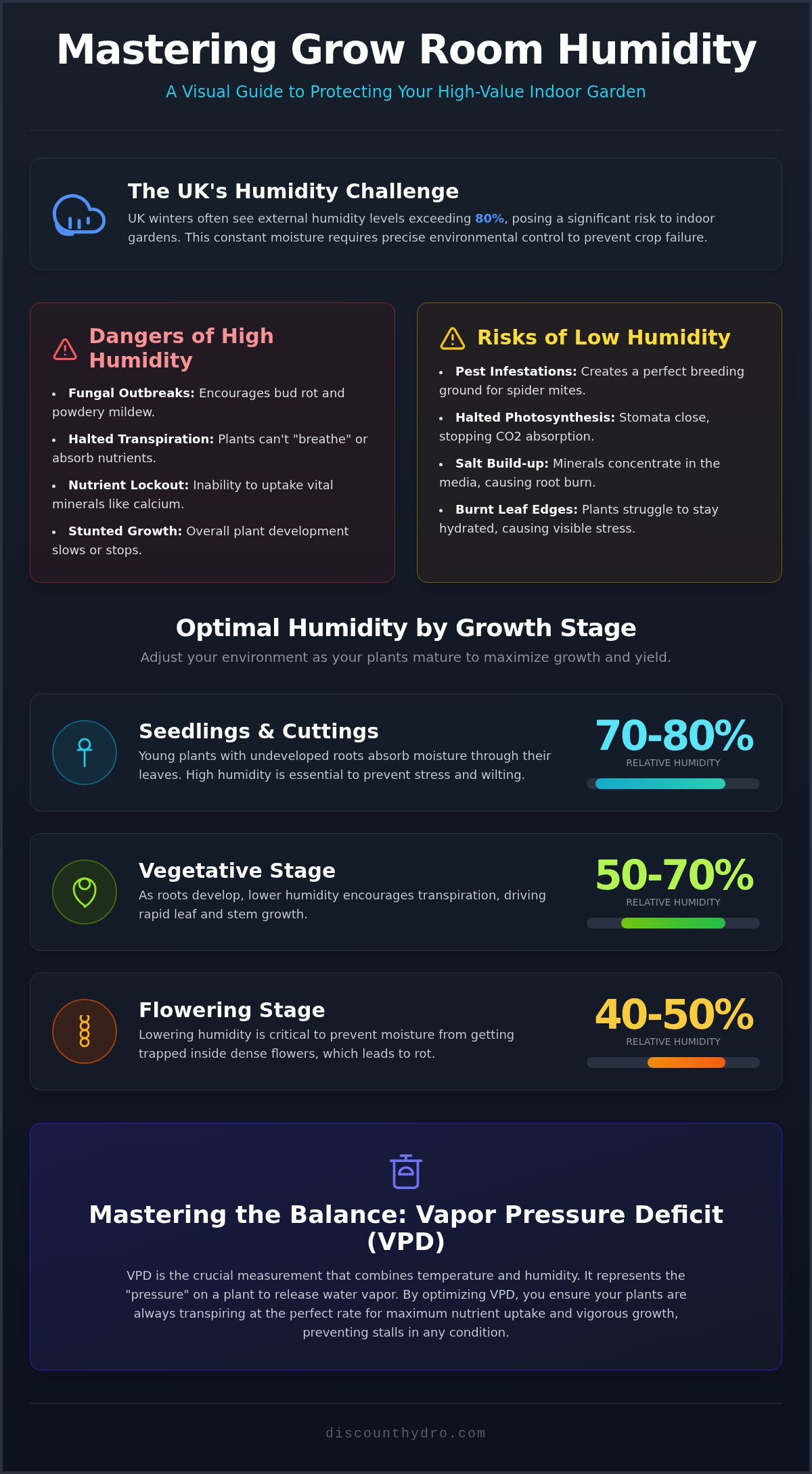
Did you know that external humidity levels in the UK often exceed 80% during the winter months? This damp climate makes grow room humidity control a constant battle for indoor gardeners looking to protect their investment. You've likely felt the frustration of watching a healthy crop succumb to bud rot or white powdery mildew just weeks before harvest. It's devastating to lose high-quality yields and waste money on inefficient equipment that fails to manage the moisture spikes caused by the UK's 1,200mm average annual rainfall.
This guide will show you how to master the science of humidity, from calculating Vapor Pressure Deficit (VPD) to choosing cost-effective EC fans that cut energy consumption by up to 50%. You'll learn how to create a stable environment that boosts transpiration and maximises your final weight without the risk of crop loss. We'll preview the best 2026-spec hardware, the lung room technique, and the precise environmental triggers you need to keep your plants healthy and your running costs as low as possible. By the end of this guide, you'll have a clear plan to maintain a professional-grade environment regardless of the weather outside.
Key Takeaways
- Understand how Relative Humidity acts as the pulse of your environment and drives nutrient uptake through plant transpiration.
- Learn specific RH targets for every growth stage to maintain effective grow room humidity control and prevent moisture-related crop failure.
- Identify why the "lights off" period is the highest risk for mould and how to manage the temperature drops that cause humidity spikes.
- Master Vapor Pressure Deficit (VPD) to balance temperature and moisture, ensuring your plants never stop breathing or feeding.
- Select the right hardware, from budget thermo-hygrometers to professional-grade GAS controllers, to build a high-yield environment at competitive UK prices.
Understanding Grow Room Humidity and Plant Transpiration
Relative Humidity (RH) measures the water vapour in the air against the maximum amount the air can hold at its current temperature. Think of it as the pulse of your environment. It dictates the speed of transpiration, which is the process where plants release water through leaf pores to pull nutrient-rich water up from the root zone. Consistent grow room humidity control is the only way to keep this biological pump working at peak efficiency. When RH is out of bounds, your plants cannot breathe or eat correctly, regardless of how expensive your nutrients are.
This relationship is especially vital in hydroponics. These systems involve high volumes of water that naturally increase ambient moisture levels. Without active management, the air becomes saturated and the pressure difference between the leaf and the air disappears. For a technical breakdown of how these pressures interact, many professionals study Vapour-pressure deficit (VPD) to fine-tune their environment and ensure constant nutrient uptake.
The Dangers of High Humidity
High RH levels are the leading cause of fungal outbreaks in UK grow rooms. Botrytis (bud rot) and Powdery Mildew flourish when moisture settles on leaf surfaces and inside dense flower sites. These pathogens can destroy an entire harvest in a few days if left unchecked. High humidity also stops the transpiration stream. If the air is too wet, the plant cannot release water, which means it cannot pull fresh calcium or magnesium from the roots. This leads to stunted growth and nutrient lockout. Excess moisture at night is the primary cause of crop failure in the UK.
The Risks of Low Humidity
Arid air is just as dangerous for your yield. When humidity is too low, plants close their stomata to conserve water. This survival response stops CO2 absorption and halts photosynthesis. You'll see stunted growth and burnt leaf edges as the plant struggles to stay hydrated. Low humidity also causes plants to pull water from the media at an accelerated rate, leaving behind high concentrations of minerals. This results in salt build-up and root burn. Additionally, dry environments are the perfect breeding ground for pests. A lack of moisture significantly increases the threat of spider mites, which can colonise a dry room in a matter of days.
Optimal Humidity Levels for Every Growth Stage
Plant humidity requirements evolve as they develop from fragile cuttings into mature, heavy-flowering specimens. Effective grow room humidity control means adjusting your environment to match these biological shifts. When you transition plants into larger grow tents, you must account for the increased leaf surface area, which releases more water into the air through transpiration. While target figures provide a baseline, maintaining a stable environment is more critical than chasing a perfect number.
Seedlings and Cuttings (70-80% RH)
Young plants lack established root systems and must absorb moisture through their leaves. High humidity levels between 70% and 80% prevent wilting and reduce stress. Use propagation domes to trap moisture locally around the foliage. To avoid "damping off", a fungal disease that kills young stems, ensure you provide minimal fresh air exchange and don't let the growing media become waterlogged. At this stage, the goal is to keep the plant hydrated while the roots colonise the media.
Vegetative Stage (50-70% RH)
As the root system matures, you can lower the humidity to between 50% and 70%. This moderate range encourages rapid leaf and stem development. Modern LED grow lights present a unique challenge here; they produce less radiant heat than older bulbs, meaning they don't "burn off" excess moisture as effectively. You may need to increase extraction or use a small heater to maintain the correct balance. Understanding VPD vs. relative humidity helps you see why temperature and moisture must be managed as a single unit to keep the plant's metabolism high.
Flowering Stage (40-50% RH)
Lowering humidity is vital once flowers begin to form. Aim for 40% to 50% RH to prevent internal rot and mould. In the final two weeks of bloom, many UK growers drop levels to 35-40% as an extra safeguard. The most dangerous period is the "lights off" humidity spike. When the temperature drops, the air can't hold as much water, causing RH to surge. Running your extraction fans 24/7 and using a dedicated dehumidifier are essential tactics during this high-risk phase. For the best prices on environmental hardware, browse the climate control range at Discount Hydro.
Essential Equipment for Precision Humidity Management
Achieving reliable grow room humidity control requires a combination of moisture adders, moisture removers, and precise monitoring tools. While you can manage a small setup manually, most UK growers find that automated hardware pays for itself by preventing crop loss and reducing daily maintenance. The most important low-cost tool in your room is the digital thermo-hygrometer. It provides the essential data you need to make adjustments before microclimates become a threat. For maximum value, look for environmental kits that bundle extraction fans with controllers rather than buying components individually.
Choosing a Grow Room Dehumidifier
In the damp UK climate, a dehumidifier is often the most critical piece of gear. Compressor dehumidifiers are the standard for most grow rooms because they are highly efficient in temperatures above 15°C. Desiccant models are better suited for very cold "lights off" periods in uninsulated spaces, though they have higher running costs. To size your unit, calculate the total water volume you give your plants daily; your dehumidifier must be able to remove at least that much from the air. A continuous drain feature is essential for indoor growers because it allows you to bypass the internal water tank and send waste moisture directly to a floor drain or reservoir.
Humidifiers and Ultrasonic Mist Makers
You'll typically need a humidifier during the seedling and early vegetative stages, or during dry winter months when central heating strips moisture from the air. Top-fill units are more convenient for quick maintenance, while large tank-based units require less frequent refills. Always use Reverse Osmosis (RO) water or distilled water in your humidifier. Tap water contains minerals that ultrasonic mist makers vibrate into a fine white dust, which can coat your LED grow lights and clog your carbon filters.
Digital Humidity Controllers
Automated controllers provide 24/7 peace of mind by making real-time adjustments to your environment. Units like the GAS Enviro Controller manage both your extraction fans and your dehumidifier, ensuring they work in tandem rather than fighting each other. Plug-and-play controllers are the most efficient way to maintain a stable VPD without constant manual intervention. Advanced systems now use PWM (Pulse Width Modulation) to control EC fans with incredible precision, allowing for smooth speed transitions that maintain humidity levels without the "sawtooth" fluctuations common with basic on/off controllers.
Advanced Techniques: VPD and Environmental Balancing
Vapour Pressure Deficit (VPD) is the difference between the amount of moisture in the air and how much moisture the air can hold when it is saturated. Instead of just looking at a percentage on a screen, VPD tells you the actual drying power of the air. Temperature and humidity are inseparable; as the temperature rises, the air's capacity to hold water increases. High-level grow room humidity control relies on balancing these two factors to ensure the pressure inside the plant leaves is higher than the pressure in the room, which keeps the plant feeding and transpiring.
Why VPD is Better than RH Alone
Relative humidity only tells you half the story. A room at 60% RH and 20°C feels much different to a plant than 60% RH at 30°C. By using a VPD chart, you can find the sweet spot where your plants are neither stressed by bone-dry air nor suffocated by stagnant moisture. Transitioning to LED lighting complicates this because these fixtures don't emit the same radiant heat as HPS bulbs. Without that heat hitting the leaves, your plants stay cooler, which changes the VPD calculation. You often need to run your room slightly warmer under LEDs to achieve the same metabolic rate you had with older lighting technology.
Managing the Intake Air
UK growers face a unique challenge during winter when intake air is both freezing and damp. If you pull 5°C air with 90% humidity directly into your tent, your heaters will struggle, and your RH will spike as the air warms up. The best approach is the "lung room" technique. Pre-treat the air in the room where your tent is located by using a heater and a dehumidifier before it gets sucked inside. This creates a stable buffer zone. Inside the tent, use oscillating fans to break up micro-climates. These pockets of stagnant, wet air often hide deep within the plant canopy and are the primary starting point for fungal infections. For professional results at the lowest UK prices, buy your environment control gear from Discount Hydro today.
If you experience an "emergency" humidity spike during the flowering stage, use this checklist to bring levels down fast:
- Strategic Defoliation: Remove large fan leaves to reduce the amount of water the plants "sweat" into the air.
- Increase Extraction: Crank your EC fans to their maximum setting to exchange the entire volume of air more frequently.
- Raise Temperatures: Use a small heater to increase the air's capacity to hold moisture, which lowers the relative humidity.
- Check for Standing Water: Ensure trays are dry and there are no leaks in your hydroponic system.
Shop Discount Hydro for Professional Humidity Control Gear
Discount Hydro is the leading choice for UK indoor gardeners who prioritise performance and value. We stock a comprehensive range of hardware designed specifically for grow room humidity control, ensuring you can maintain a stable environment without overspending. Our inventory includes everything from budget-friendly digital hygrometers for basic monitoring to pro-grade GAS and AC Infinity controllers for total automation. We focus on a high-volume, low-margin business model. This allows us to offer the most competitive pricing in the UK market on all environmental gear.
We understand that timing is critical when managing an indoor environment. We provide fast, discreet nationwide shipping on all orders to ensure your gear arrives when you need it. Your equipment arrives in plain packaging for total privacy. We maintain deep stock levels of all essential environmental tools, so you don't have to wait for backorders while your humidity levels spike. Our goal is to be your efficient, reliable warehouse partner, providing the hardware you need at prices that protect your bottom line.
Top-Rated Humidity Solutions
Our best-selling dehumidifiers are selected for their reliability in small to medium tent environments. We offer both compressor units for high-efficiency moisture removal and desiccant models for colder UK winters. If you're based in the North East, take advantage of our "Click and Collect" service at our County Durham warehouse for even faster access to your equipment. While you're upgrading your climate control, check out our latest deals on hydroponic nutrients to ensure your plants have the fuel they need to thrive in their newly optimised environment.
Expert Support for Your Setup
Choosing the right equipment for your specific space can be technical. Our team is available to provide direct, pragmatic advice on equipment sizing and compatibility. We don't use fluff or long-winded stories; we give you the facts you need to make a quick purchase decision. This efficient, sales-focused approach ensures you spend less time shopping and more time growing. Whether you need a single mist maker or a complete environmental overhaul, we have the stock and the logistics to support your success. Browse our Humidity Control range now and save on your next grow.
Secure Your Harvest with Precision Environmental Control
Managing moisture is a non-negotiable part of indoor gardening. You now understand that grow room humidity control isn't just about avoiding mould; it's about driving the transpiration stream and ensuring your plants can actually use the nutrients you provide. From hitting 80% RH in propagation to dropping below 40% in late bloom, every stage requires specific targets to maximise final yield. Consistency is the key to preventing micro-climates and nutrient lockout.
At Discount Hydro, we provide the hardware you need to maintain these levels at the UK's most competitive prices. Whether you need an EC fan to lower running costs or a pro-grade GAS controller for total automation, we have the stock ready for fast UK-wide delivery. Local growers in County Durham can also benefit from our convenient click-and-collect service. Don't let the damp UK weather ruin your next crop. Shop Discount Hydro Humidity Control Gear today and build a more stable, productive environment. Your plants will show the results in their health and final weight.
Frequently Asked Questions
What is the ideal humidity for a grow room during the flowering stage?
Aim for a range of 40% to 50% relative humidity during the flowering stage. This low level is critical to prevent internal rot in dense flower sites. During the final two weeks of bloom, many professionals drop the target to 35-40% for extra security. Maintaining precise grow room humidity control during this phase protects your yield from fungal pathogens that thrive in damp, stagnant air. This adjustment ensures your flowers remain dry and healthy until harvest.
How can I lower my grow tent humidity without a dehumidifier?
You can lower levels by increasing your extraction fan speed to exchange air more frequently. Strategic defoliation also helps by removing large leaves that release water vapour into the tent. Additionally, raising the room temperature with a small heater increases the air's moisture capacity, which naturally lowers the relative humidity. These methods are effective for minor adjustments, but they don't replace a dedicated dehumidifier during a wet UK winter when ambient levels are high.
Why does my humidity spike when the grow lights go off?
Humidity spikes at night because cooler air cannot hold as much water vapour as warm air. When your lights turn off and the temperature drops, the relative humidity rises sharply even if the actual amount of water in the air remains the same. This is why running your extraction fans 24/7 is essential. It ensures that moisture-laden air is constantly replaced with fresher, drier air from your lung room, preventing dew from forming on foliage.
Can I use a household dehumidifier in my grow room?
Yes, you can use a household unit, but it must have a continuous drain feature. Grow rooms involve high transpiration rates that will fill a standard water tank in just a few hours. Without a hose leading to a drain, the unit will turn off once the tank is full, causing a dangerous humidity spike. Ensure the unit's litre-per-day rating matches the total volume of water you give your plants daily to maintain a stable environment.
Does high humidity affect the life of my carbon filter?
High humidity significantly reduces the lifespan and efficiency of your carbon filter. When RH levels exceed 70%, the carbon pores can become clogged with moisture, which stops the filter from scrubbing odours effectively. This also increases the physical load on your extraction fan, potentially leading to motor wear. Keeping your environment within the correct range ensures your filtration system remains effective for its full rated duration and prevents unwanted smells from escaping your space.
How many oscillating fans do I need for a 1.2m x 1.2m grow tent?
Use at least two oscillating fans for a standard 1.2m square tent. Position them at opposite corners to create a circular airflow pattern that reaches every part of the canopy. This prevents the formation of stagnant micro-climates where mould often starts. One fan should move air across the top of the plants, while the second should focus on the area beneath the canopy to ensure total air circulation and prevent moisture pockets from building up.
What is the difference between relative humidity and VPD?
Relative humidity measures the percentage of moisture the air holds at a specific temperature. Vapor Pressure Deficit measures the difference between that moisture and the air's saturation point. VPD is a more accurate metric for plant health because it accounts for temperature's effect on transpiration. While RH tells you how wet the air is, VPD tells you how hard your plants are working to pull nutrients from the roots, making it the superior metric for growth.
Will a bigger extraction fan lower my humidity?
A bigger fan only lowers humidity if the air it pulls into the tent is drier than the air it removes. If your intake air is damp, simply increasing the extraction speed won't solve the problem. In these cases, you must use a dehumidifier to treat the air in your lung room before it enters the tent. High-performance EC fans offer better grow room humidity control by allowing for precise, automated speed adjustments based on triggers.