

How to Deal with Thrips Indoors: A Practical Guide for UK Growers
You notice a single silver streak on a leaf today, and by next week, your entire indoor garden is crawling with pests that refuse to die. It's a common problem that leads to ruined aesthetics and significantly reduced yields. Learning how to deal with thrips indoors is essential for any grower looking to protect their investment in LED grow lights and nutrients. You need a direct solution that works fast and complies with current UK pesticide regulations to stop the spread before it becomes unmanageable.
Effective pest management requires the right products and a tactical approach to the thrips lifecycle. This guide provides a practical strategy to identify, eliminate, and prevent thrips using proven, cost-effective methods available in the UK. We'll cover the use of blue sticky traps for monitoring, biological controls like Amblyseius cucumeris, and authorized chemical options such as Provanto. From understanding MAPP numbers to selecting the right foliar sprays, you'll find the technical facts needed to keep your grow room productive and pest-free.
Key Takeaways
- Identify early warning signs like silver leaf streaks and slender pests before they spread throughout your grow room.
- Master how to deal with thrips indoors by isolating infested plants and using blue sticky traps to monitor adult populations.
- Compare chemical and organic treatment strategies to find the most cost-effective and legal solution for your specific indoor setup.
- Discover how professional-grade plant nutrients and supplements help your crop recover from pest-induced stress and maintain high yields.
- Optimize environmental controls and intake filtration to slow pest breeding rates and prevent future outbreaks in your grow tent.
Identifying Thrips and Their Damage in Your Indoor Garden
Thrips are tiny, slender insects that damage plants by sucking sap directly from the tissue. These pests are barely visible to the naked eye, often measuring only 1mm to 2mm in length. Understanding Thrips (Order Thysanoptera) is the first step in protecting your crop. They use rasping mouthparts to puncture plant cells, which drains the life from your garden and stunts growth. Because they are so small, many growers don't realize they have an issue until the damage is widespread and yields are already compromised.
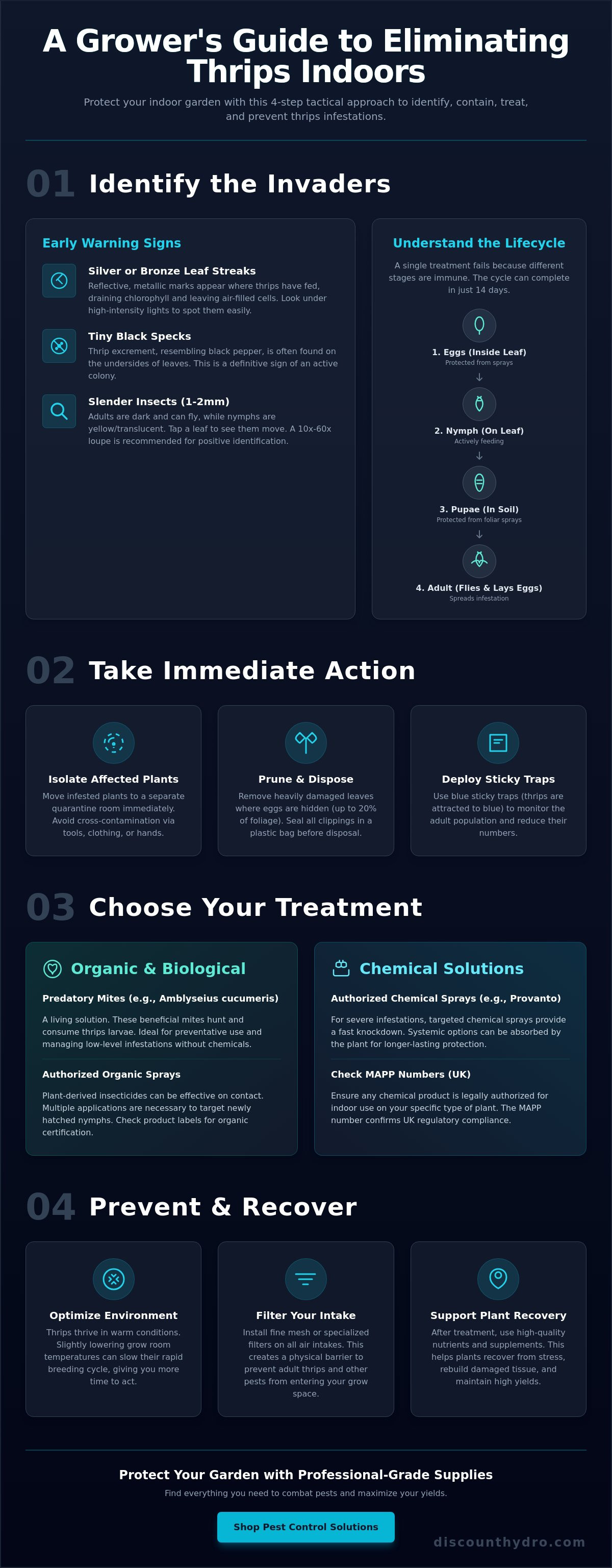
Check your leaf surfaces for silver or bronze-coloured streaks. These markings indicate where the insects have fed and removed the chlorophyll. Another unmistakable sign is thrip excrement, which looks like tiny black pepper specks on the undersides of leaves. Identifying these early markers is how to deal with thrips indoors effectively before the population explodes. If you ignore these black specs, the infestation will quickly migrate to new growth, ruining the aesthetics and health of your entire room.
Your led grow light is a powerful tool for detection. High-intensity lighting reveals the subtle movement of these pests that might otherwise hide in the shadows of a dense canopy. When you use the full spectrum of a high-quality light, the contrast makes the silver streaks pop. Check the top of the canopy and the middle layers where light penetration is still high. Movement is your best indicator; if you tap a leaf and see tiny slivers jumping or crawling, you have an active colony.
Signs of Infestation: Silver Streaks and Black Specs
The "silvering" effect happens when thrips drain individual plant cells, leaving them filled with air. This creates a reflective, metallic appearance on the foliage. Nymphs are usually yellow or translucent and move slowly, while adults are darker black or brown and can fly. Use a 10x or 60x jeweller’s loupe to confirm their presence. Without magnification, you might mistake them for simple dust or nutrient deficiencies. Look specifically at the leaf veins, as thrips prefer to congregate near the plant's main transport lines for easier feeding.
The Thrips Lifecycle: Why One Treatment Fails
The egg-to-adult cycle is incredibly fast, sometimes completing in just 14 days in warm indoor environments. This rapid progression is why a single spray never works. Females can lay dozens of eggs, which are inserted directly into the leaf tissue. This physical barrier protects the eggs from most contact insecticides. Once they reach the pupal stage, they often drop into the soil or growing media to transform into adults. Knowing how to deal with thrips indoors requires targeting every stage of this cycle, from the foliage to the substrate. If you only spray the leaves, the pupae in your pots will emerge as a fresh wave of adults within days.
Immediate Actions: Quarantining and Physical Removal
Speed is critical when you identify an infestation. Thrips spread rapidly because adults can fly or crawl between plants with ease. The first step in learning how to deal with thrips indoors is breaking their path of migration. If you leave one infested plant in your main room, the rest of your crop will succumb within days. You must act the moment you see the silvering symptoms described in the RHS guide to thrips.
Isolating Affected Plants
Isolation is difficult in a compact grow tent environment. If your plants share a reservoir or are physically touching, the risk is high. Move infested plants to a completely separate room immediately. This quarantine zone needs its own light source and ventilation to keep the plant alive while you treat it. Never move tools, fans, or even your own clothing between the quarantine area and your clean grow space. Thrips are hitchhikers. If you touch an infested leaf and then walk into your main tent, you've transported the problem. For growers using shared hydroponic systems, you may need to disconnect individual modules to prevent the pests from moving through the root zone or shared drainage.
Manual Removal and Pruning Techniques
Pruning reduces the immediate pest population by removing the leaves where eggs are embedded. Focus on the most damaged foliage. Use sharp, sterilized snips to make clean cuts. Don't over-prune; removing more than 20% of the foliage can stress the plant and slow its recovery. Place all clippings into a plastic bag and seal it before leaving the room. This prevents winged adults from escaping and finding a new host. You can also use a soft sponge and lukewarm water to wipe the undersides of remaining leaves. This manually removes nymphs and adults that haven't yet migrated. It's a tedious process but highly effective for lowering the initial pest density.
After pruning, wash the entire plant with a steady stream of lukewarm water. This physically knocks pests off the stems and leaves. Once the plants are moved, you must sanitize the entire grow area. Wipe down tent walls and floor liners with a disinfectant solution. Thrips pupae often hide in the corners of trays or in the folds of the tent fabric. A clean environment is your best defense against a second wave of hatching adults. If your current setup makes isolation impossible, consider upgrading to a modular system or a secondary tent to manage future outbreaks more effectively.
Treatment Strategies: Organic vs. Chemical Solutions
Choosing the right treatment depends on the infestation's severity and your specific growing environment. Contact killers destroy the pest on the plant's surface, while systemic treatments are absorbed into the tissue to kill insects as they feed. When researching controlling indoor thrips, remember that UK regulations limit certain active ingredients for indoor use. Always check the MAPP number on any chemical product to ensure it's authorized for your setup. This is a technical requirement that ensures safety and legality in your grow room.
Frequency is the most important factor in any treatment plan. Apply your chosen solution every 3 to 5 days for at least three consecutive cycles. This schedule is necessary because eggs protected inside the leaf tissue are immune to most sprays. By treating repeatedly, you catch the nymphs as they emerge and before they can lay new eggs. If you stop after one application, the population will rebound within a week. Consistency is how to deal with thrips indoors effectively.
Timing your application is vital to avoid plant damage. Never spray under intense LED grow lights. The droplets can act as magnifying lenses, causing severe leaf burn and permanent damage to your foliage. Apply treatments just before the lights turn off or during the dark cycle. Supporting your plants with high-quality hydroponic nutrients helps them recover from the stress of both the pests and the treatments. Silica-based supplements are particularly effective for strengthening cell walls, making it harder for thrips to penetrate the tissue and feed.
Biological Controls and Natural Remedies
Predatory mites like Amblyseius cucumeris are excellent for managing populations in a grow tent. These beneficial insects hunt thrips nymphs and thrive in the warm, humid conditions found in most indoor gardens. For a physical mode of action, insecticidal soaps and neem oil are popular choices. These work by suffocating the pests on contact. Don't use heavy oils late in the flowering stage, as they can clog plant pores and affect the final quality of your crop. You can also introduce beneficial nematodes into your growing media to target the pupae stage, preventing the next generation from emerging from the substrate.
Targeted Insecticides and Contact Sprays
Heavy infestations may require pyrethrin-based sprays. These are derived from chrysanthemum flowers and provide a rapid knockdown of adult thrips. Coverage is critical. You must spray the undersides of every single leaf, as this is where the majority of the population hides. To avoid building pest resistance, rotate between different active ingredients. Using the same spray repeatedly can lead to a resistant population that is immune to your efforts. A methodical approach to spraying ensures you don't leave any survivors to restart the infestation.
Environmental Management to Prevent Future Outbreaks
Prevention is cheaper than a cure. Once you understand how to deal with thrips indoors, your focus must shift to environmental barriers. Thrips thrive in temperatures between 25°C and 30°C. If you keep your grow room at the higher end of this range, their lifecycle accelerates, leading to explosive population growth. Lowering your daytime temperatures to 22°C or 24°C can significantly slow their breeding rate. This gives your other control methods more time to work before the next generation hatches.
Humidity management is equally vital. Unlike spider mites, which prefer bone-dry conditions, thrips are resilient across various humidity levels. However, maintaining a stable environment prevents the plant stress that attracts these pests in the first place. High-quality intake filtration is your primary line of defense. Most thrips, often called "thunder flies" in the UK, enter grow rooms through the ventilation system. Without a fine mesh filter on your air intake, you're essentially inviting them into your tent.
Optimising Airflow and Extraction
Strong airflow makes it difficult for winged adults to land and lay eggs. Position your internal fans to create constant, turbulent air movement across the canopy. This physical disruption is a simple but effective deterrent. Your extraction system should maintain negative pressure within the grow tent at all times. This ensures that air only enters through your filtered intakes rather than through zips or small gaps where pests can squeeze in. If you need to upgrade your ventilation, check our latest deals on extraction kits and grow tents to secure your environment.
Maintaining Grow Room Hygiene and Sanitation
Sanitation is the most overlooked aspect of pest control. Thrips are frequently introduced by the grower. Always change your clothes before entering your grow space if you've been working in an outdoor garden. "Store-bought" plants or shared cuttings are high-risk vectors for thrips and their eggs. Never introduce new plants into your main room without a 14-day quarantine period. Between harvests, perform a deep clean of the entire area. Use specialist disinfectants to scrub every surface, including zips, poles, and light fixtures. Sterilise all pots, trays, and tools using a bleach solution or dedicated grow room cleaner. Thrips pupae can survive in small cracks or within used growing media, so starting each cycle with fresh media and sterile equipment is mandatory for long-term success.
Essential Pest Control Supplies for Indoor Growers
Success in the grow room depends on your ability to react to threats immediately. You shouldn't be searching for supplies once an infestation is already visible. Creating a "grower's first aid kit" is the most practical way to manage risks. This kit should contain monitoring tools, protective gear, and a selection of authorized sprays. Knowing how to deal with thrips indoors means having these items on your shelf before the first silver streak appears on a leaf. Being prepared allows you to start the necessary treatment cycles without delay.
Protective gear is mandatory for safe application. Always use nitrile gloves and a suitable face mask when applying foliar treatments or insecticides. Even organic solutions like neem oil or insecticidal soaps require careful handling to avoid skin irritation. Keep these supplies in a dedicated storage box within your grow area so they're always accessible. This technical approach ensures your safety while you protect your investment in nutrients and lighting.
Monitoring Tools: Sticky Traps and Magnification
While yellow sticky traps are common for fungus gnats, blue sticky traps are the gold standard for thrips. These pests are specifically attracted to the blue light spectrum. Position these traps at the canopy level where adult movement is most frequent. Use them as a diagnostic tool to track population density. By counting the number of pests caught each week, you can verify if your treatment cycles are working. If the count doesn't drop, you must rotate your active ingredients to avoid resistance. Combine these traps with a high-power jeweller's loupe to inspect leaf undersides for nymphs that the traps won't catch.
High-Value Pest Management Solutions
Maintaining a consistent stock of essential supplies ensures you never miss a treatment window. Bulk-buy options for plant nutrients and supplements are the most cost-effective way to support plant health during an outbreak. Strengthening your plants with silica helps them withstand the stress of pest feeding and treatment applications. Always keep a backup contact killer spray on hand for immediate knockdown of adult populations. Waiting for a delivery during a rapid infestation can result in total crop loss. Be pragmatic and keep your inventory stocked with proven solutions.
Browse our range of pest control and plant health products to find professional-grade solutions at competitive prices. We stock everything from blue traps to high-intensity LED grow lights and extraction systems to help you maintain a clean, productive environment.
Secure Your Indoor Garden with Proactive Pest Management
Successfully managing an outbreak requires more than just a single spray. You now know how to deal with thrips indoors by combining early detection, strict quarantine protocols, and repeated treatment cycles. Effective control targets the entire lifecycle, from the eggs embedded in the leaf tissue to the pupae hiding in the growing media. Maintain your environmental barriers, keep your grow room sterile, and use blue sticky traps to monitor for any new movement. Supporting your plants with high-quality nutrients and robust extraction systems remains your best long-term defense against crop damage.
Get the technical supplies you need to protect your plants and maximize your yields. Save on professional-grade pest control at Discount Hydro. We provide competitive pricing on top nutrient brands and essential pest management supplies. Our service includes fast UK-wide delivery and convenient Click & Collect options in County Durham. Stocking your grower’s first aid kit today ensures you are ready to act before an infestation spreads. Stay vigilant and keep your environment dialed in for a successful harvest.
Frequently Asked Questions
Do thrips fly or do they just crawl between plants?
Adult thrips have fringed wings and are capable of flying between plants. While they are relatively weak fliers, they easily travel on air currents created by your internal fans and extraction systems. Nymphs do not have wings and must crawl to migrate. This combination of movement means an infestation can spread across an entire grow tent in just a few days if not isolated immediately.
Can thrips live in hydroponic clay pebbles or coco coir?
Thrips frequently use growing media like coco coir and clay pebbles during their pupal stage. After feeding on the foliage, the larvae drop into the substrate to transform into adults. This makes the media a primary hiding spot that many growers overlook. To fully address the problem, you must treat the substrate with beneficial nematodes or authorized soil drench treatments to kill the developing pupae before they emerge.
Is it possible to completely get rid of thrips without using harsh chemicals?
You can eliminate thrips using a combination of biological controls and physical removal. Predatory mites such as Amblyseius cucumeris and beneficial nematodes are highly effective at targeting different stages of the lifecycle. When you combine these with blue sticky traps and regular pruning, you create a robust strategy for how to deal with thrips indoors. Consistency with these organic methods is vital for total eradication.
How long do thrips eggs stay dormant in an empty grow tent?
Thrips generally cannot survive for more than a few weeks in an empty grow tent without a host plant. They don't have a long-term dormancy like some other pests. However, pupae in the media or eggs in discarded plant matter can still hatch if the environment remains warm. Deep cleaning your tent with a specialist disinfectant between cycles is the only way to ensure no survivors remain for your next crop.
Will thrips kill my plants if I don’t treat them immediately?
Thrips rarely kill a plant overnight, but they cause significant stunting and reduced yields. The constant sap-sucking drains the plant's energy and leaves it vulnerable to secondary infections. Thrips are also notorious for transmitting plant viruses that can lead to total crop failure. If you don't act when you first see silver leaf streaks, the population will eventually overwhelm the plant's immune system and ruin the harvest.
Why do thrips keep coming back after I have sprayed them?
Thrips often return because most contact sprays only kill the adults and nymphs visible on the leaves. The eggs are safely tucked inside the leaf tissue, and the pupae are hidden in your pots. This is why learning how to deal with thrips indoors requires a minimum of three treatment cycles spaced 3 to 5 days apart. Missing just one treatment allows the next generation to hatch and restart the infestation.
Are thrips the same thing as thunder flies?
Yes, thrips are commonly known as thunder flies or thunder bugs in the UK. They are particularly active during the warm, humid weather that precedes a storm. During these periods, they often swarm outdoors and are easily sucked into indoor grow rooms through unfiltered air intakes. Installing fine mesh filters on your extraction system is a technical necessity to prevent these seasonal pests from entering your grow space.
What is the best temperature to stop thrips from breeding?
Lowering your daytime temperatures to between 20°C and 22°C will significantly slow the thrips breeding rate. These pests thrive and reproduce at their fastest when temperatures sit between 25°C and 30°C. While you shouldn't freeze your plants, keeping the room on the cooler side makes it much easier for your predatory mites and sprays to get ahead of the population growth. Environmental control is a powerful preventative tool.